BATTLEFIELD 2042 | PART 03
UI + MAPS
GOODBYE KANSAS, 2021
ART DIRECTION | CONCEPT DESIGN | PRODUCTION
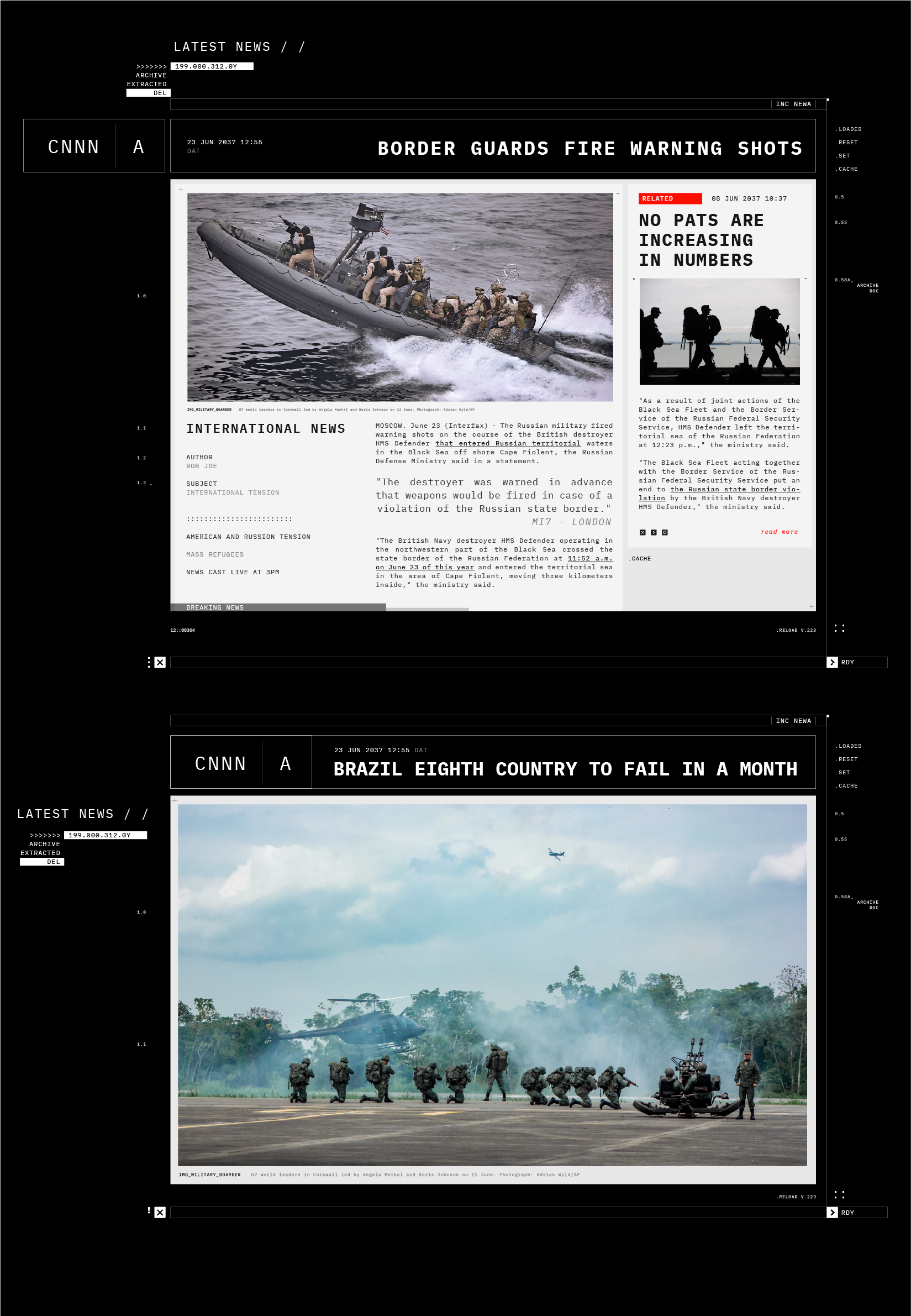
This section examines the development of interface and map systems used throughout the cinematic. UI and typographic systems functioned as critical narrative devices, used to convey context, establish time, and embed secondary layers of information throughout the film. These elements operate across the sequence as both structure and texture, supporting the progression from present day to the world of 2042.
Rather than serving a single explanatory role, interface elements were distributed throughout the environment. Headlines, timestamps, and data fragments appear embedded within footage and digital space, reinforcing the passage of time while allowing narrative detail to accumulate through repetition and variation.

03.0 Initial Interface Design
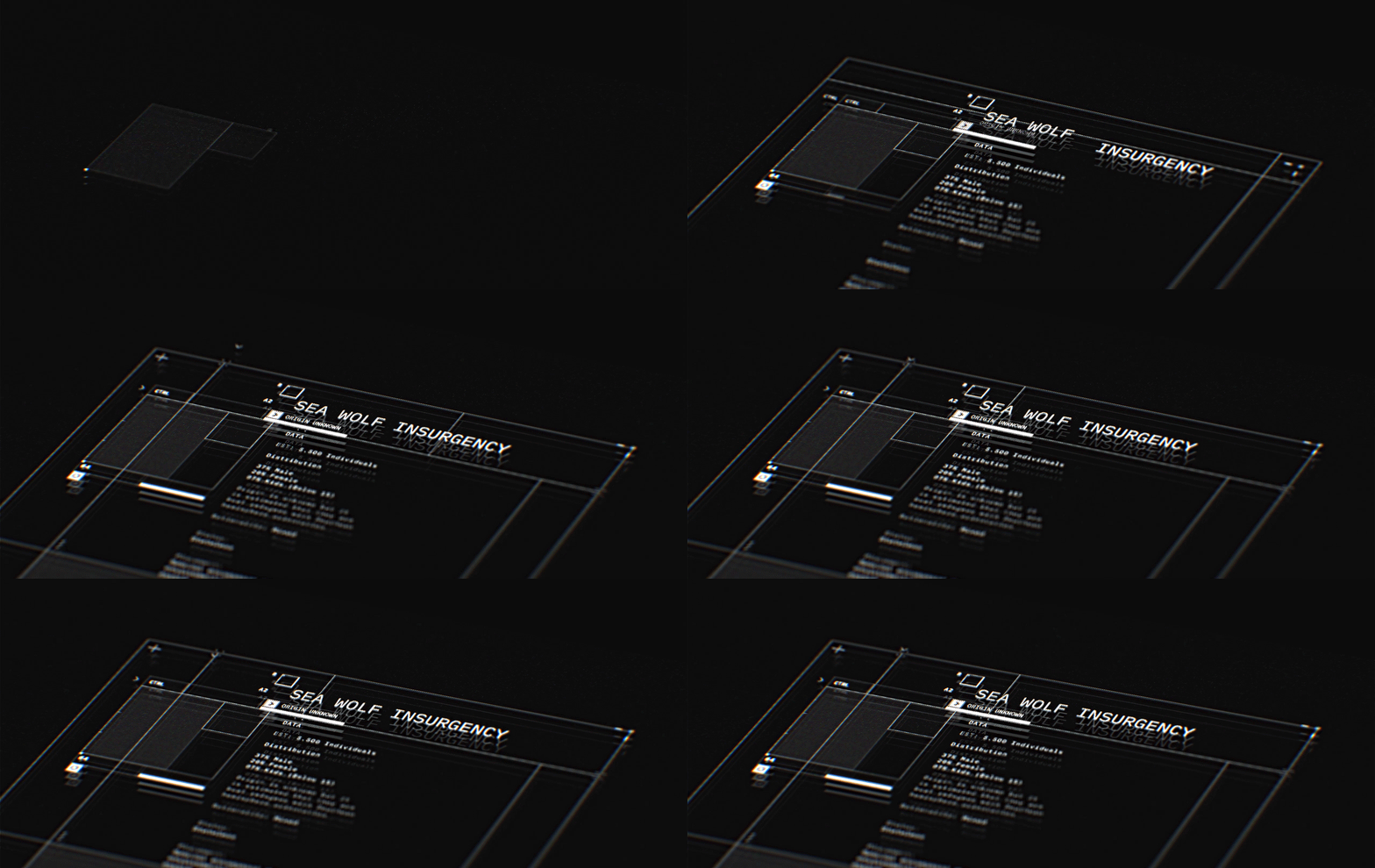
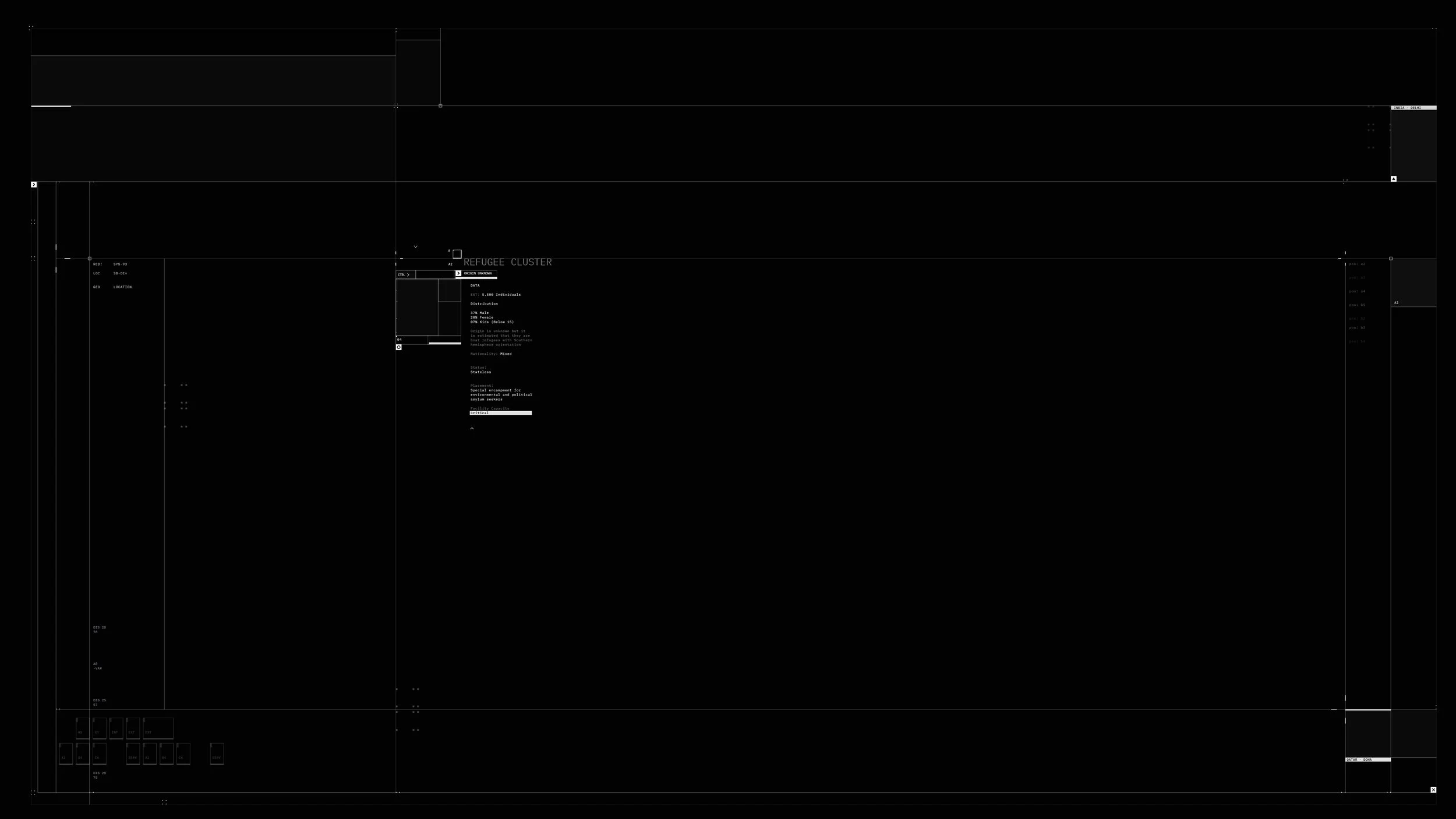
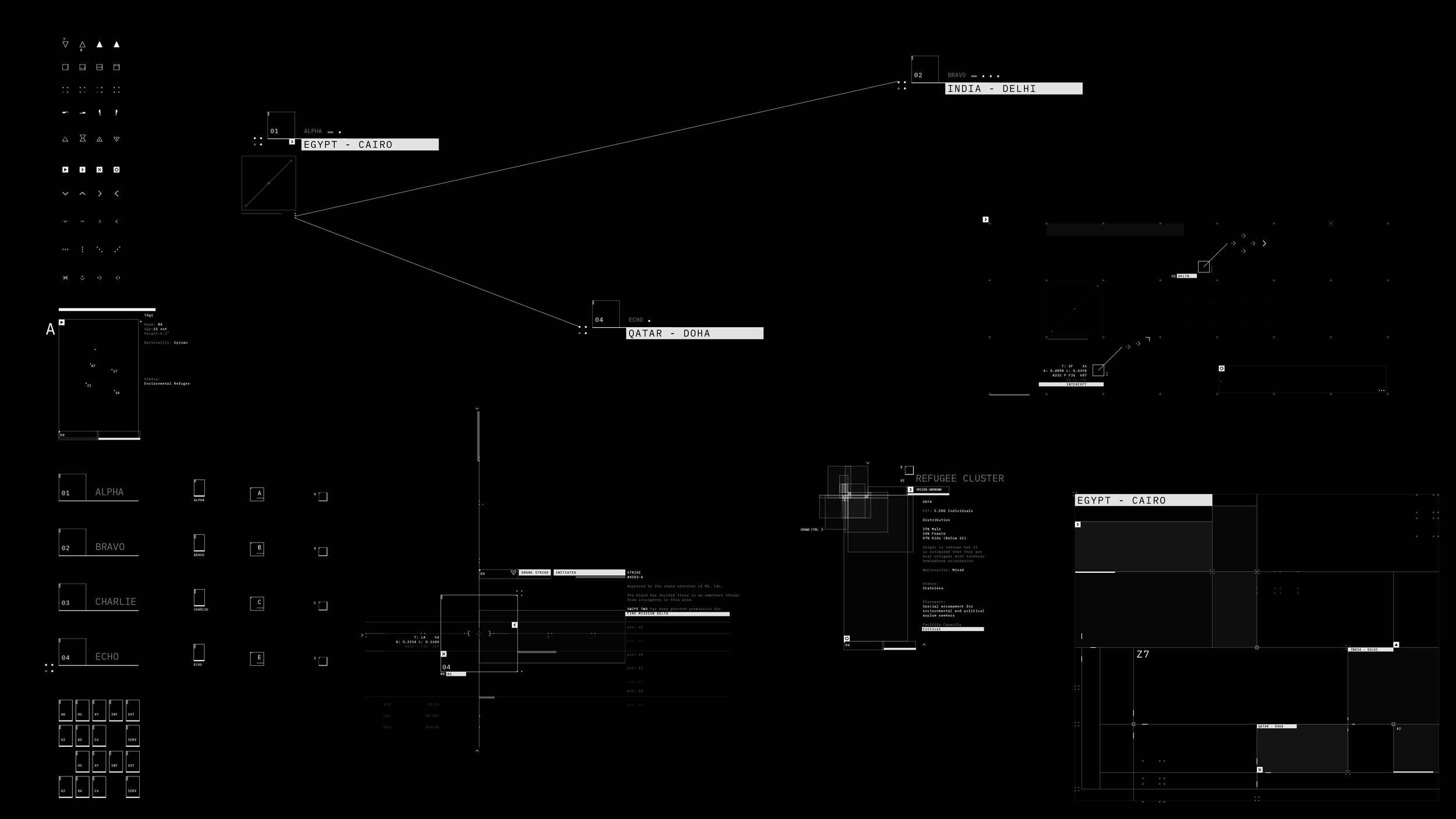
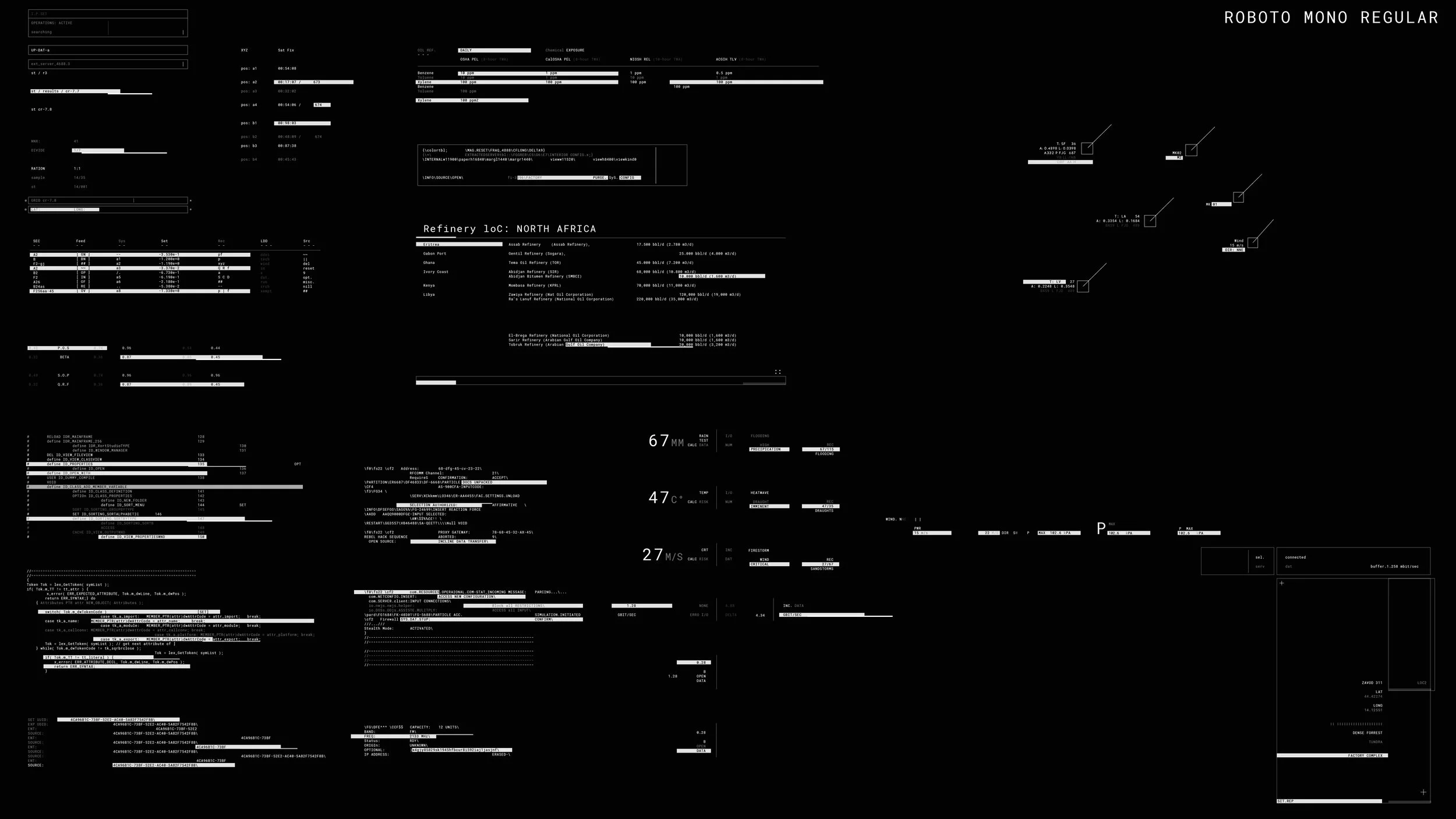
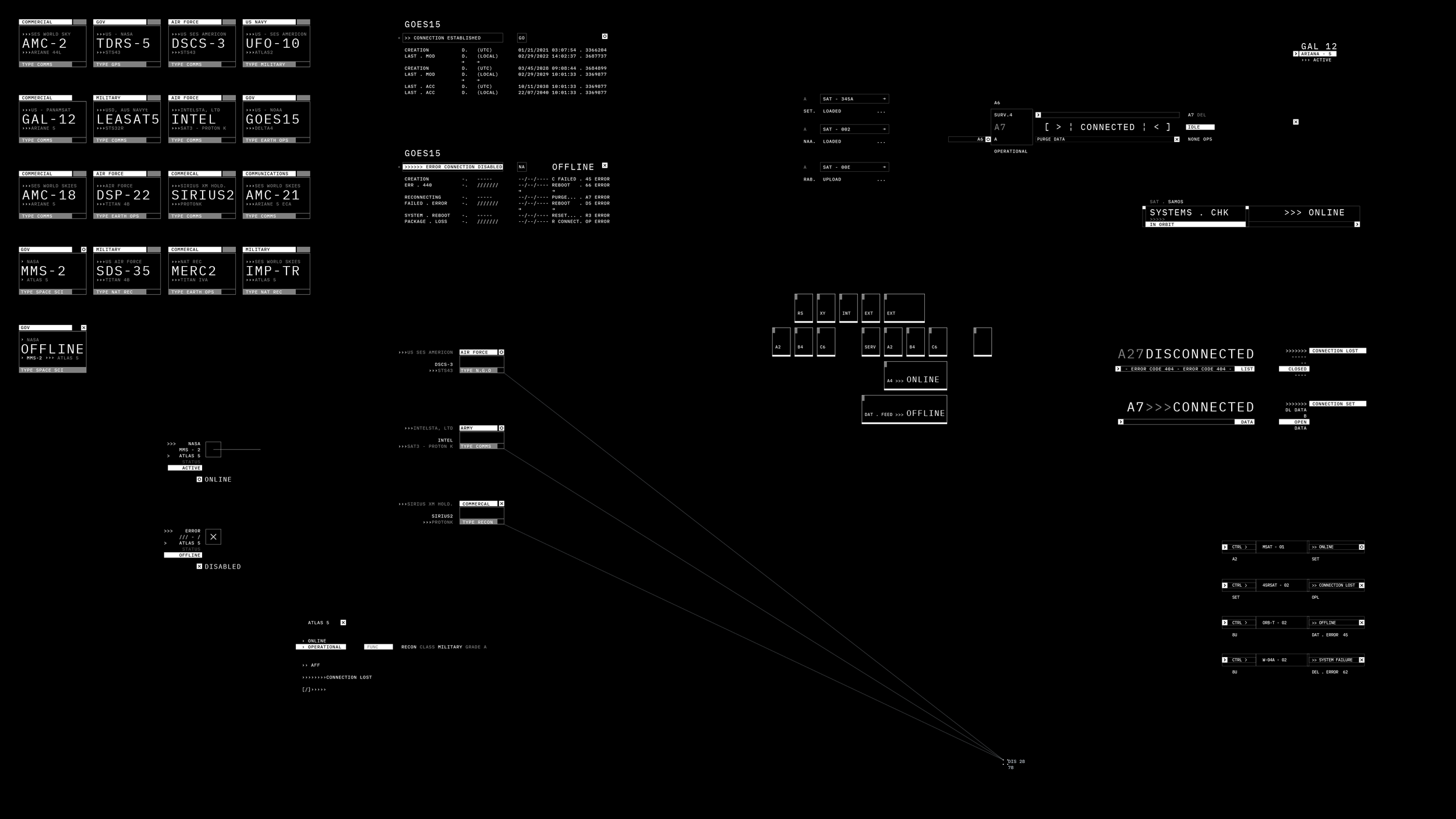
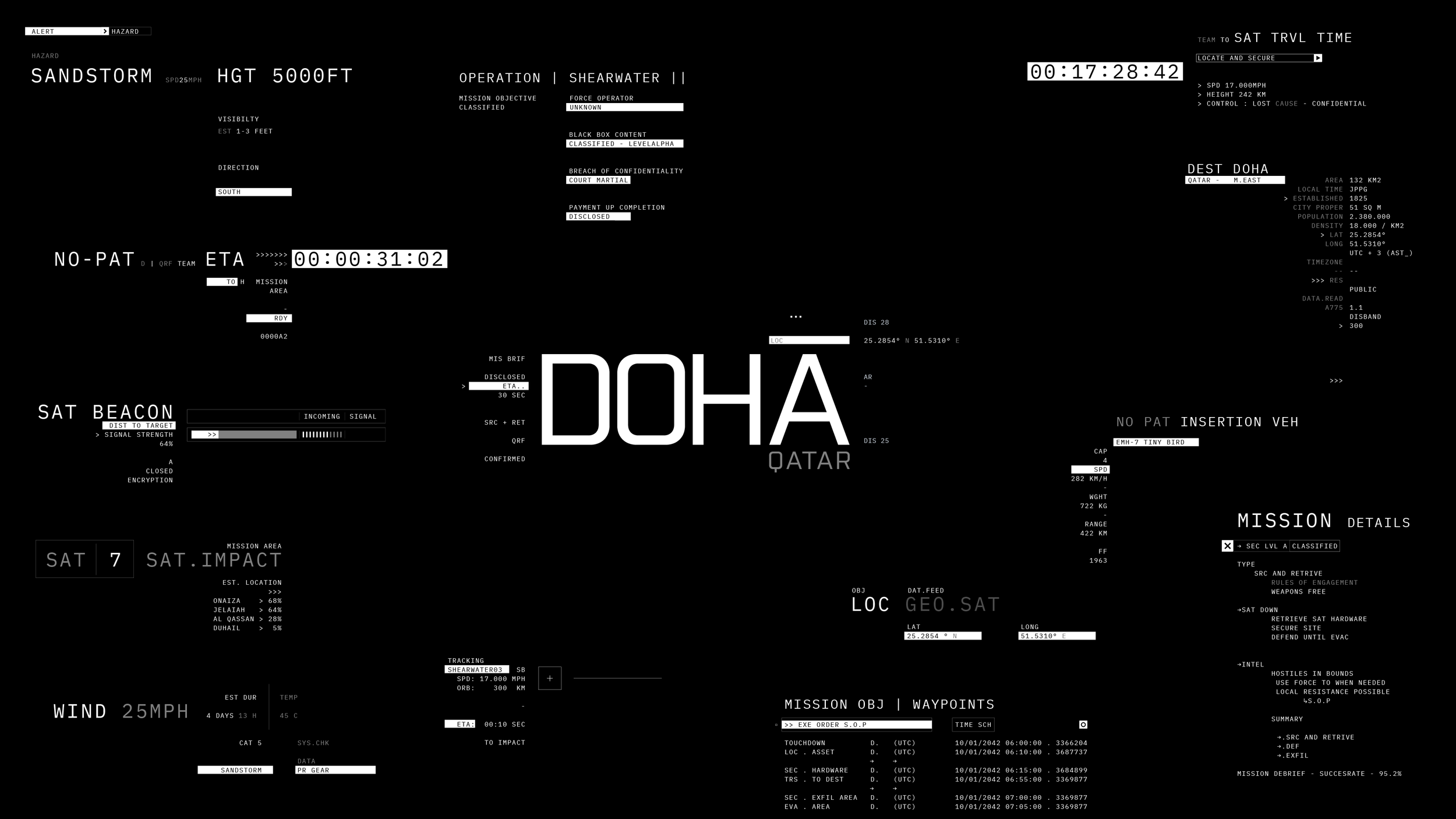
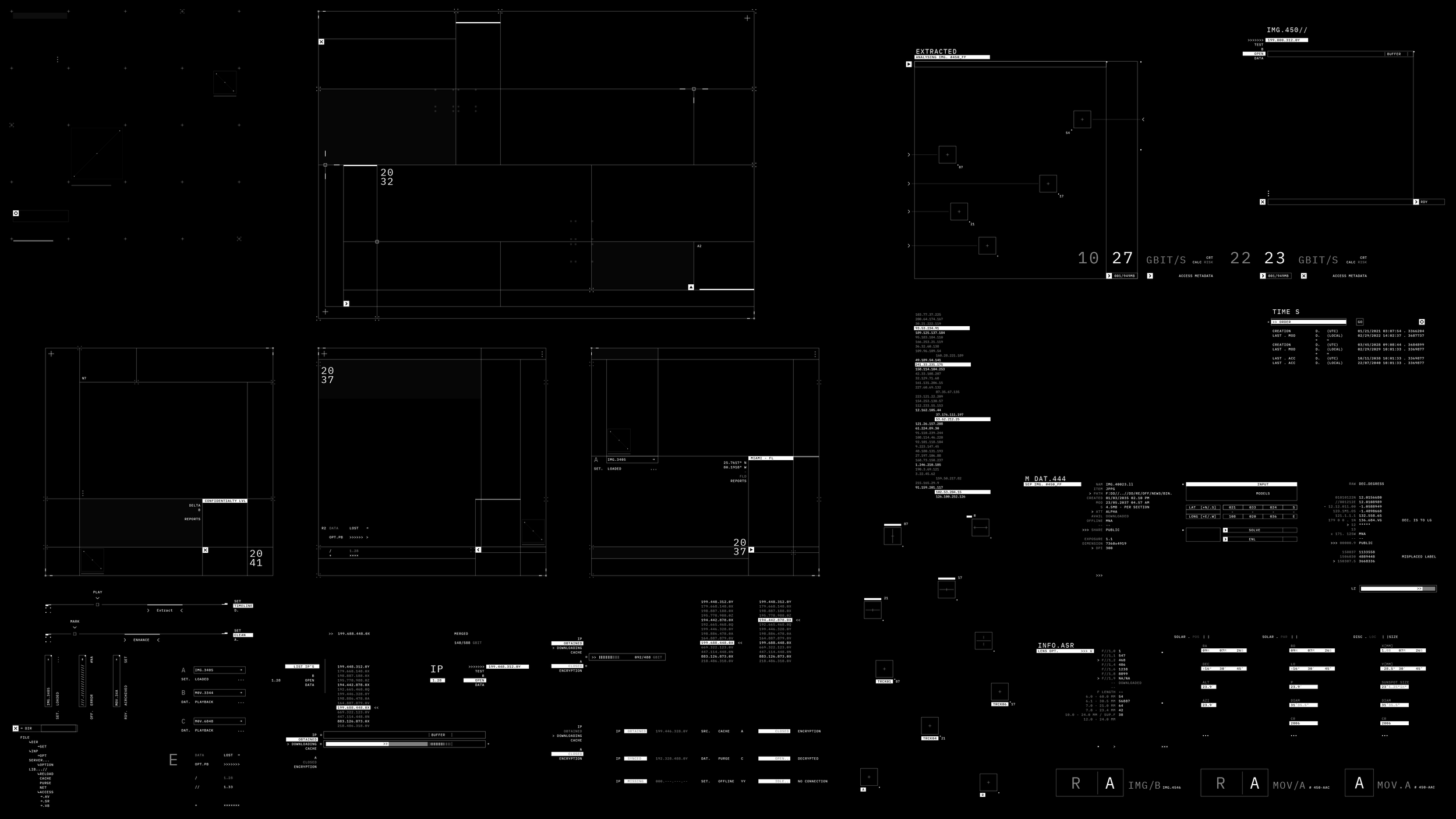
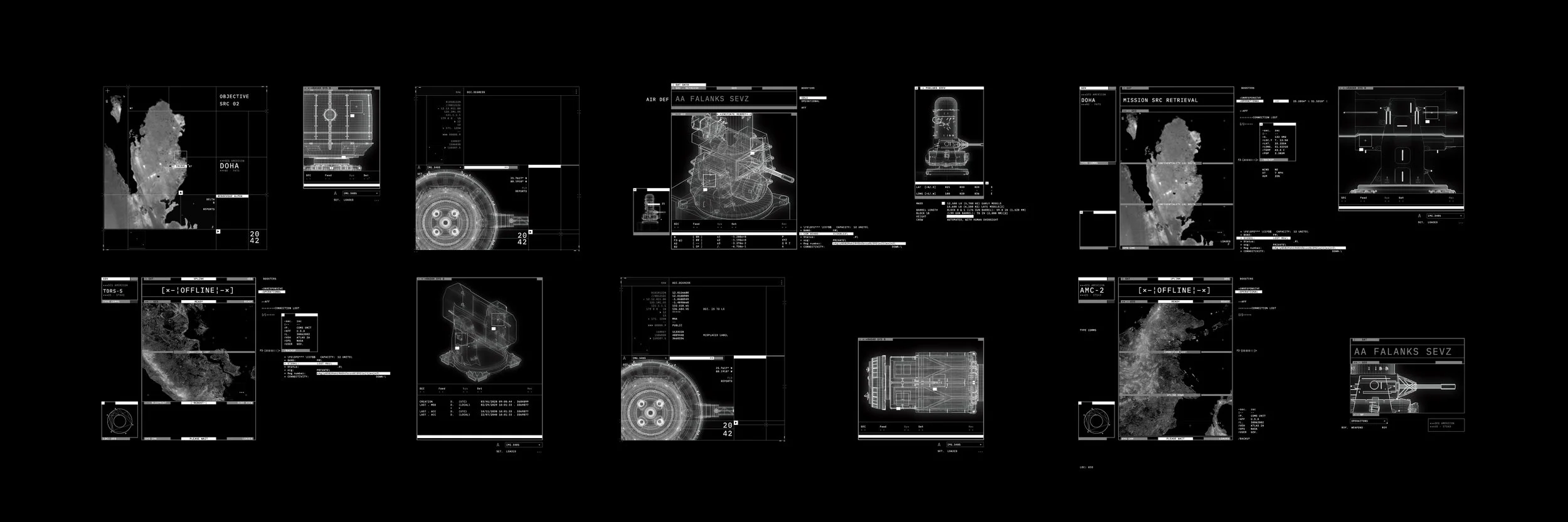
The interface system needed to accommodate a wide range of information types while remaining cohesive within an already dense visual field. Content ranged from basic grids and terminal output to complex map overlays and military intelligence data. Establishing hierarchy was essential to maintain legibility while allowing information to exist at multiple levels of prominence.
Early exploration began with command-line and terminal interfaces, using their inherent structure as a foundation. From there, the system expanded outward, developing a visual language capable of dissolving into glitch textures or asserting itself as the primary focal element within a shot. This flexibility allowed interface elements to shift roles depending on narrative emphasis.






03.1 Topographic Map Design
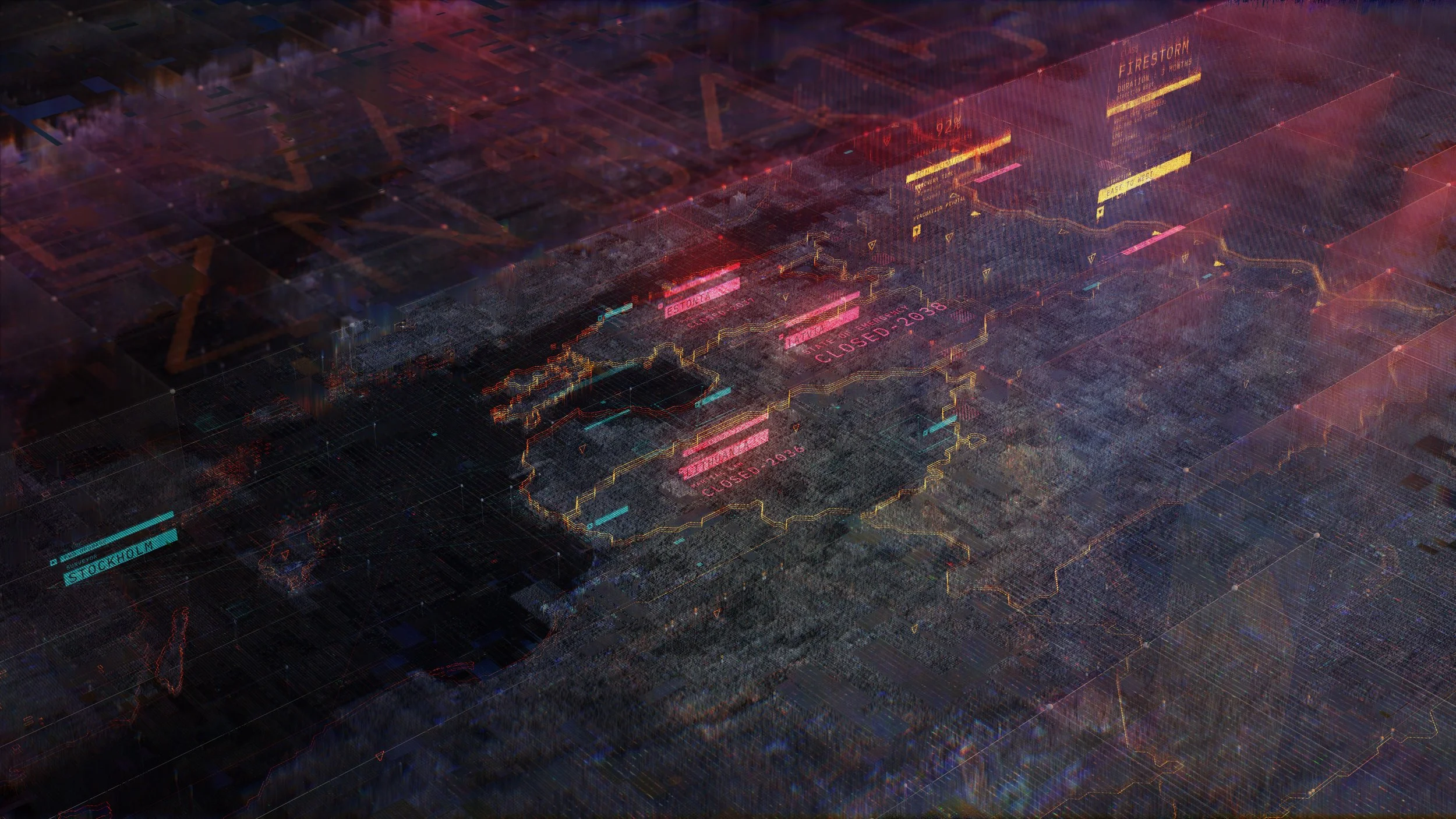
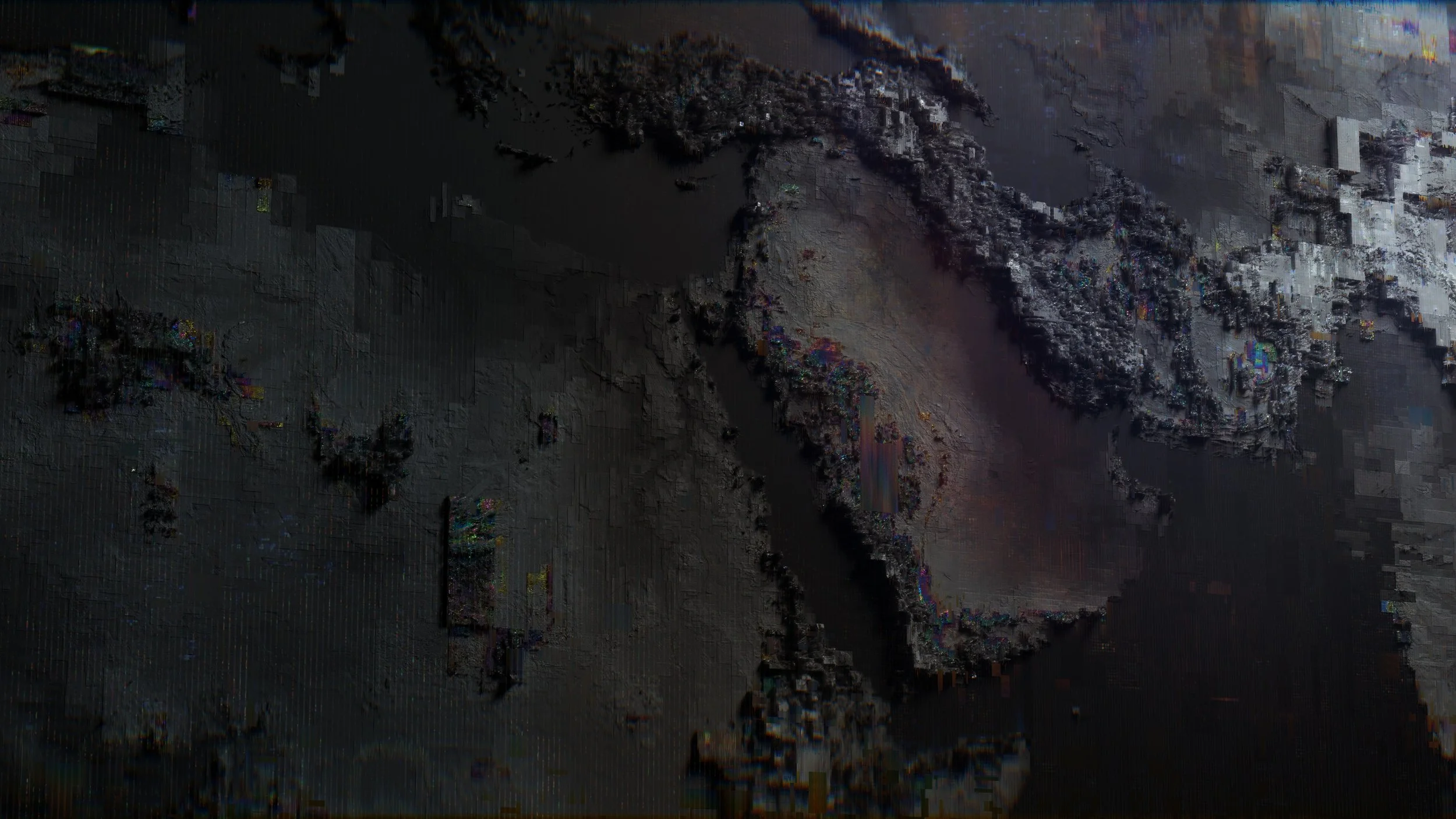
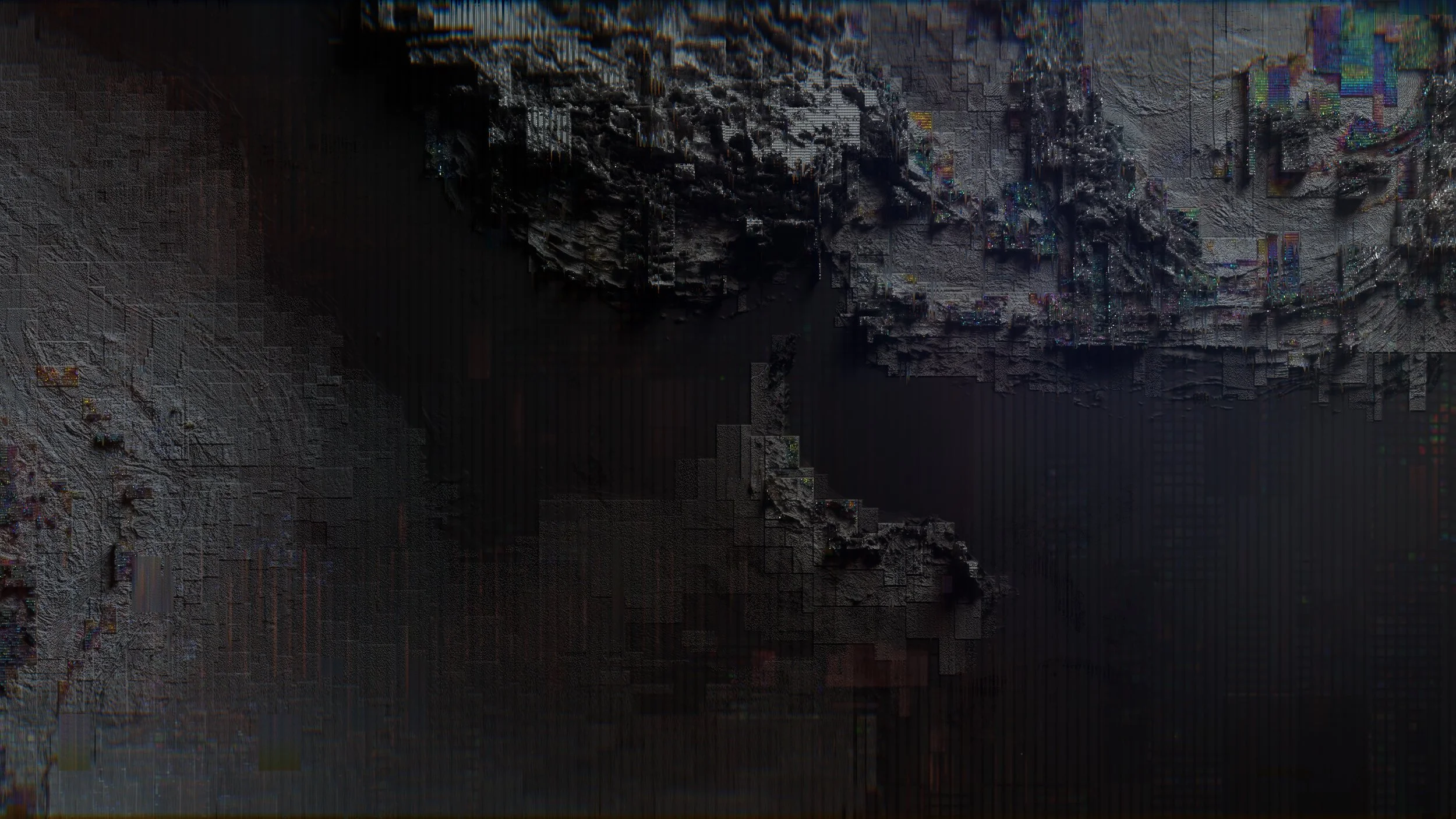
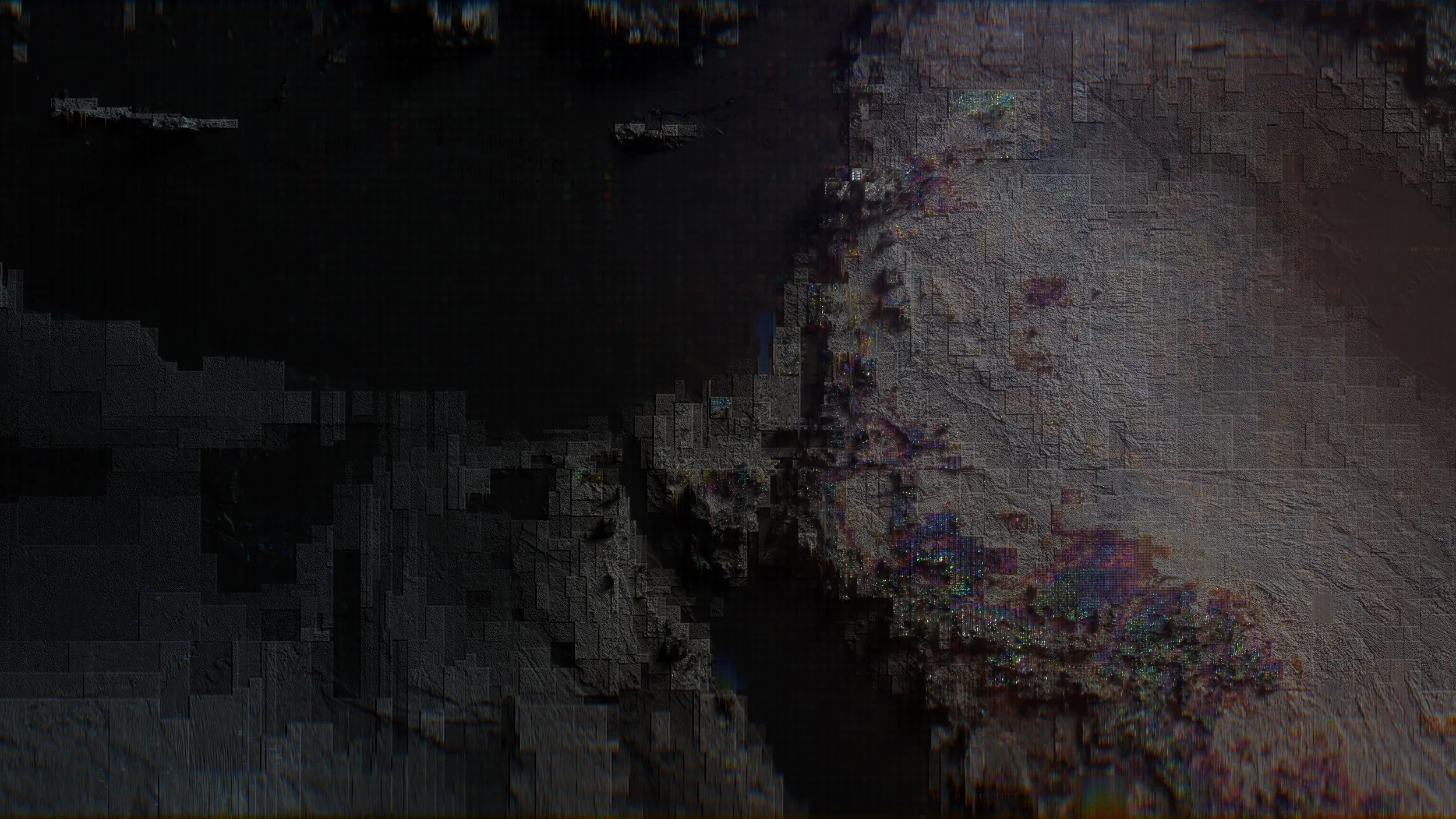
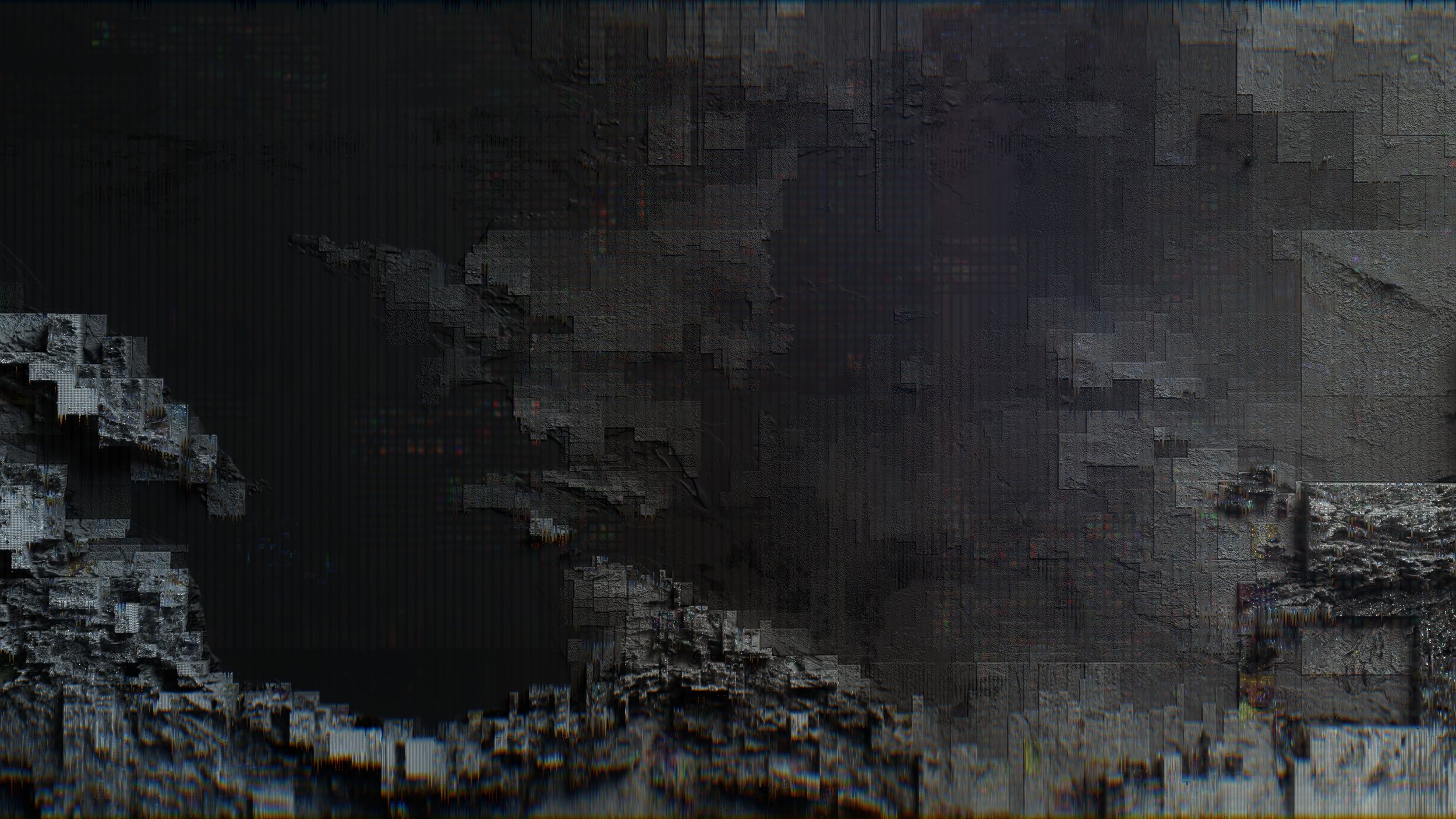
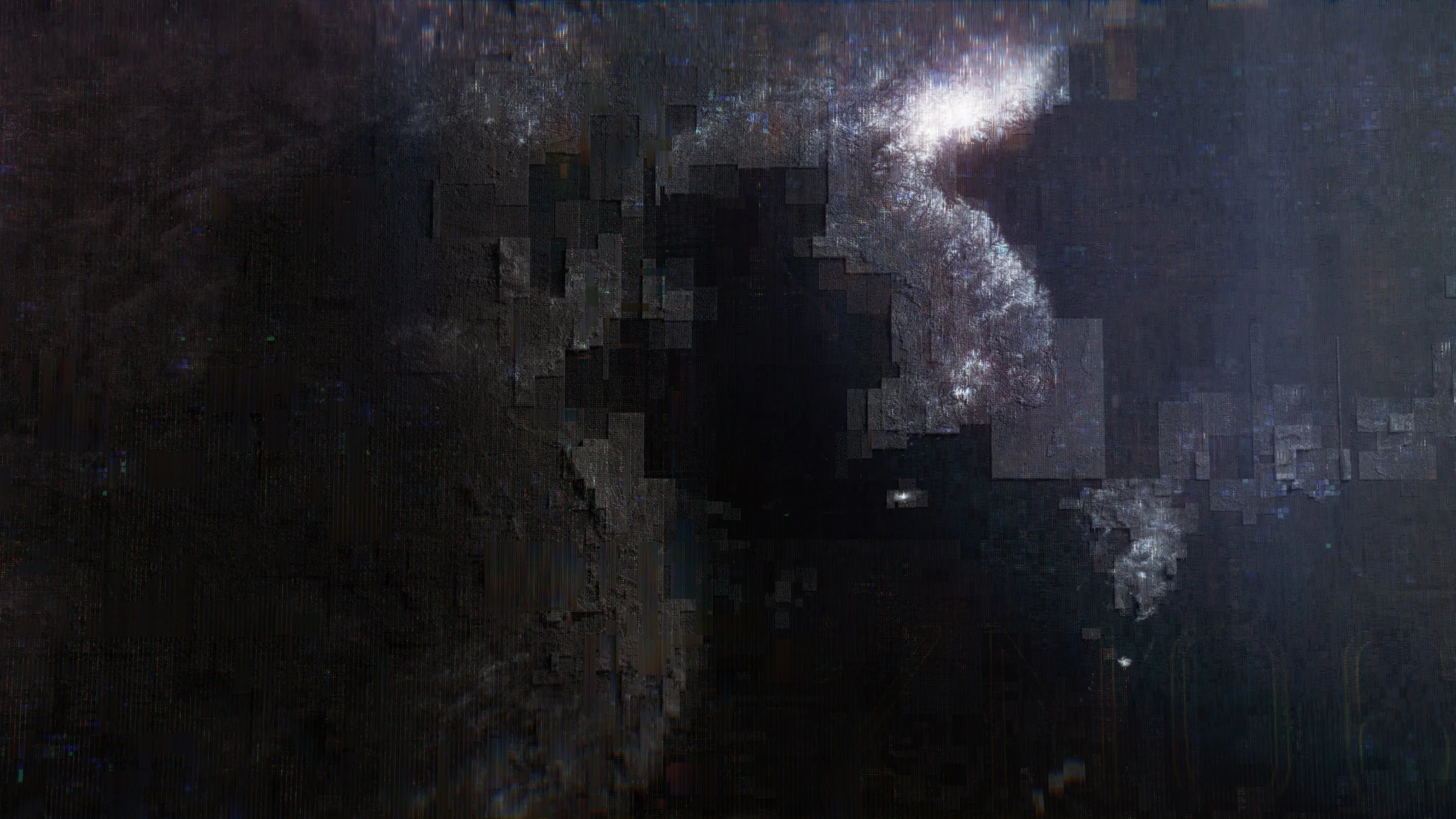
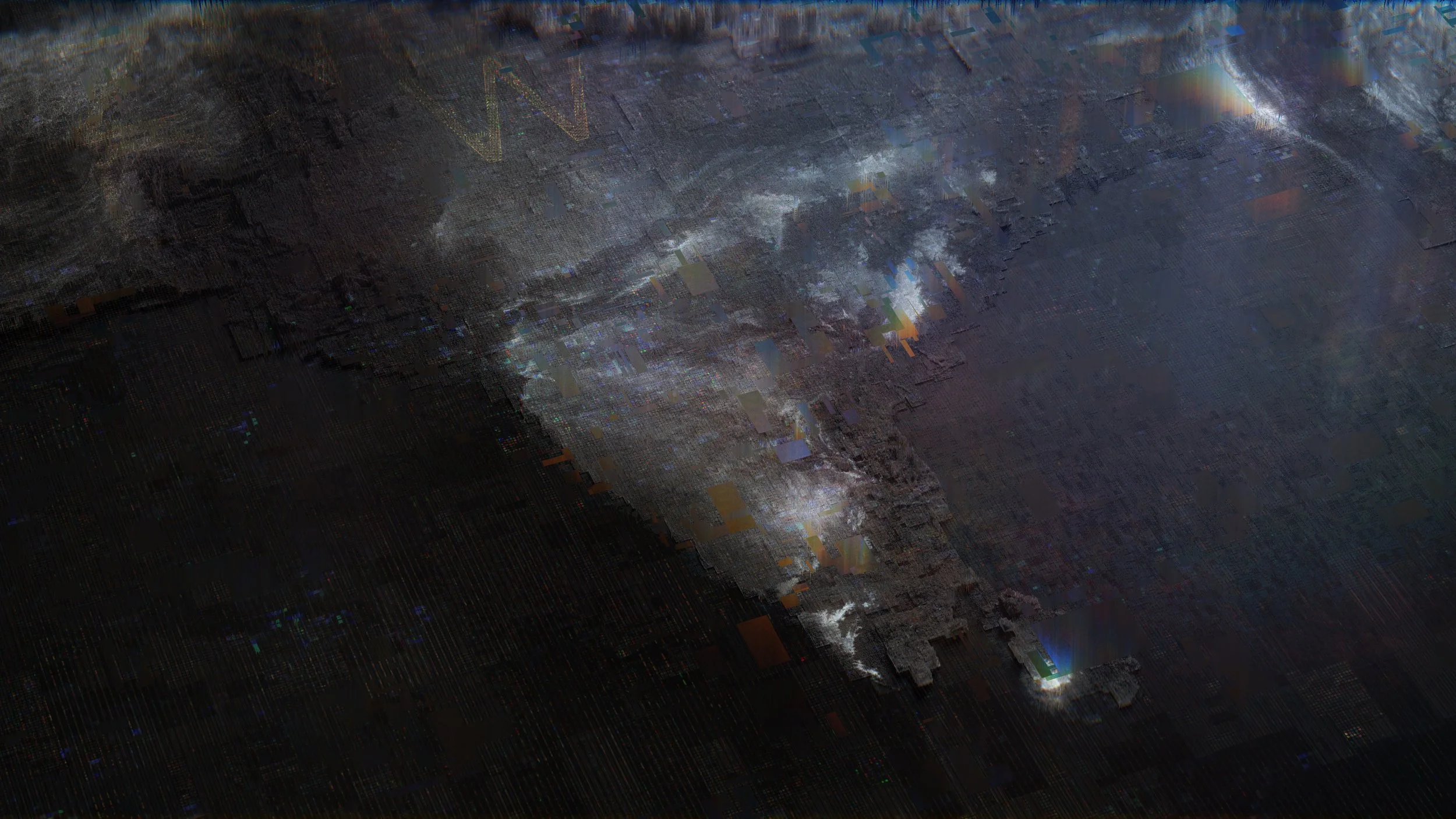
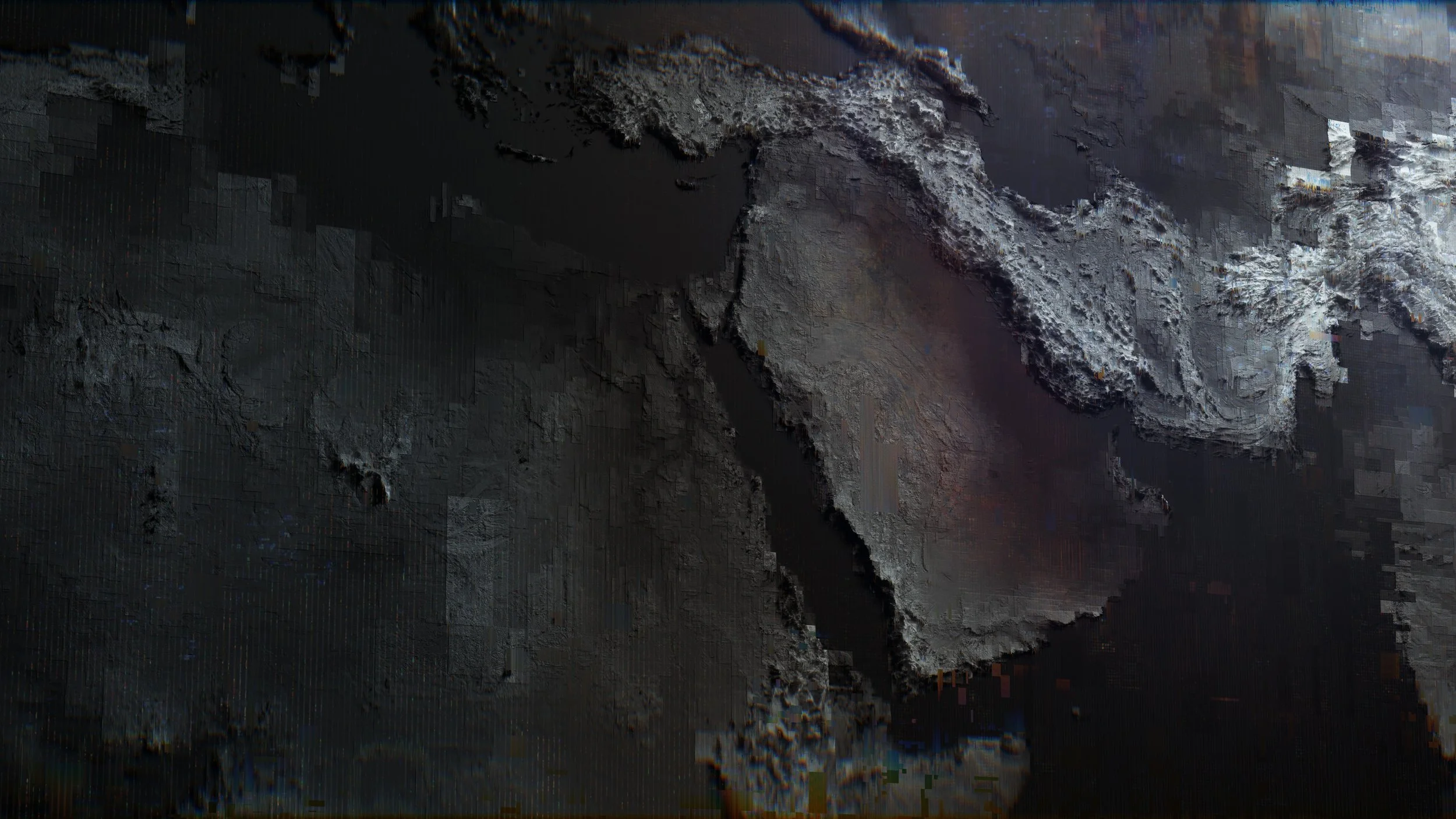
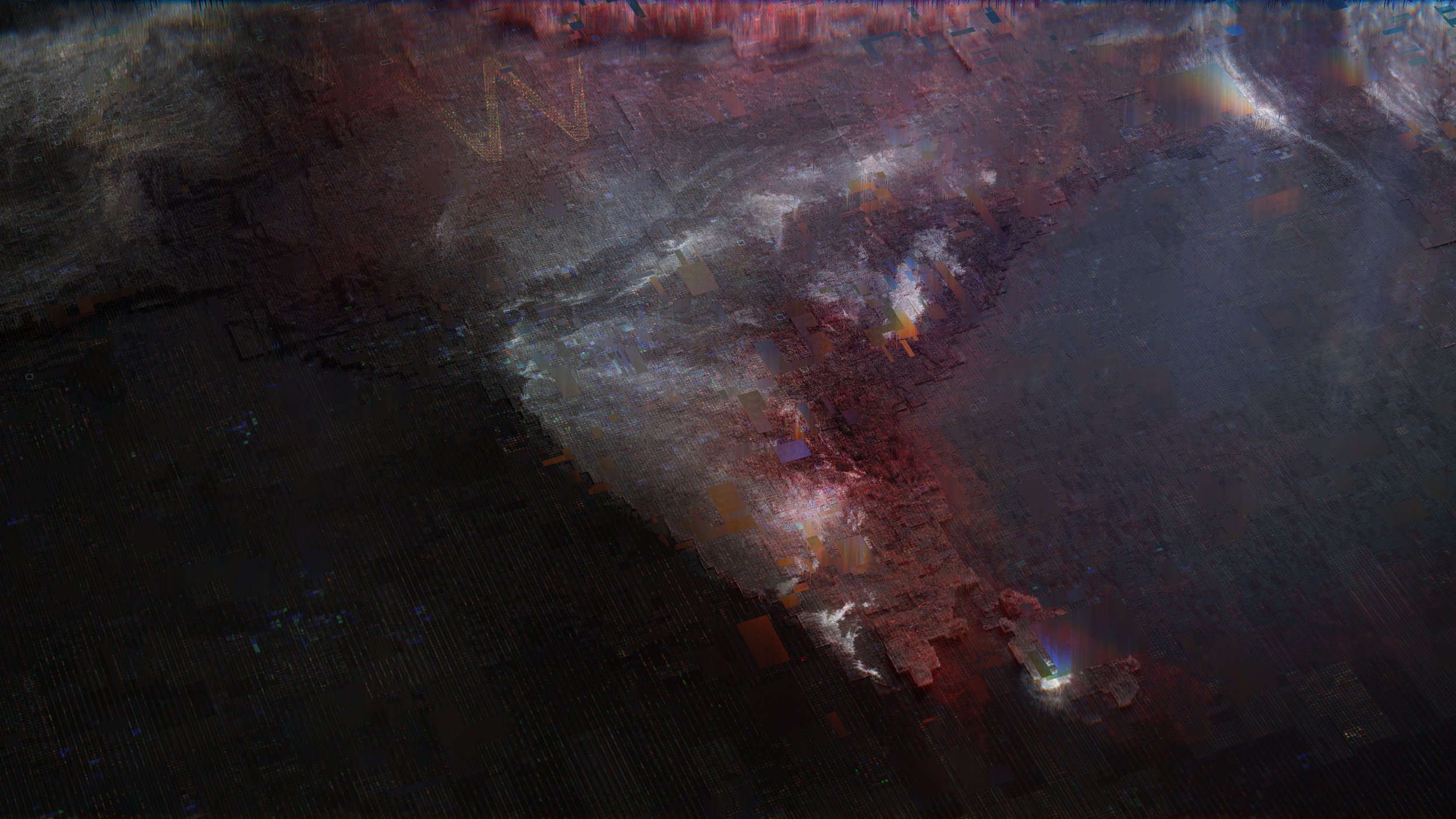
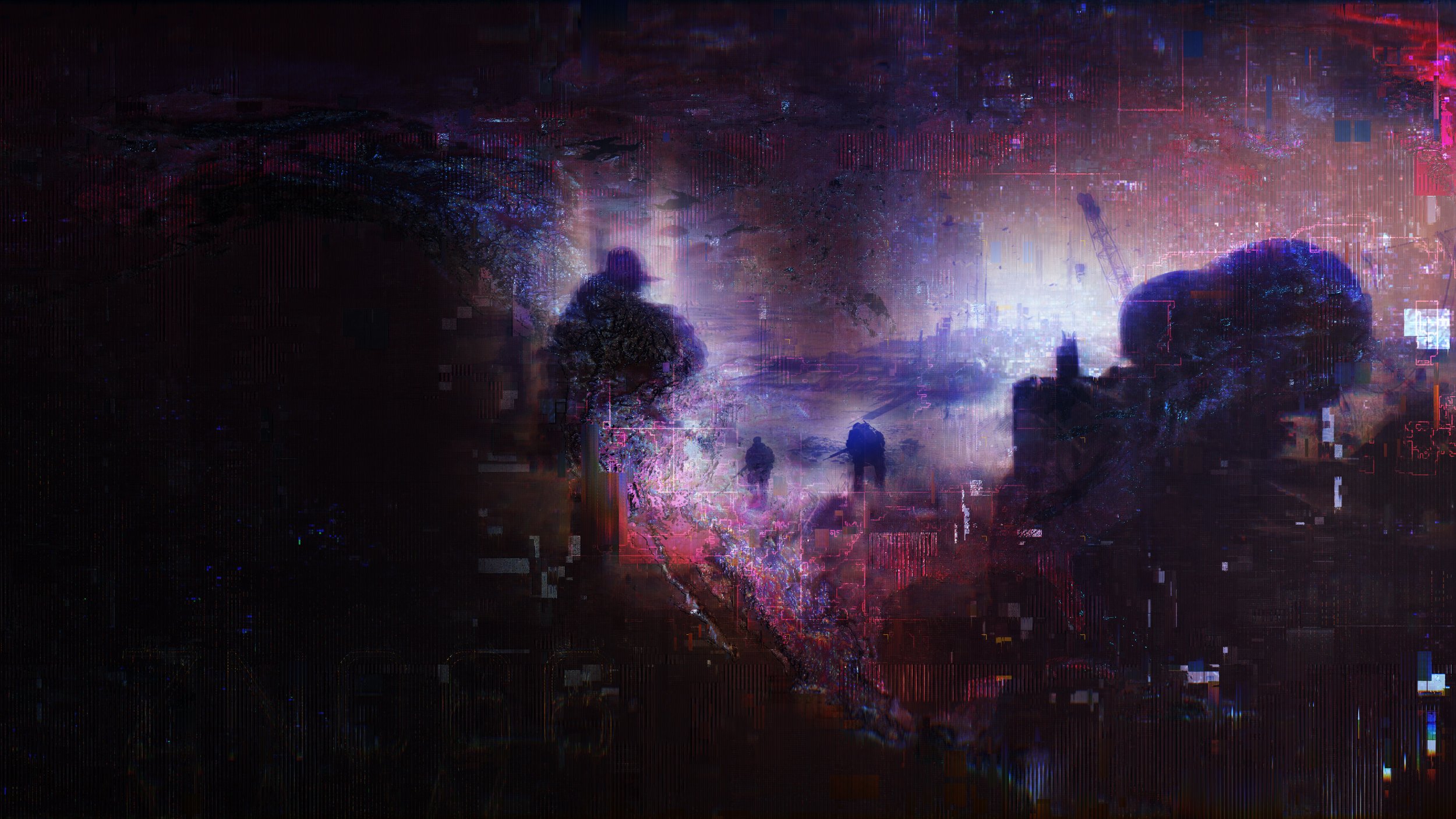
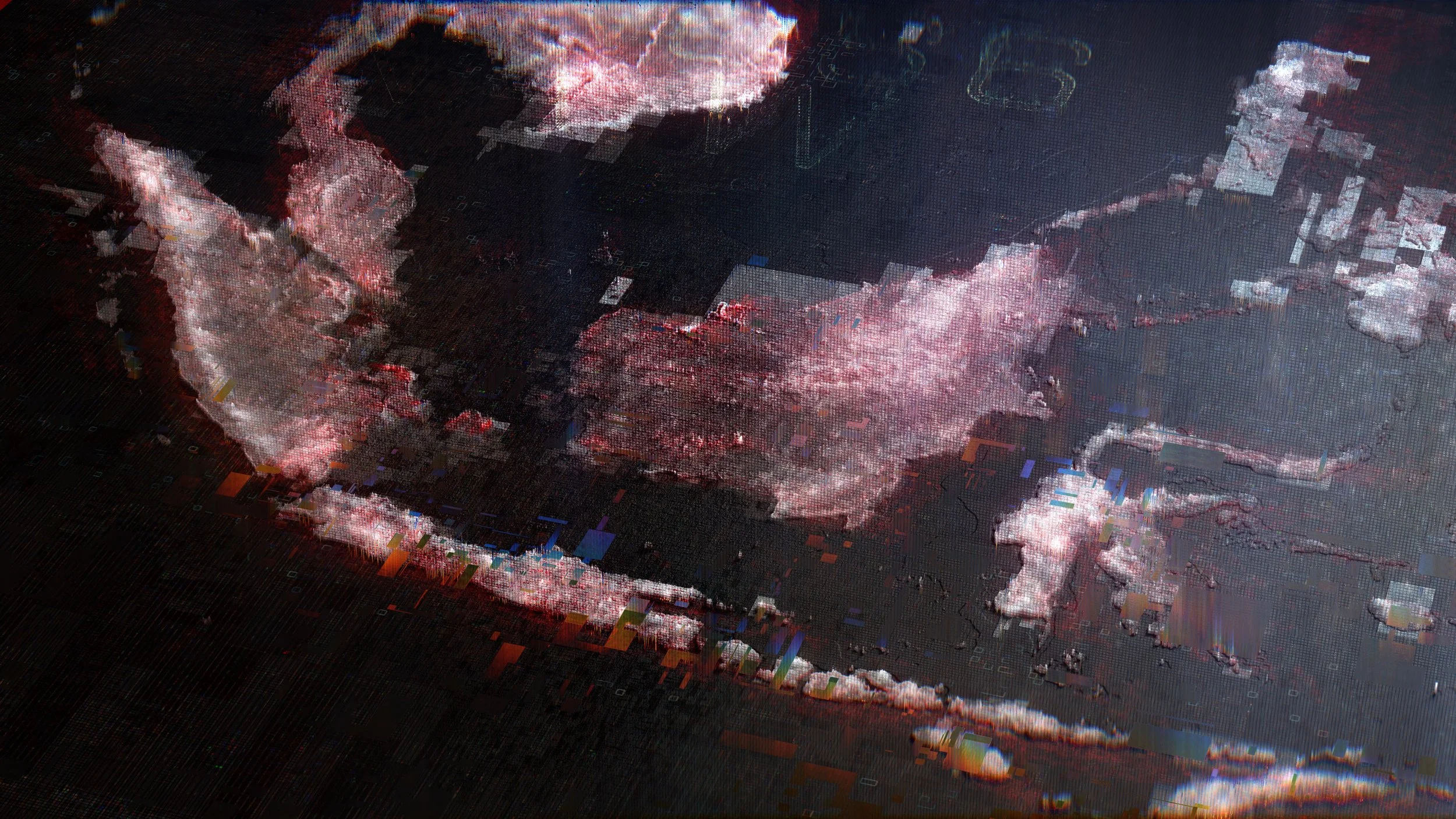
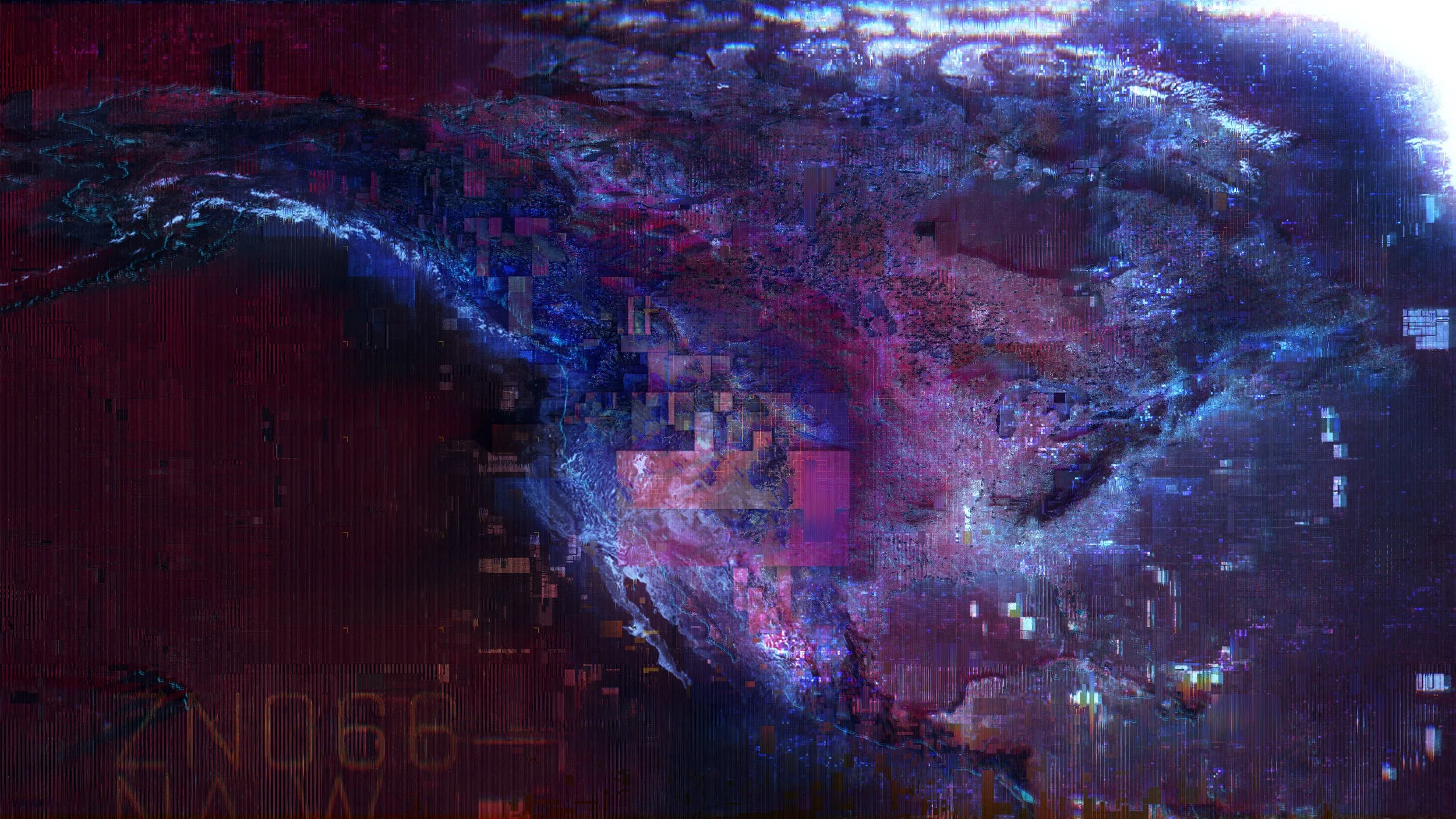
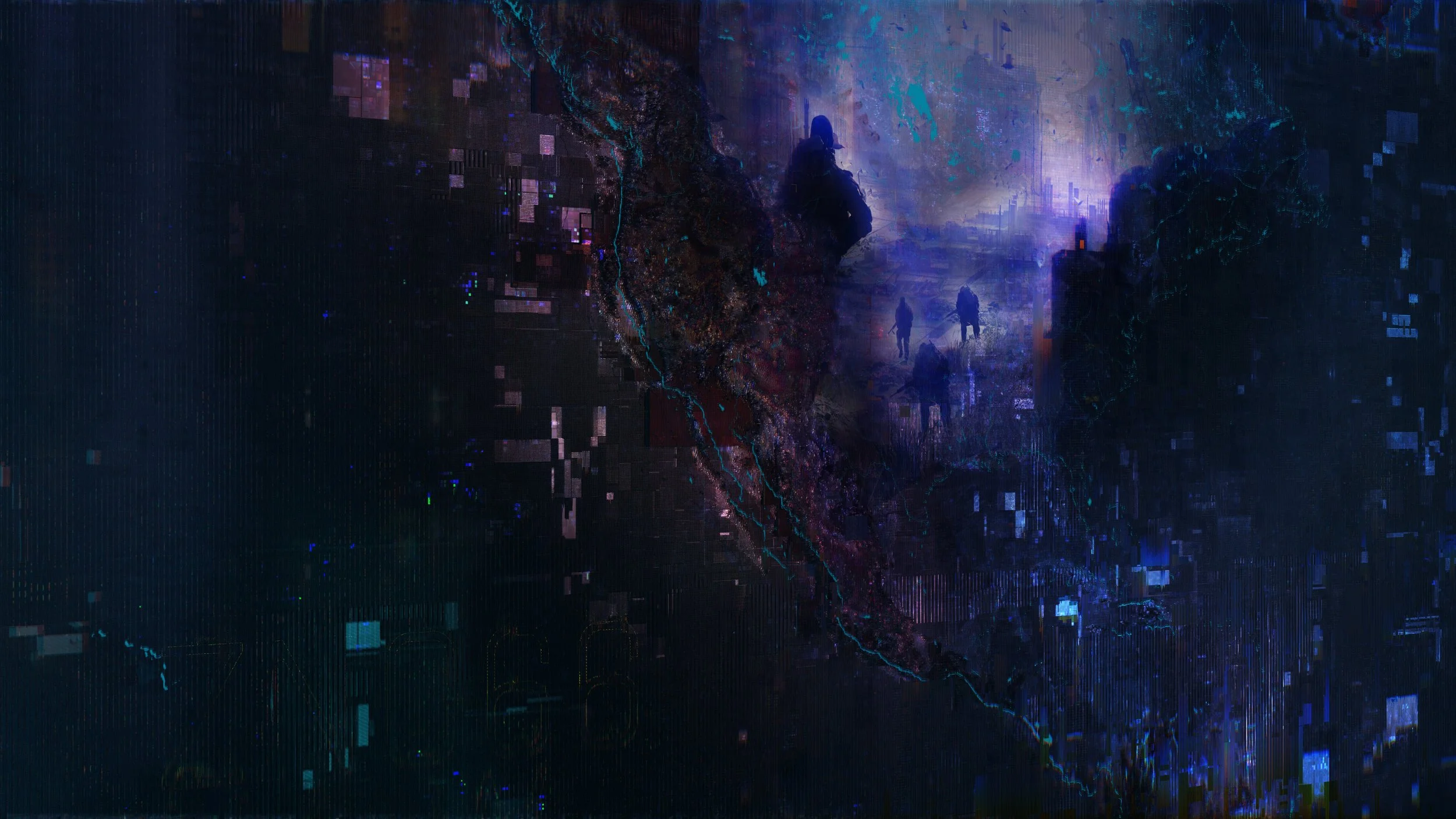
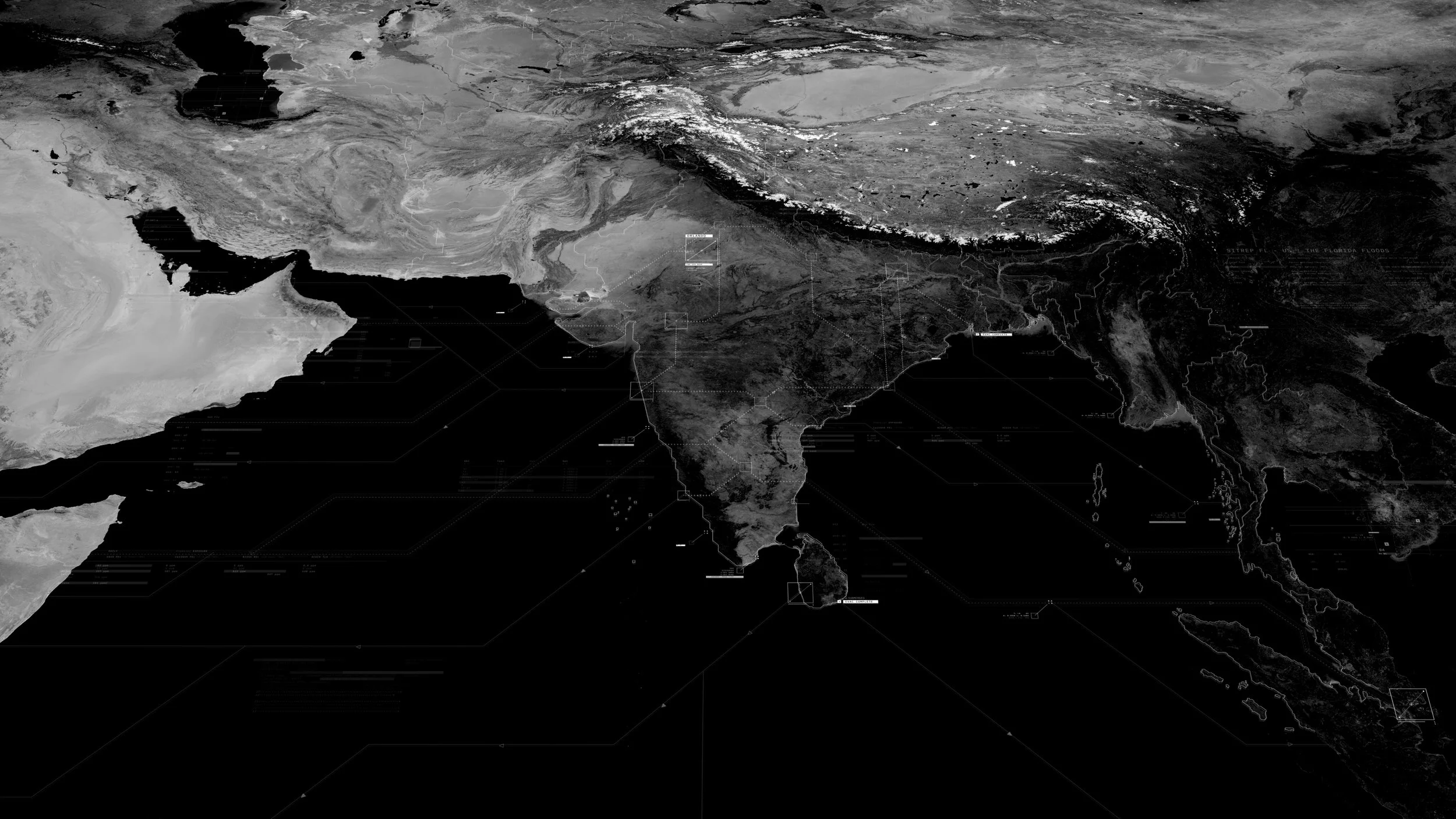
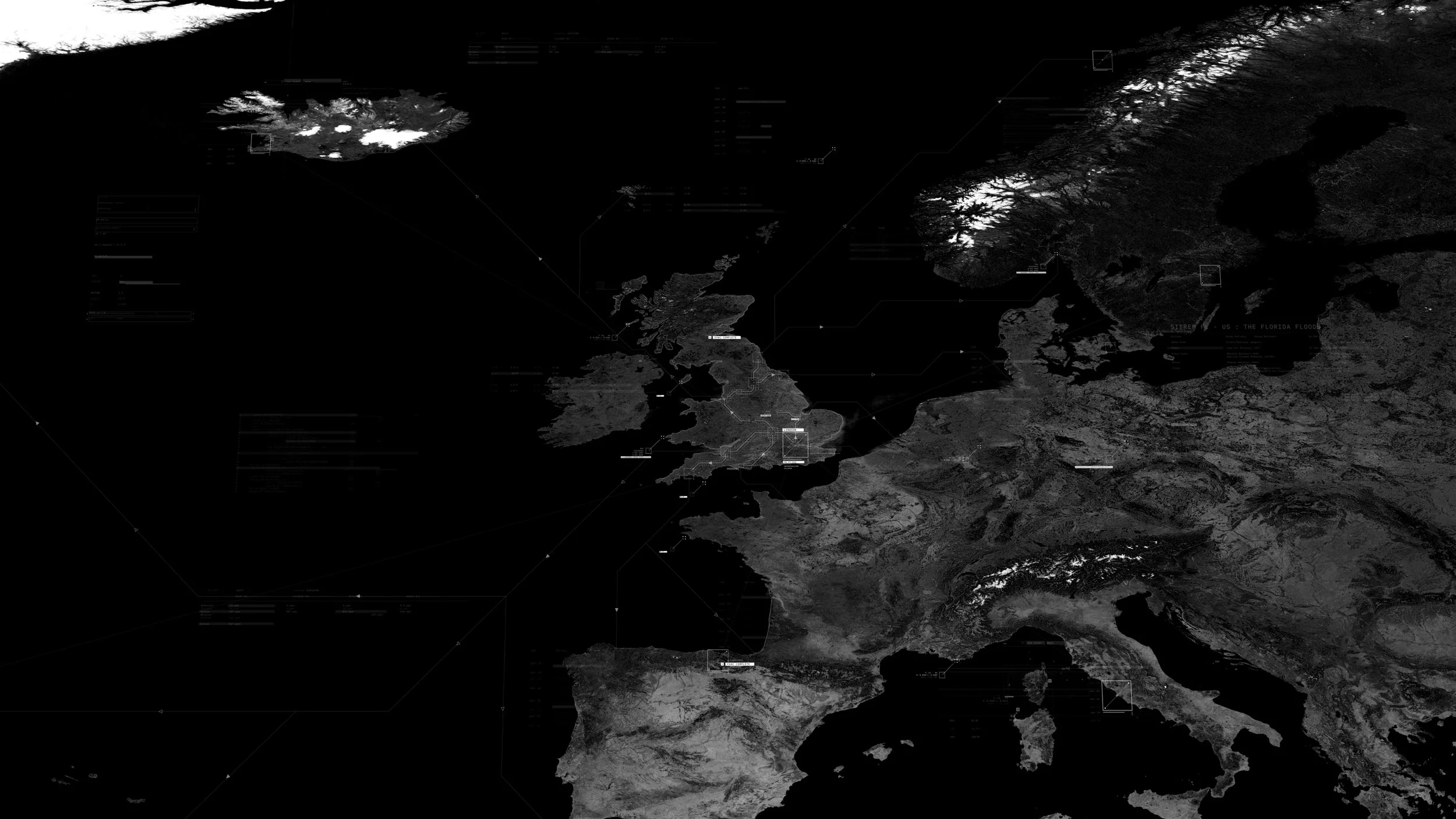
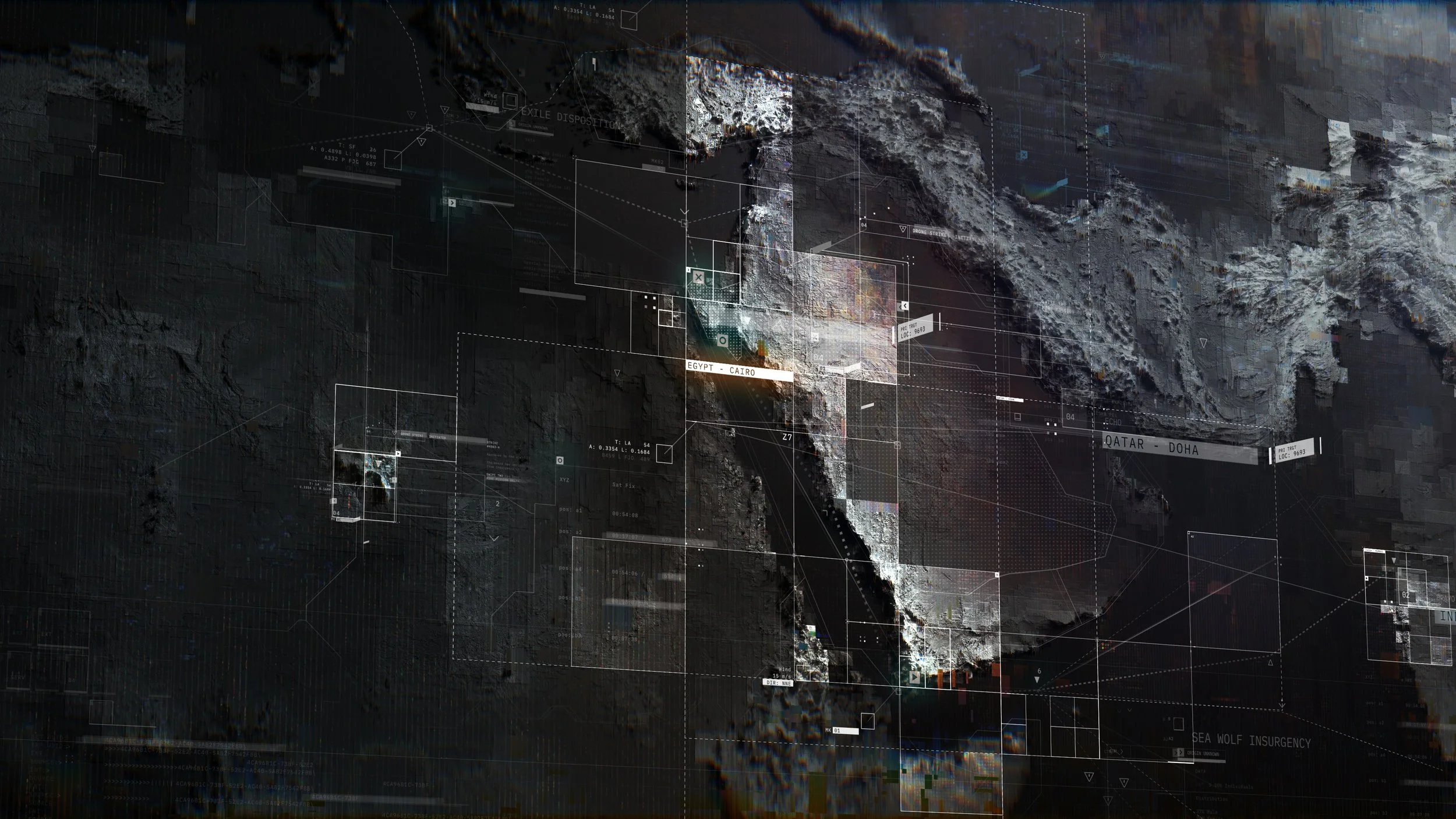
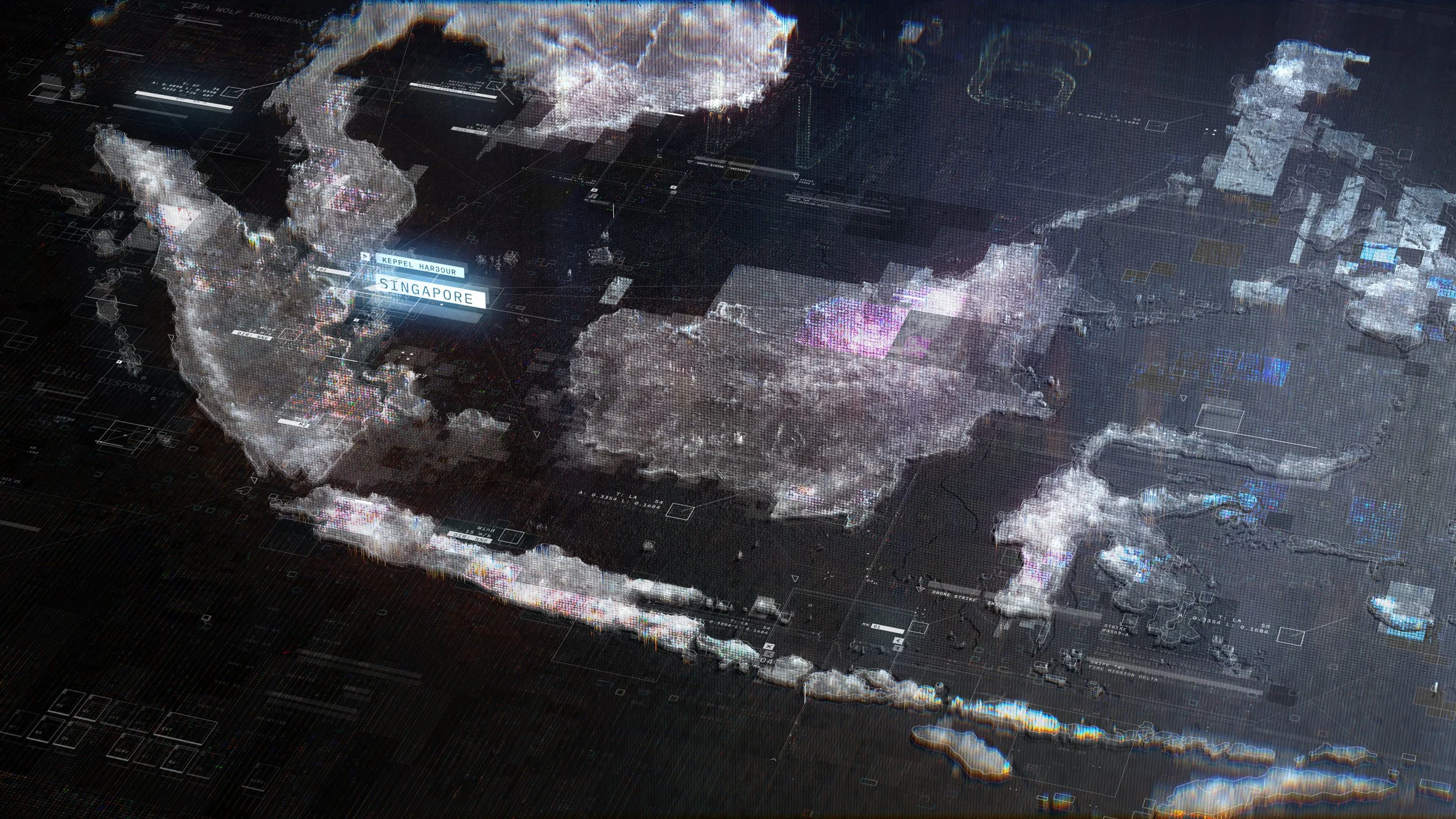
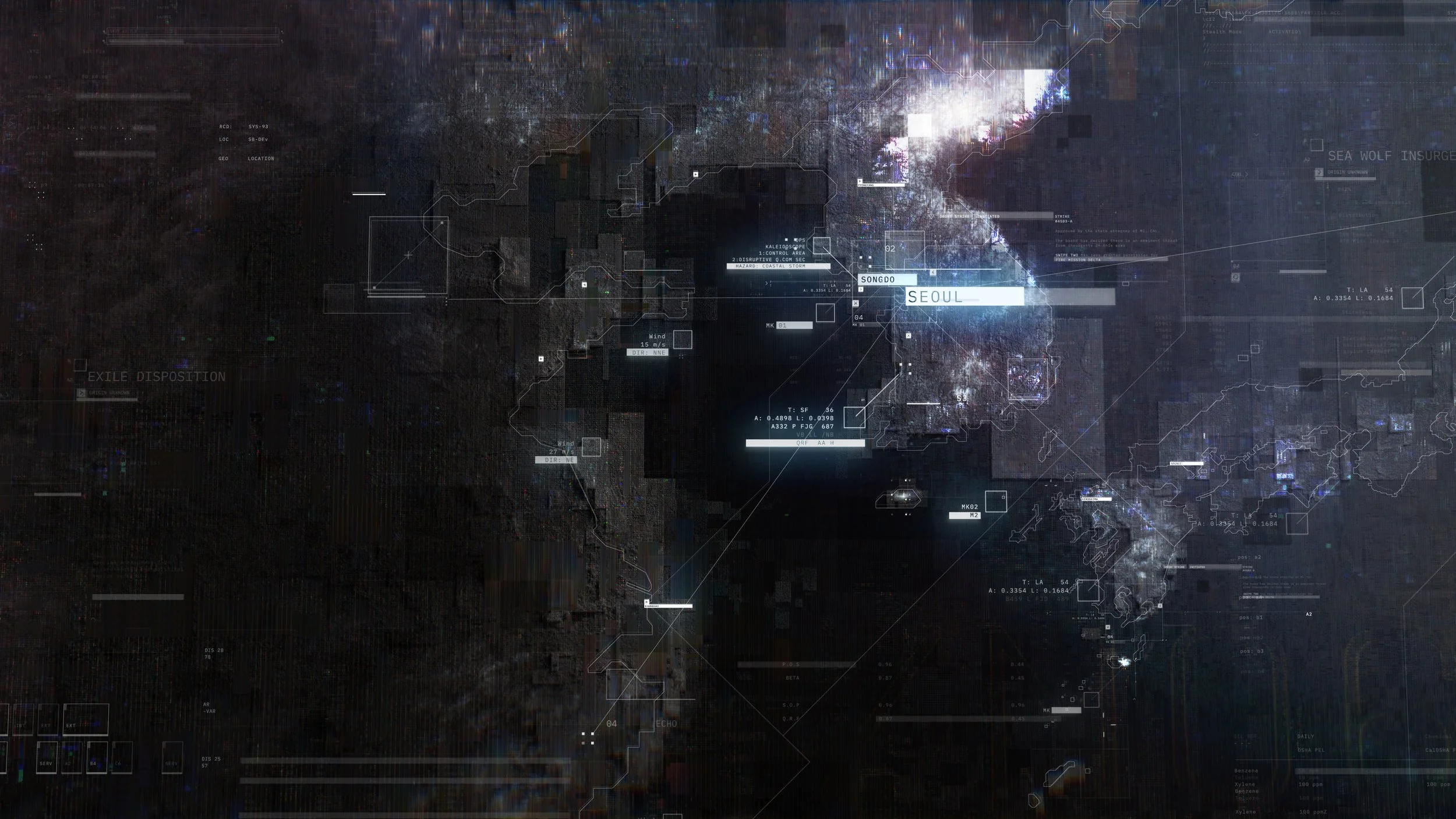
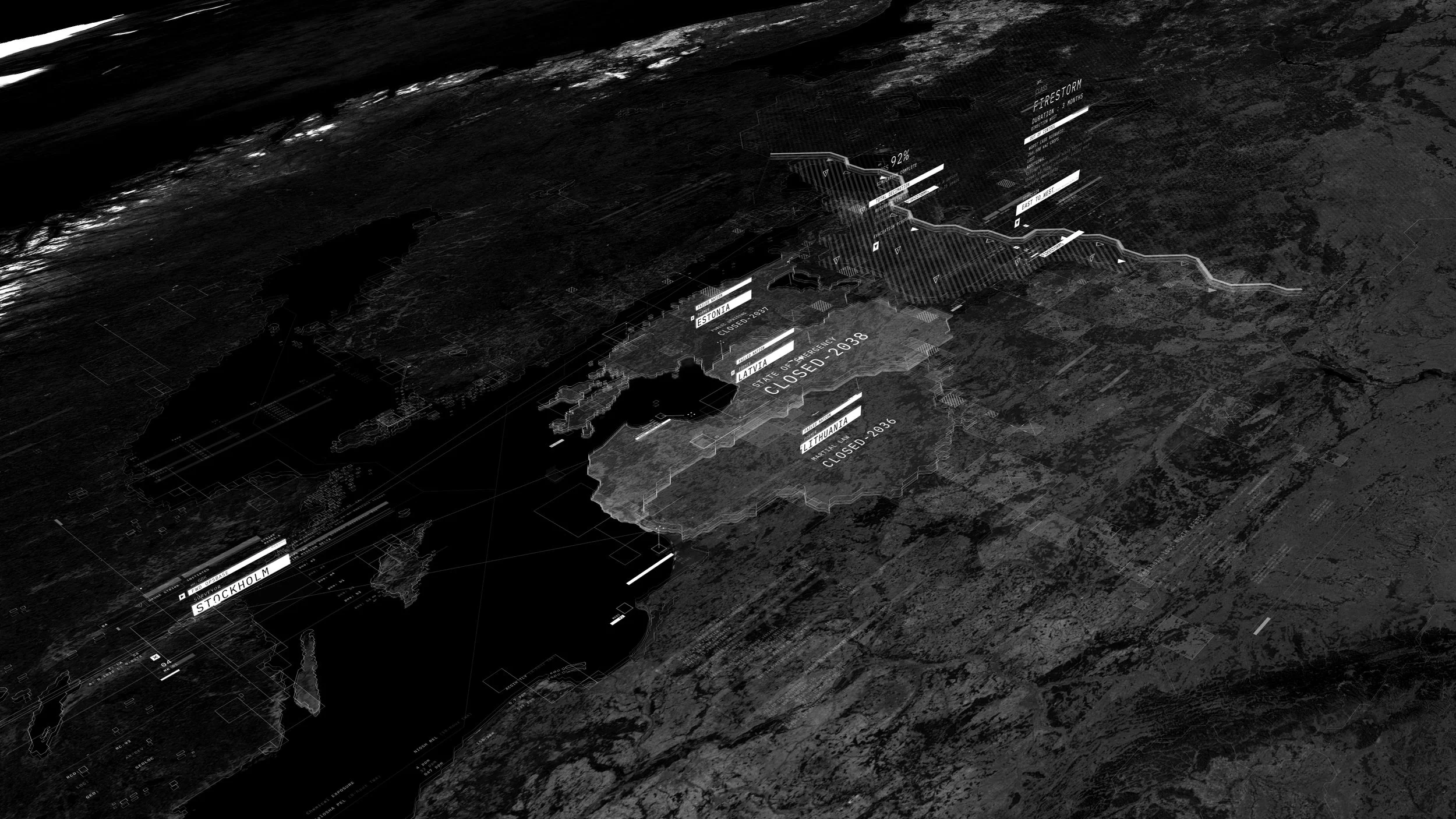
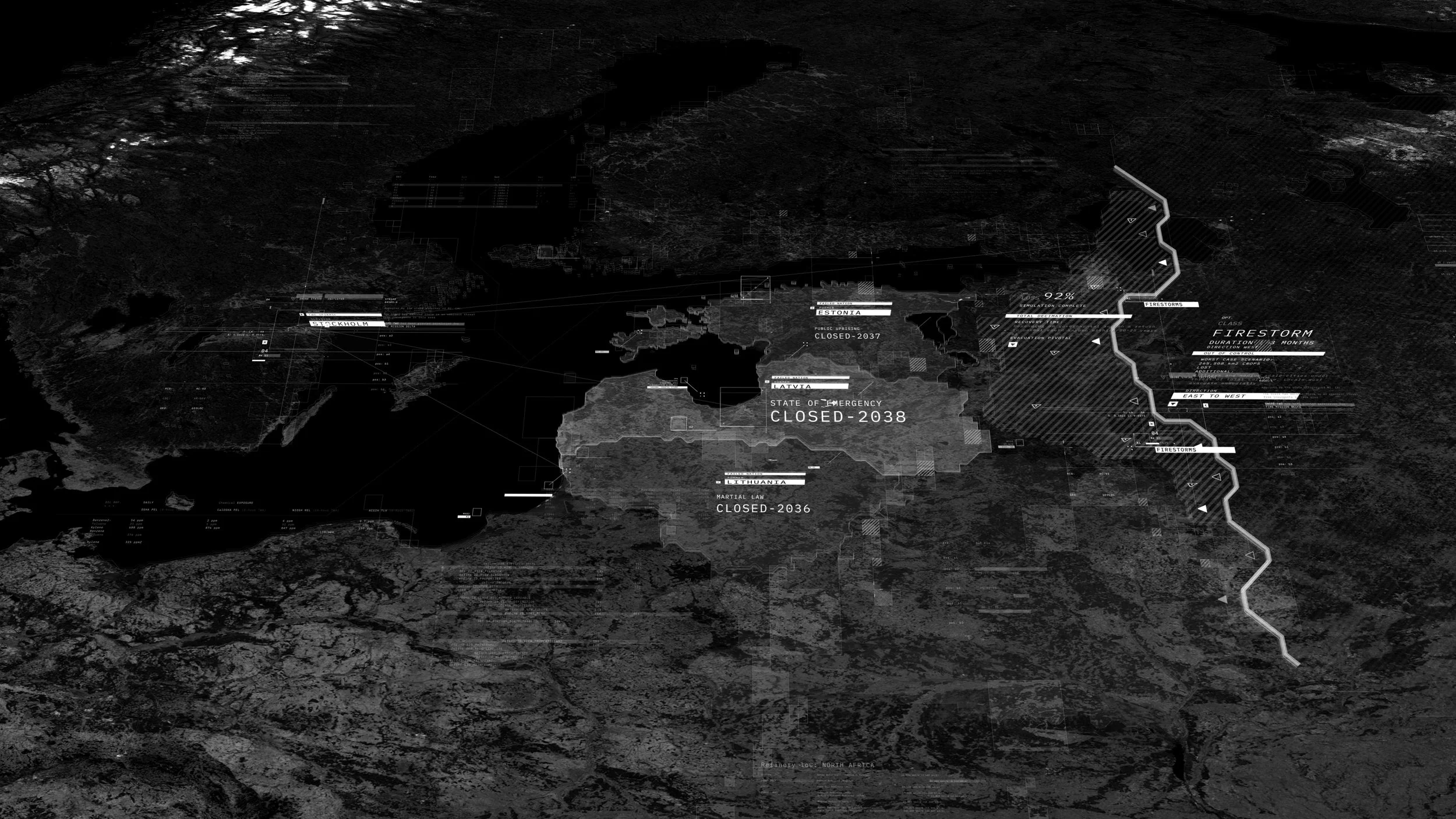
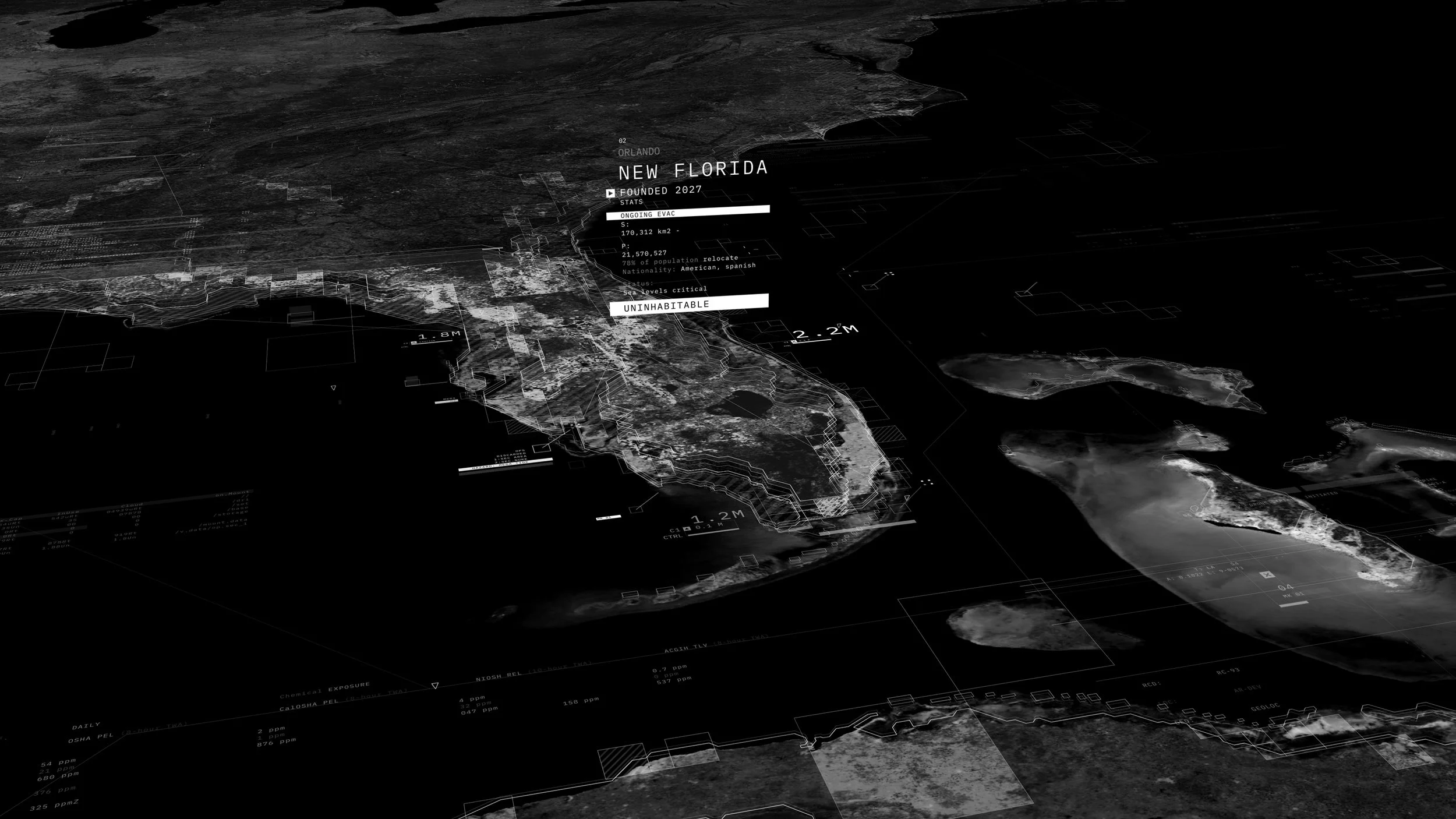
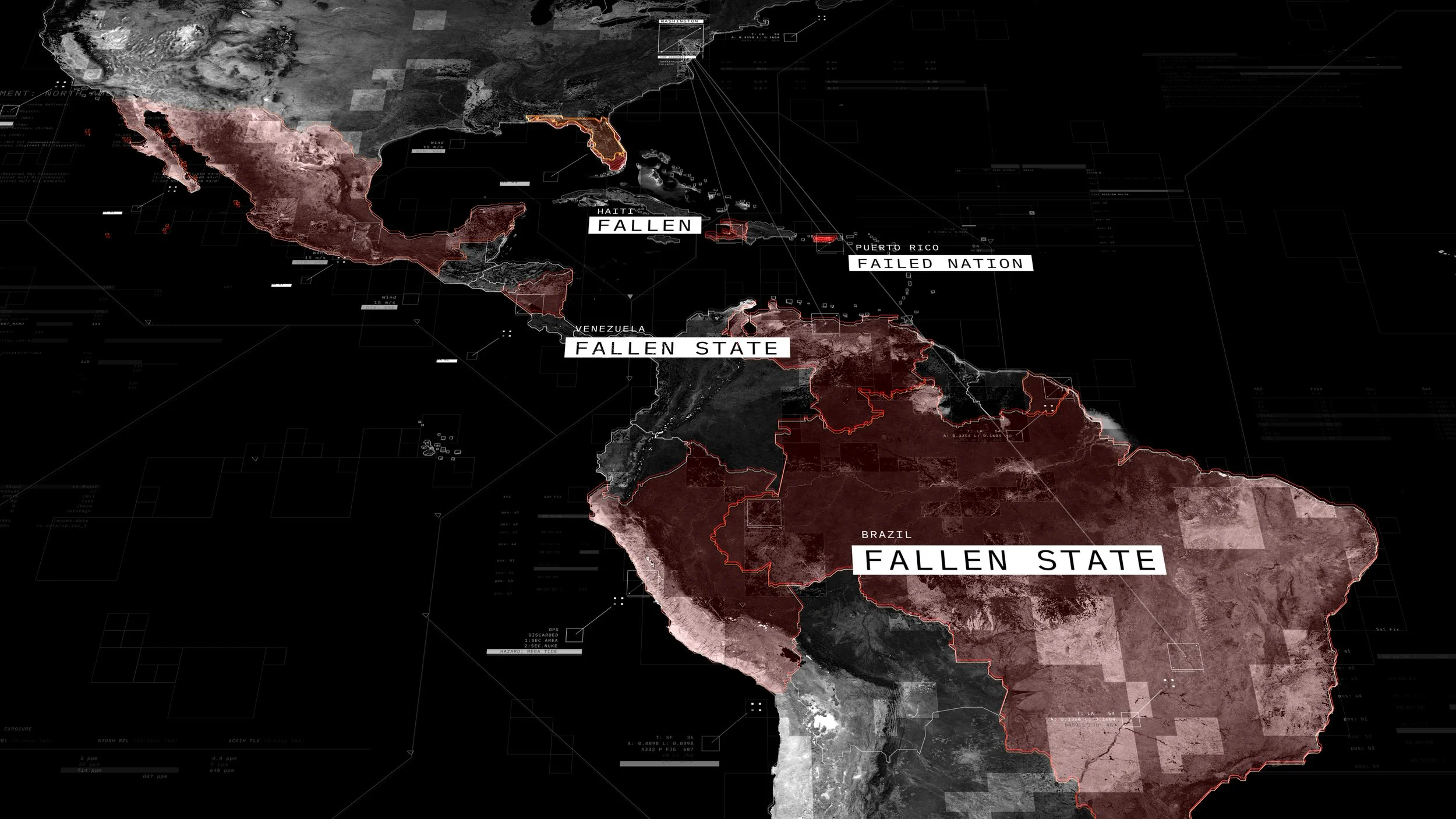
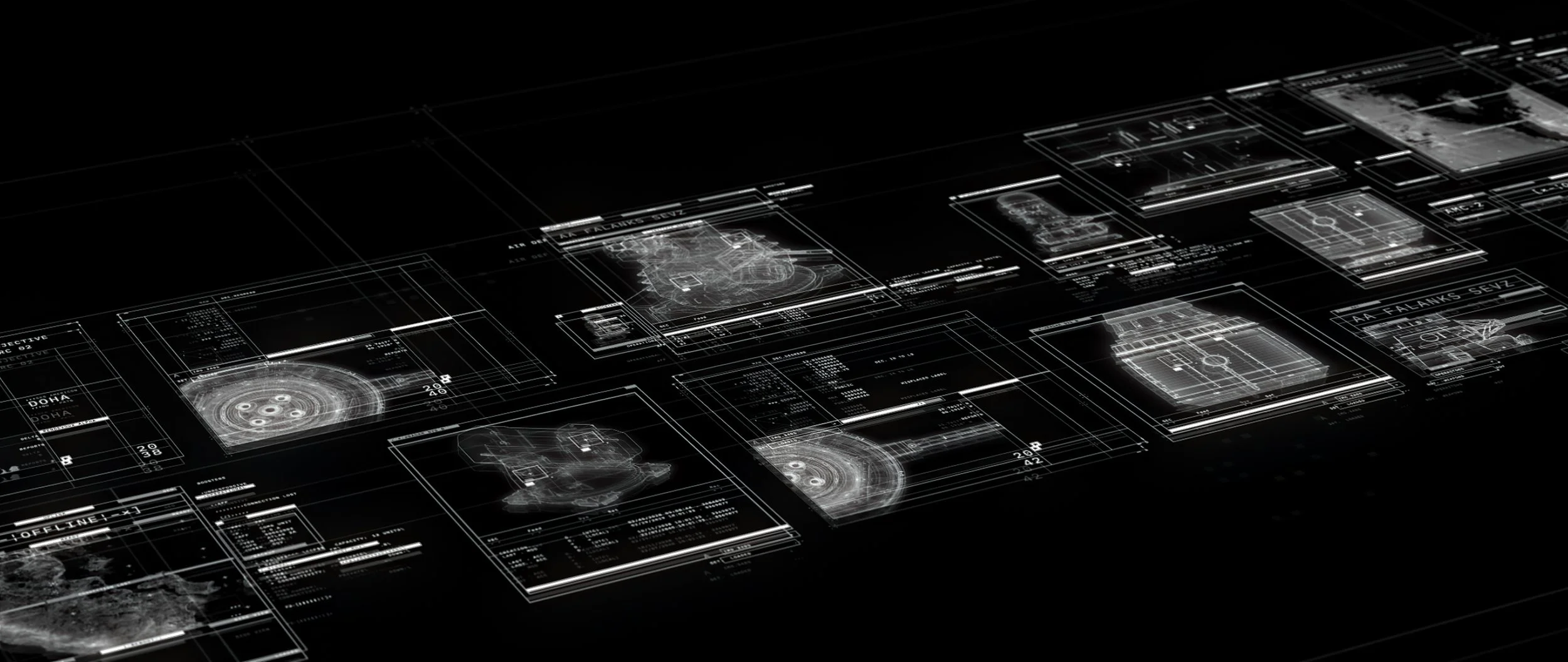
Maps played a central role in contextualizing large-scale events, yet their familiarity posed a design challenge. The objective was to create a visual treatment that felt specific to the digital world of the film while remaining immediately legible.
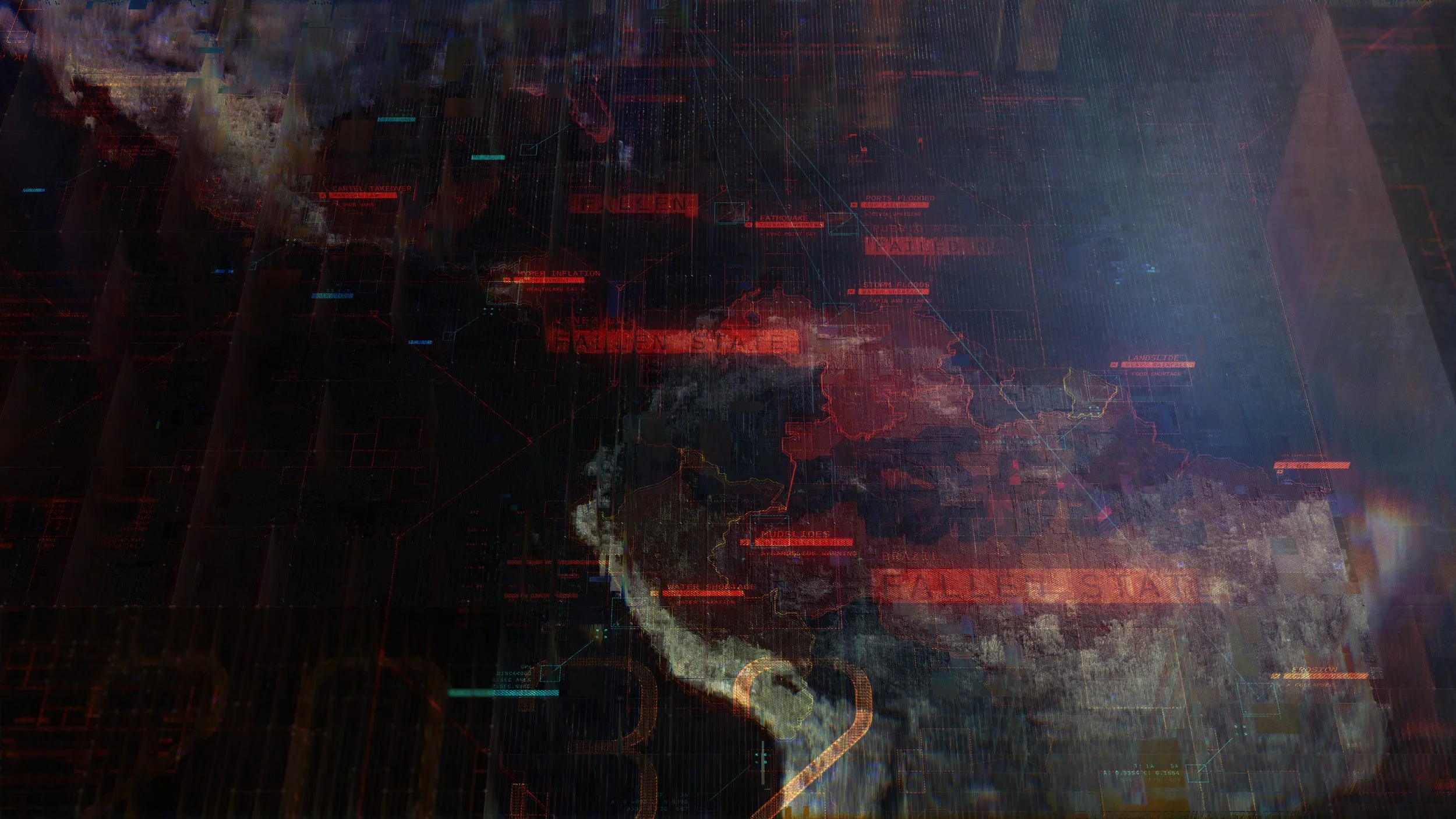
To achieve this, recursive grid techniques developed for glitch imagery were adapted to generate geographic base layers. At a distance, the maps read as recognizable regions. Closer inspection reveals that the terrain is constructed from a subdividing system of blocks, aligning geographic representation with the broader system logic of the Network and its content.
03.2 Role of UI
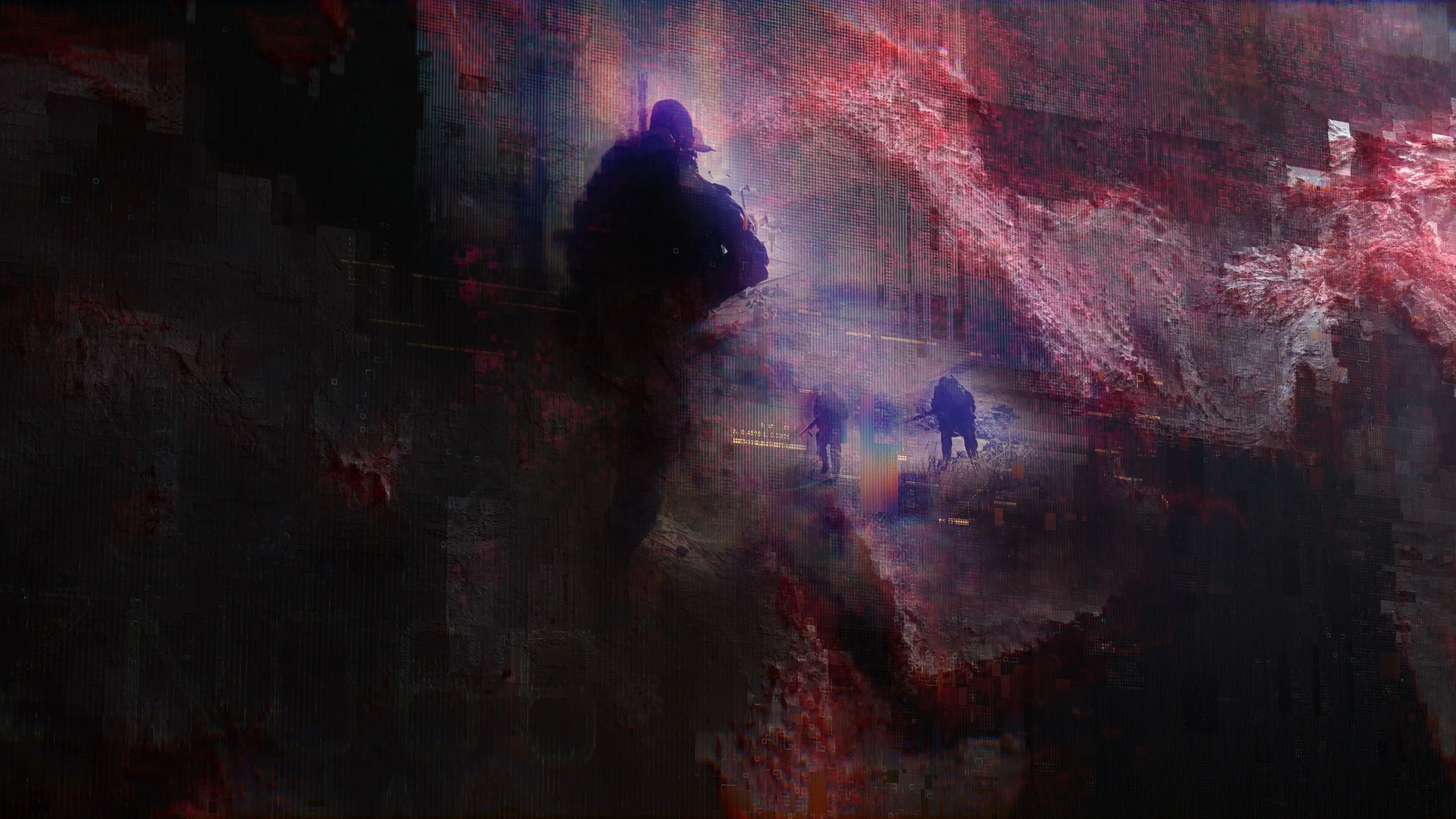
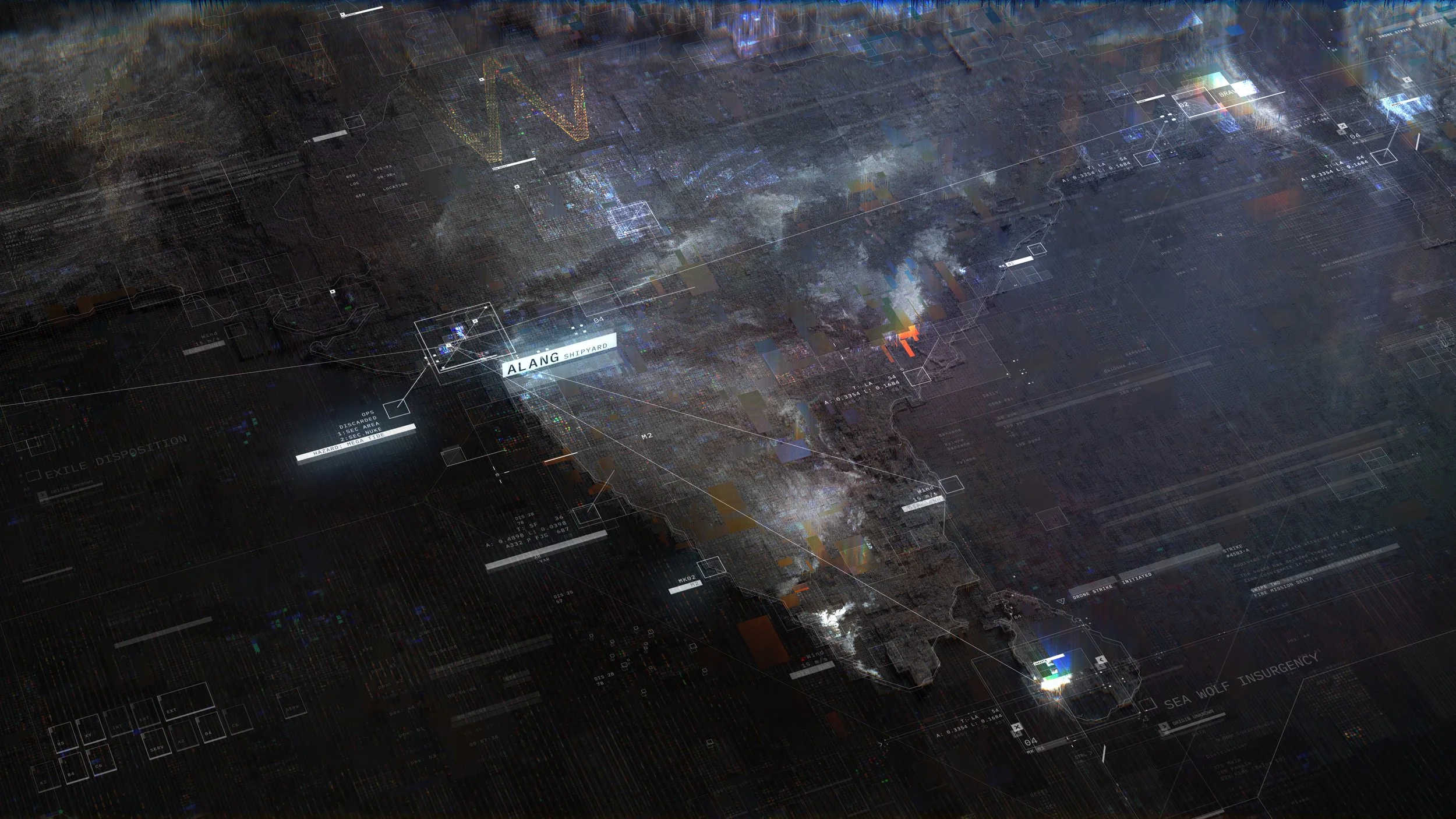
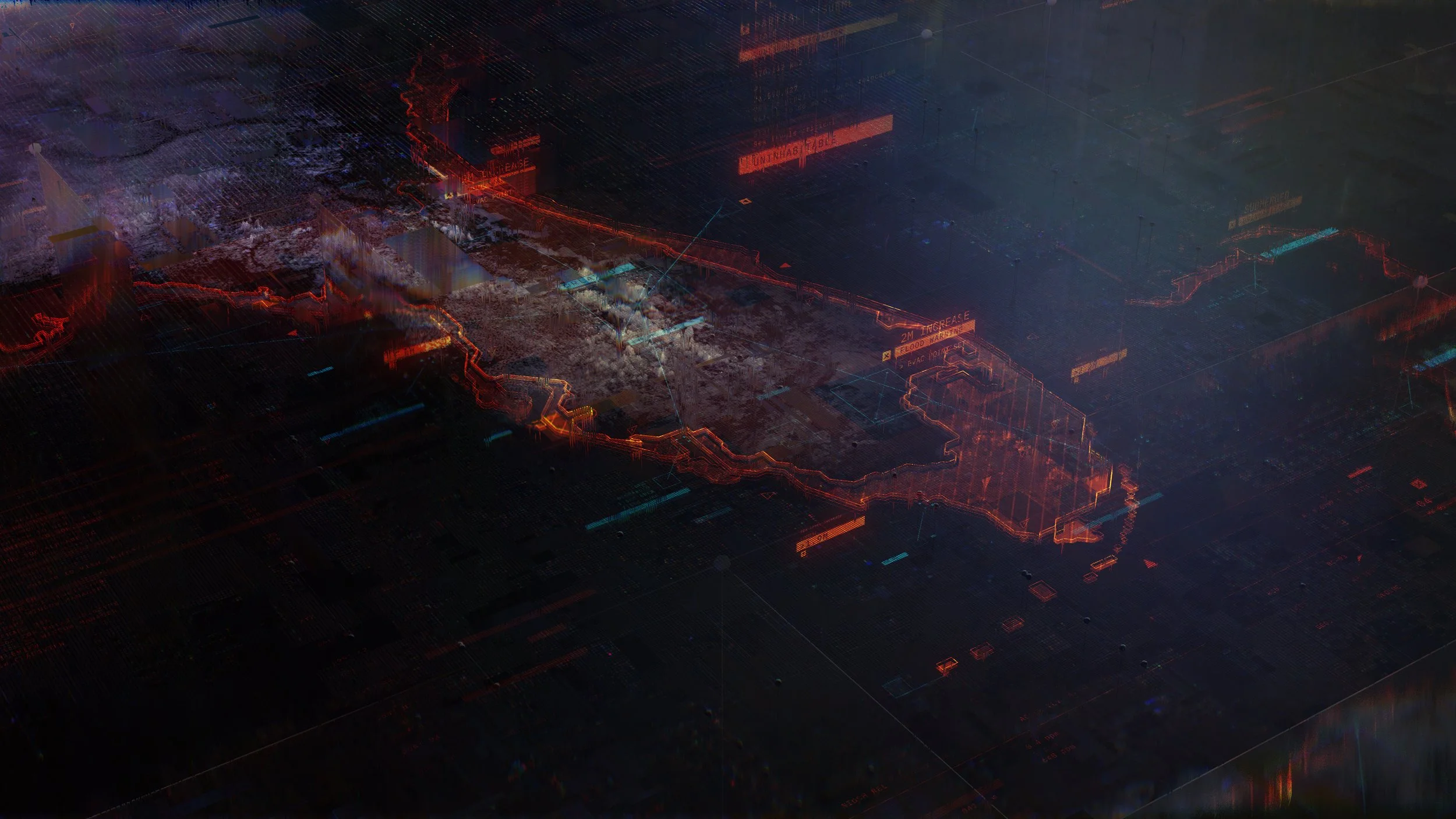
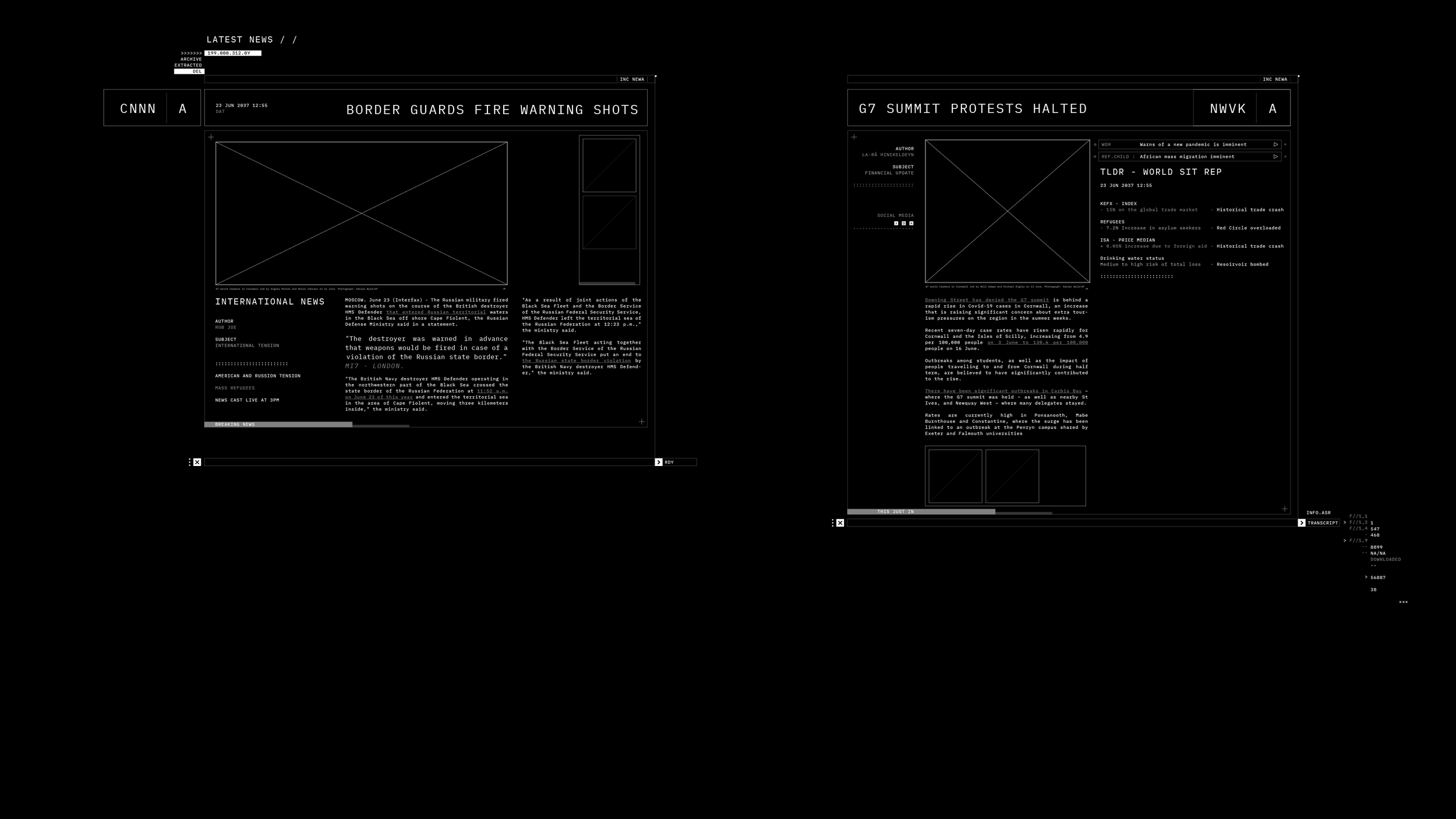
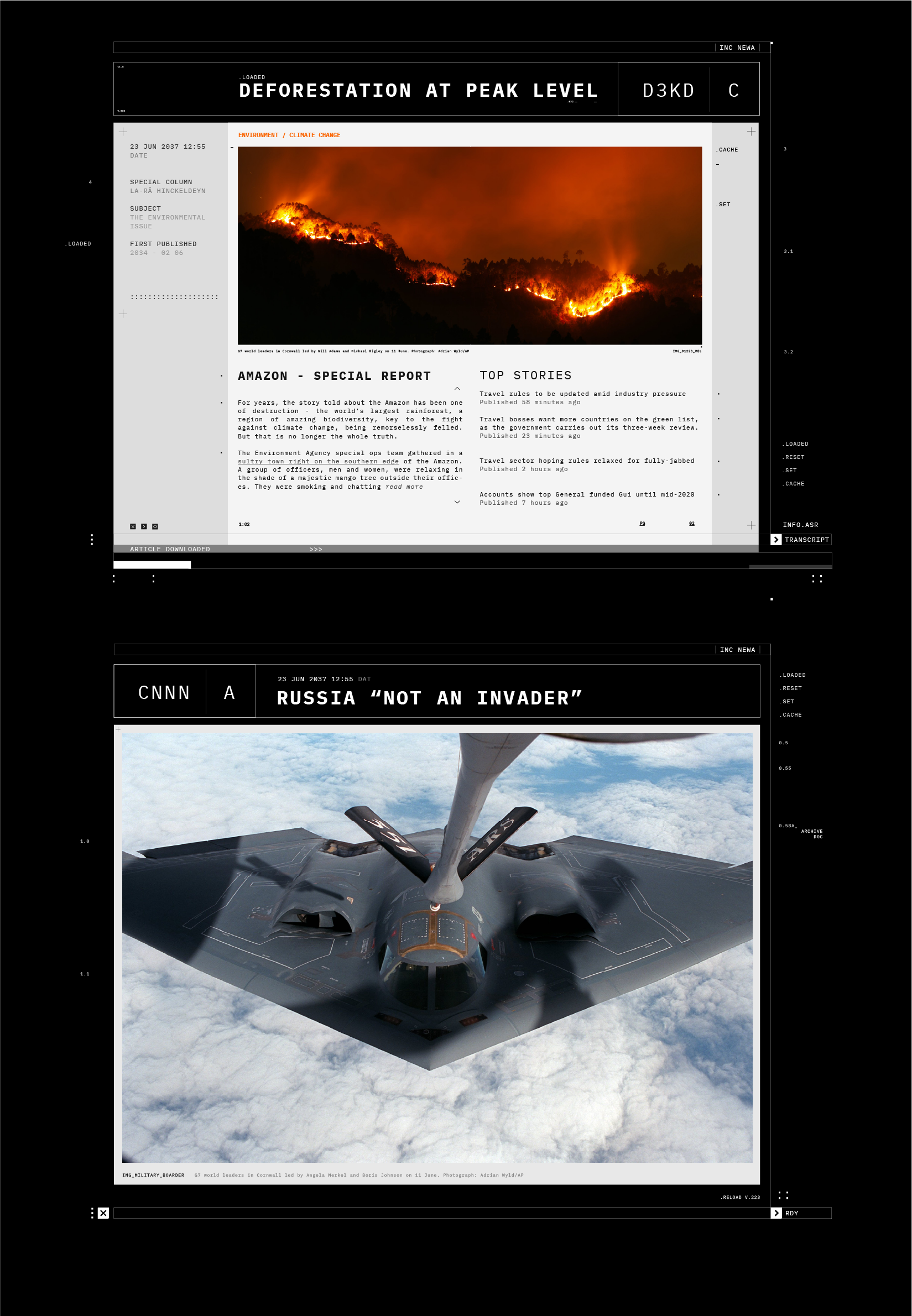
Interface elements supplied context for major narrative beats while contributing density and texture to the compositions. Data relating to sea level rise, shipping routes, evacuation paths, infrastructure, situation reports, and weather systems was interwoven with military objectives, terminal readouts, waypoints, intelligence fragments, and mission briefings.
Much of this information is intentionally peripheral on first viewing. For viewers who pause or revisit the film, these layers reveal additional narrative depth, with the UI carrying deeper meaning beyond decorative ornamentation.
03.3 Interface Within the Network
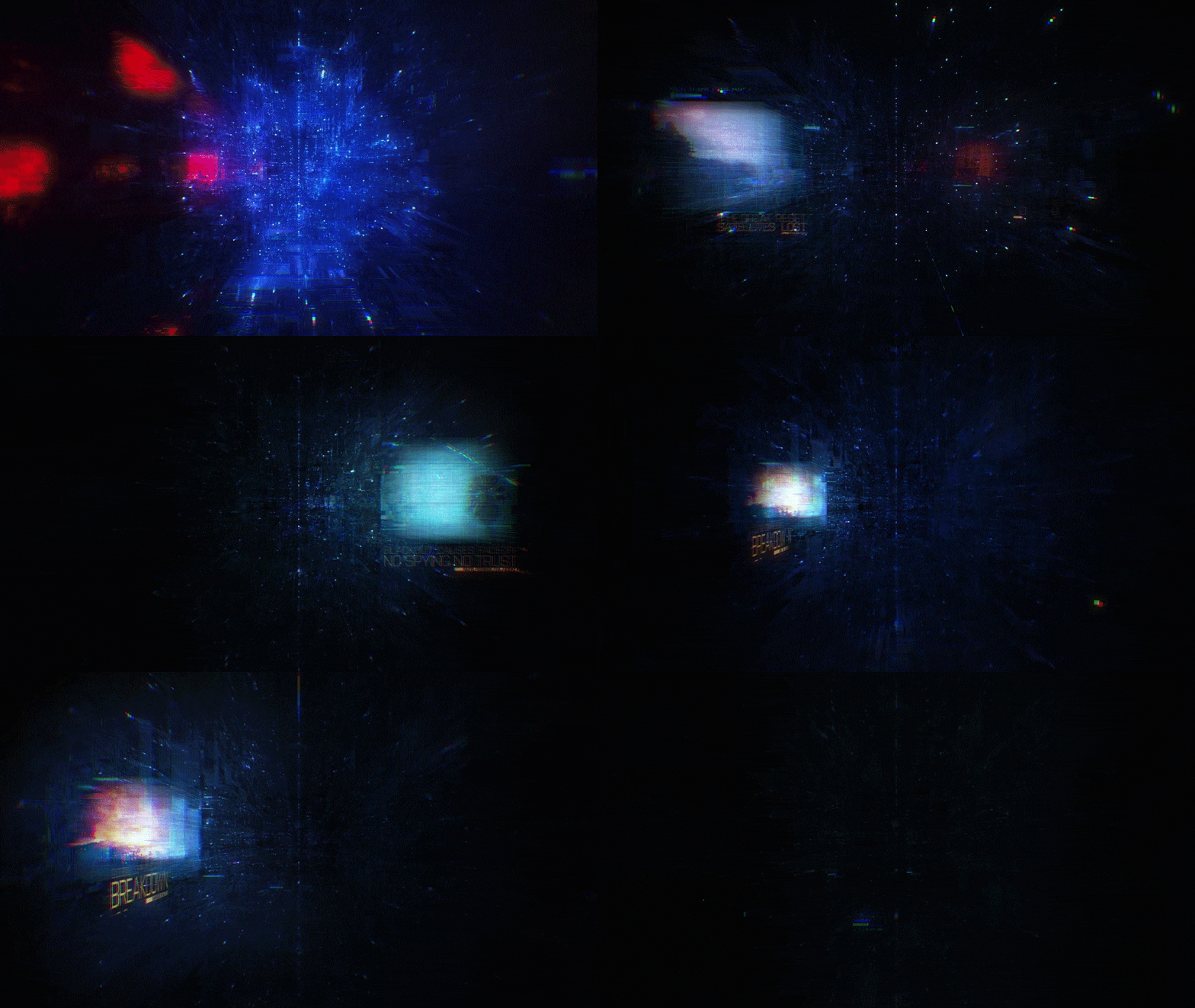
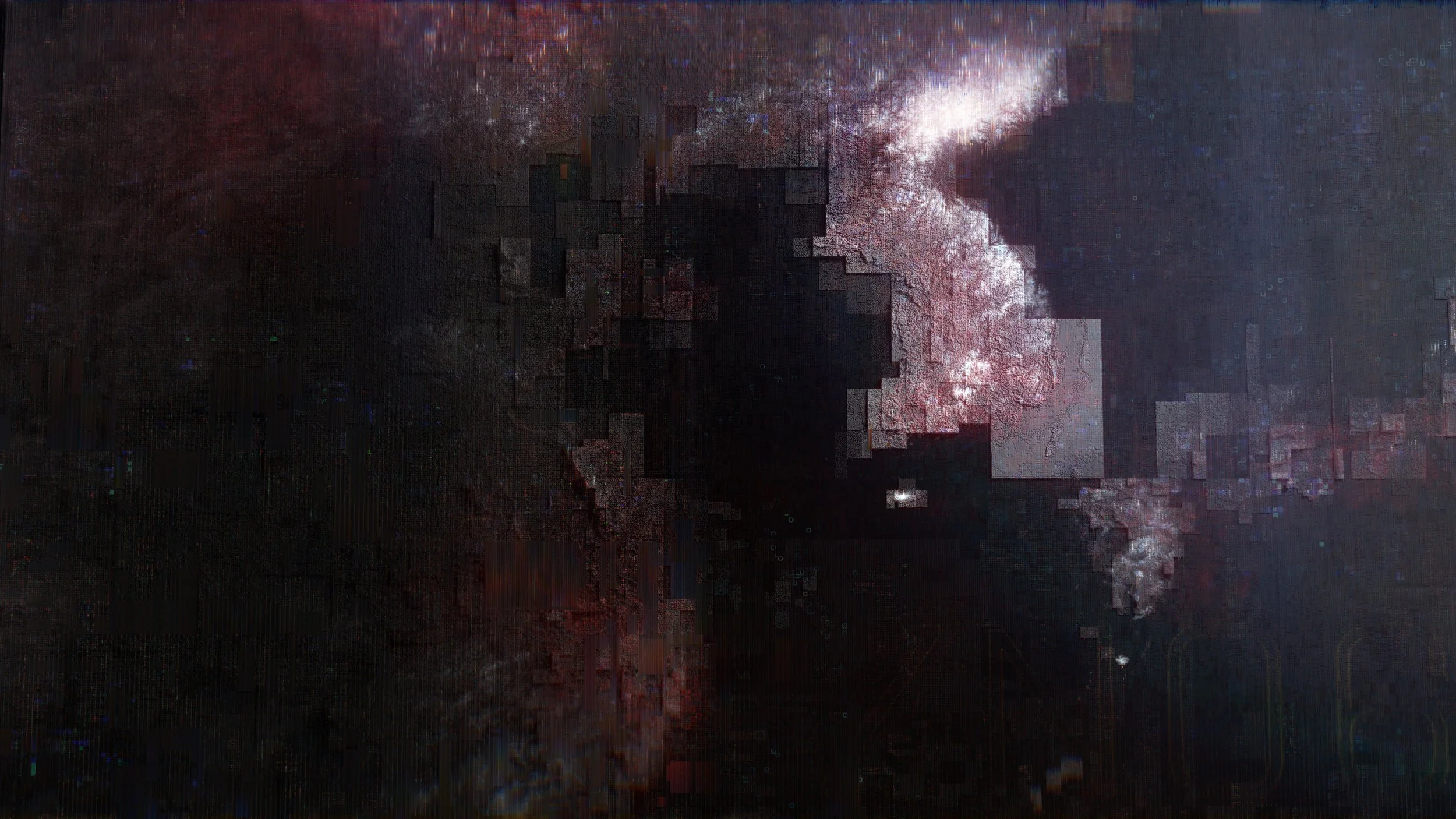
The Network required its own UI grid system to organize glitched footage, voxel structures, and embedded content. These grids provided a secondary graphic layer through headlines, tags, and timestamps, reinforcing narrative progression without interrupting larger visual systems.
As the story reaches the global blackout, the interface degrades in parallel with the Network. Grid systems fracture, information drops out, and structure gives way to absence. This breakdown mirrors the collapse of communication infrastructure depicted in the narrative, enabling UI behavior to reflect shifts in the story progression.
03.4 Typography + News Headlines
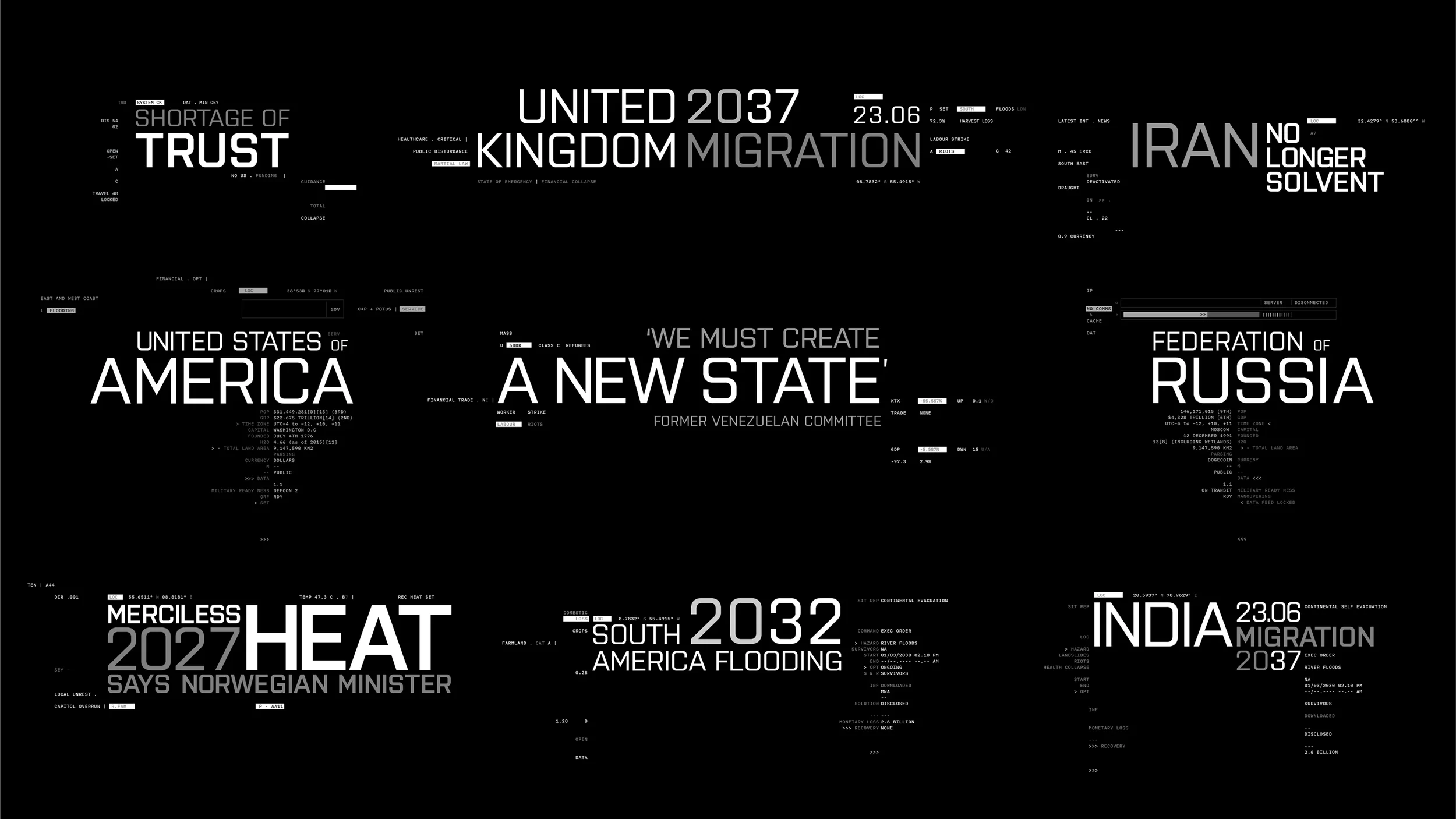
Headline typography was used to anchor the timeline of events. As the film moves from the present day toward 2042, headlines establish temporal markers that help orient the viewer within the sequence.
Typography was treated as information architecture rather than ornament. Its role was to deliver clarity at key moments while remaining integrated into the broader visual system, allowing text to coexist with imagery, data, and motion without overwhelming it.
Credits
MICHAEL RIGLEY: Art Direction, Lead Design, Lead Animation, 2021
CREDITS | PRODUCTION
Client: Electronic Arts | DICE Stockholm | Criterion London
Production: Goodbye Kansas
Executive Producer: Anton Söderhäll
Producer: La-Rå Hinckeldeyn
Score: Hildur Guðnadóttir & Sam Slater
Sound Design: UHORT
Credits: GBK Graphics Team
CREDITS | MOTION GRAPHICS
Director: Will Adams
Art Director | Lead Design: Michael Rigley
Producer: La-Rå Hinckeldeyn
Lead UI Design: Steven Bussey
3D Animation: Michael Rigley, Will Adams
2D Animation: Michael Rigley, Guilherme Ferreirinha, Marcus Melin
UI Animation: Steven Bussey
Lead Glitch Animation: Guilherme Ferreirinha