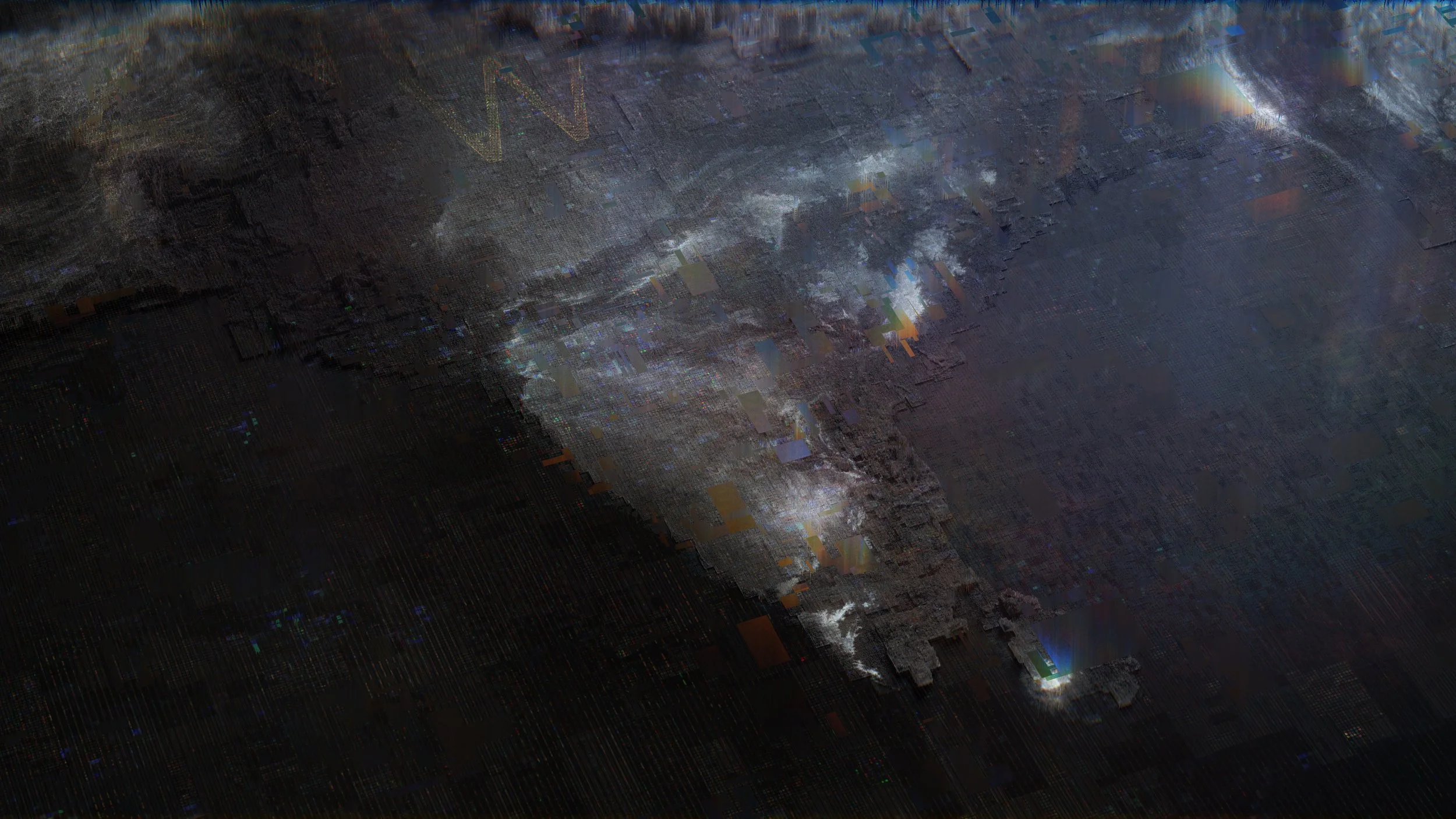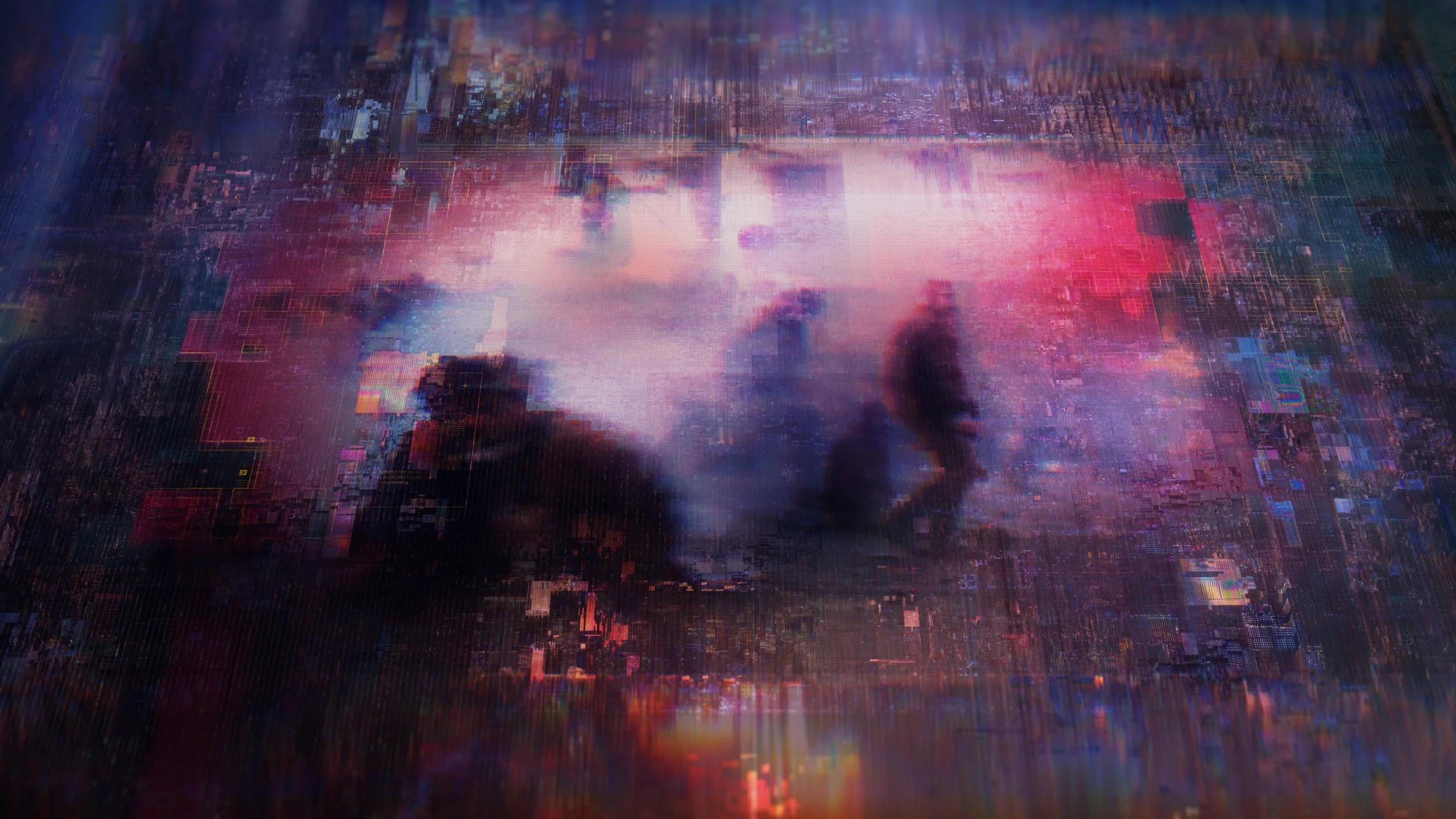
BATTLEFIELD 2042 | PART 02
CONTENT
GOODBYE KANSAS, 2021
ART DIRECTION | CONCEPT DESIGN | PRODUCTION
This section of the case study focuses on the visual development of the content inside the Network—the system through which global events, media, and data are observed throughout the film. While the satellite serves as the narrative entry point, the Network operates as the primary storytelling space, shaping how information is structured, revealed, and experienced over time.
The work documented here examines how content was designed to exist within that space. It traces the evolution of visual language, material treatment, and spatial logic that allowed disparate media—video, imagery, audio, and data—to coexist within a single, coherent system.
02.0 Formative Explorations
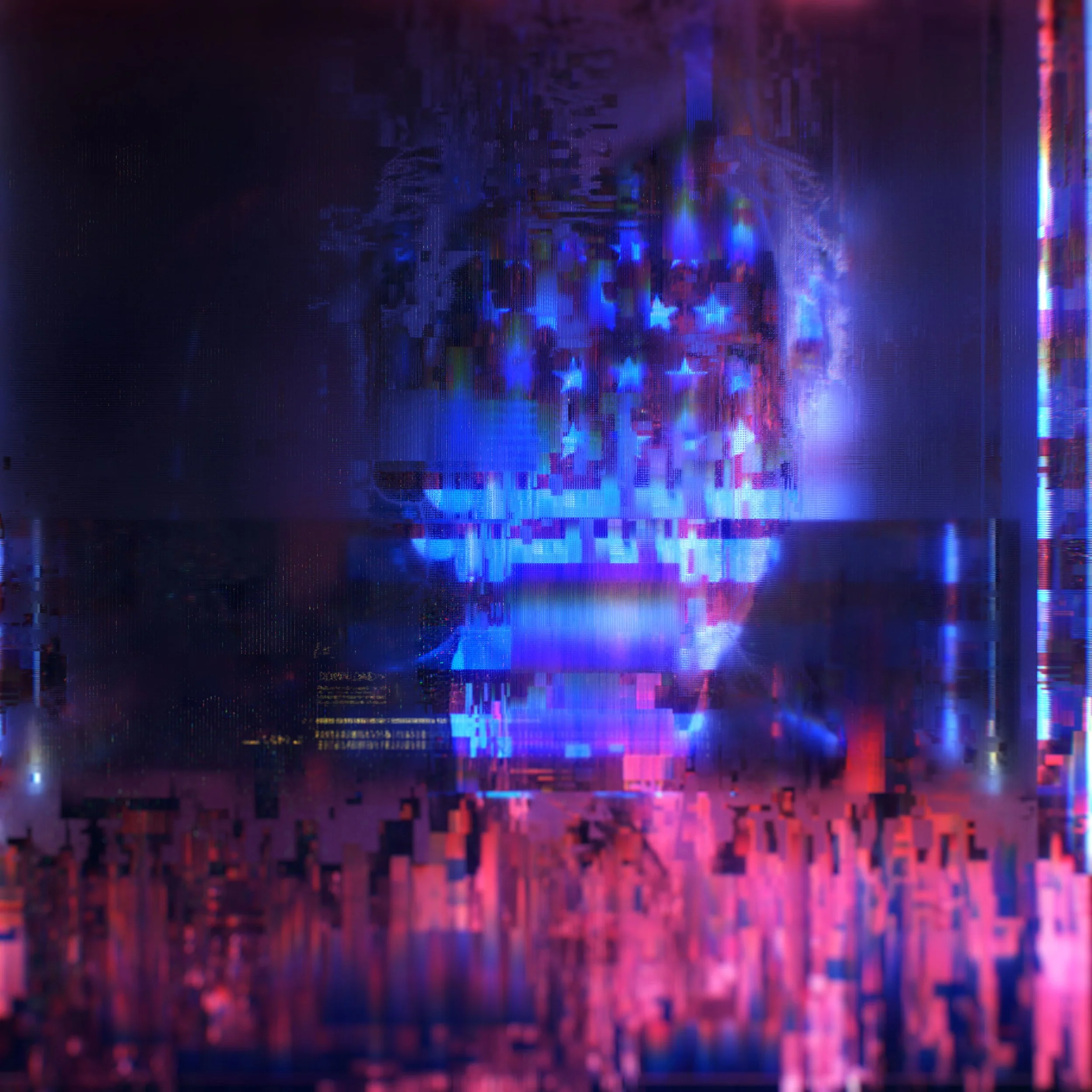
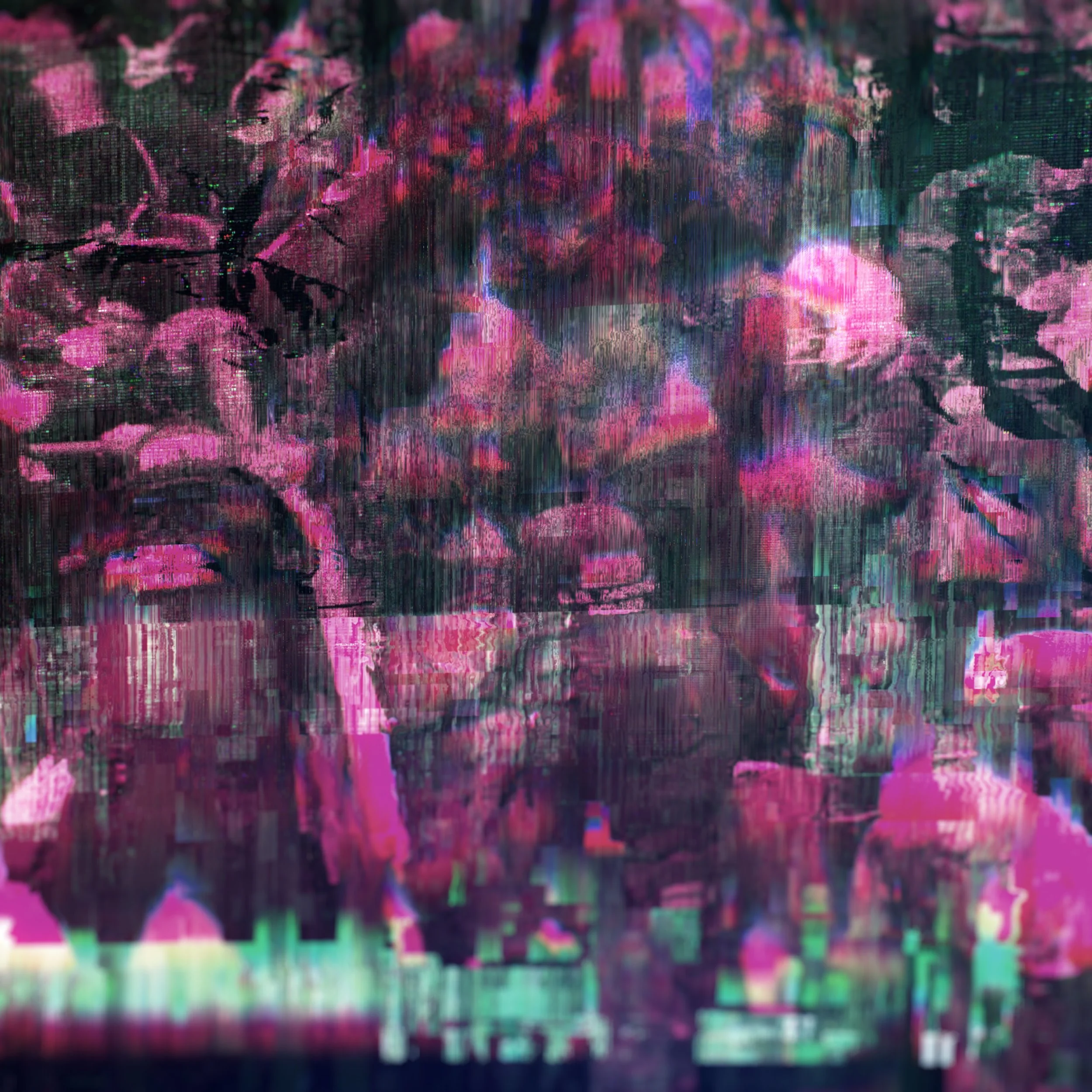
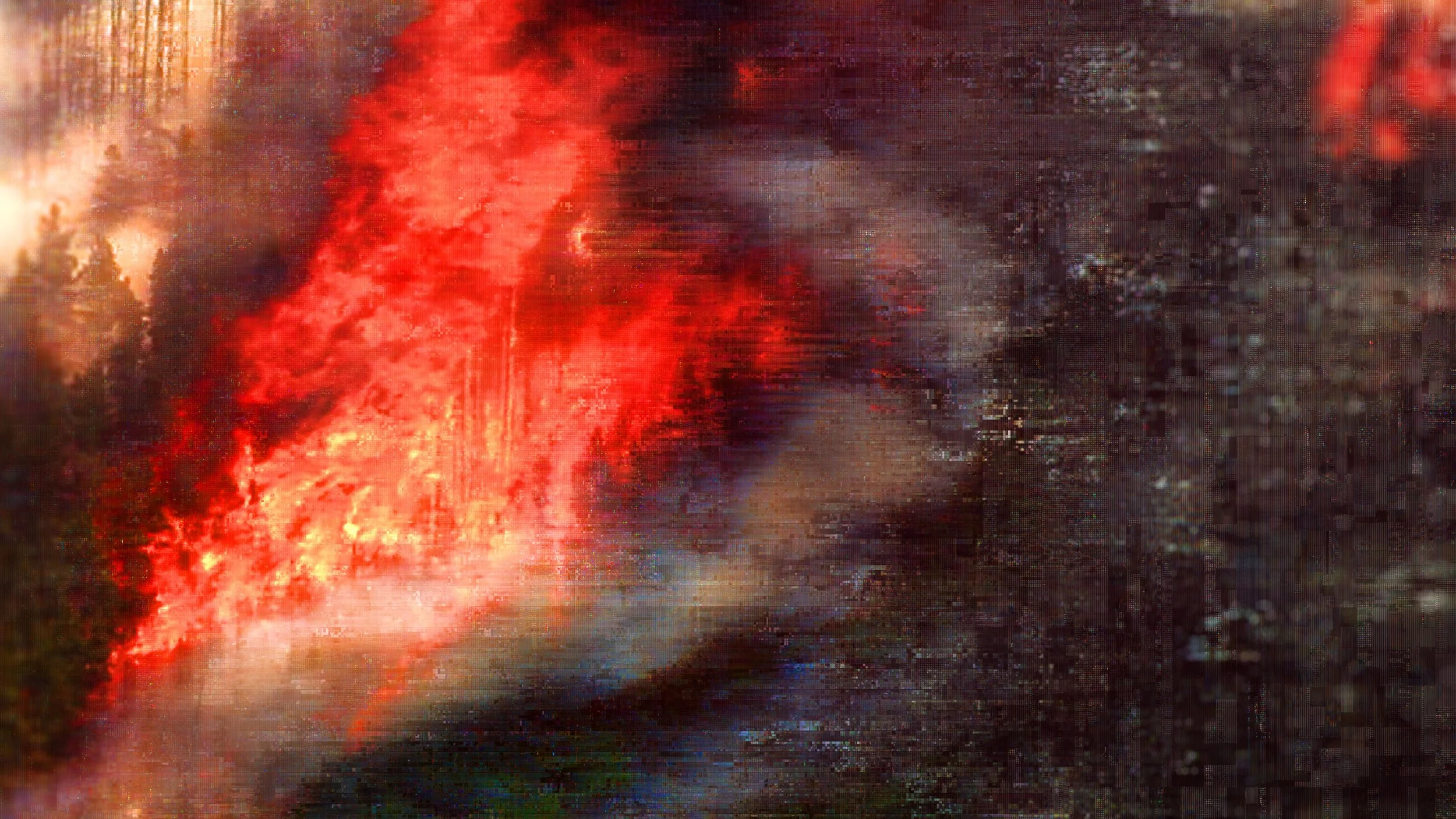
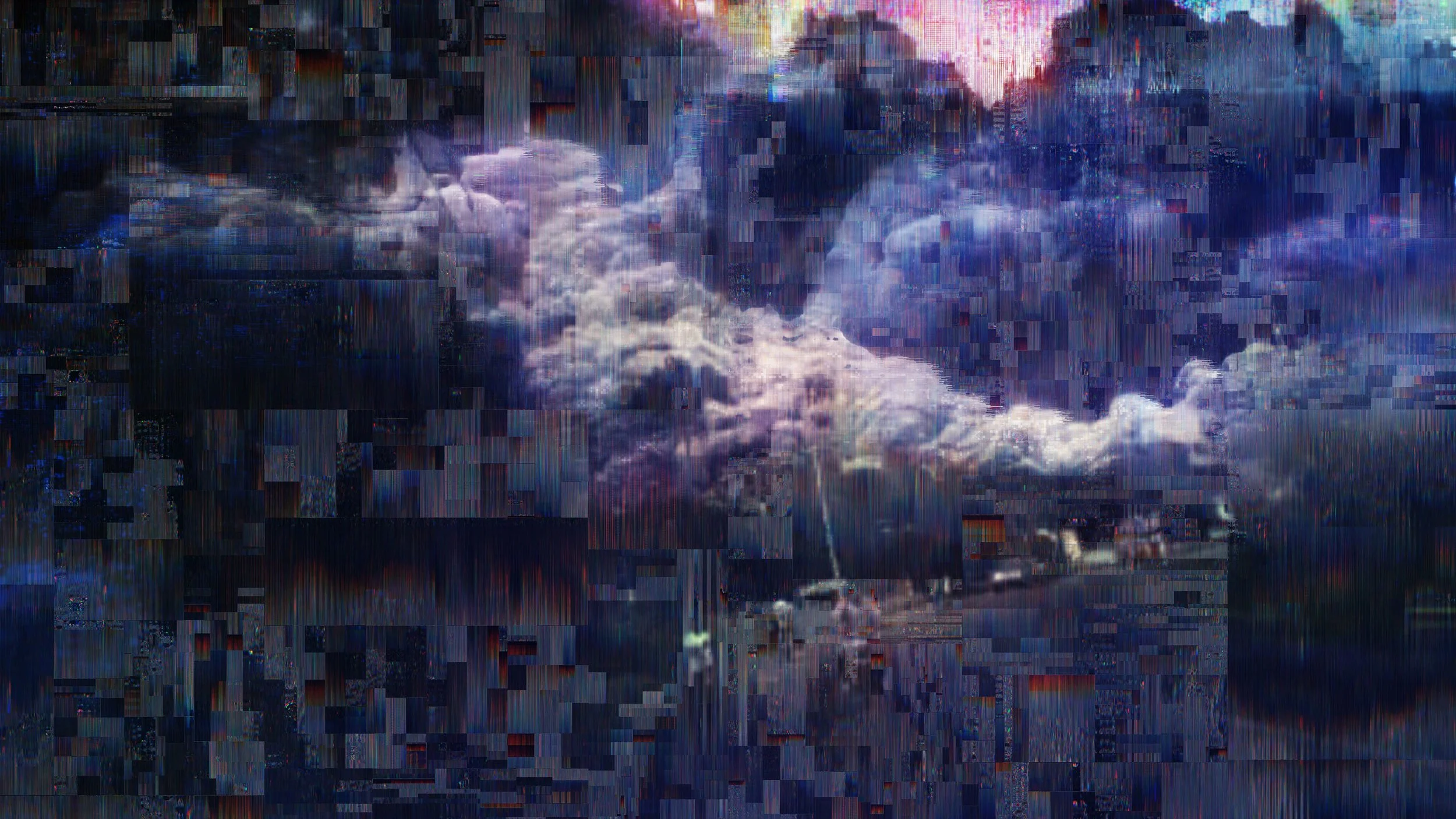
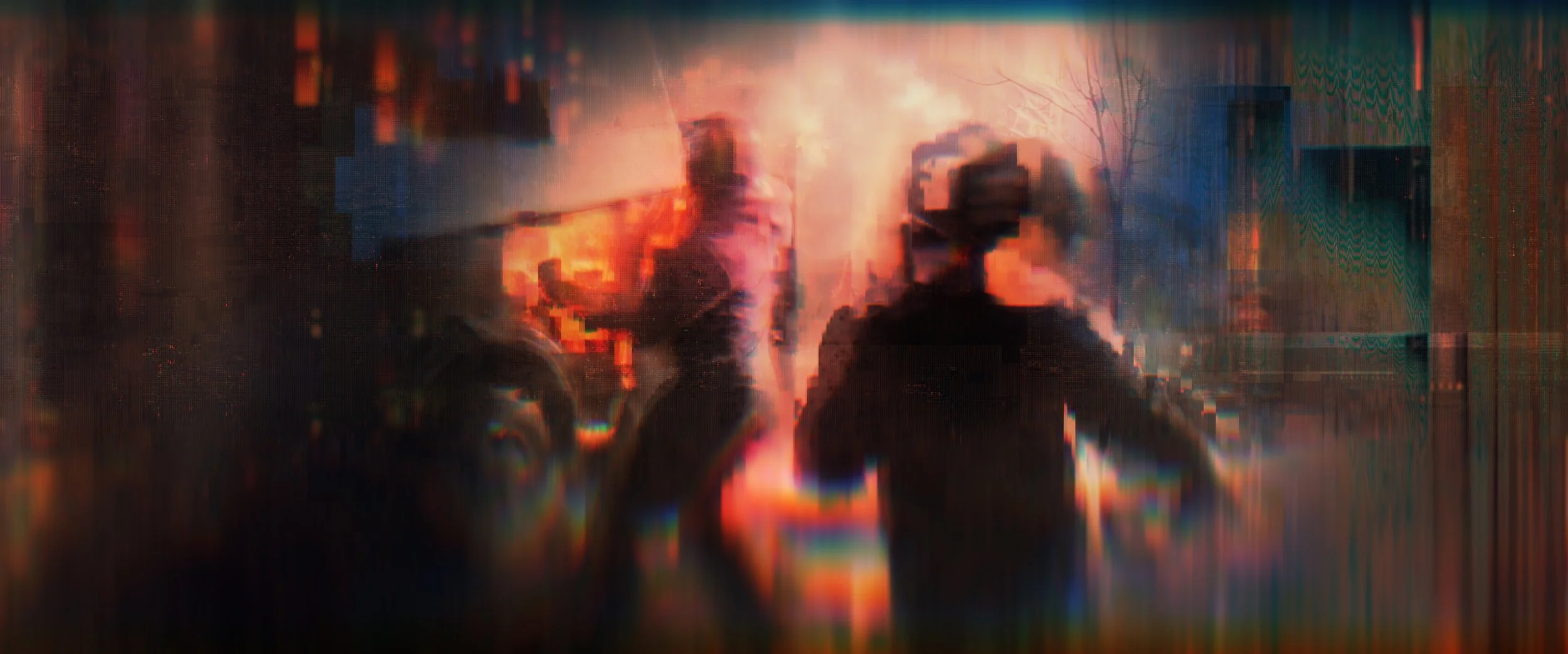
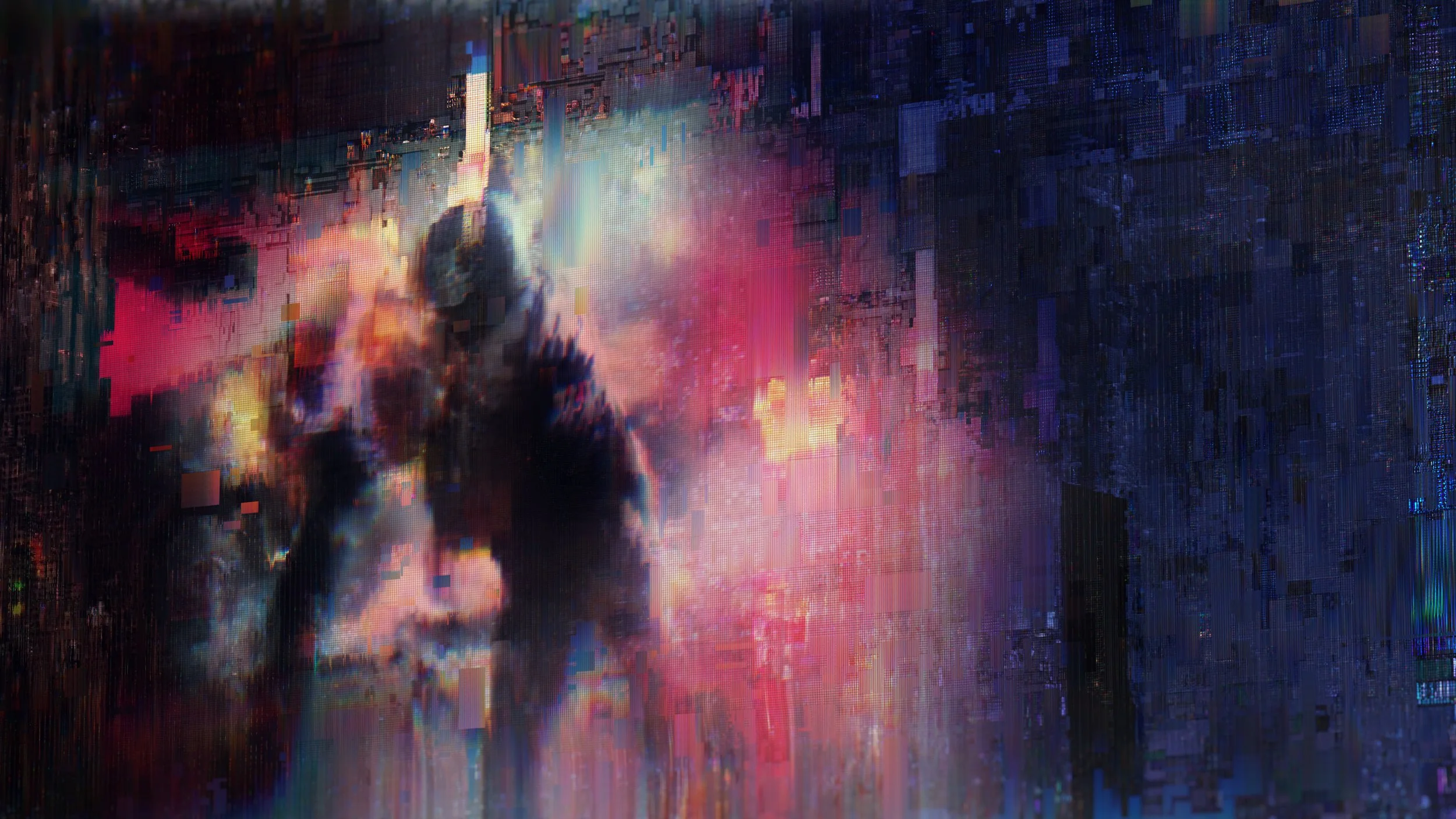
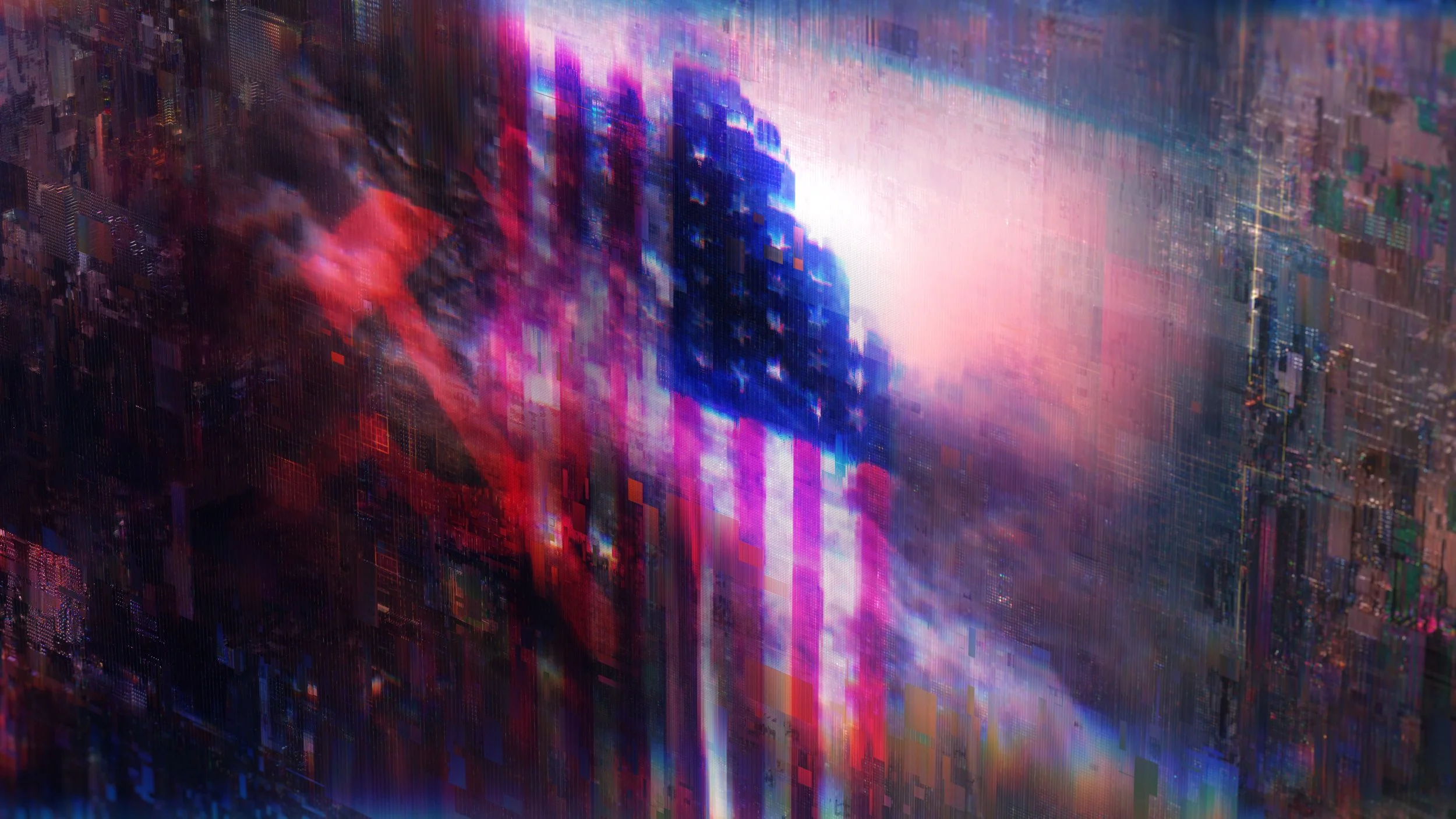
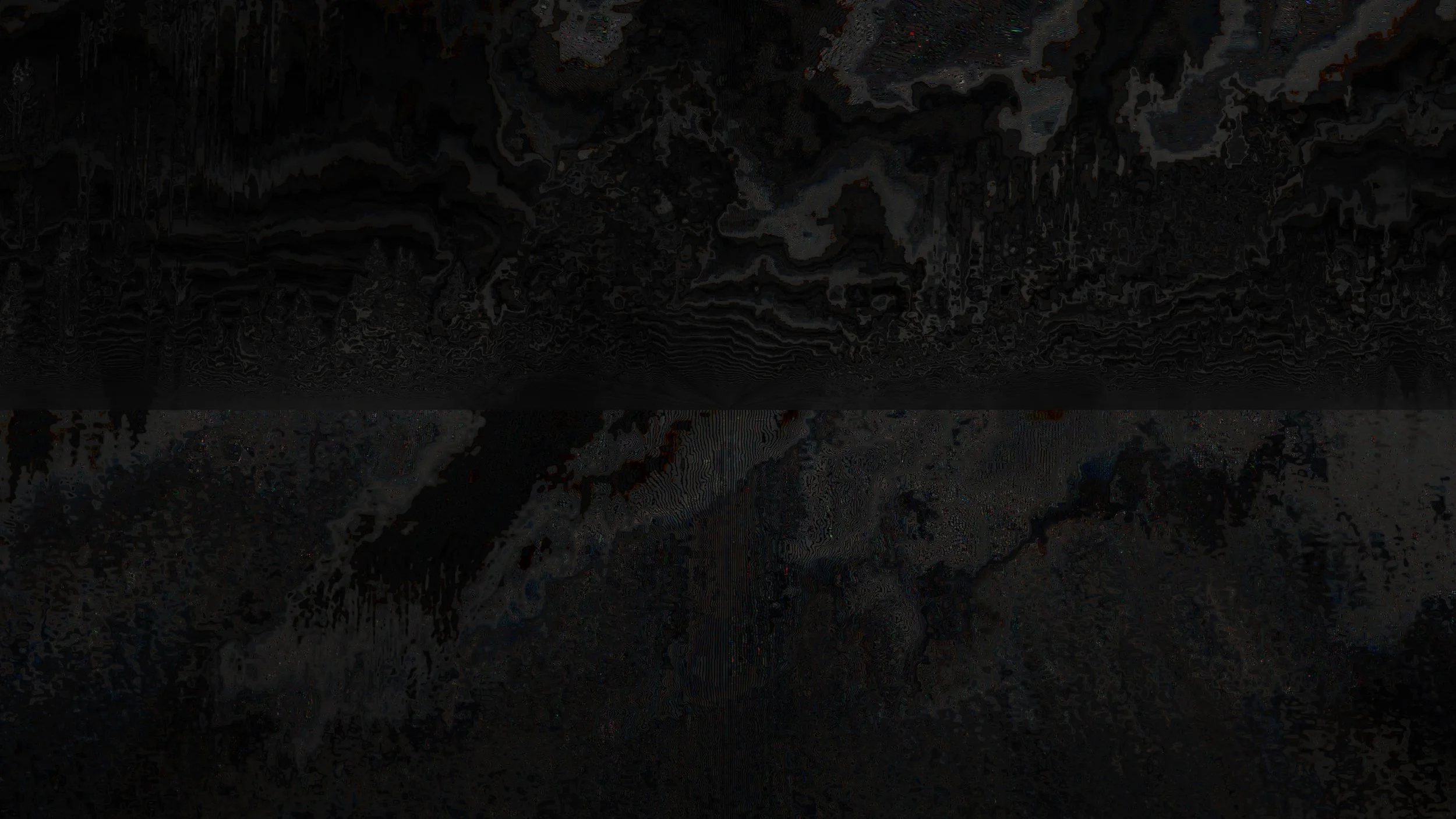
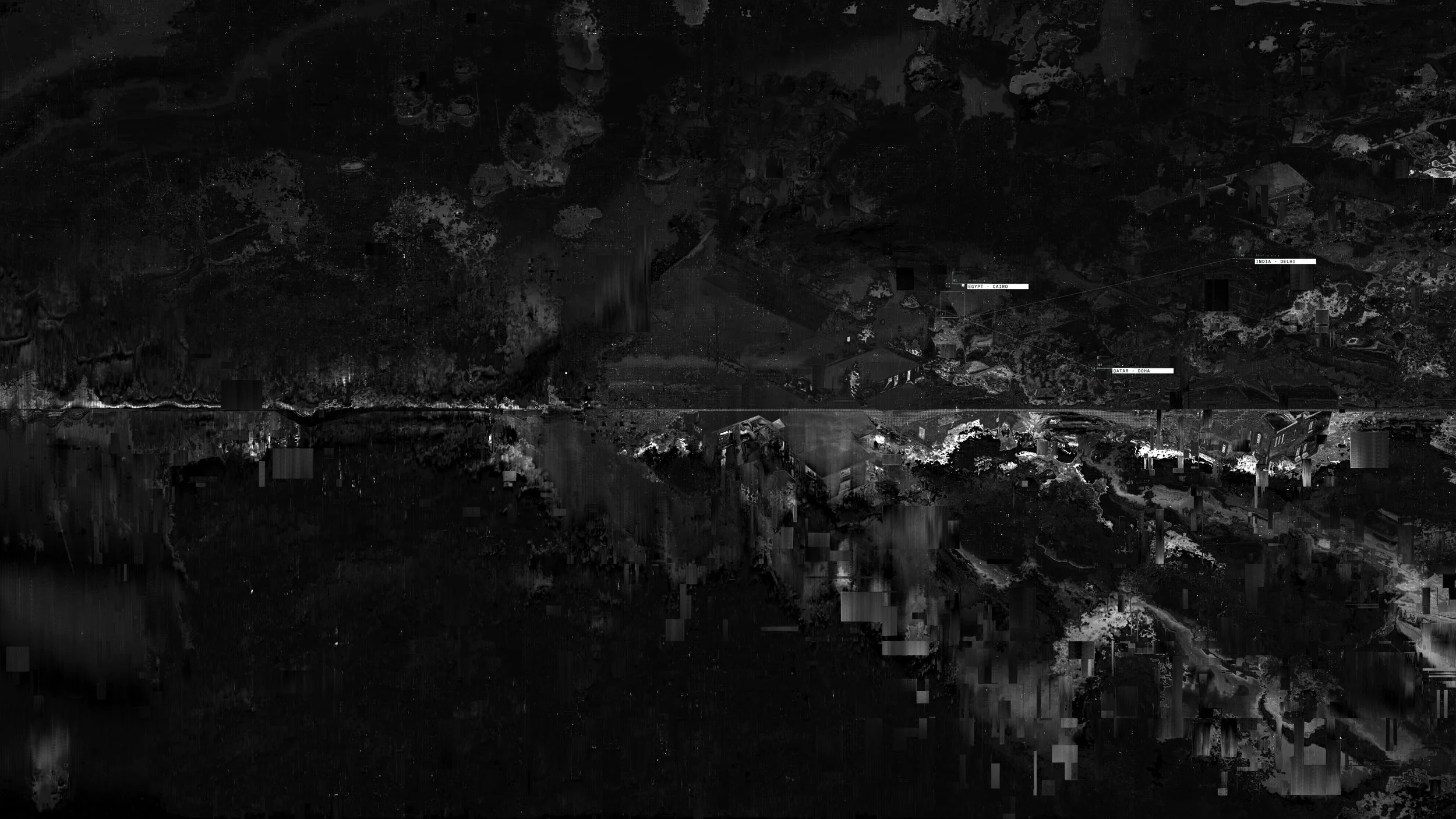
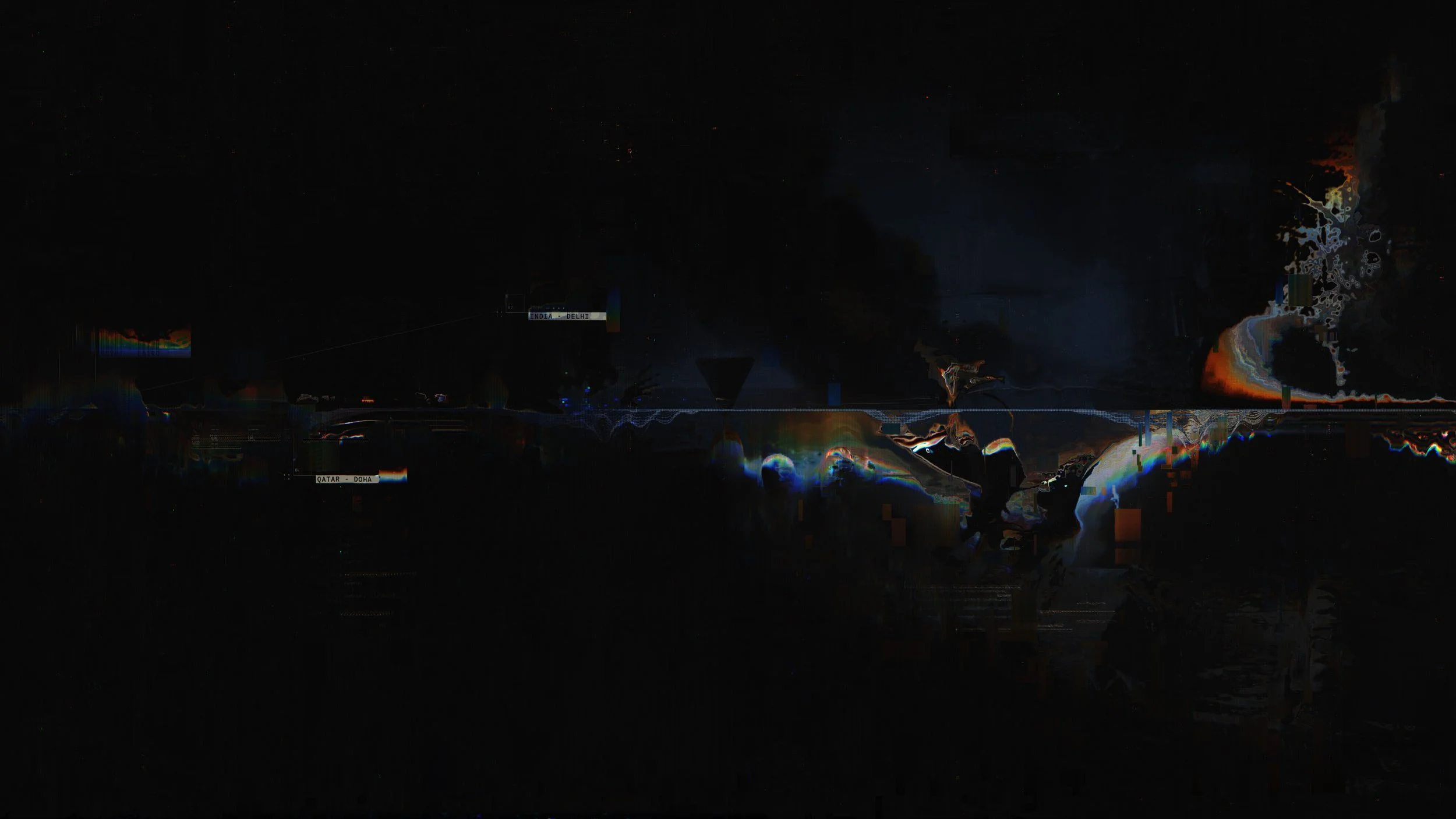
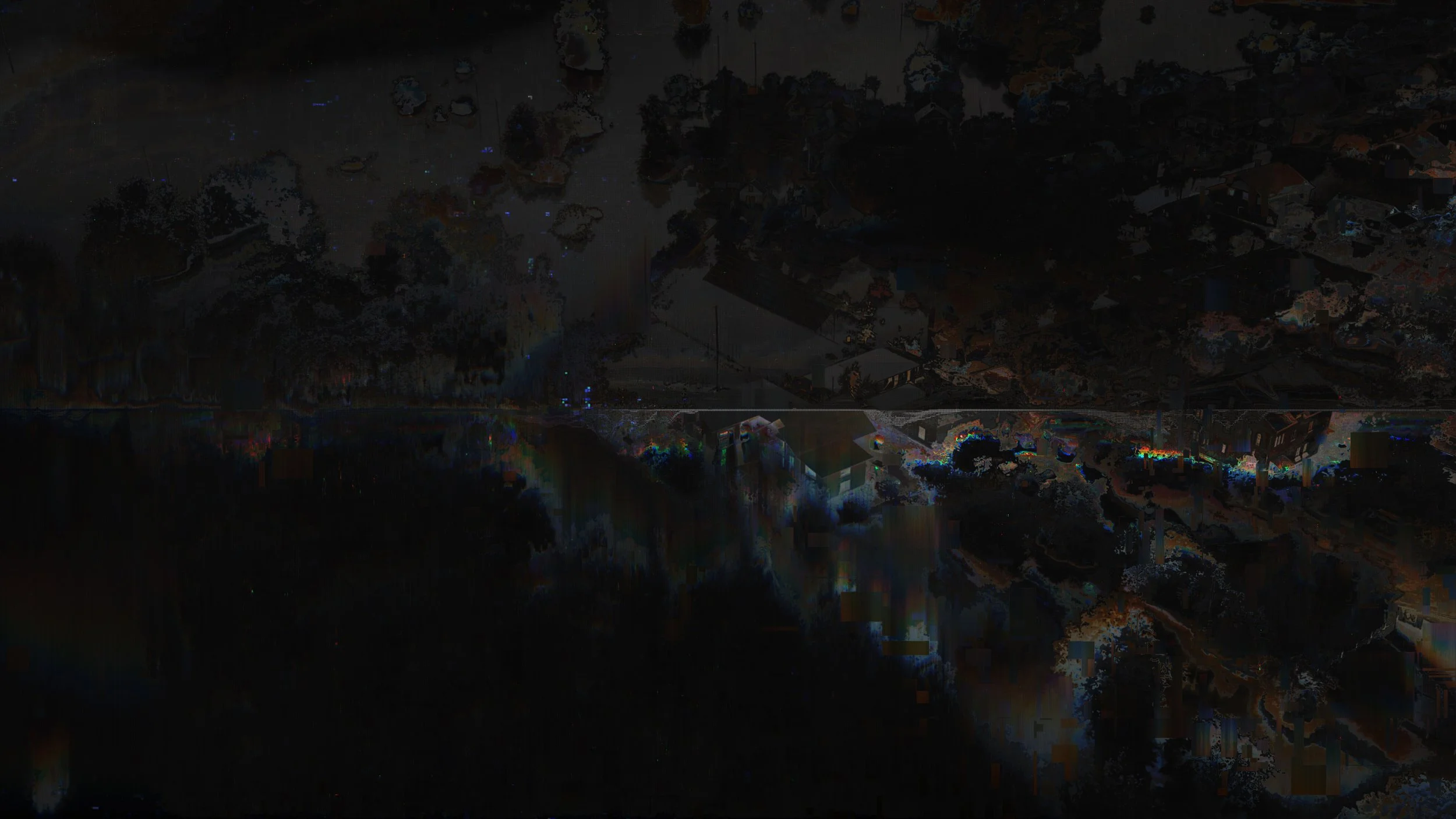
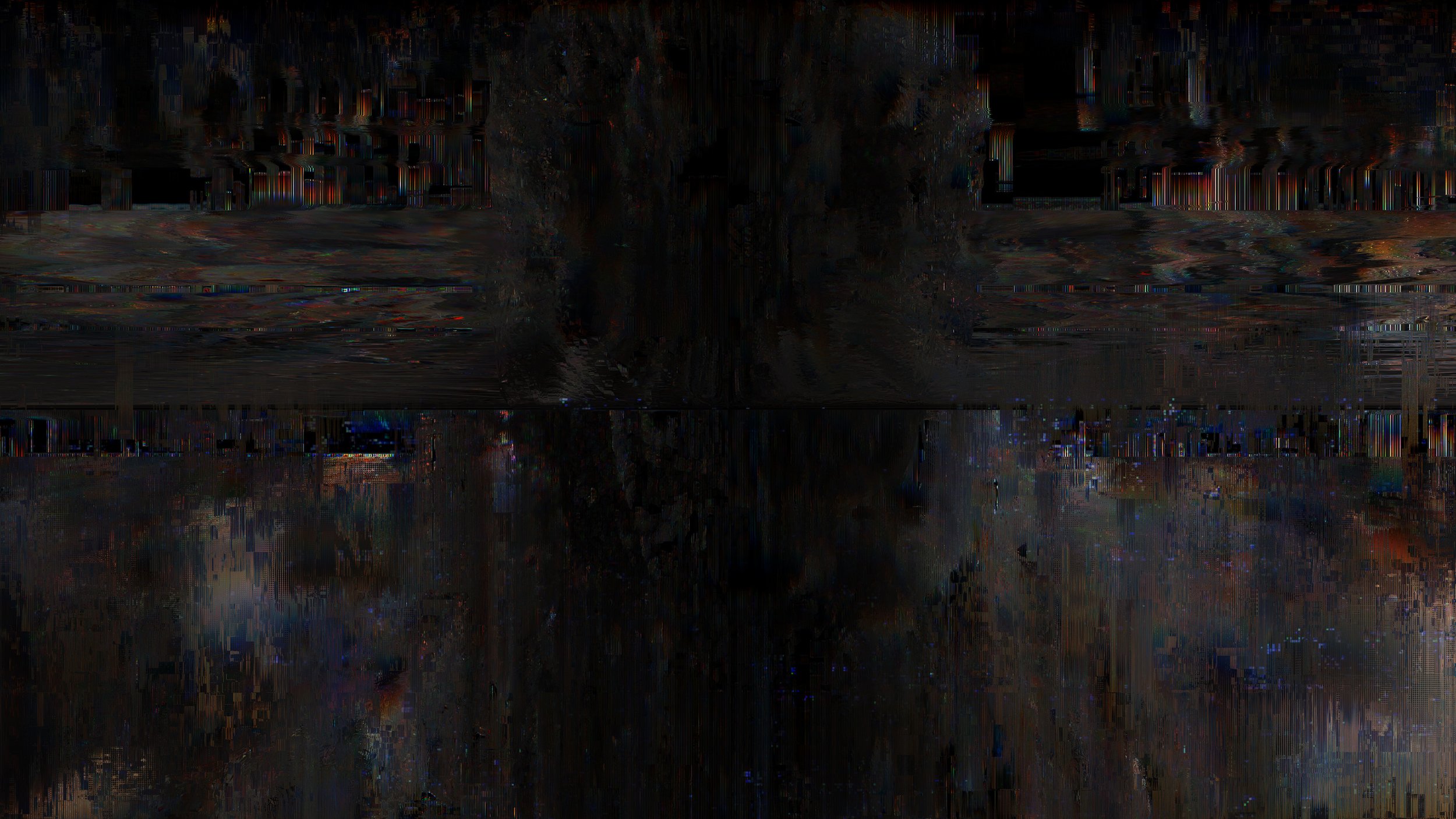
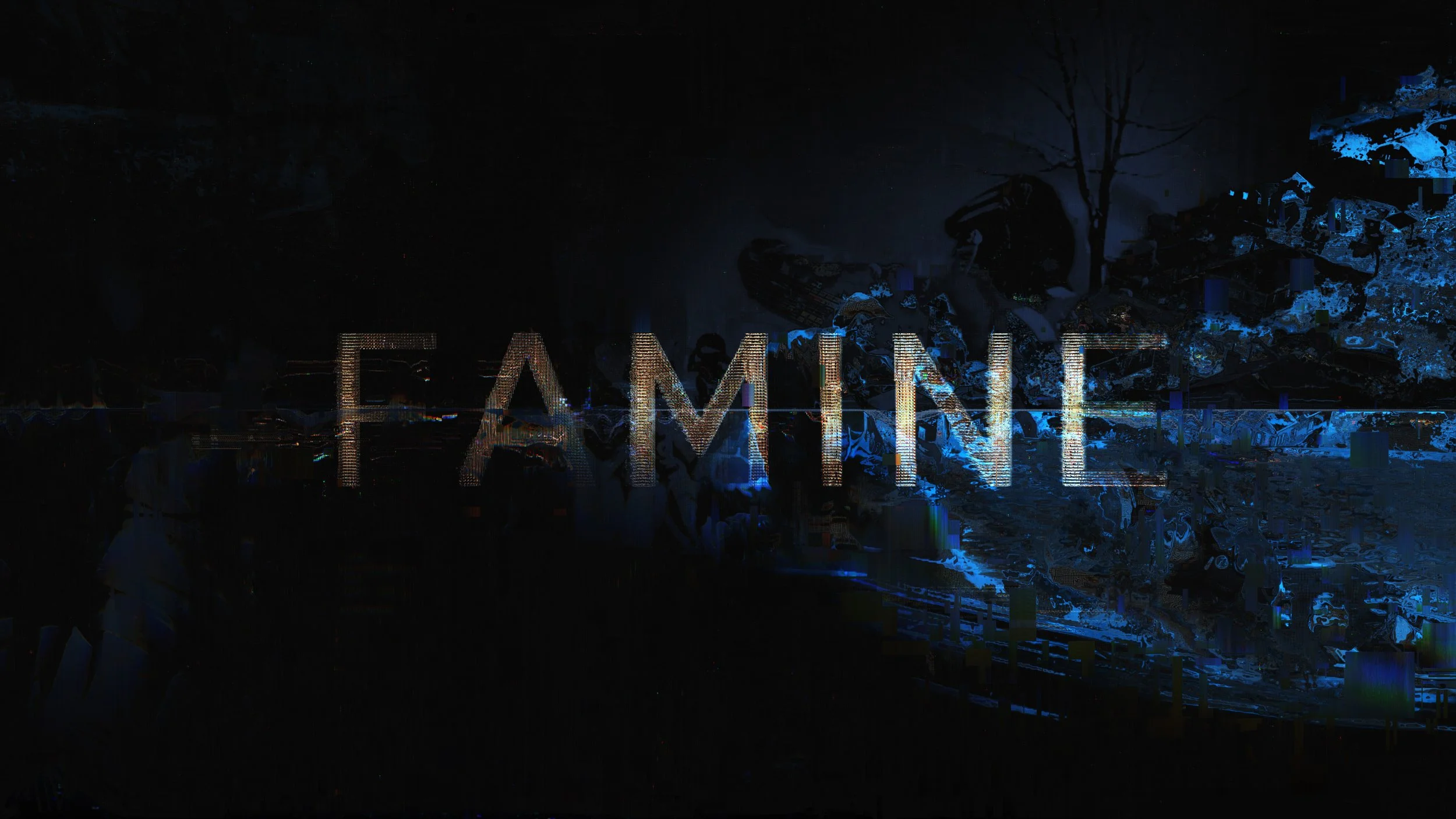
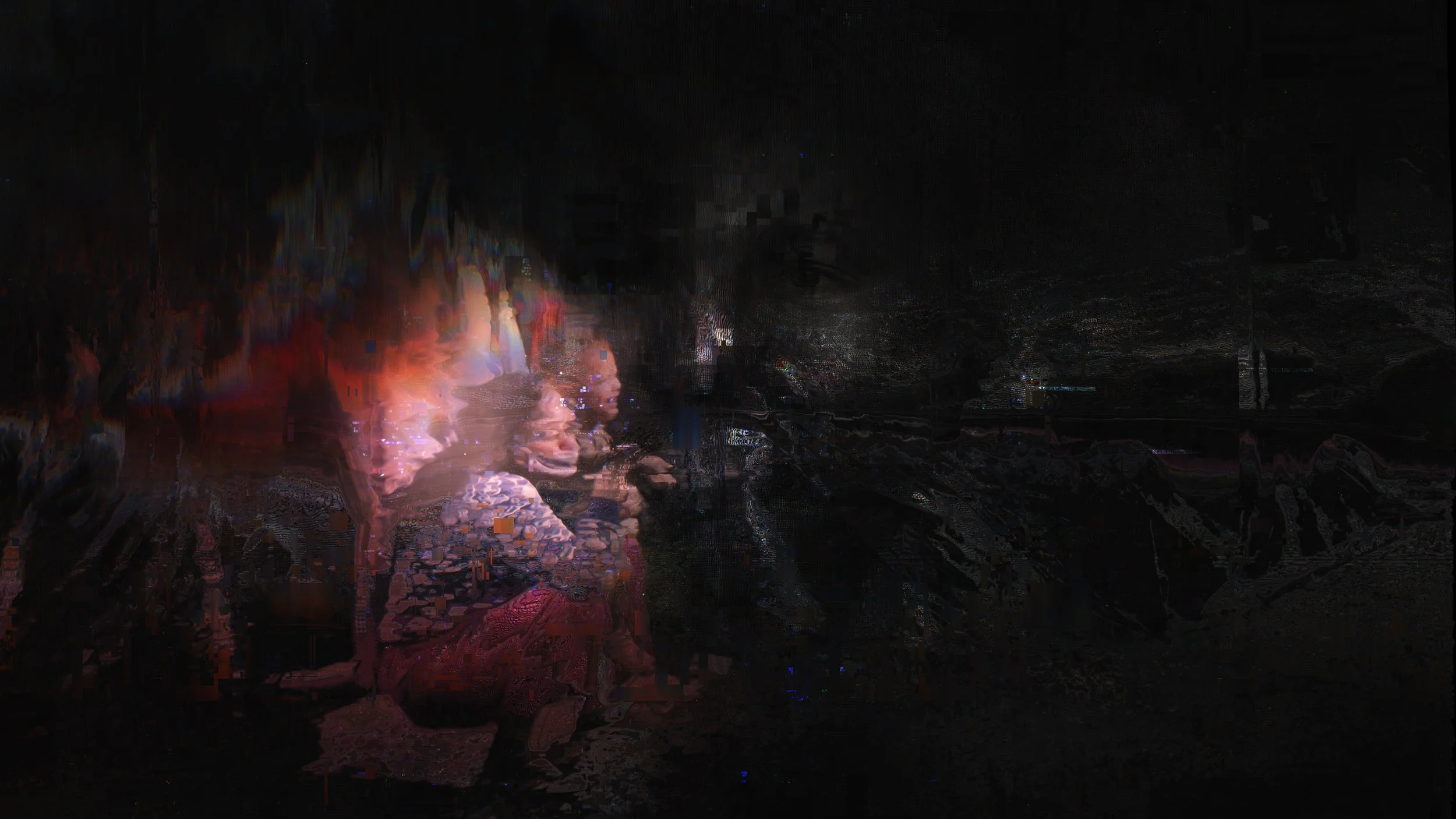
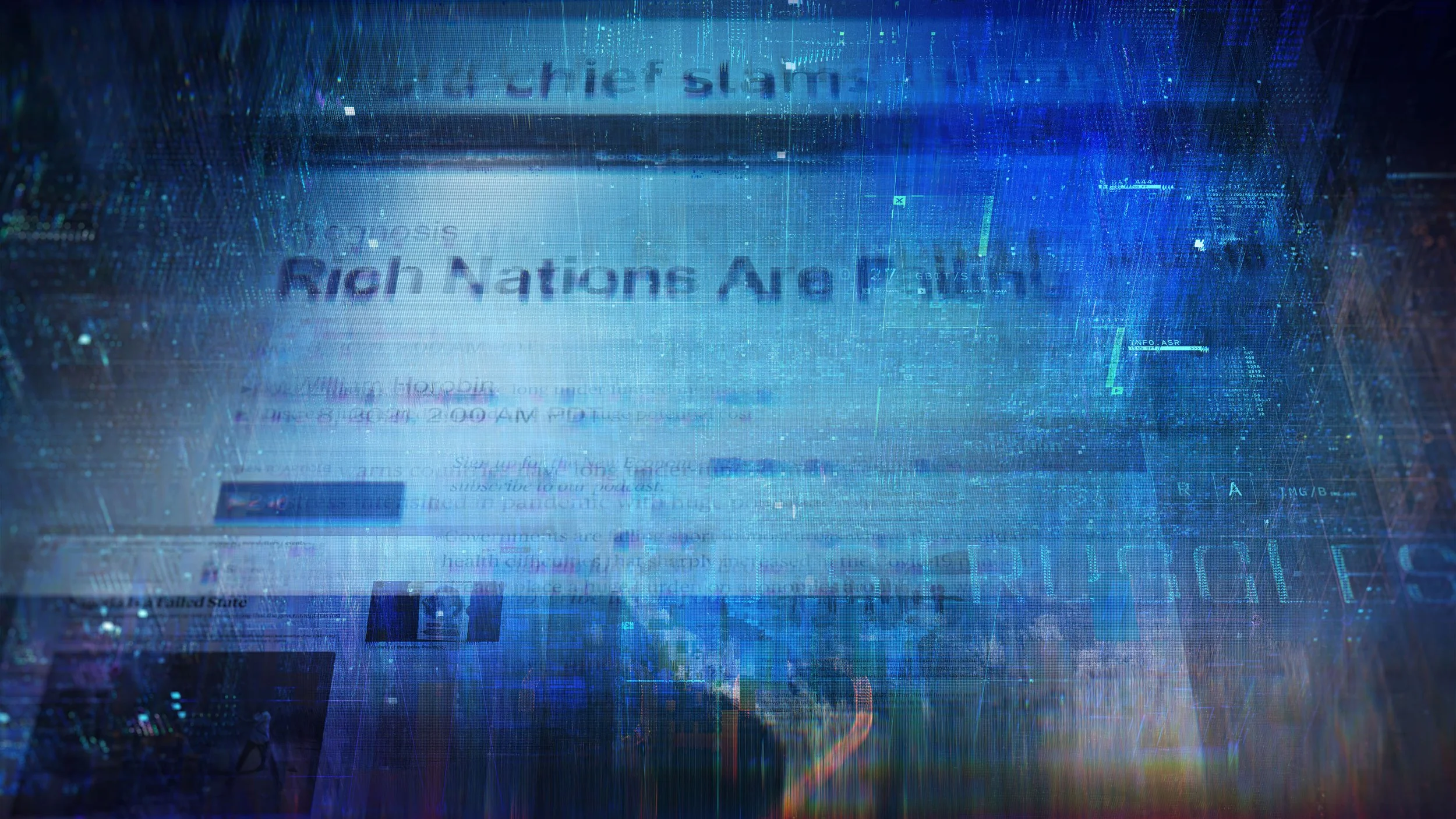
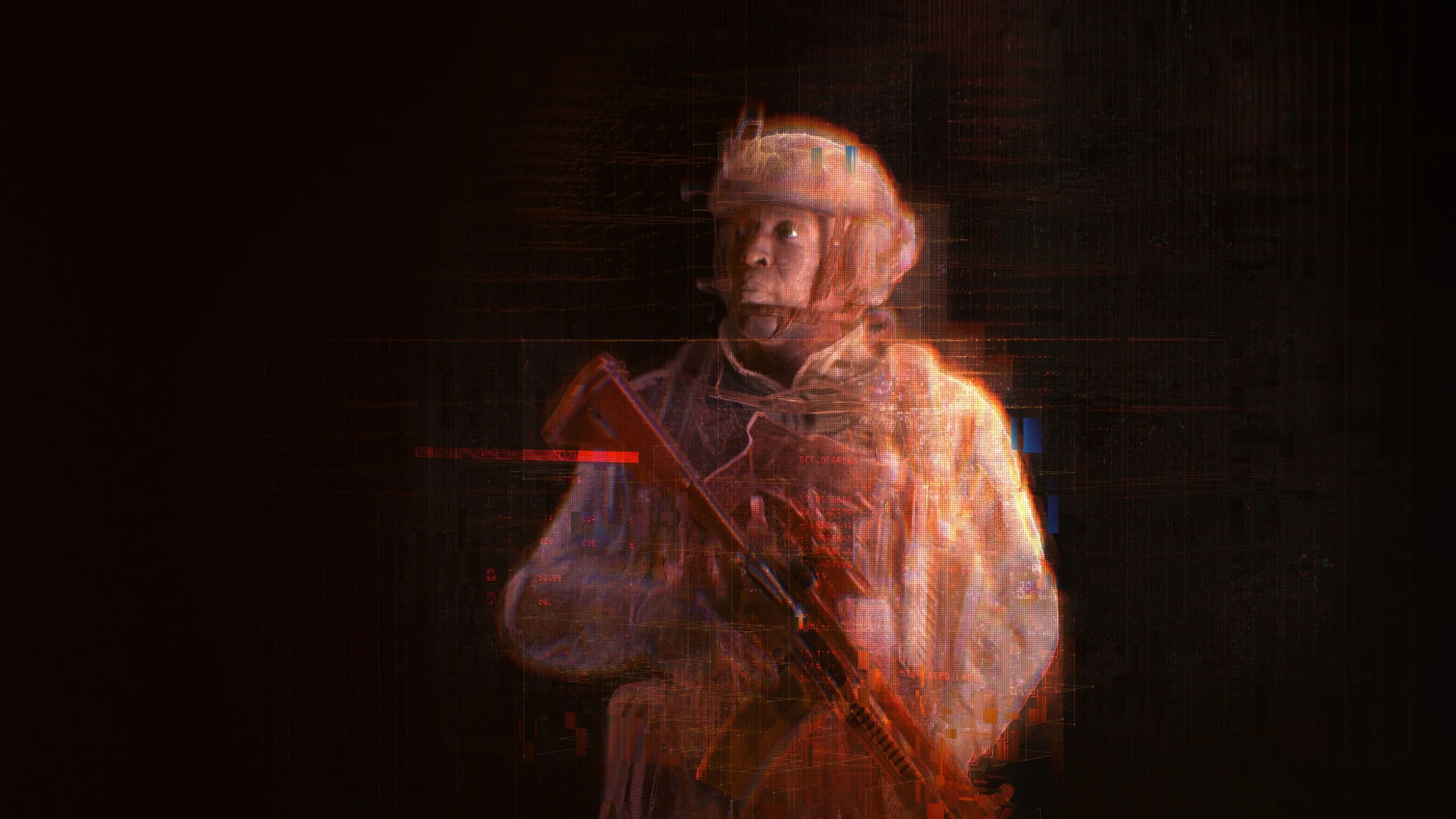
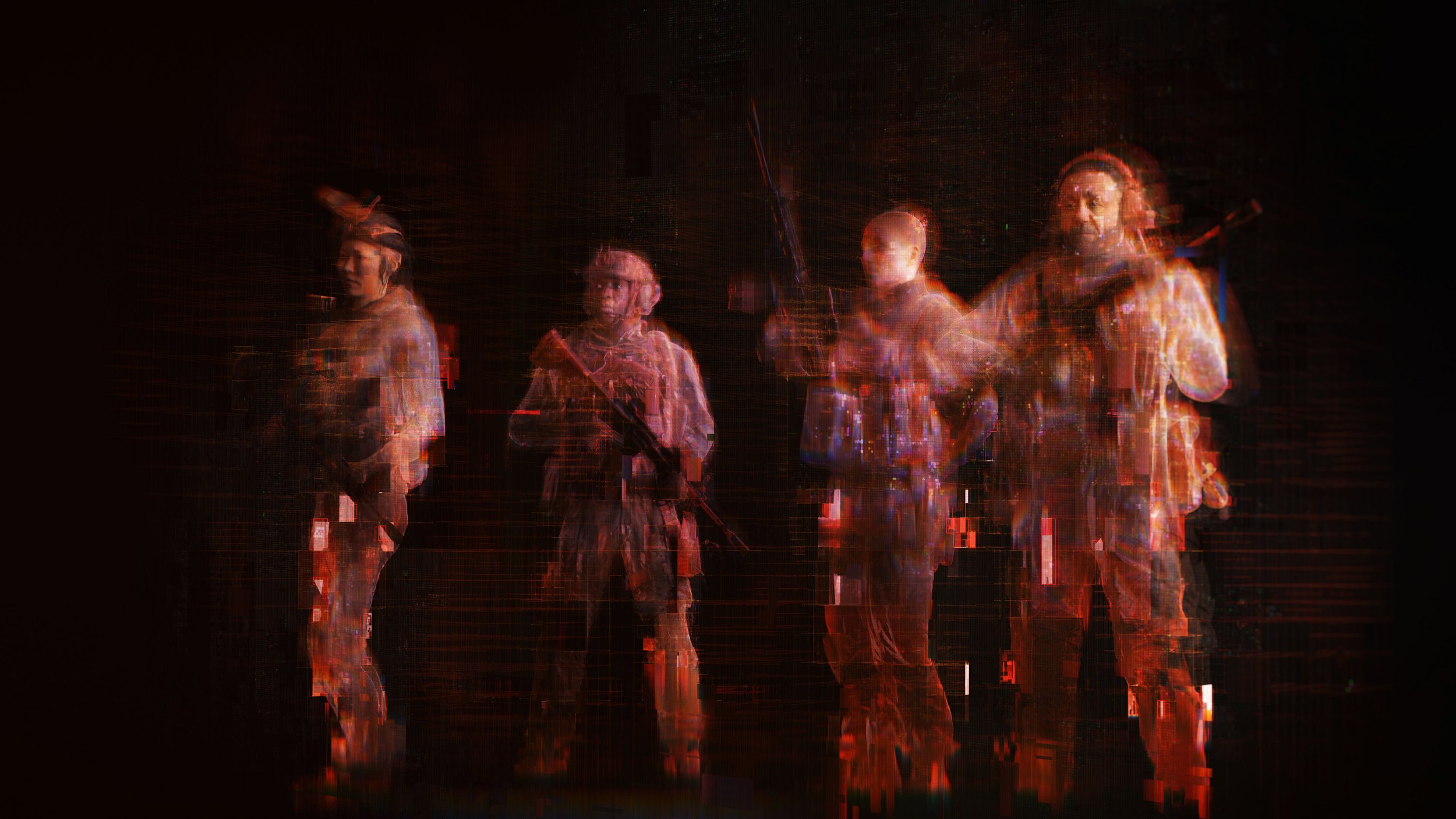
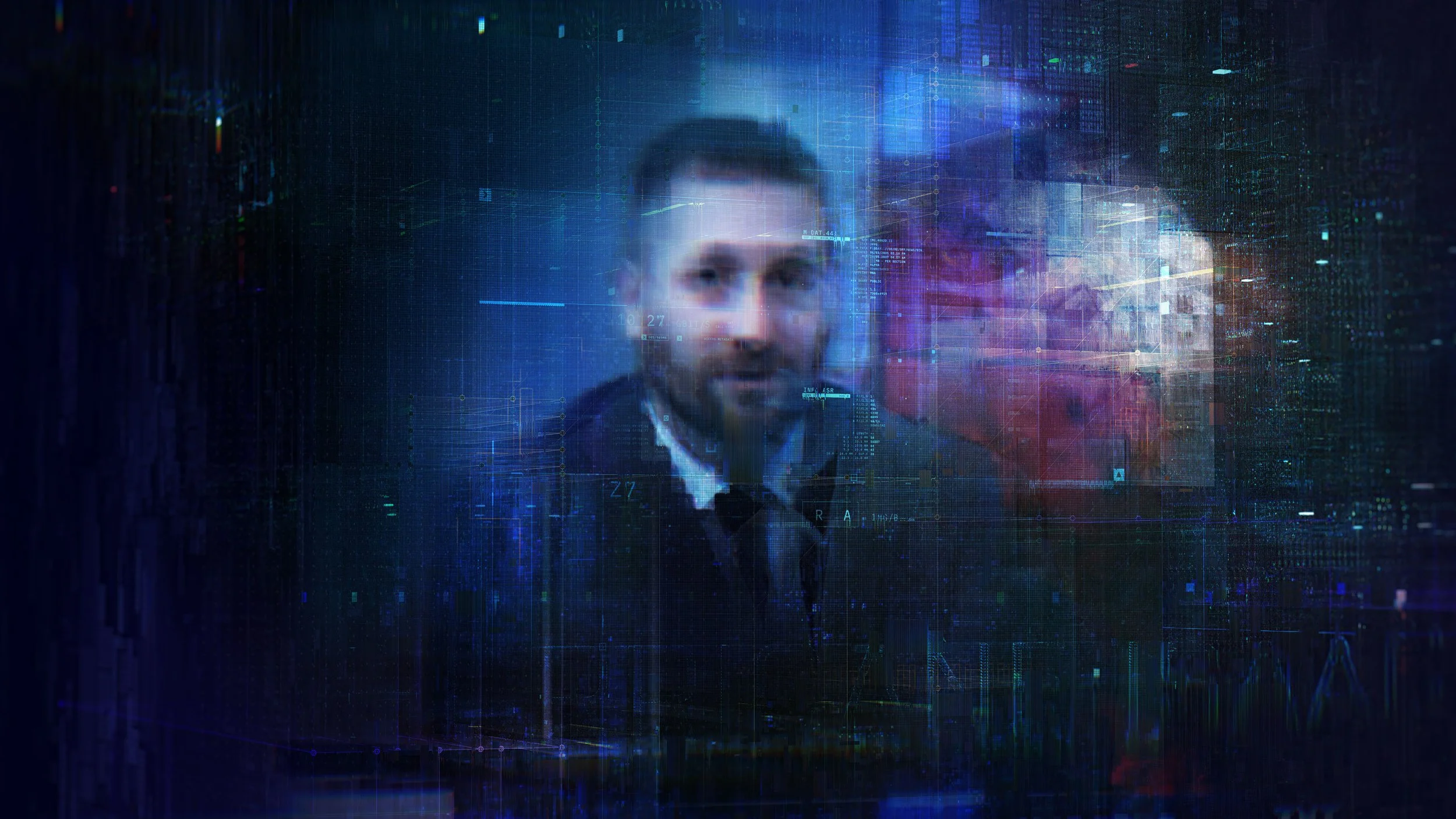
Early look development explored alternatives to familiar military interface and glitch aesthetics. A conscious effort was made to move away from polished, synthetic treatments and toward something that felt captured rather than generated. The goal was to suggest imperfection and presence, as though visual distortion emerged from physical processes instead of software effects.
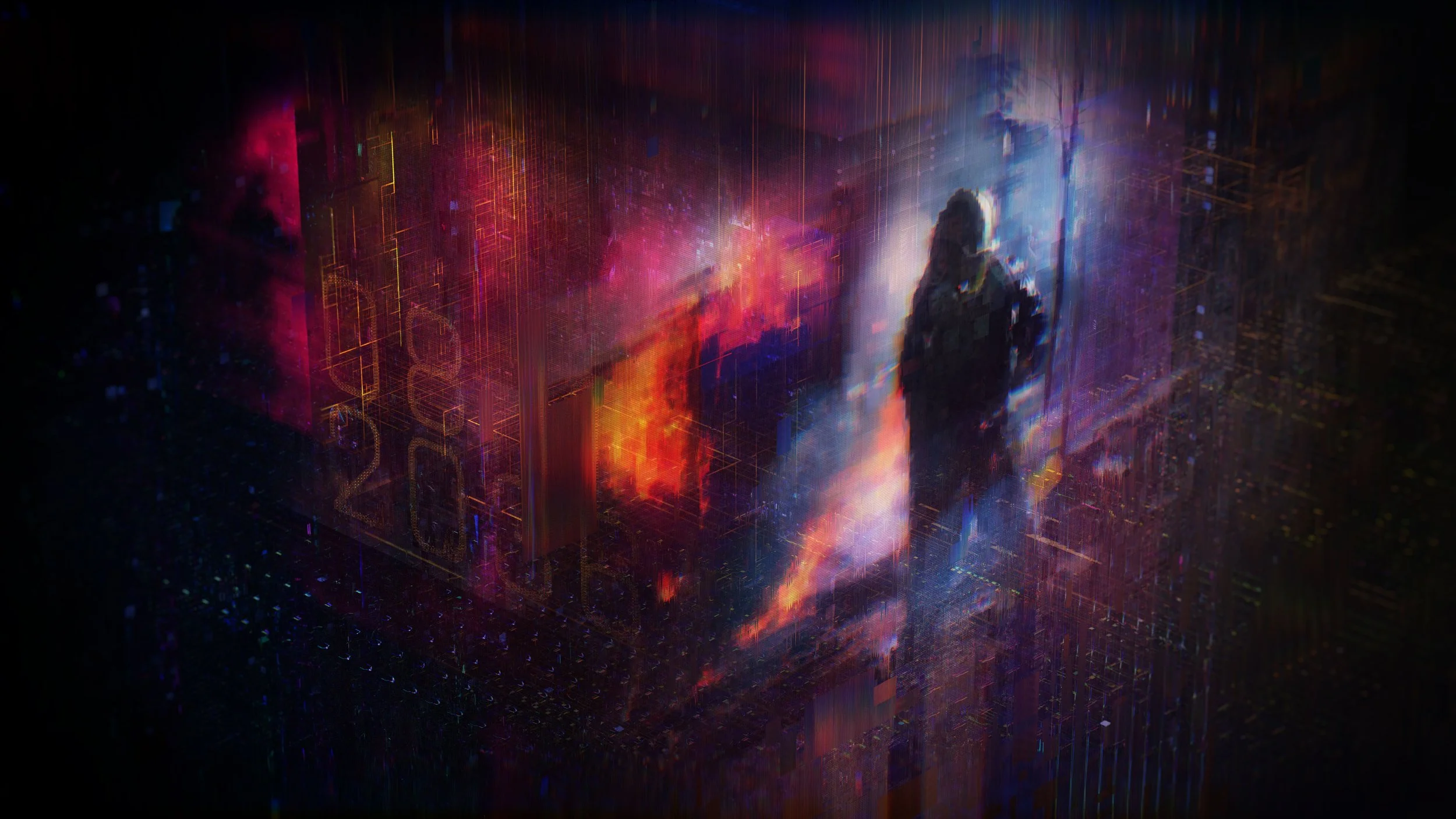
These initial studies drew influence from street art and graffiti, reflecting the geopolitical unrest and social instability embedded in the narrative. Glitch behavior was explored through painterly gestures, organic degradation, and irregular texture, emphasizing materiality over precision.
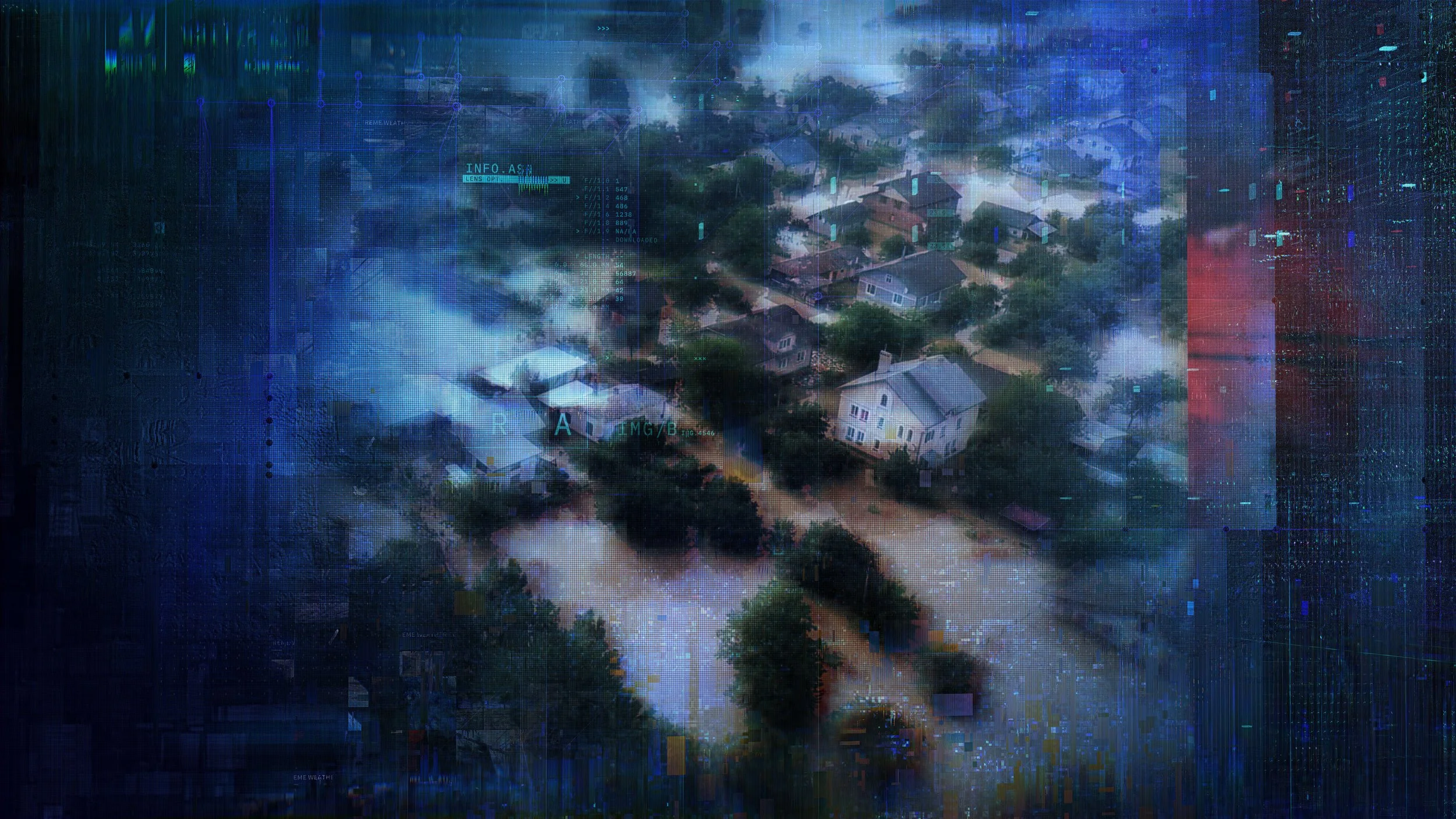
A parallel focus during this phase was integration. Stock footage needed to feel curated and embedded within the system, not framed as isolated inserts. Hard-edged rectangles and floating frames were avoided in favor of content that appeared to exist within its surrounding environment, shaped by the same forces acting on the Network itself.
02.1 Bespoke Graphic Components
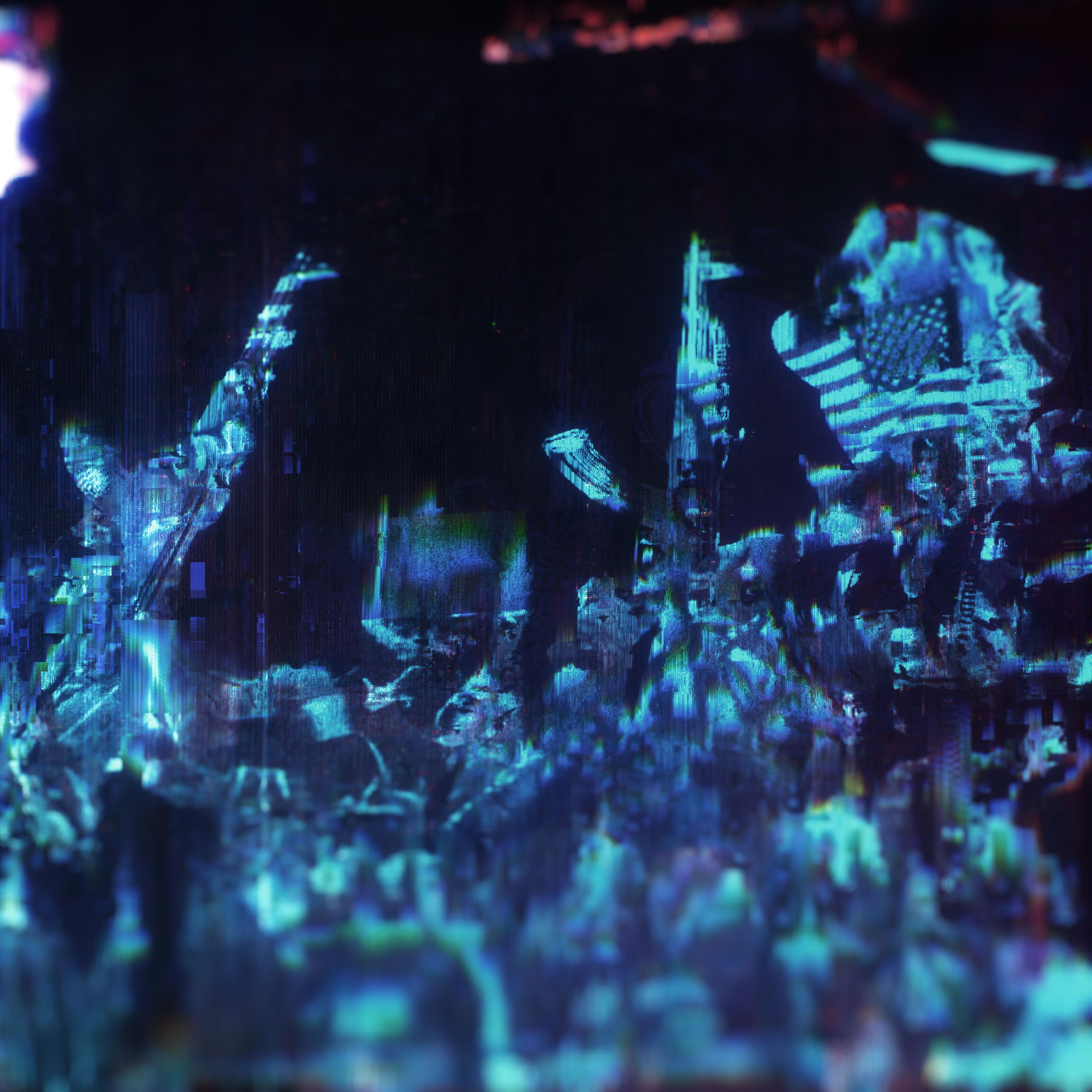
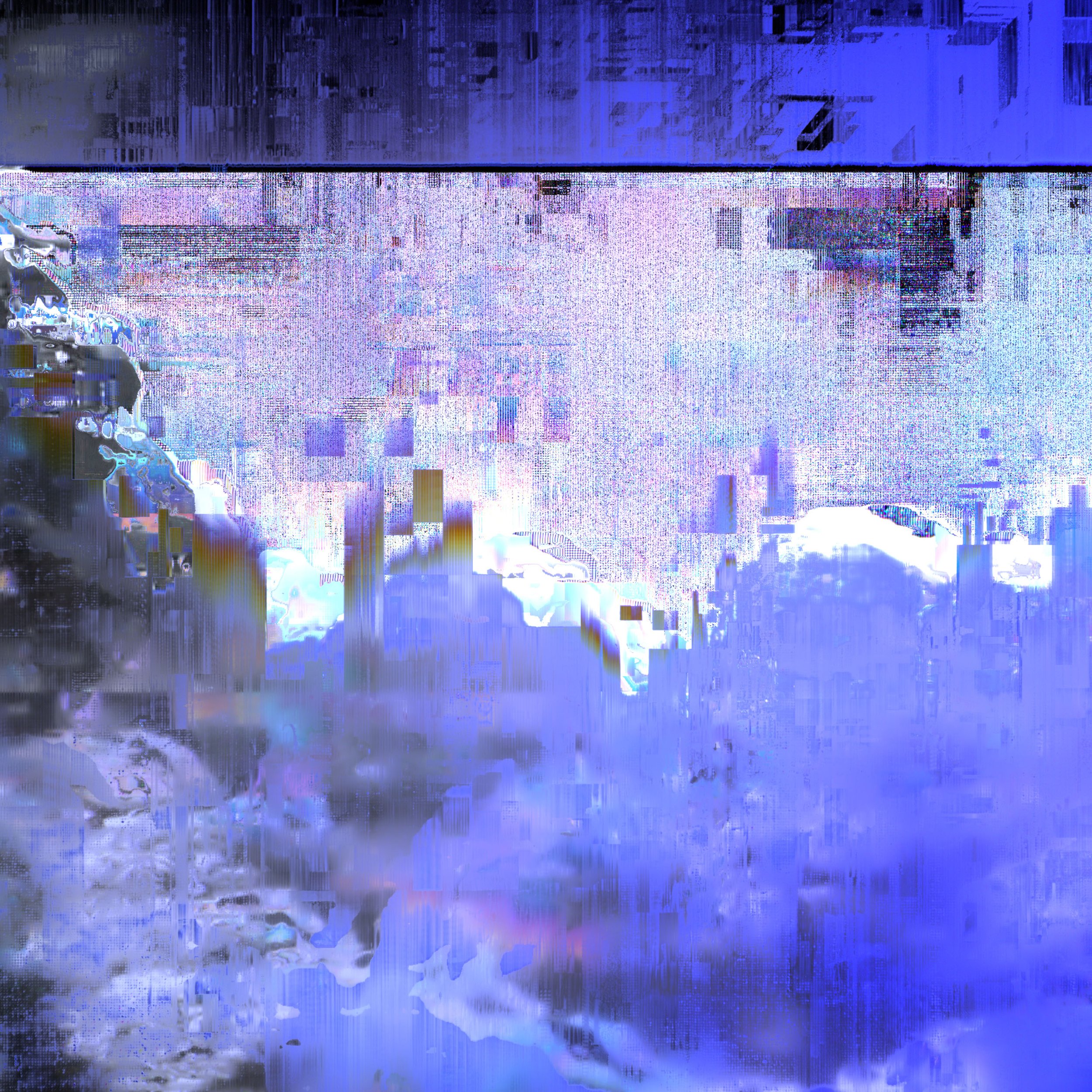
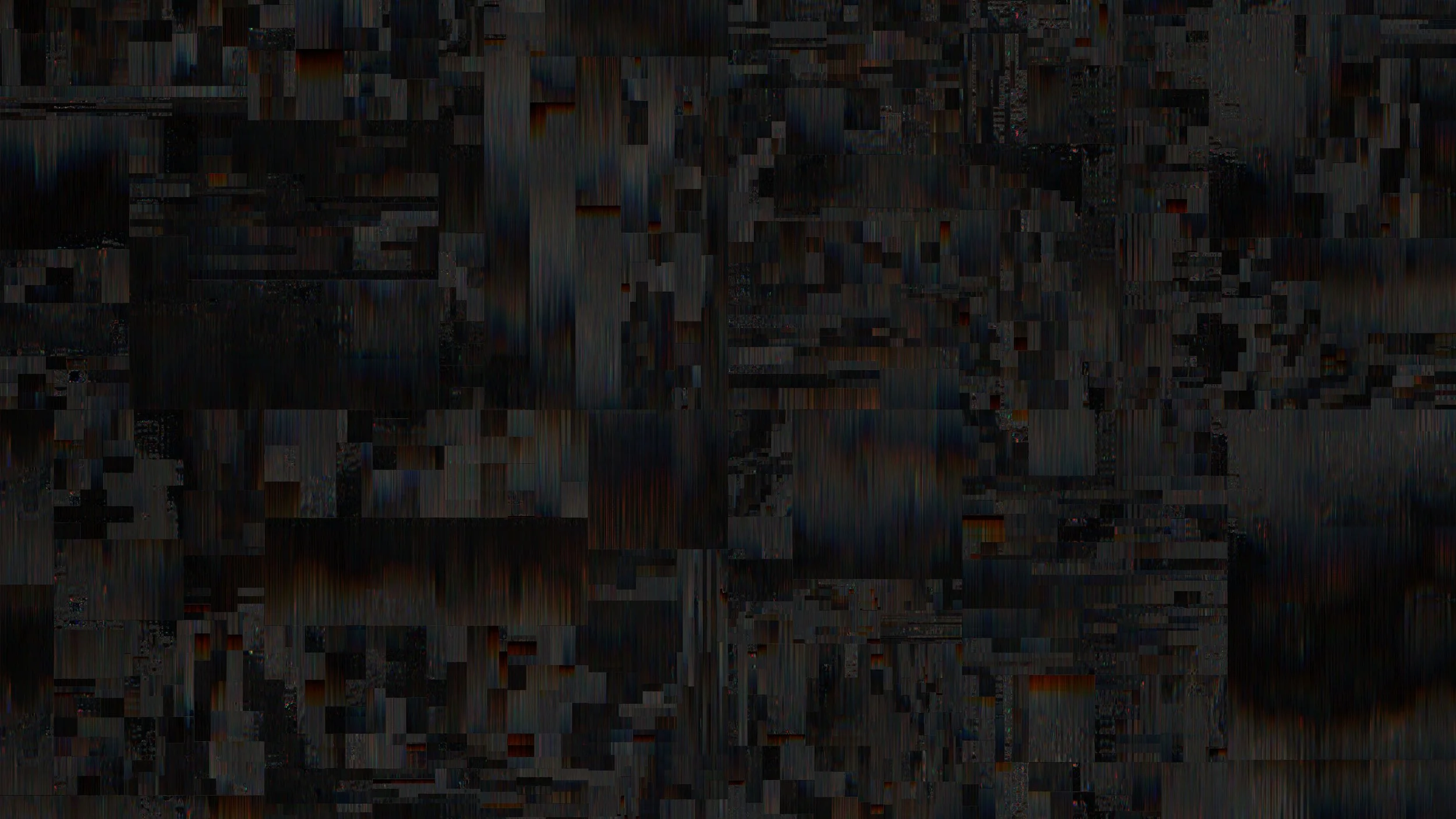
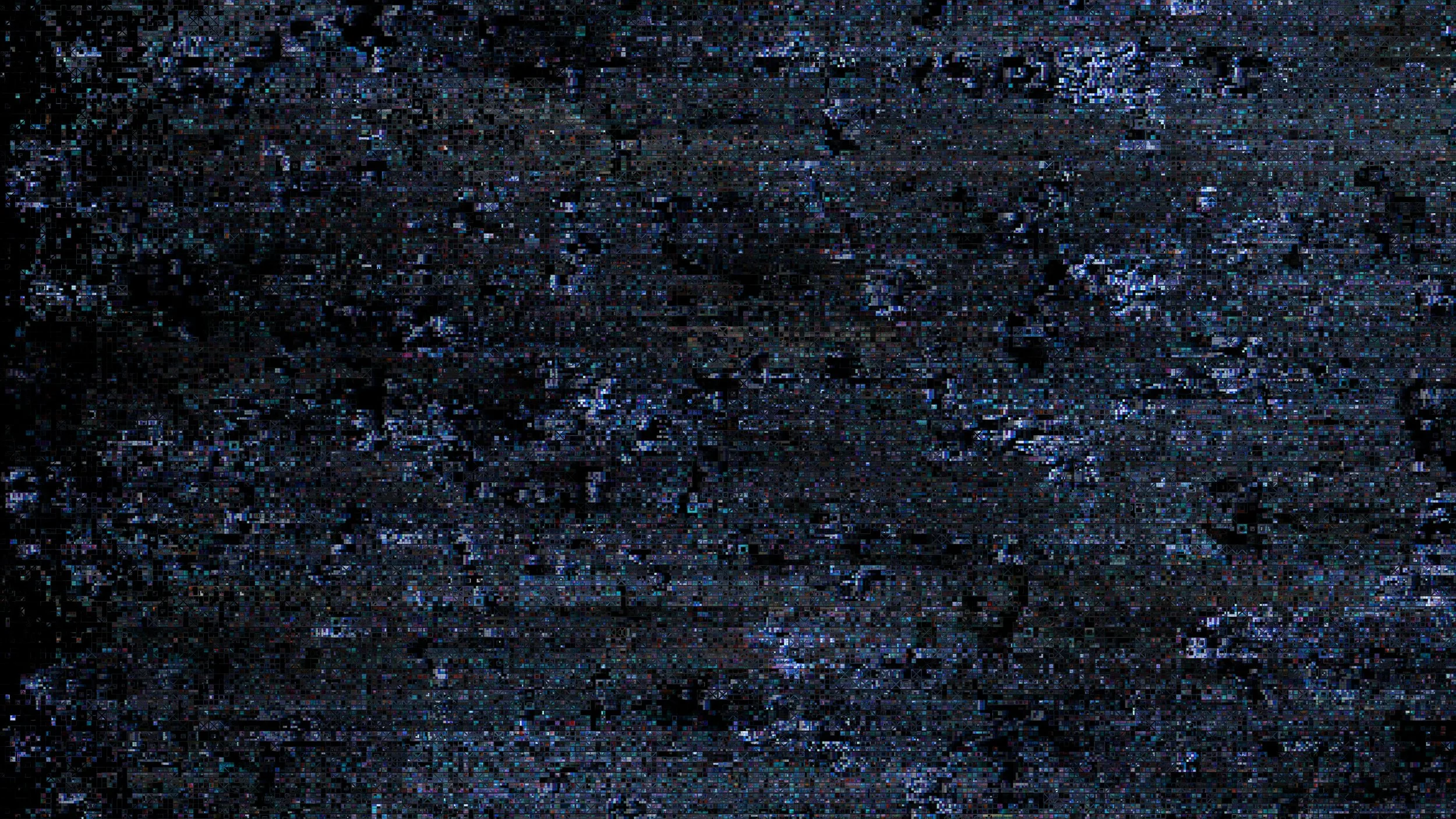
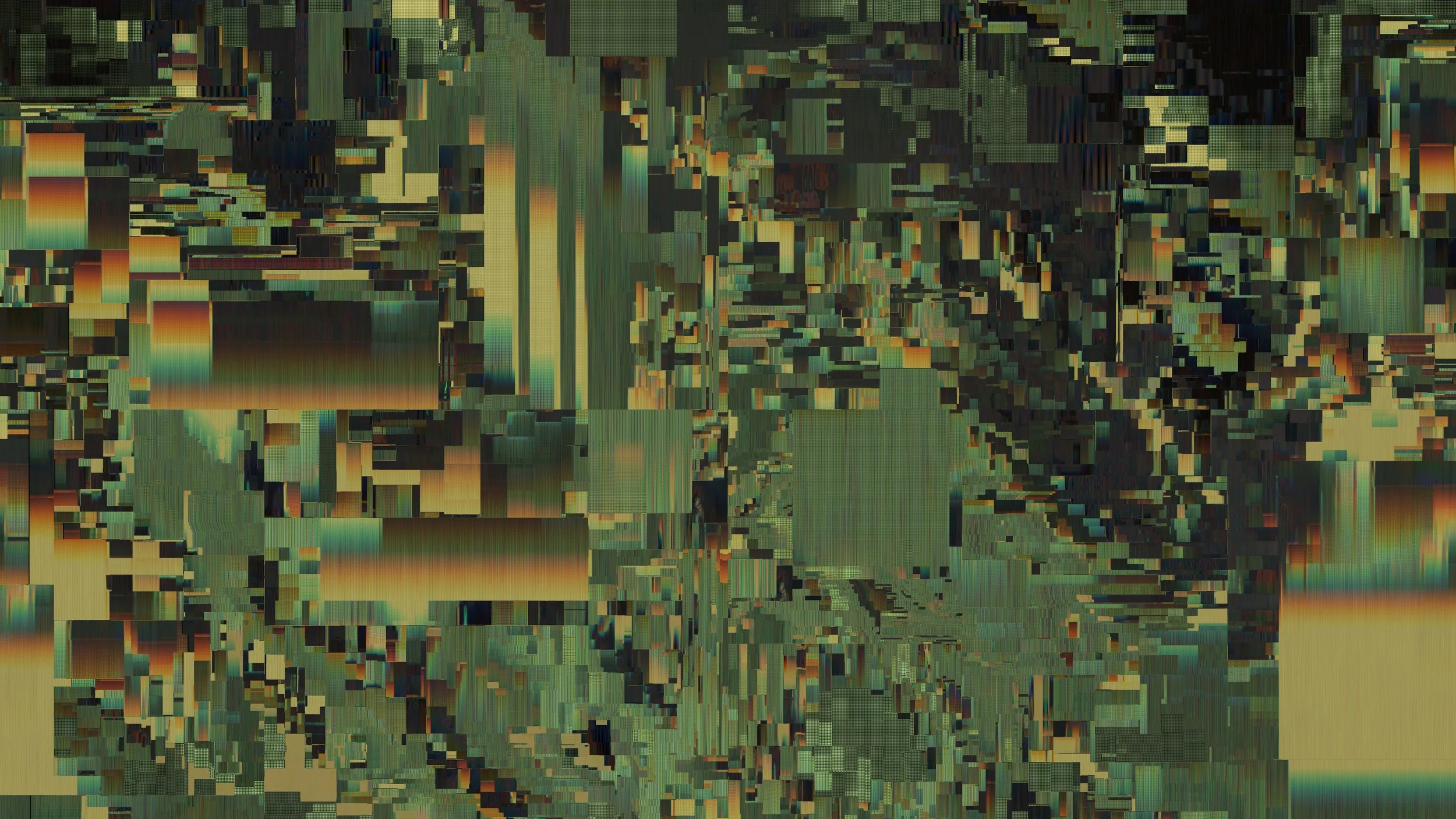
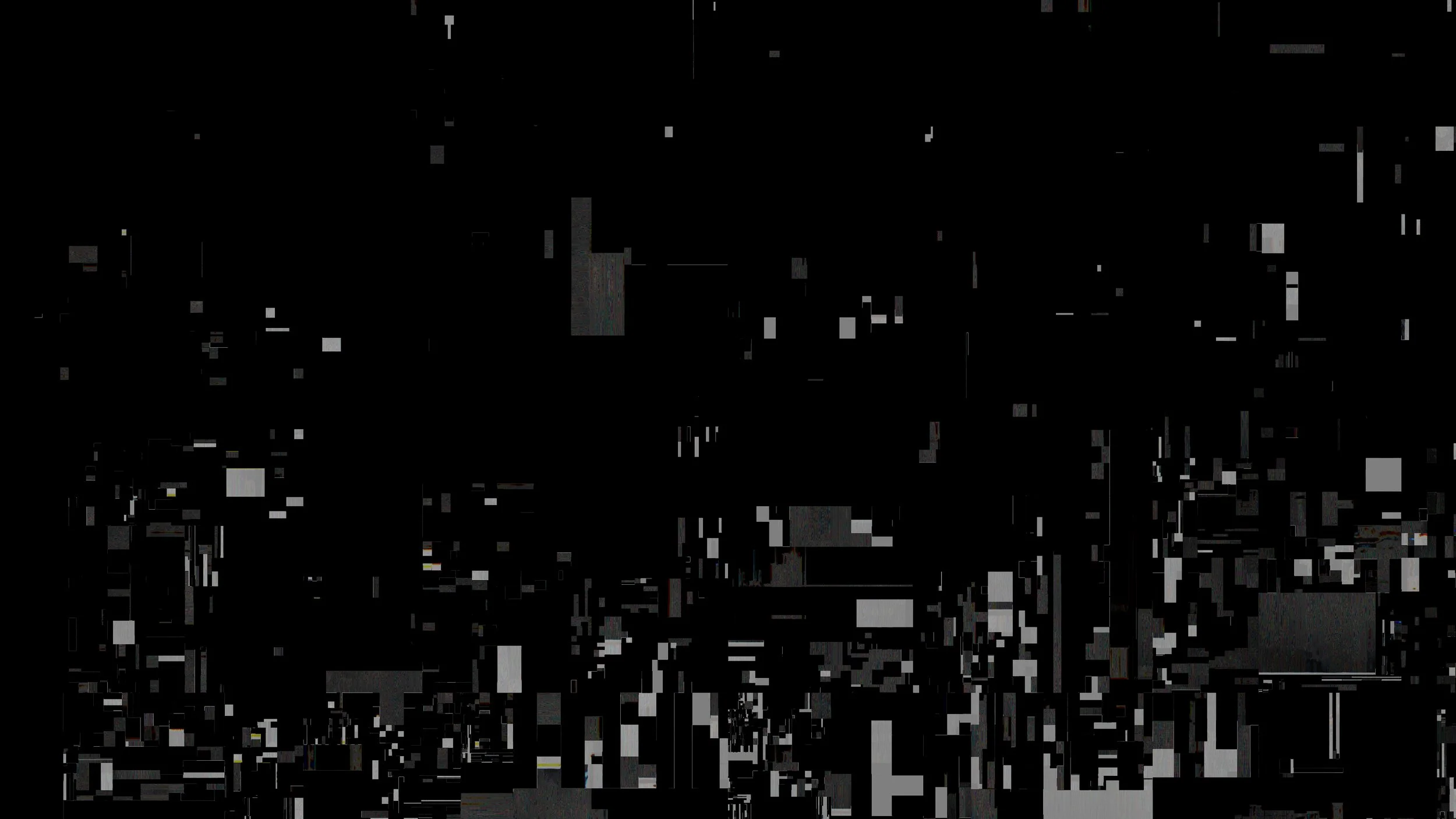
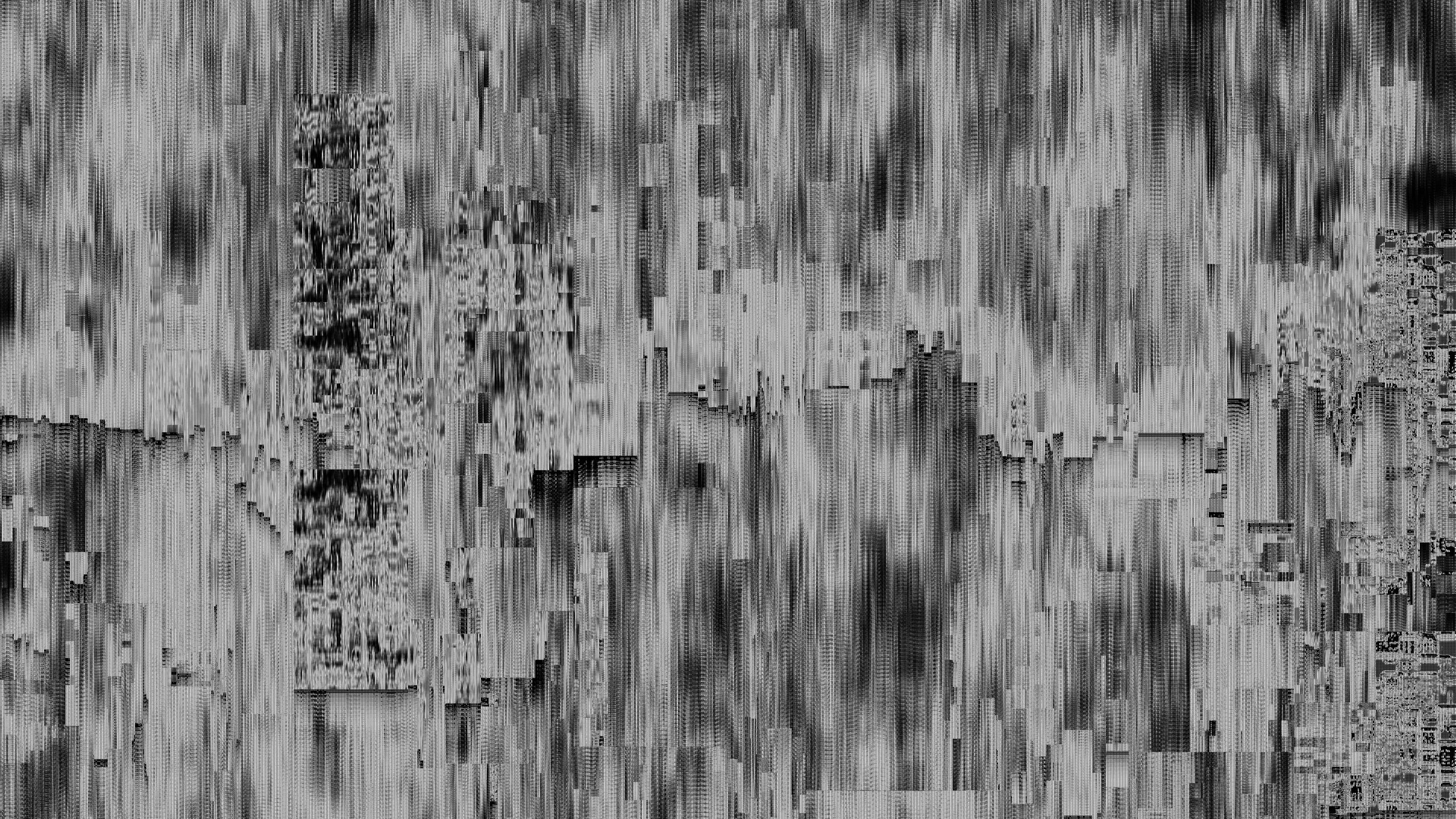
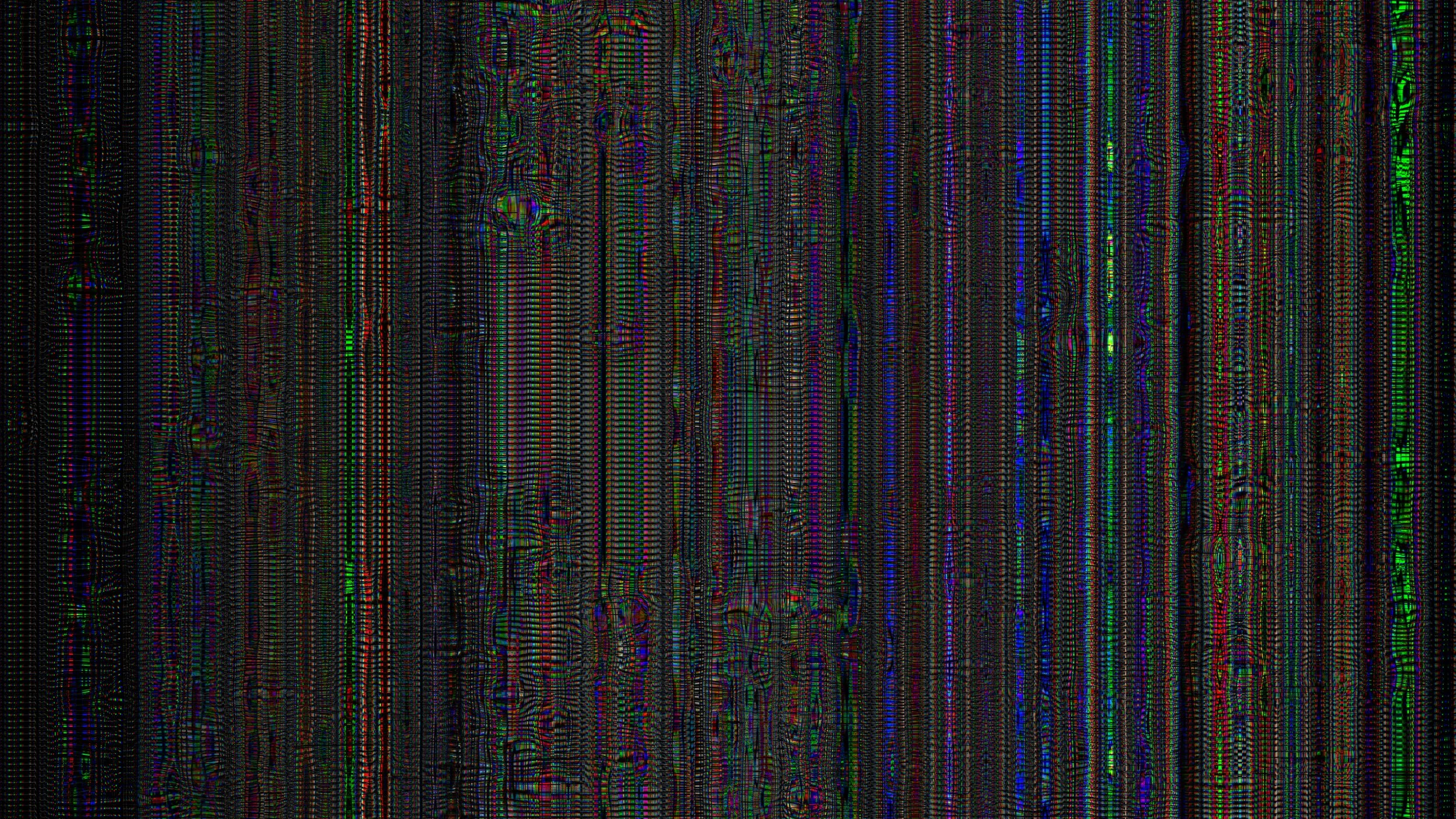
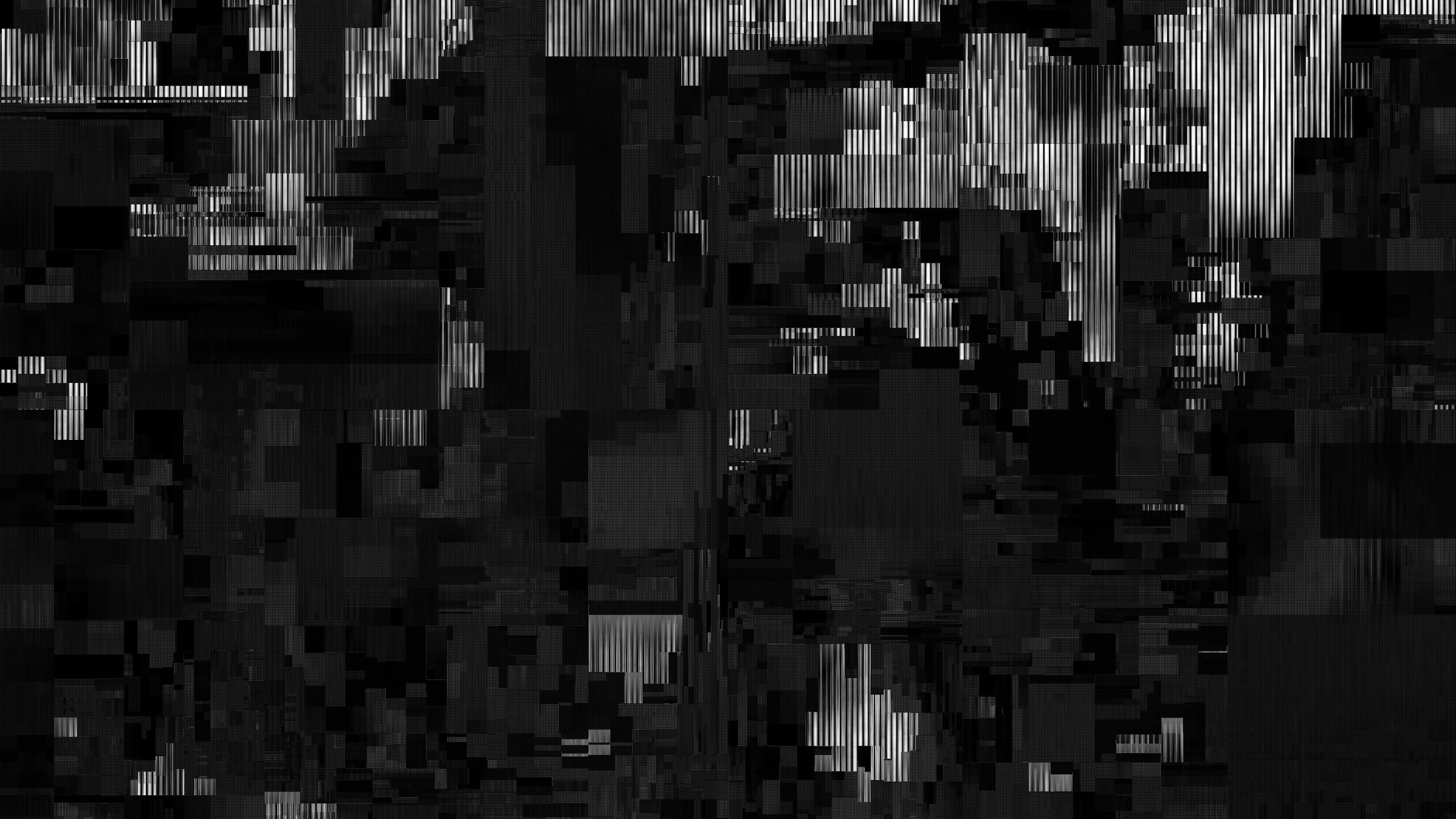
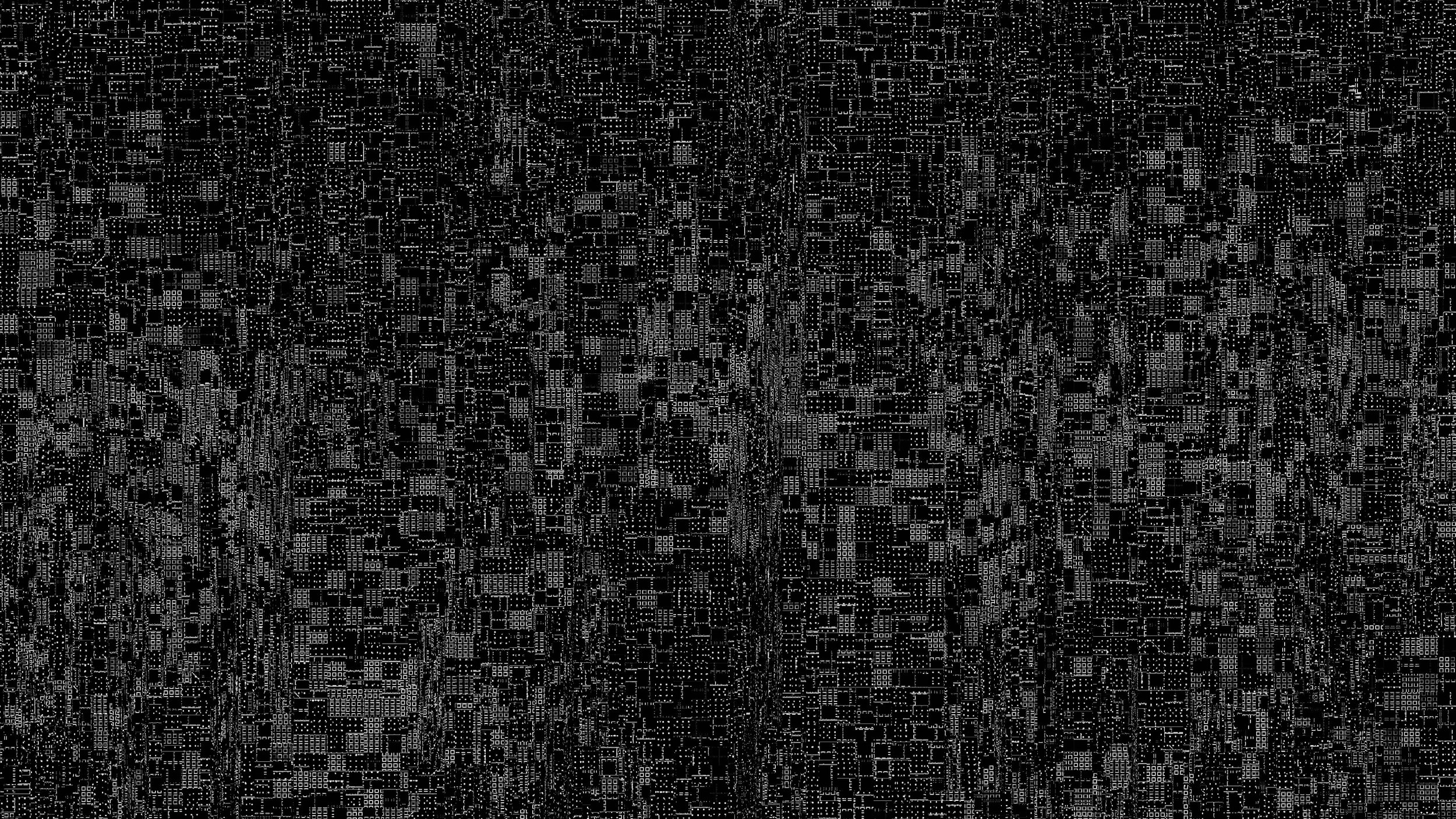
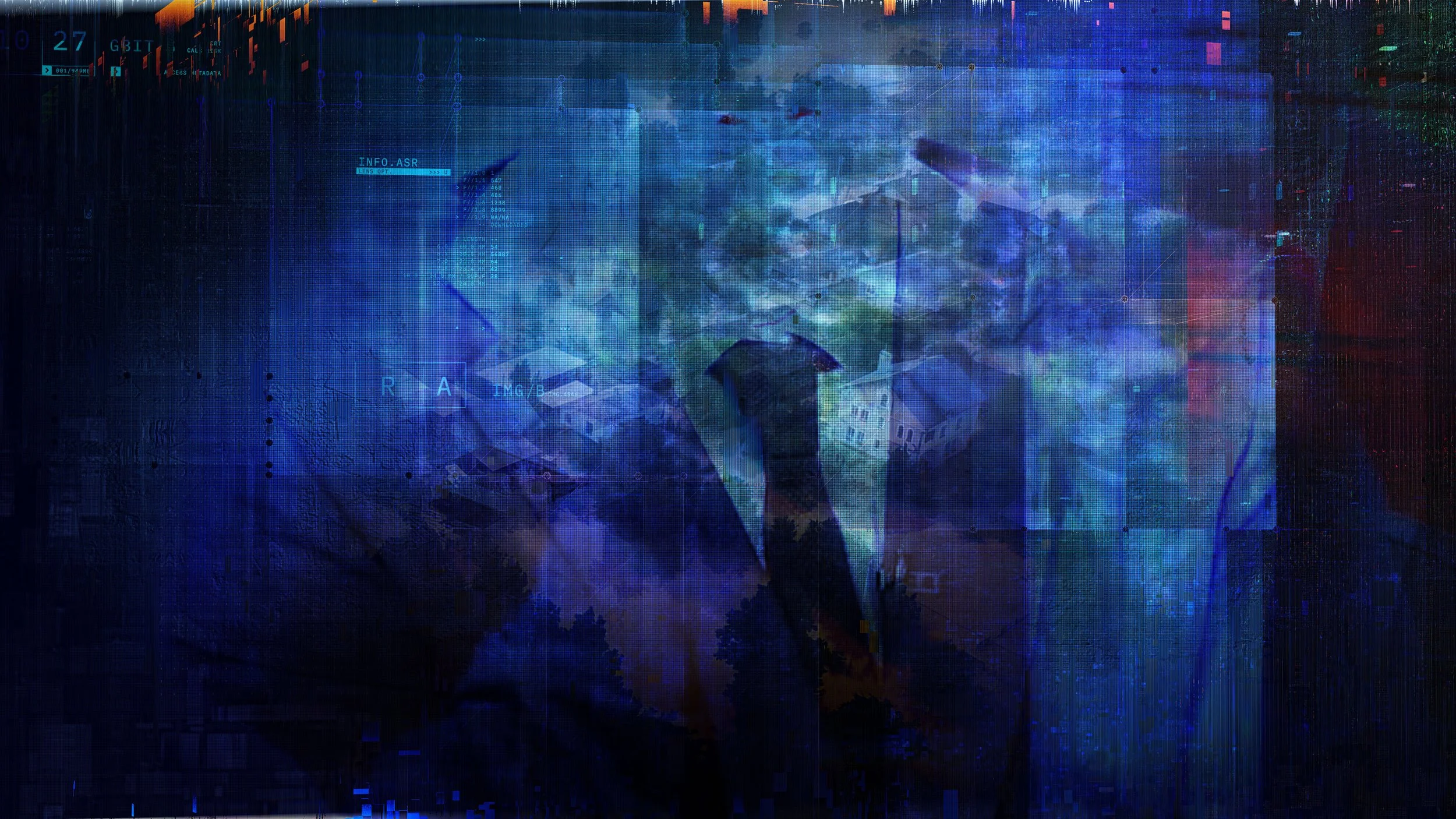
Process played a defining role in shaping the visual outcome. Glitch imagery is inherently dependent on both method and source material, and establishing a distinct look required avoiding pre-made effects, presets, or off-the-shelf assets.
To support this, dozens of custom mattes and graphic elements were developed to drive distortion, fragmentation, and layering throughout the film. These components formed a flexible toolkit, allowing variations in behavior while maintaining internal consistency across the system.
02.2 APPLICATION TO CONTENT
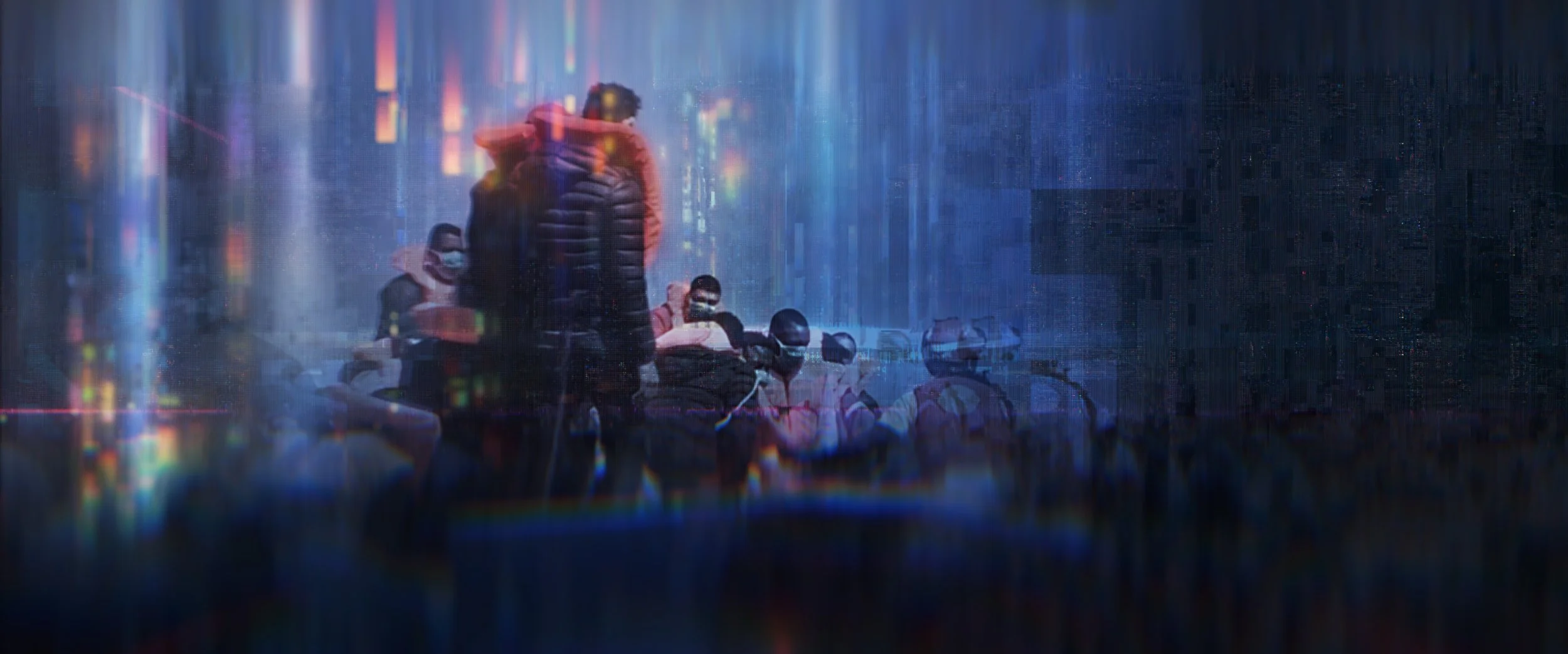
The film initially began as a two-dimensional, editorial-style concept. As development progressed, it expanded into a volumetric environment—the Network—capable of containing an extensive archive of content that could be navigated spatially.
This shift introduced new constraints. Content needed to function both as individual elements and as part of a larger field, existing across depth and scale. Early experiments explored ways of breaking the bounding box, allowing footage to project into space and interact with surrounding geometry.
02.3 ITERATION + DISCOVERY
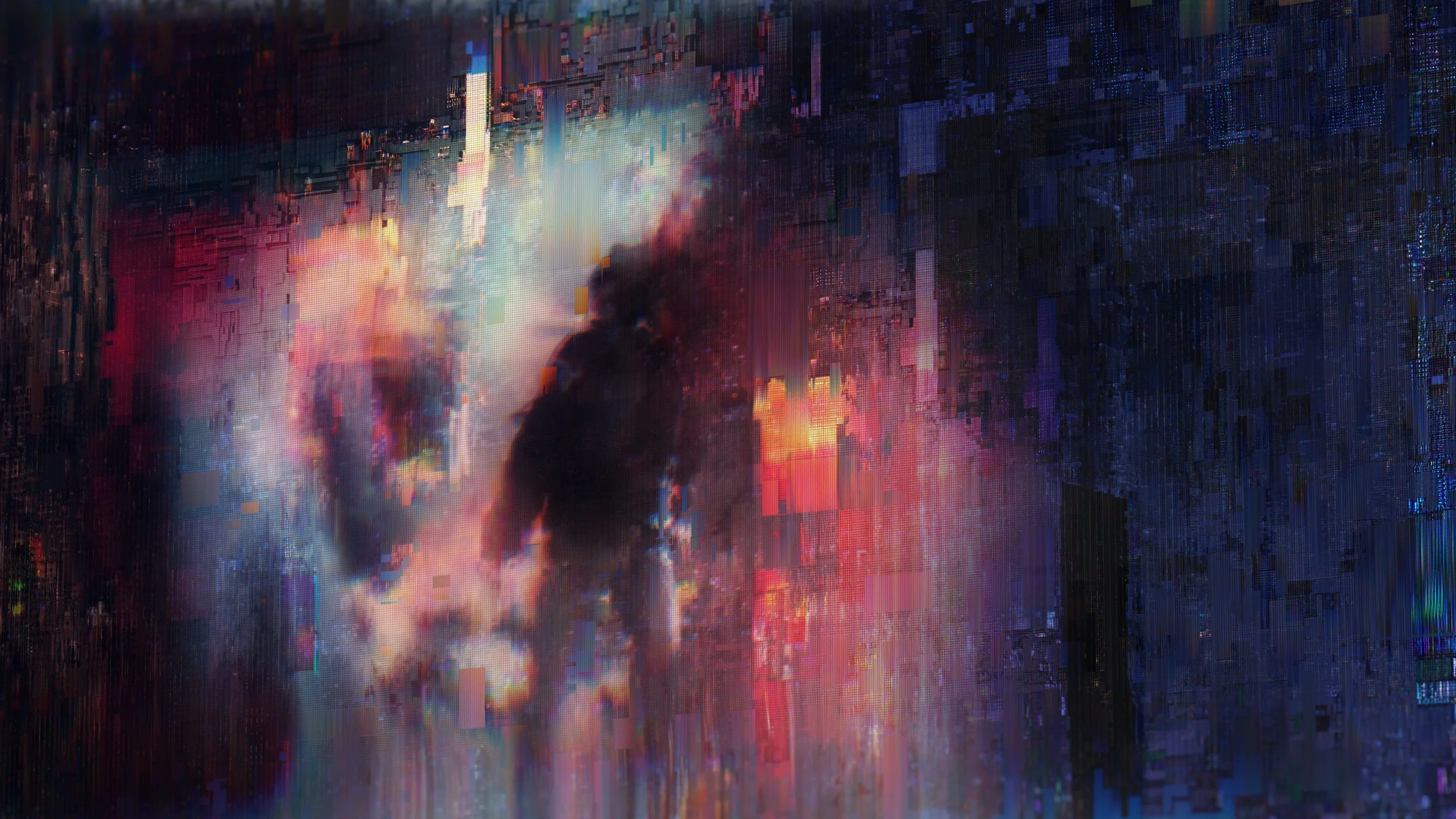
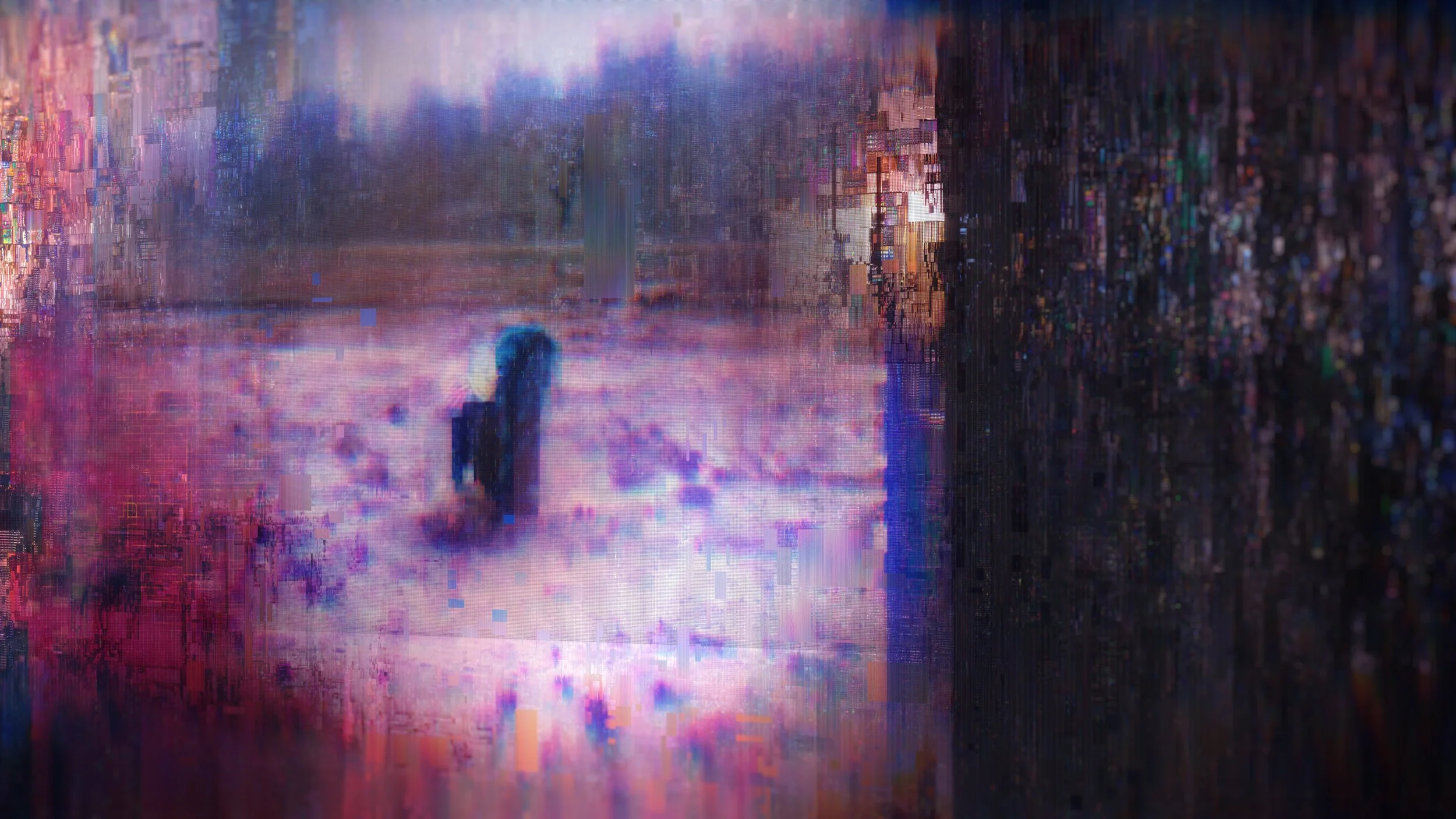
These studies clarified both potential and limitation. While individual frames achieved the desired tone, the underlying geometry proved insufficient when scaled to hundreds or thousands of simultaneous elements. The approach struggled to accommodate multiple content types—video, audio, and three-dimensional assets—within a single structural logic.
Several ideas carried forward from this phase, including incoming data streams, layered peripheral grids, and the way content visually merged with its environment. These elements became foundational, even as the container itself continued to evolve.
02.4 BLACK OUT
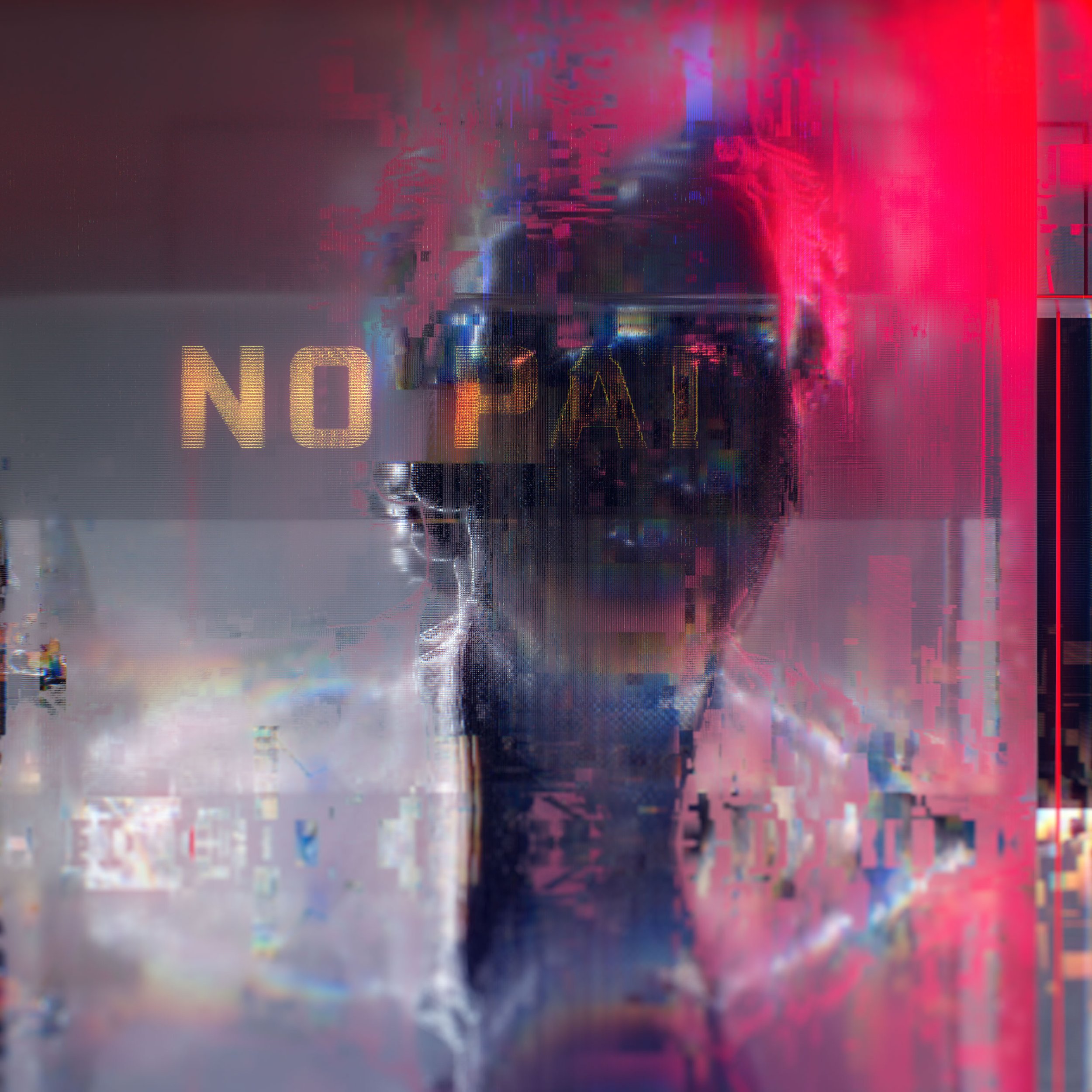
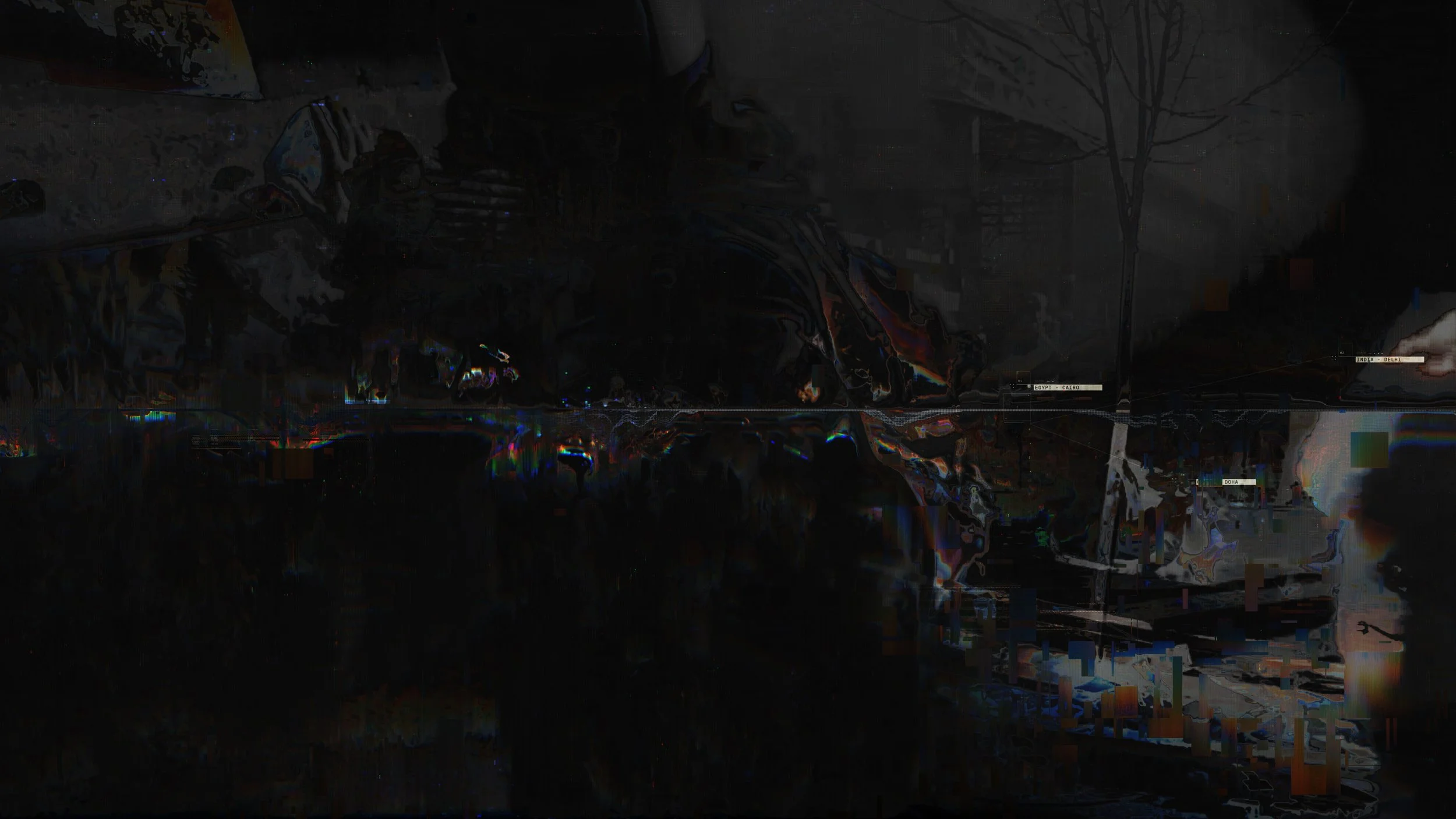
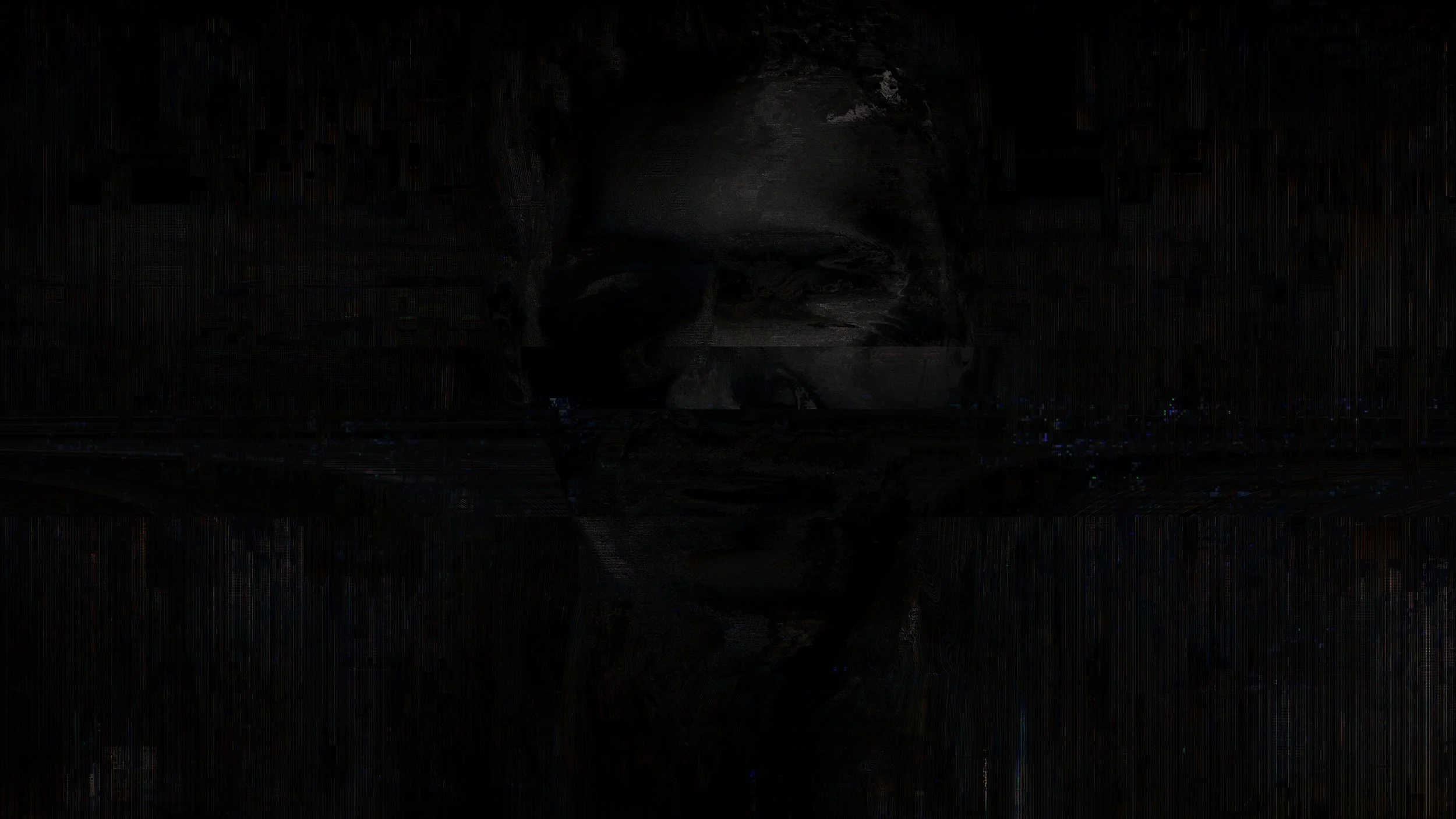
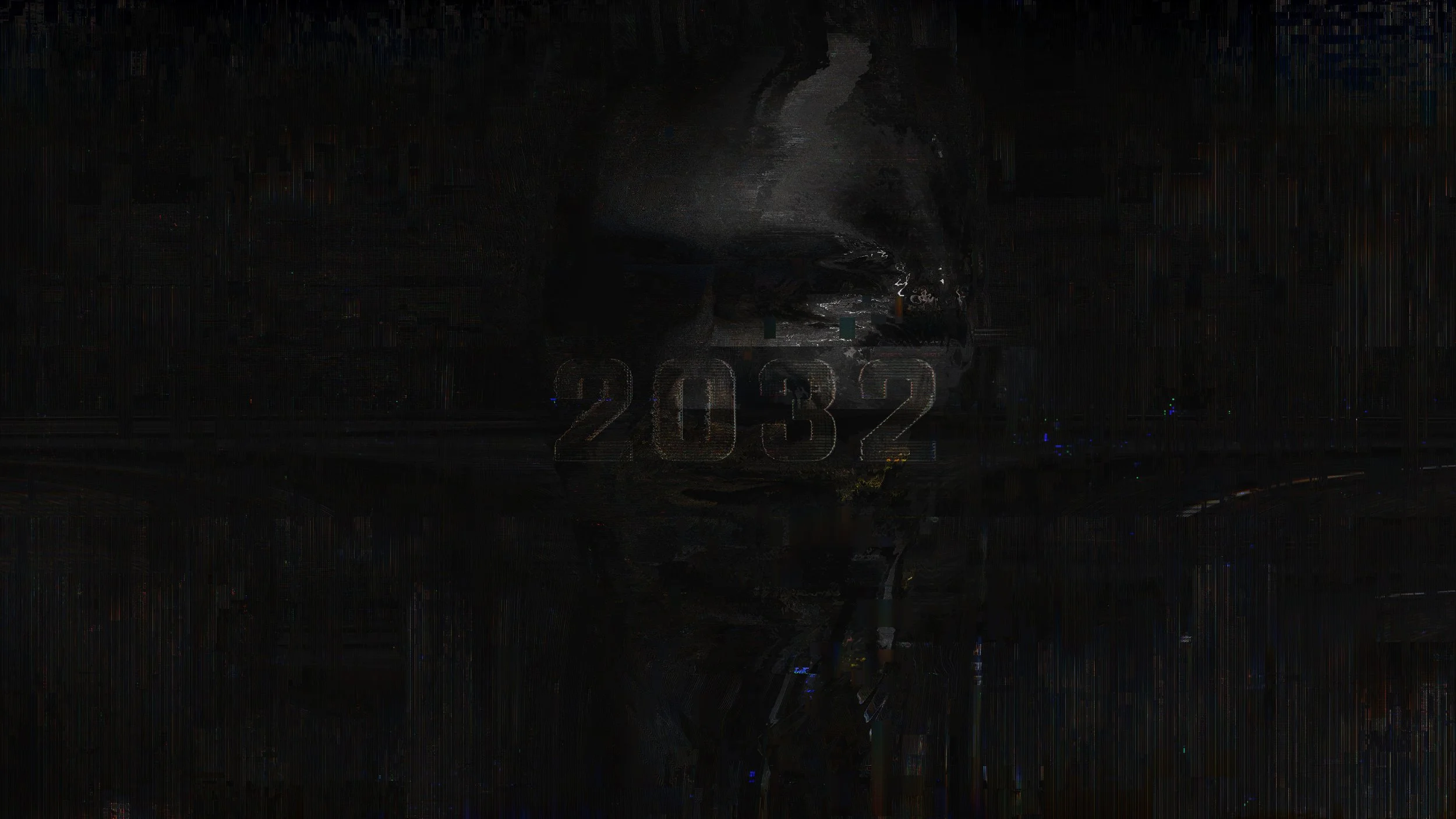
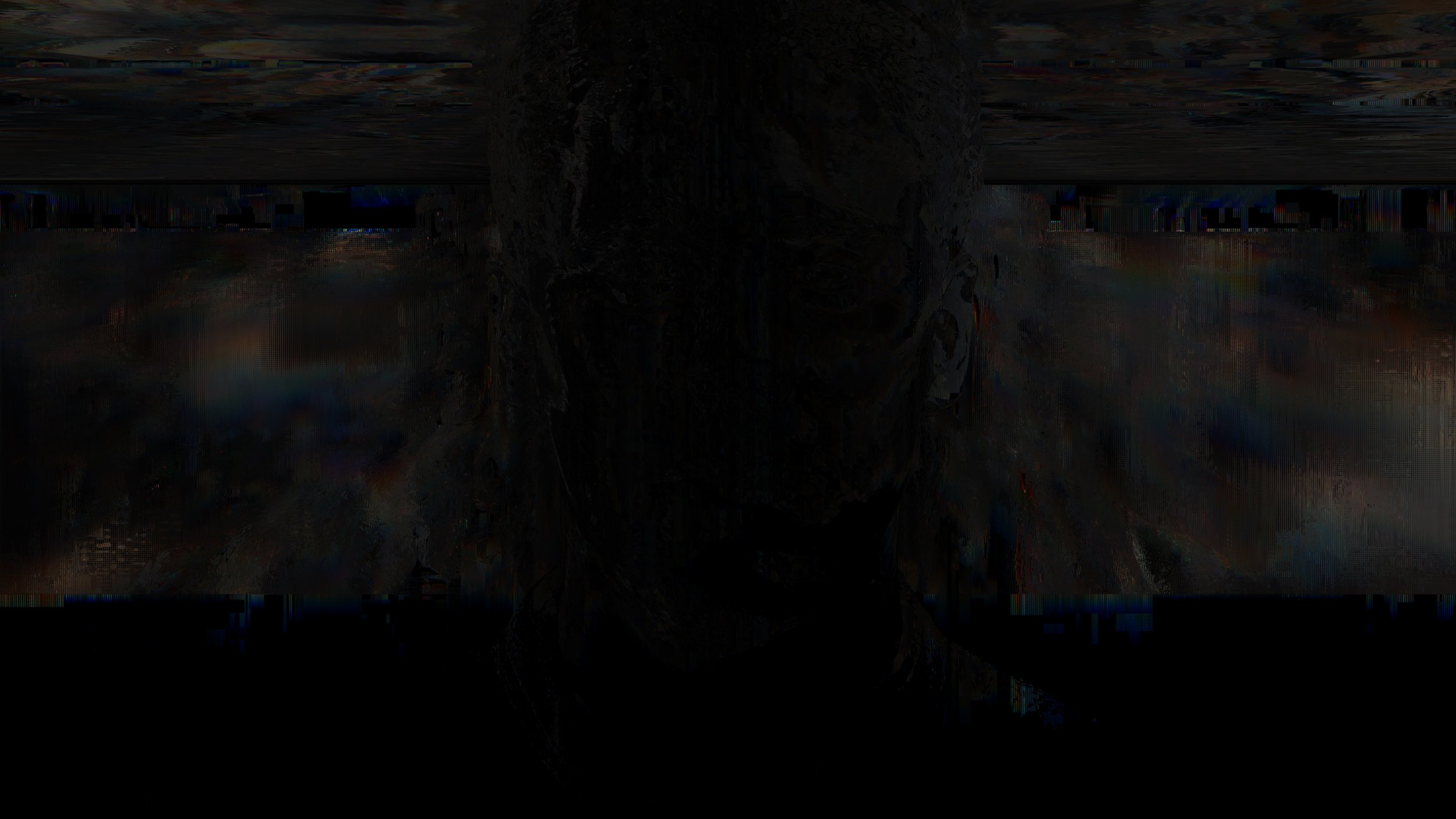
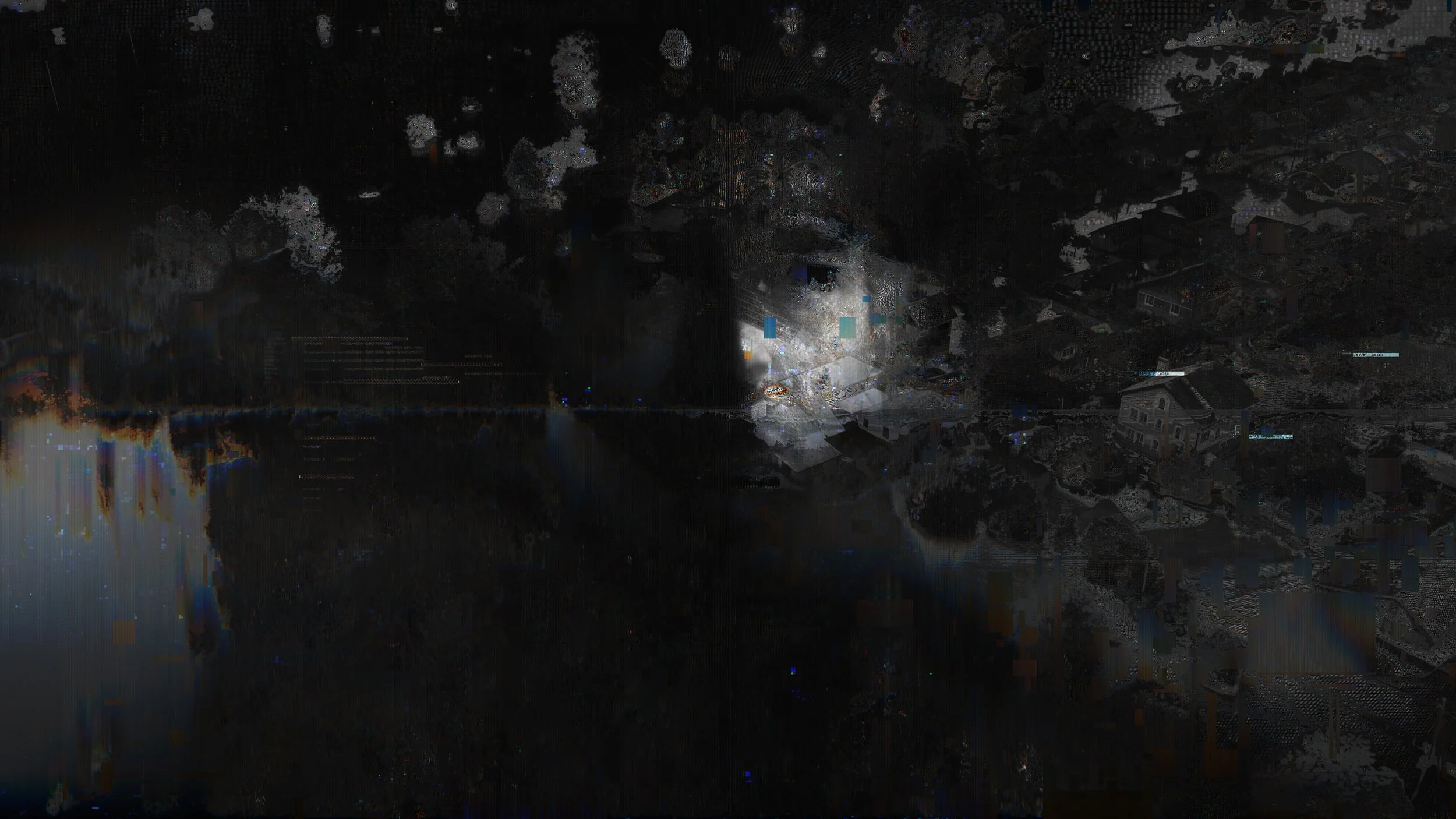
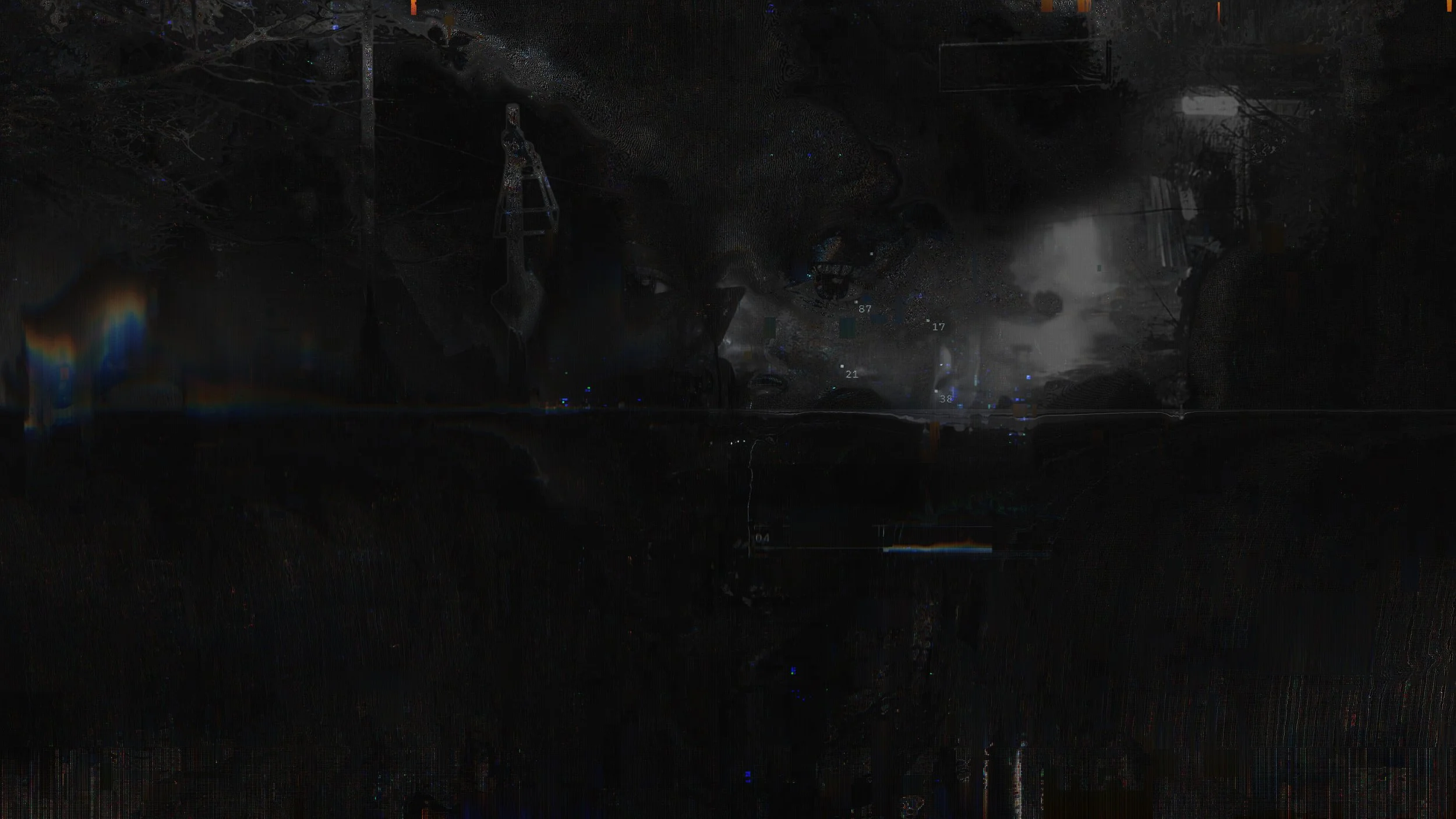
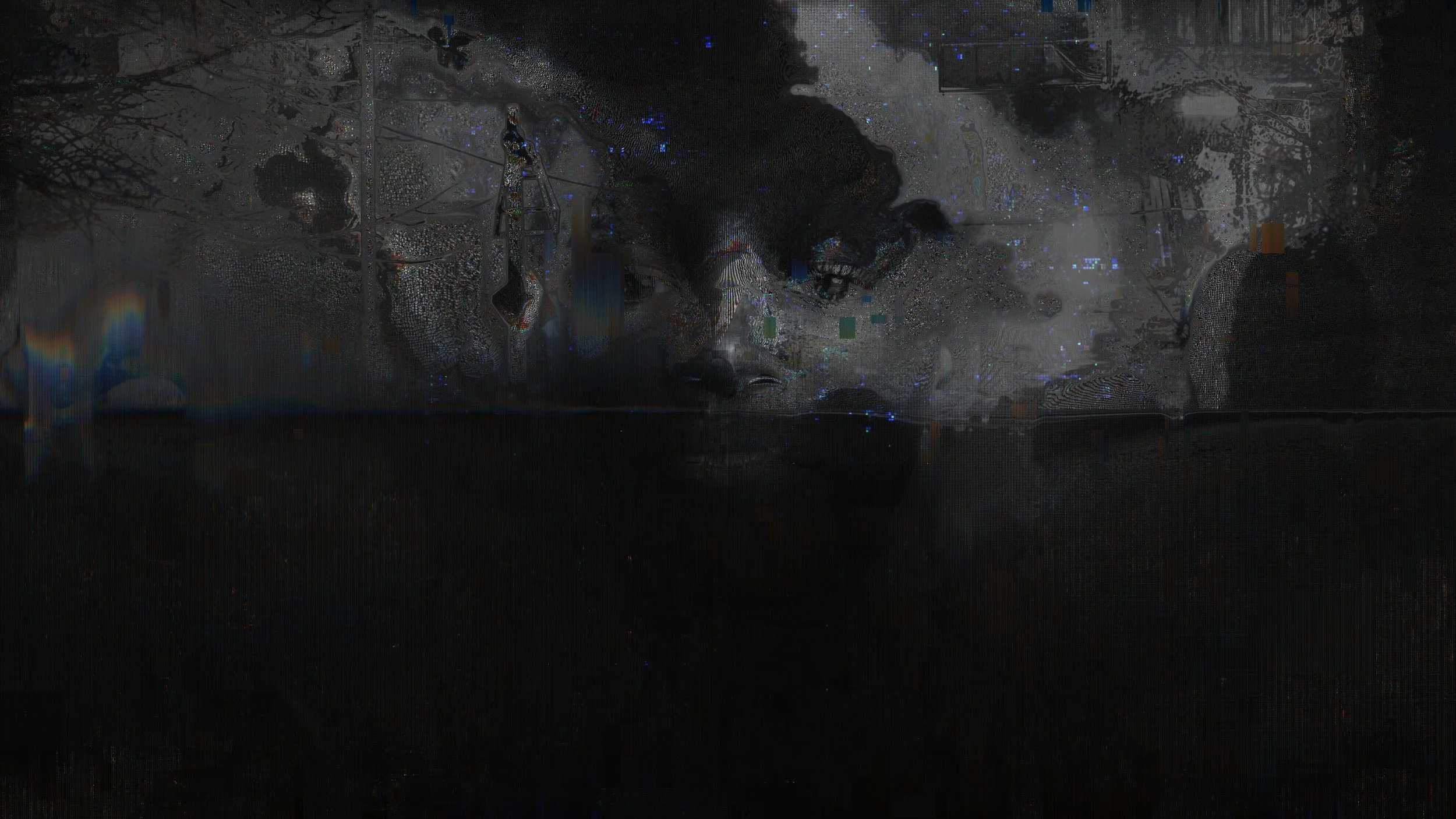
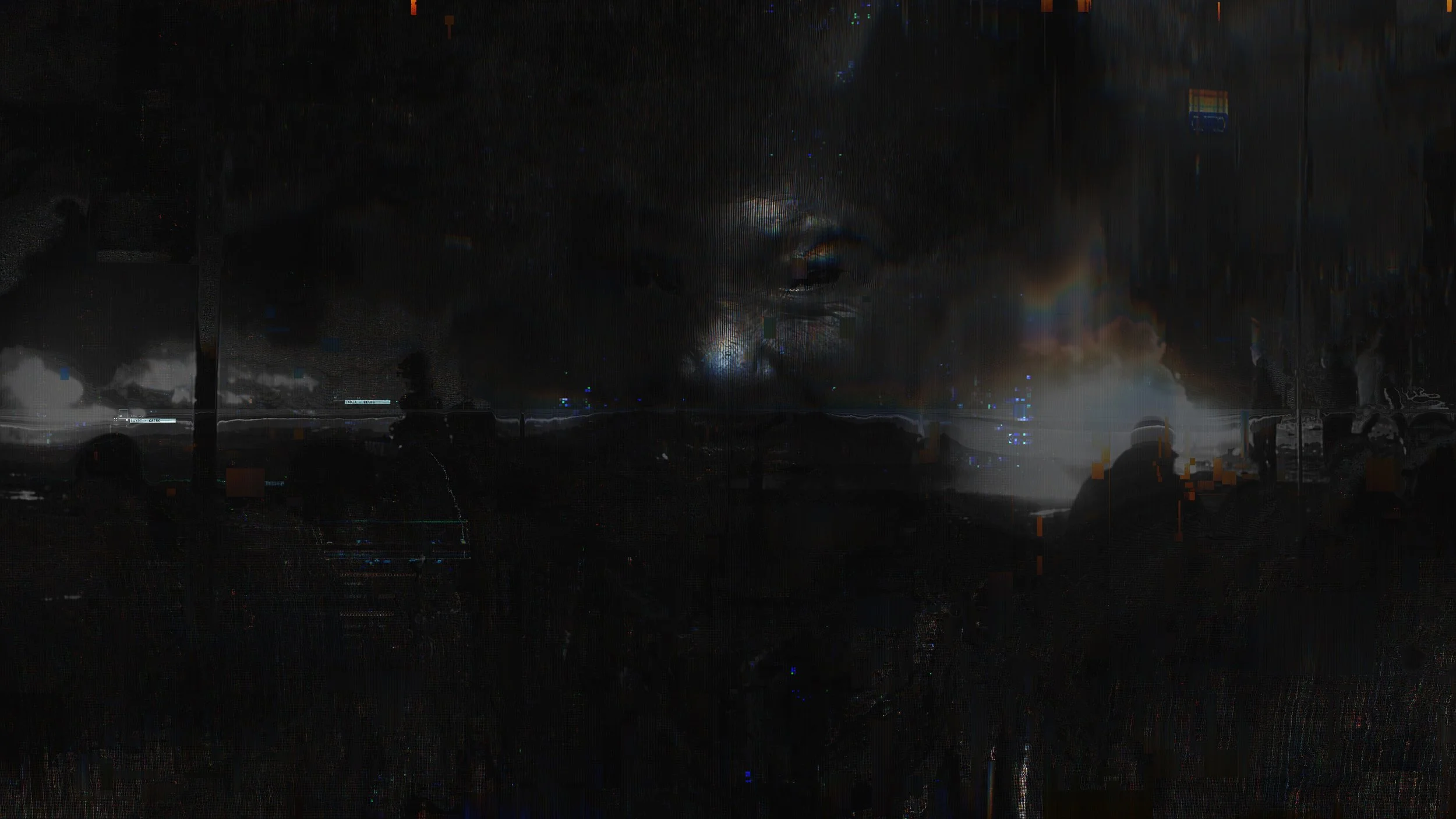
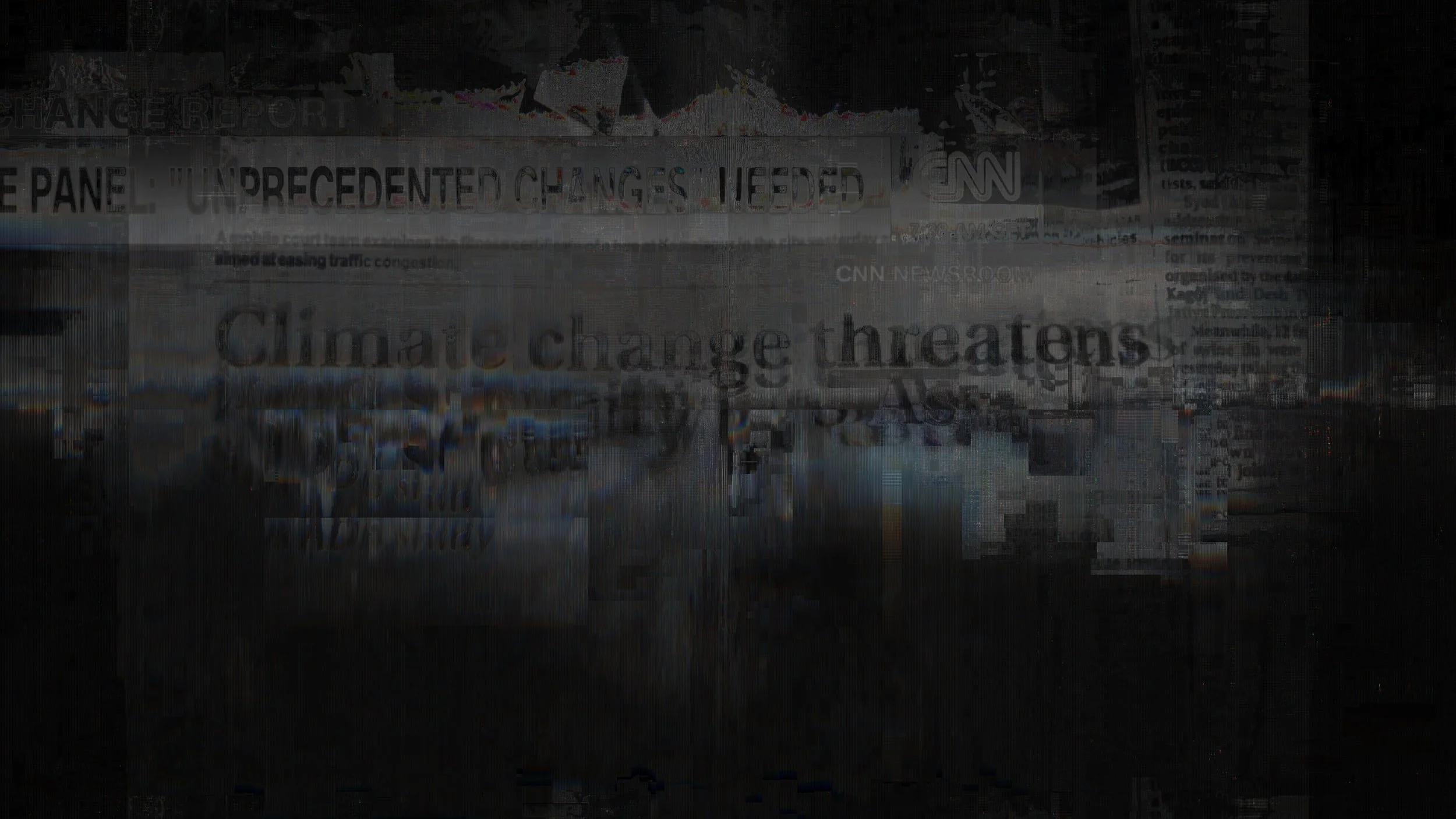
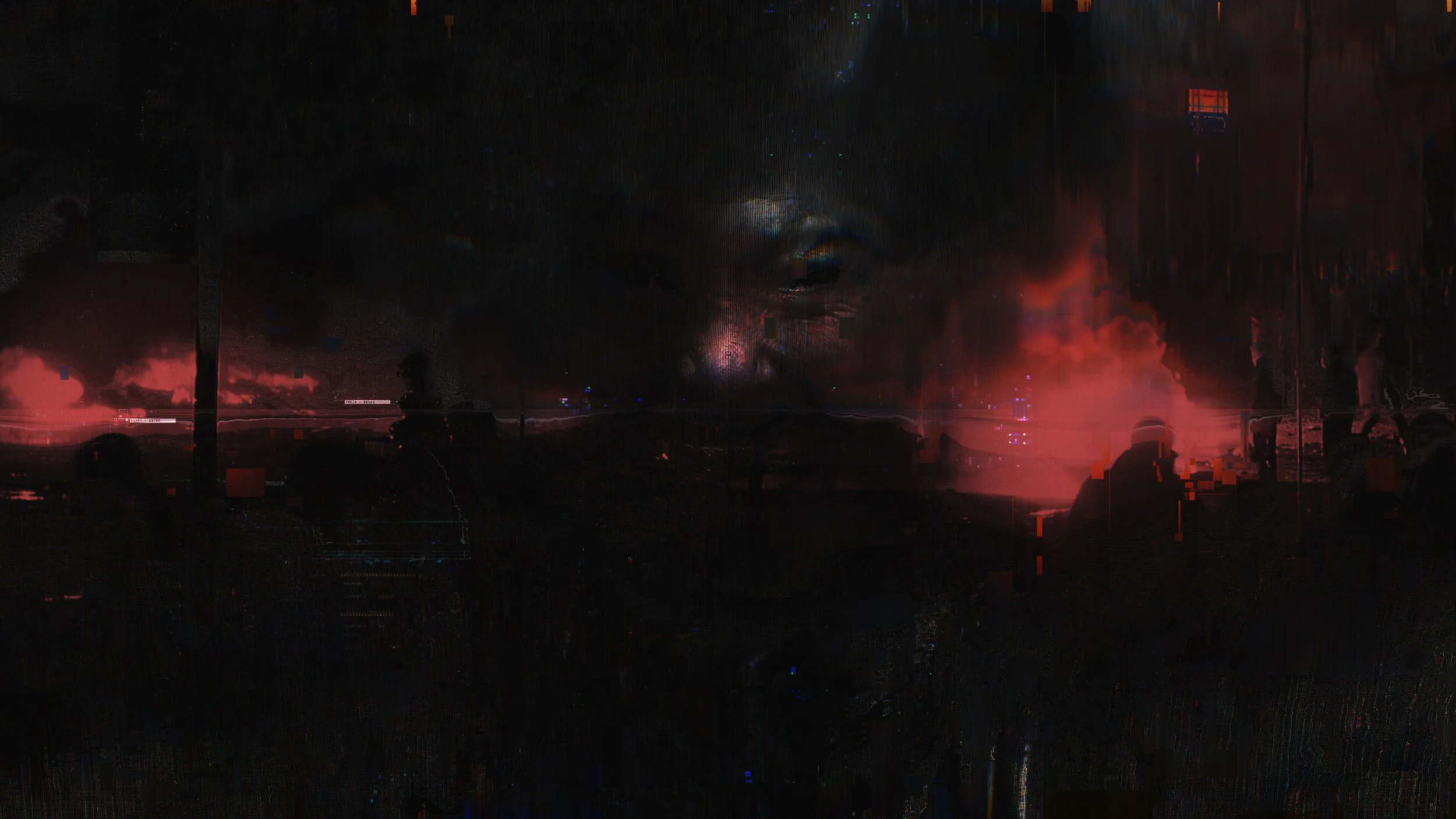
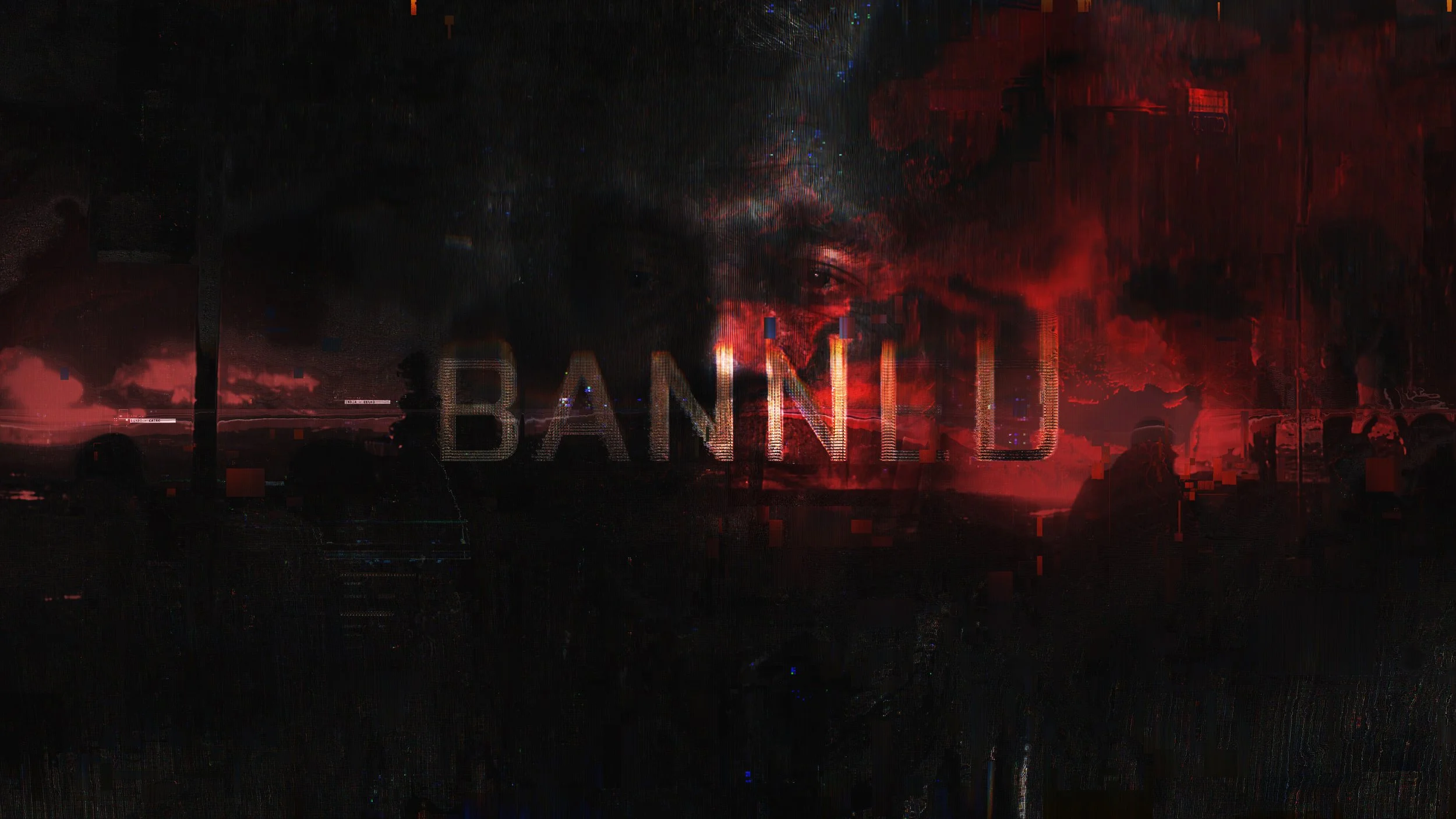
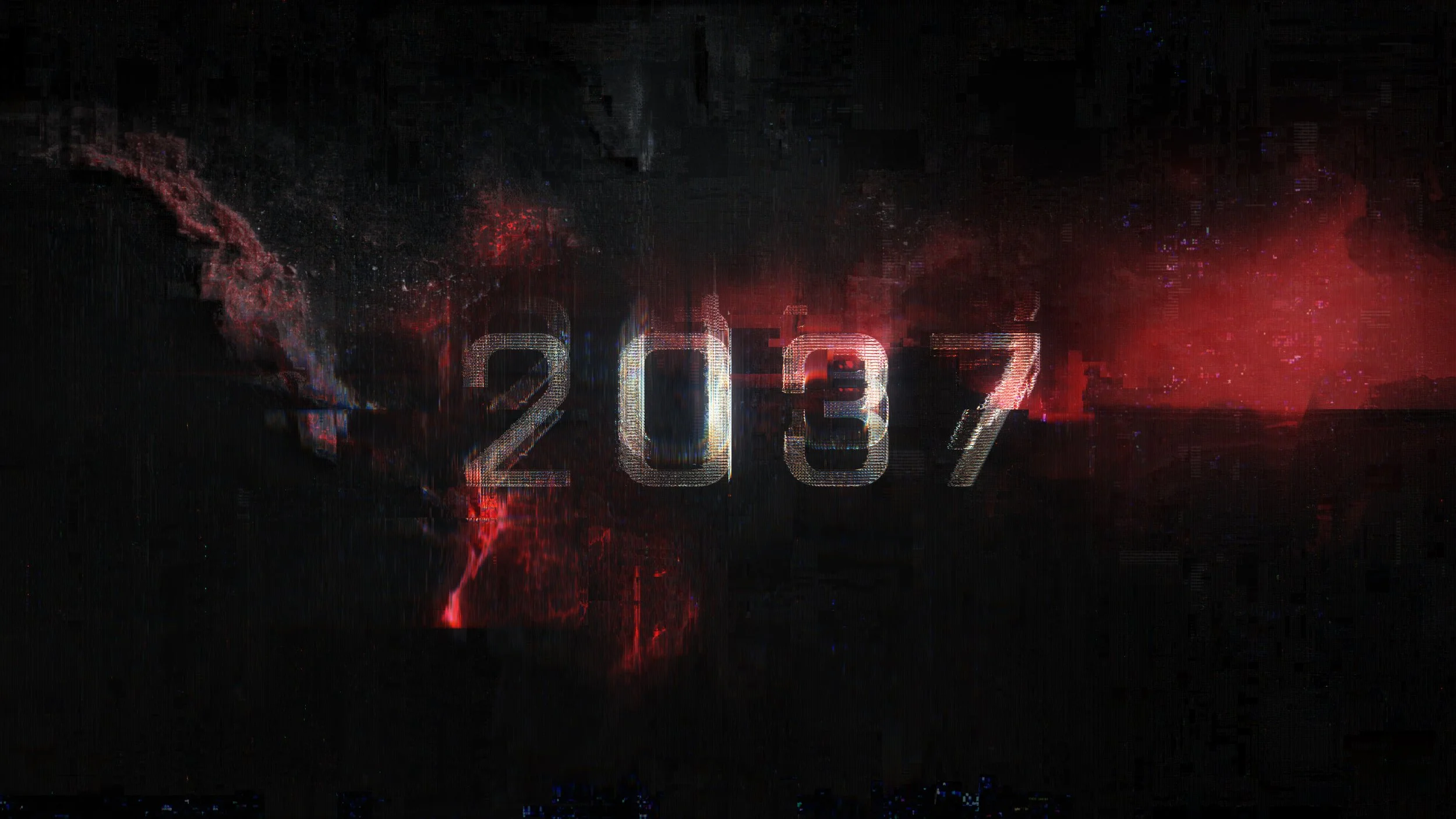
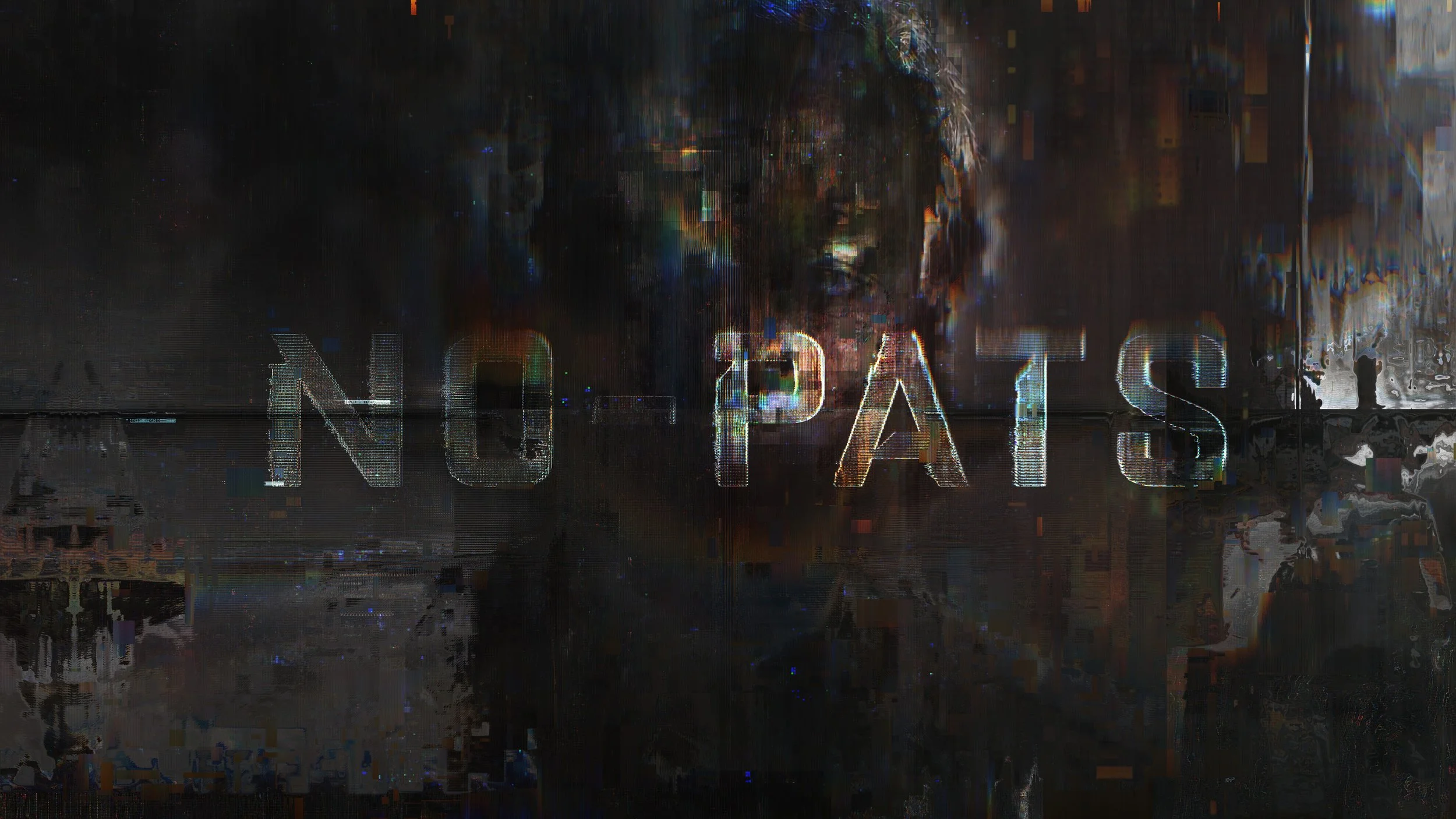
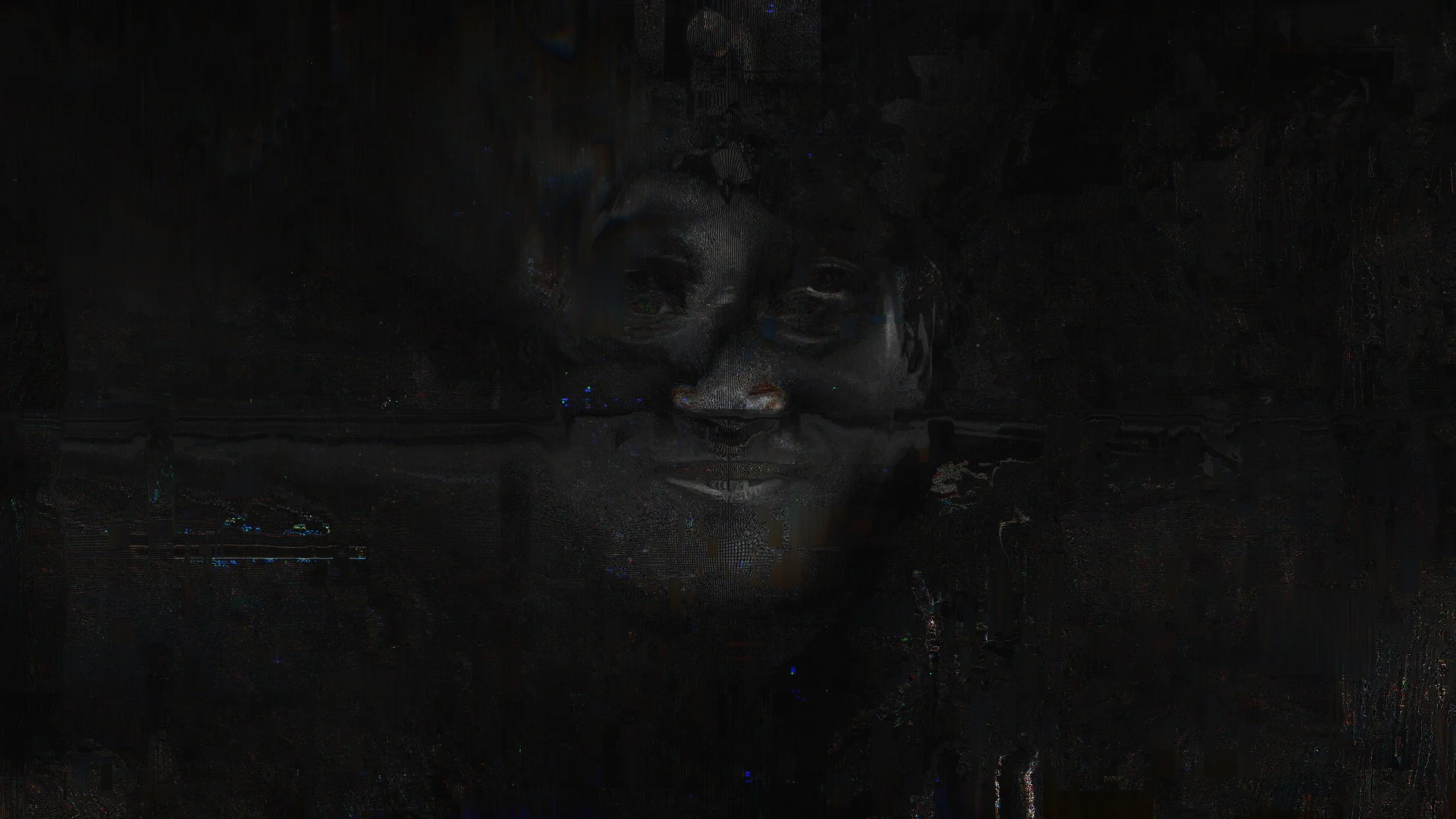
During early development of the blackout sequence, an alternate narrative approach was explored. The concept centered on a camouflaged broadcast delivered by a No-Pat group, using AI-generated faces and voices that shifted continuously to obscure identity.
This system combined static interference, typography, and embedded footage that surfaced intermittently through the noise. While the idea was ultimately set aside, the exploration helped define the visual vocabulary of disruption and informed later treatments of signal loss and instability elsewhere in the film.
02.5 Voxels
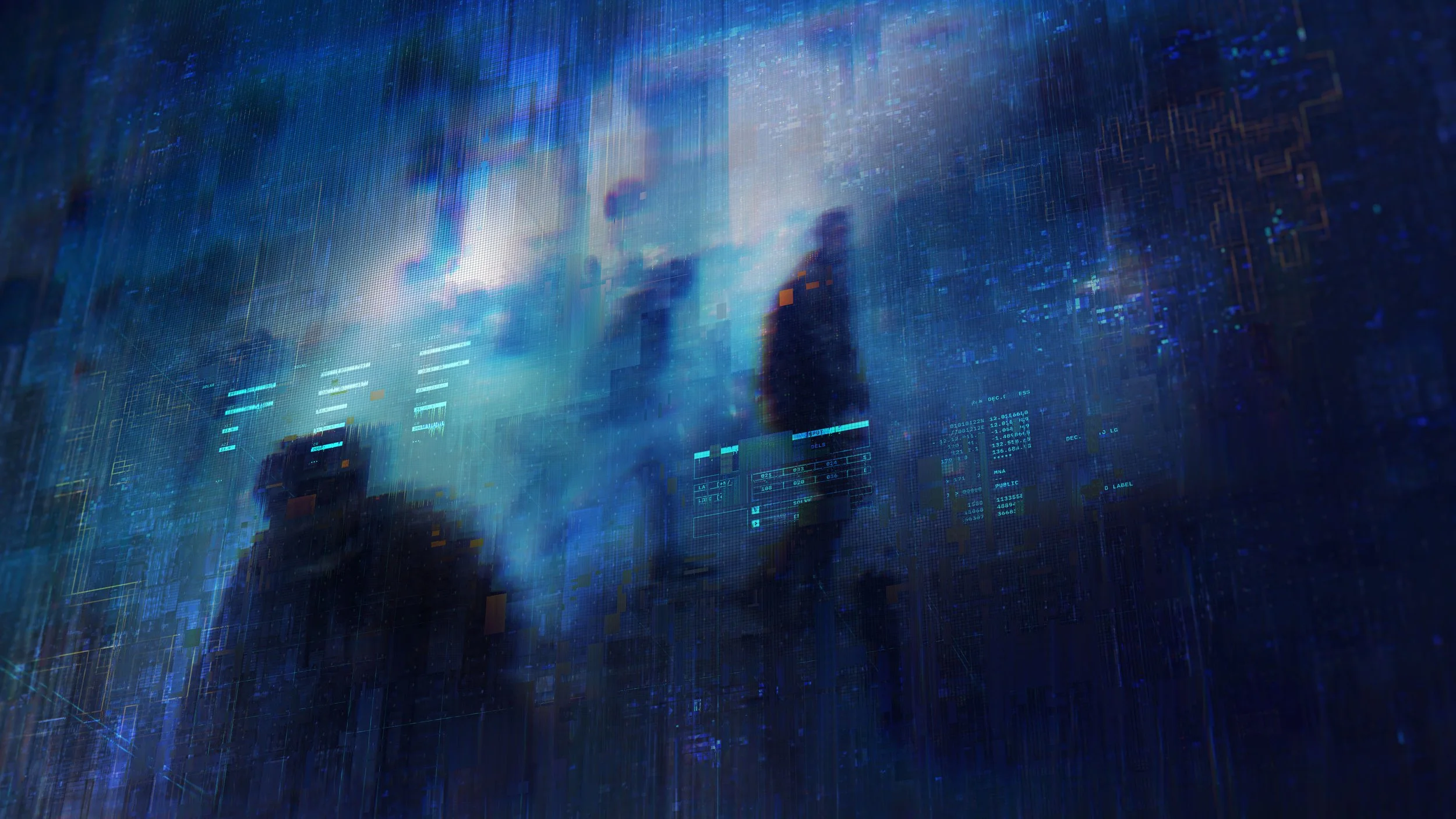
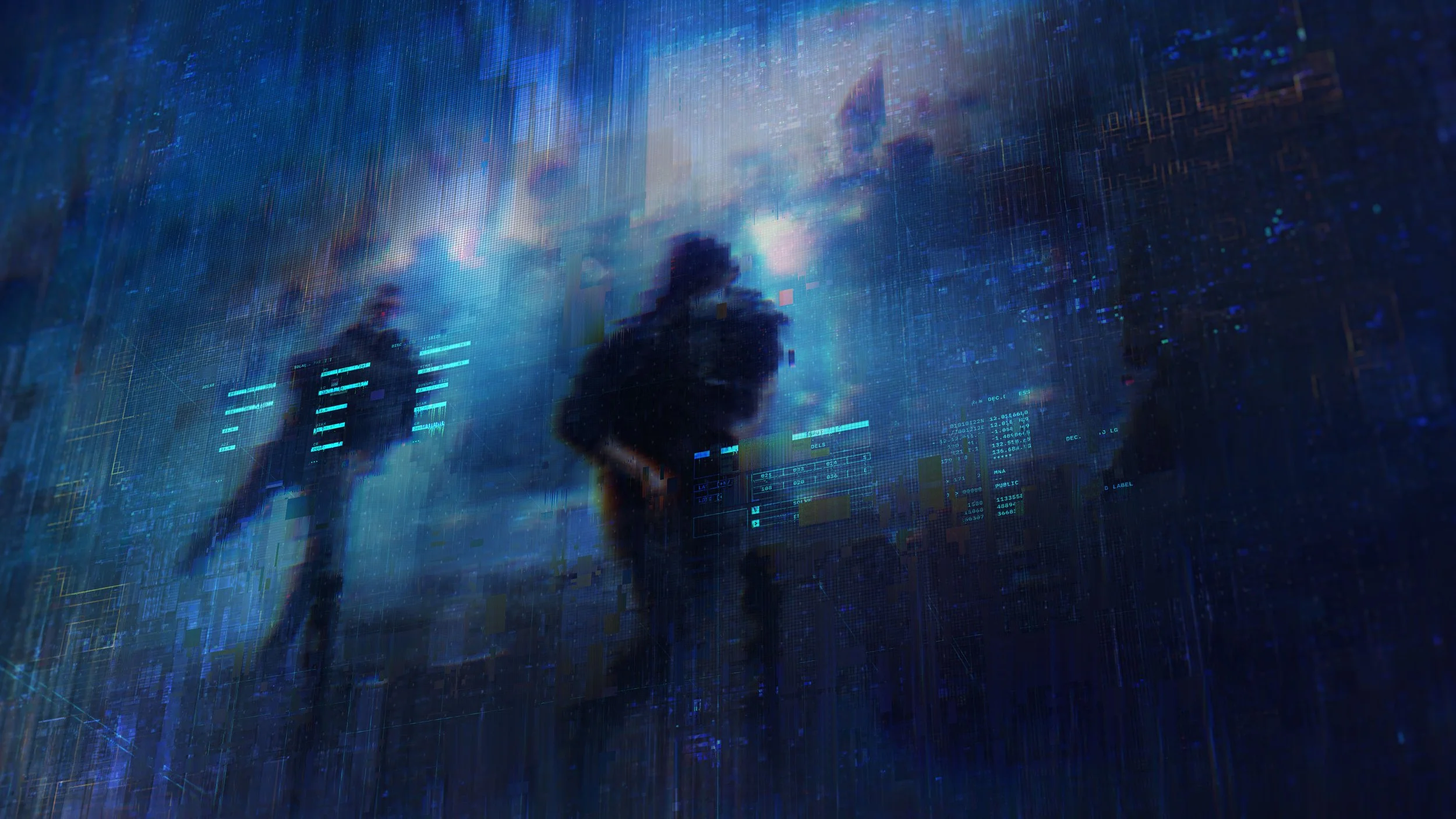
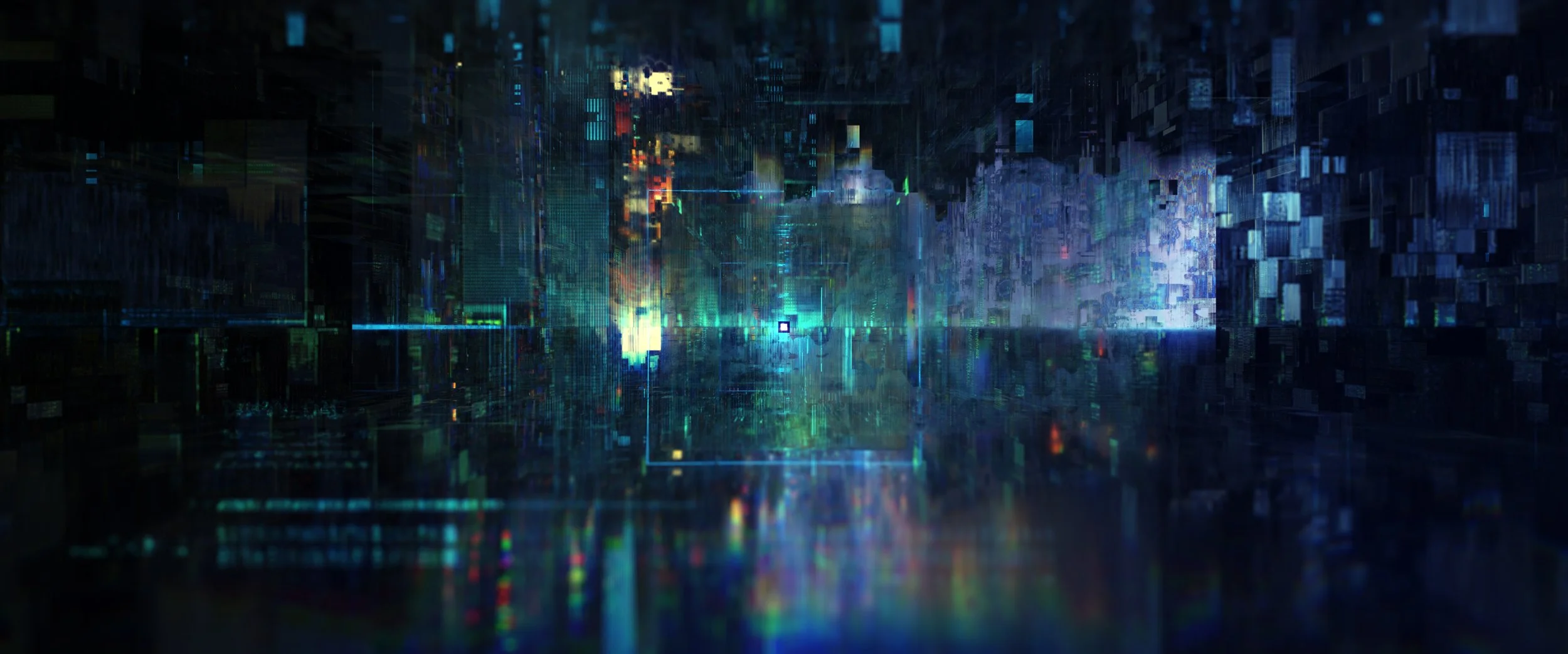
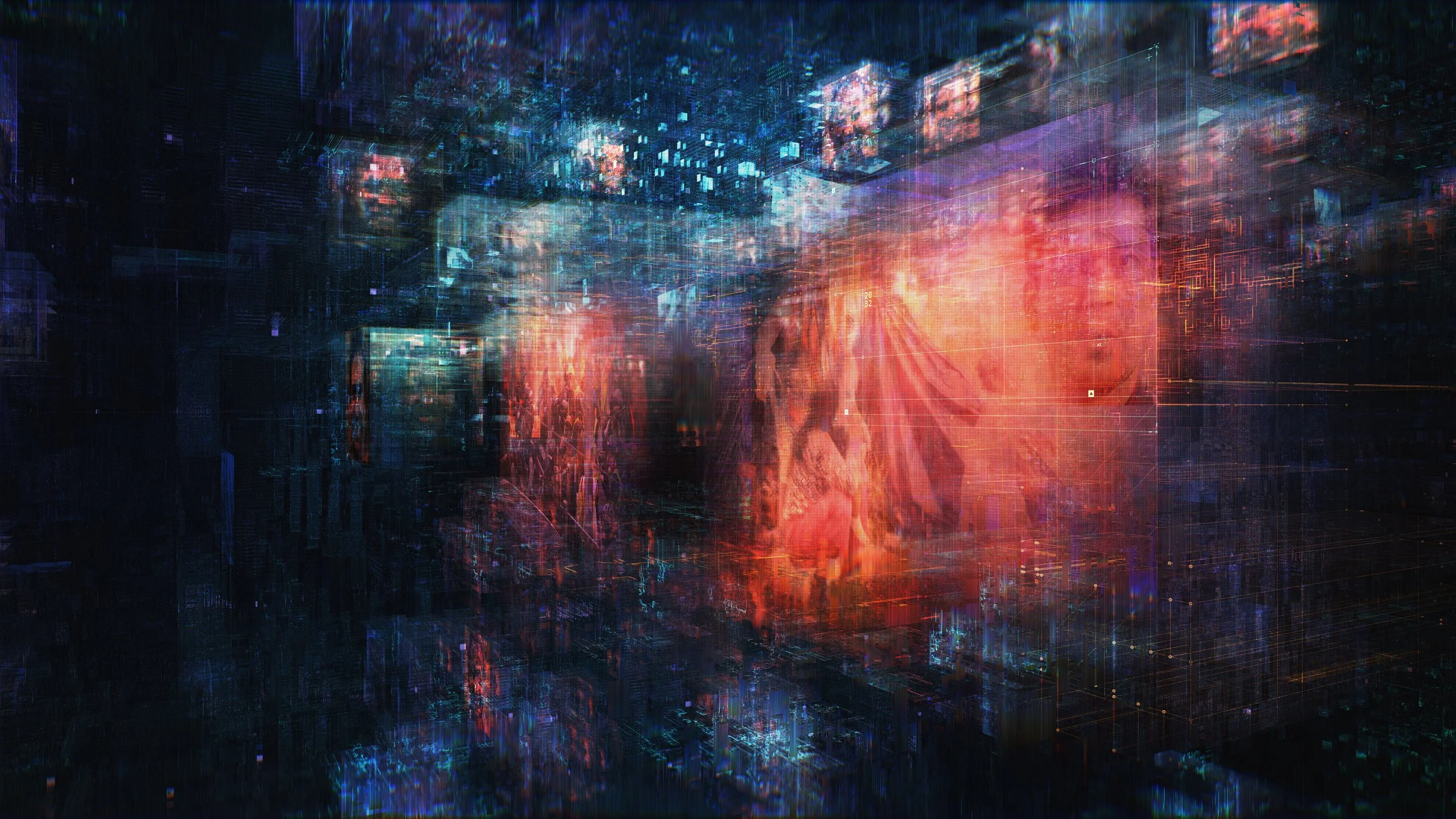
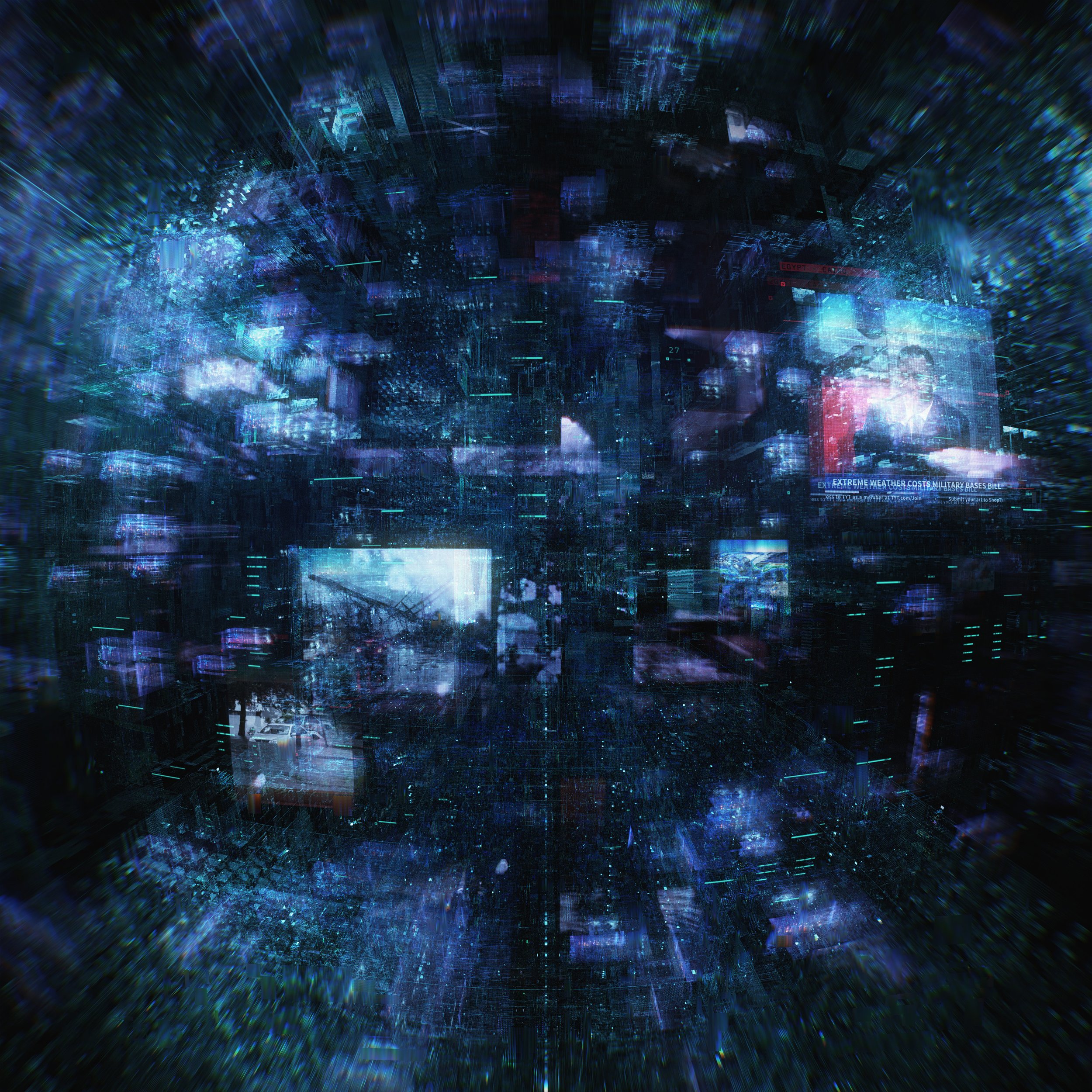
The projection-based approach never fully resolved the spatial challenges of the Network. A new solution emerged while developing the map sequences: volumetric grids functioning as holographic containers.
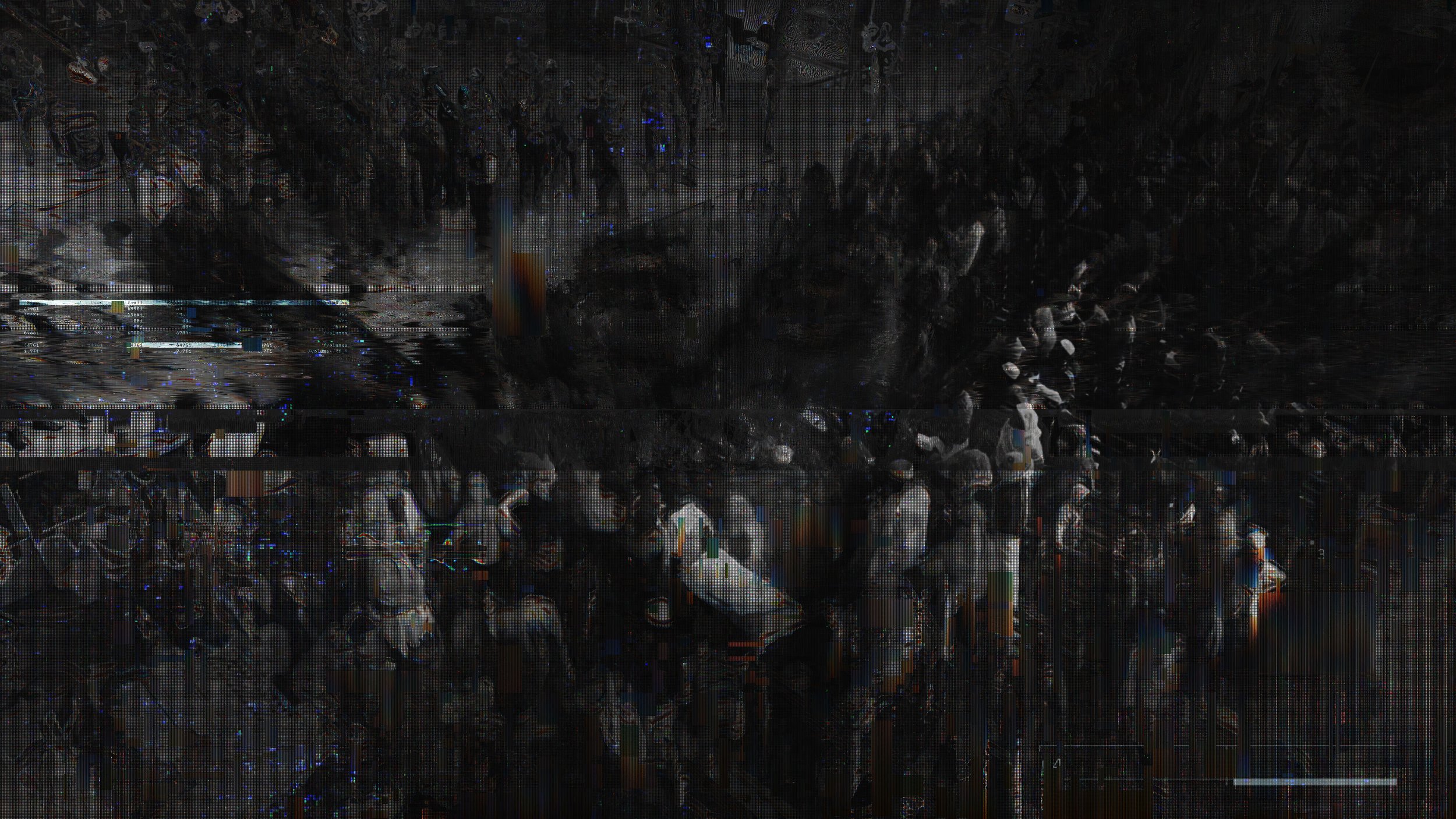
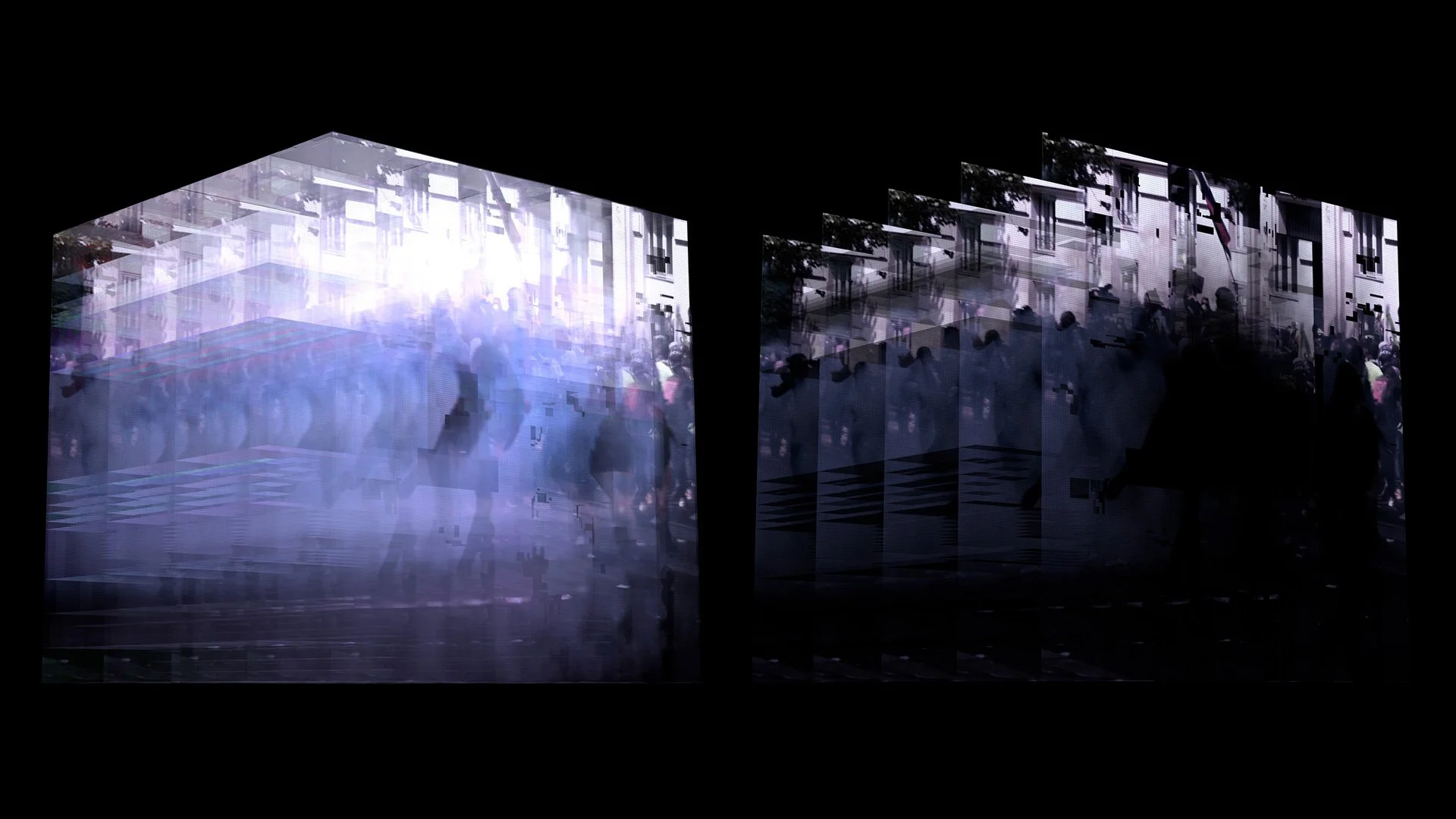
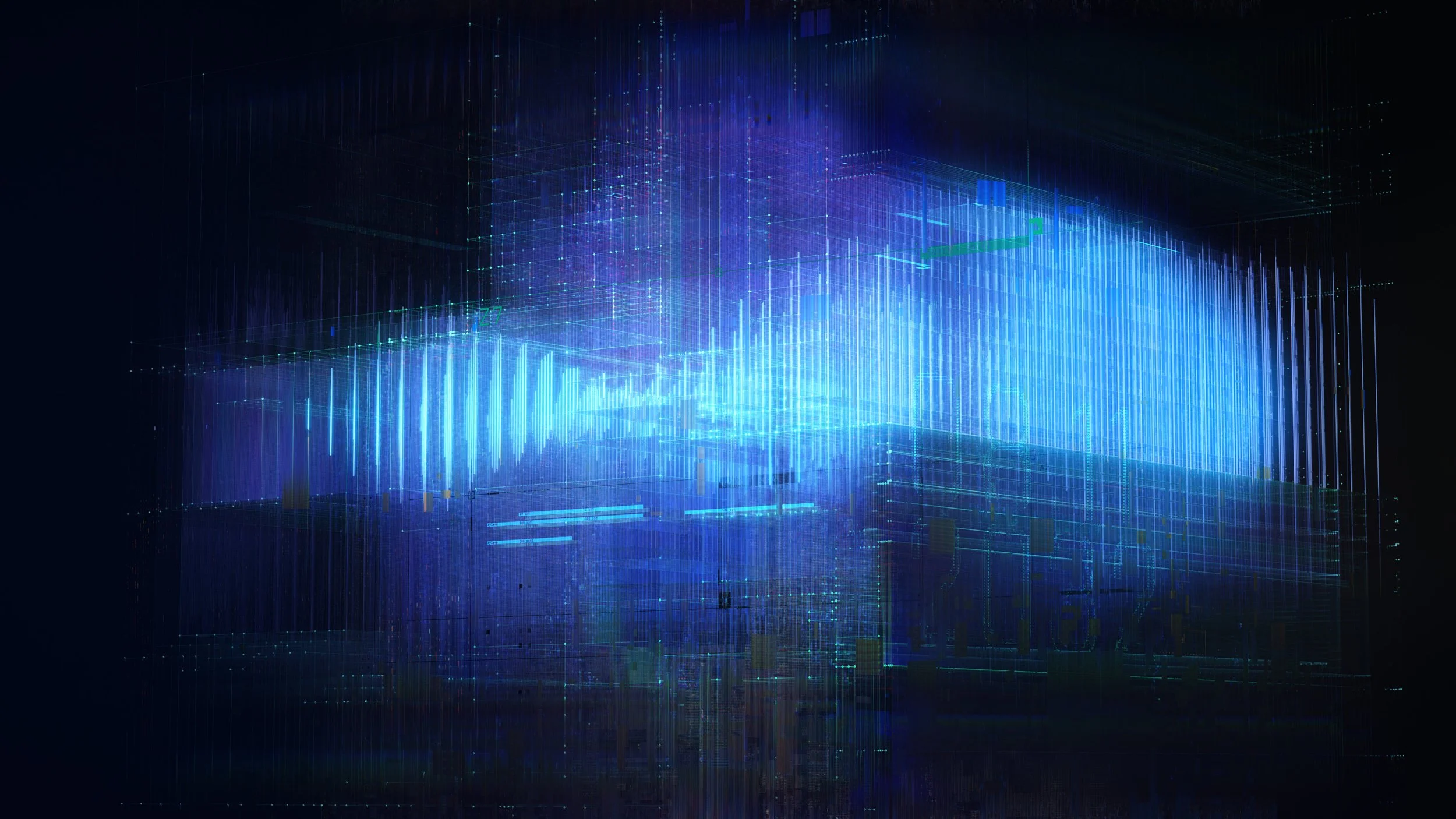
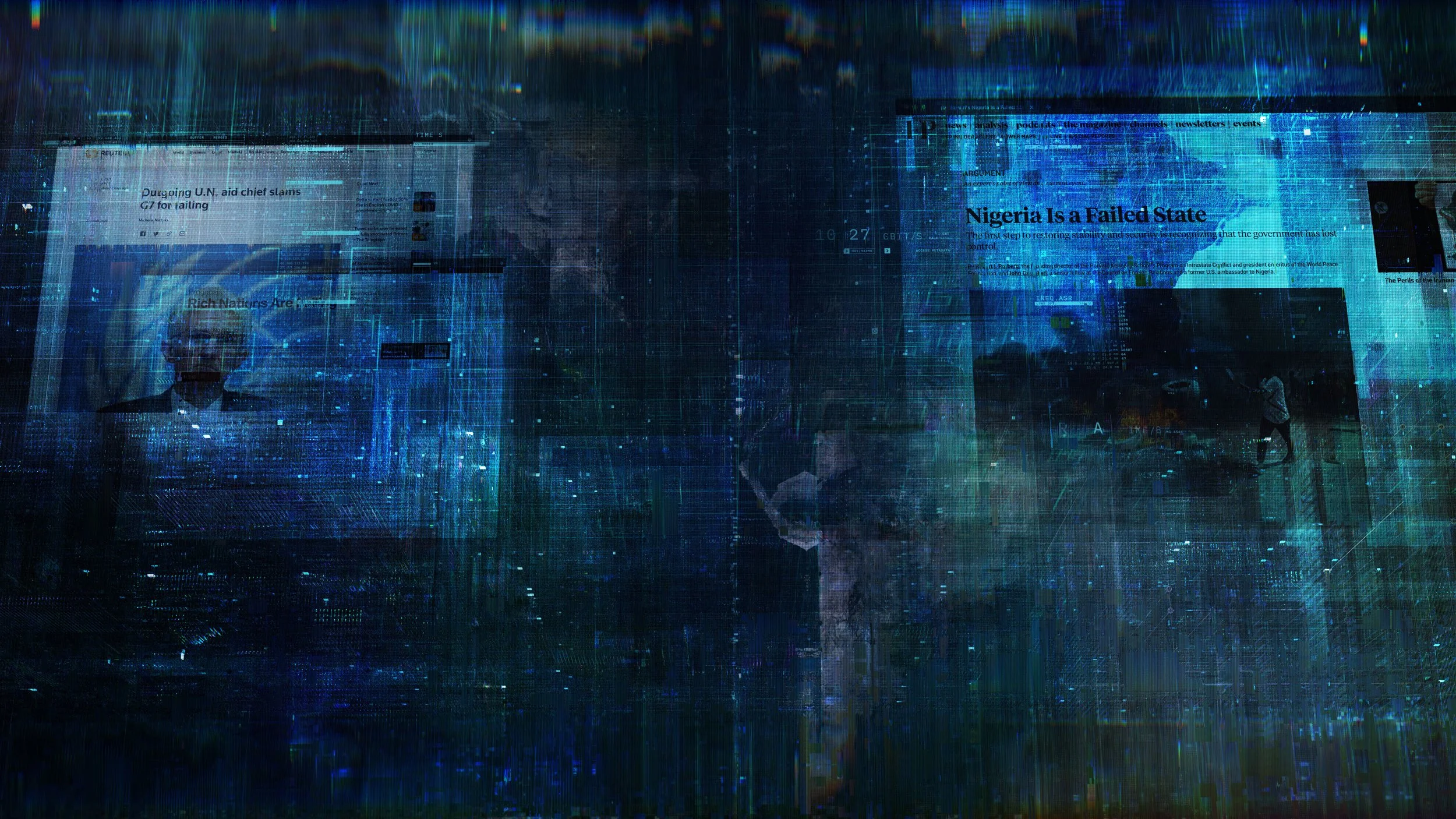
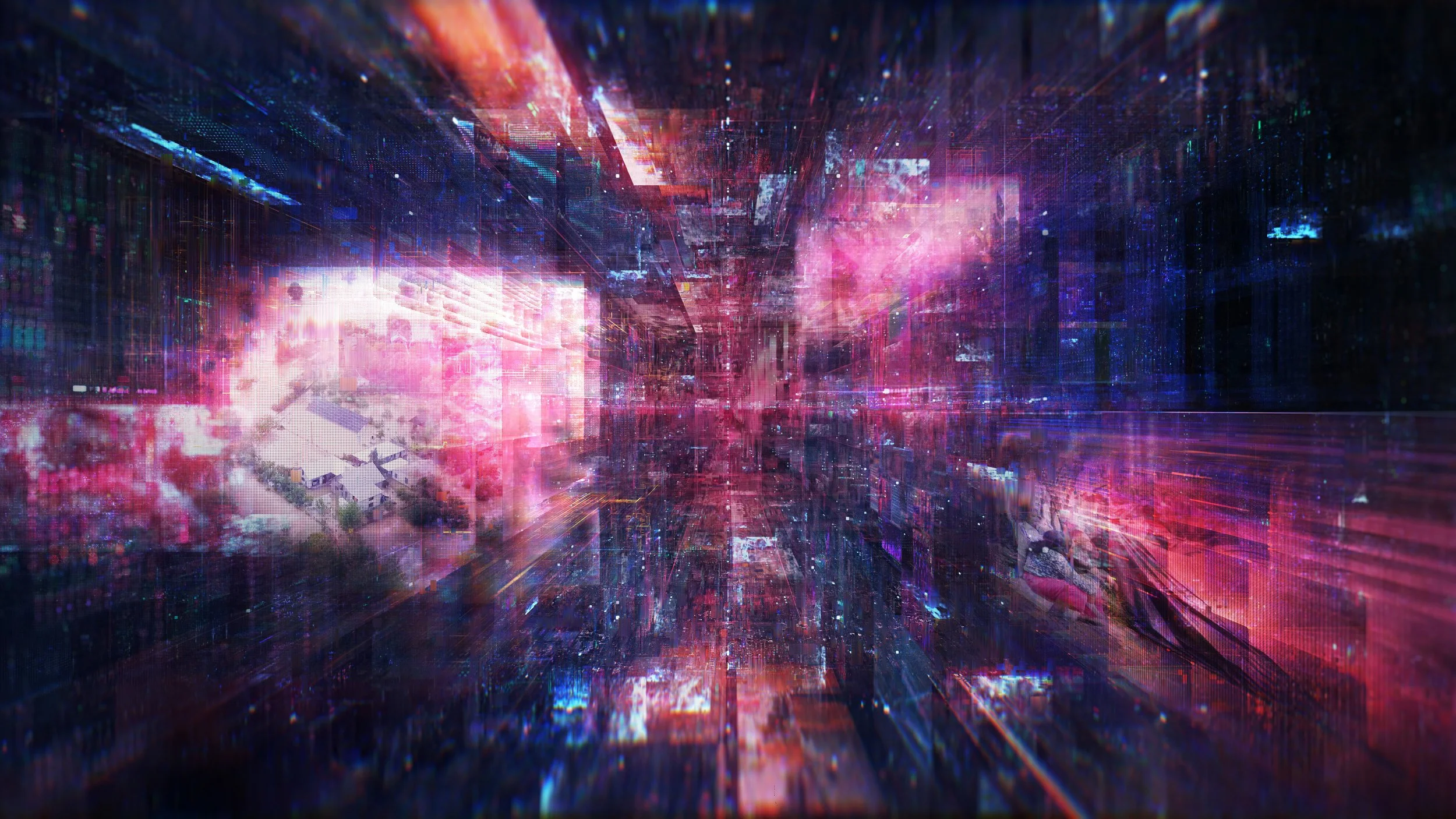
These voxel structures provided a flexible framework capable of operating at multiple scales. They allowed content to exist as immersive environments, navigable volumes, and full-frame imagery simultaneously. The grid system supported wide shots populated with massive quantities of material—news articles, audio clips, video streams—while preserving legibility and hierarchy.
The voxel concept unified structure and content, establishing a system where information could be layered, entered, and exited without breaking spatial continuity.
02.6 Final look
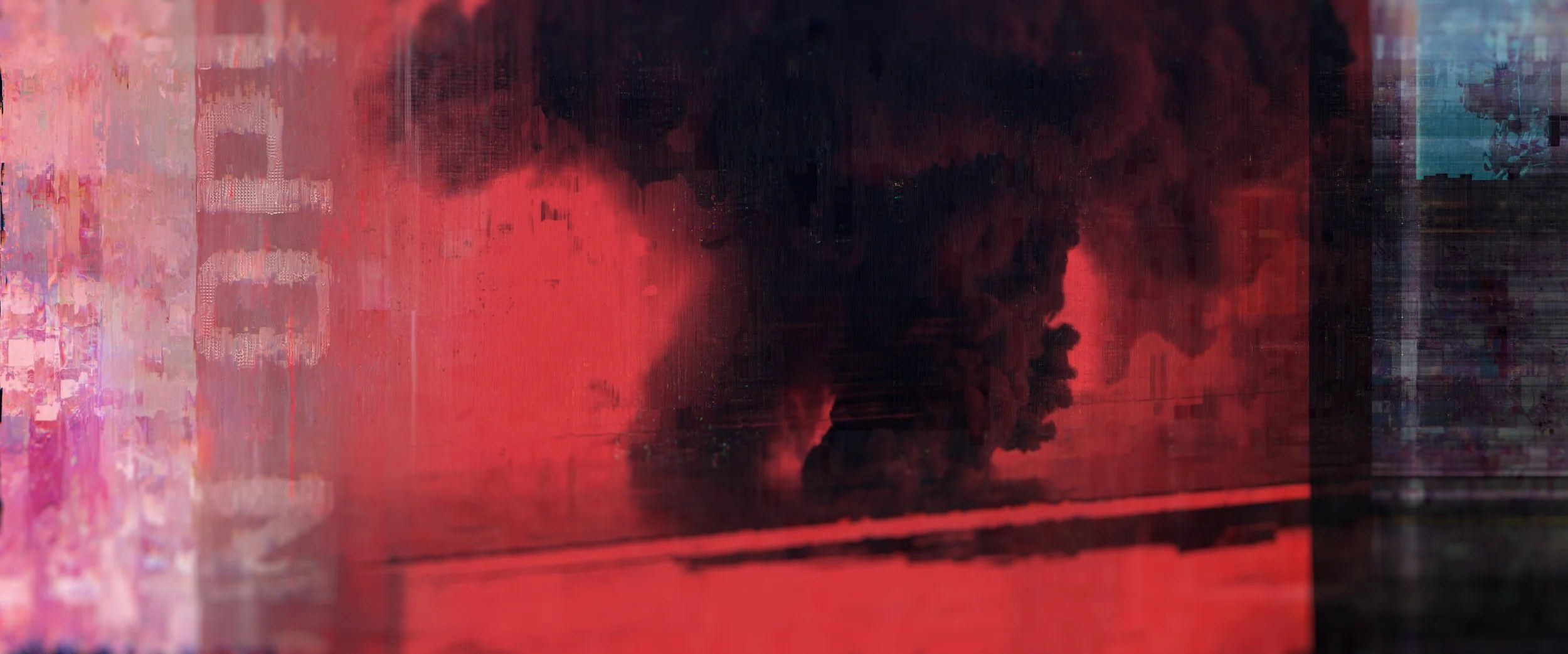
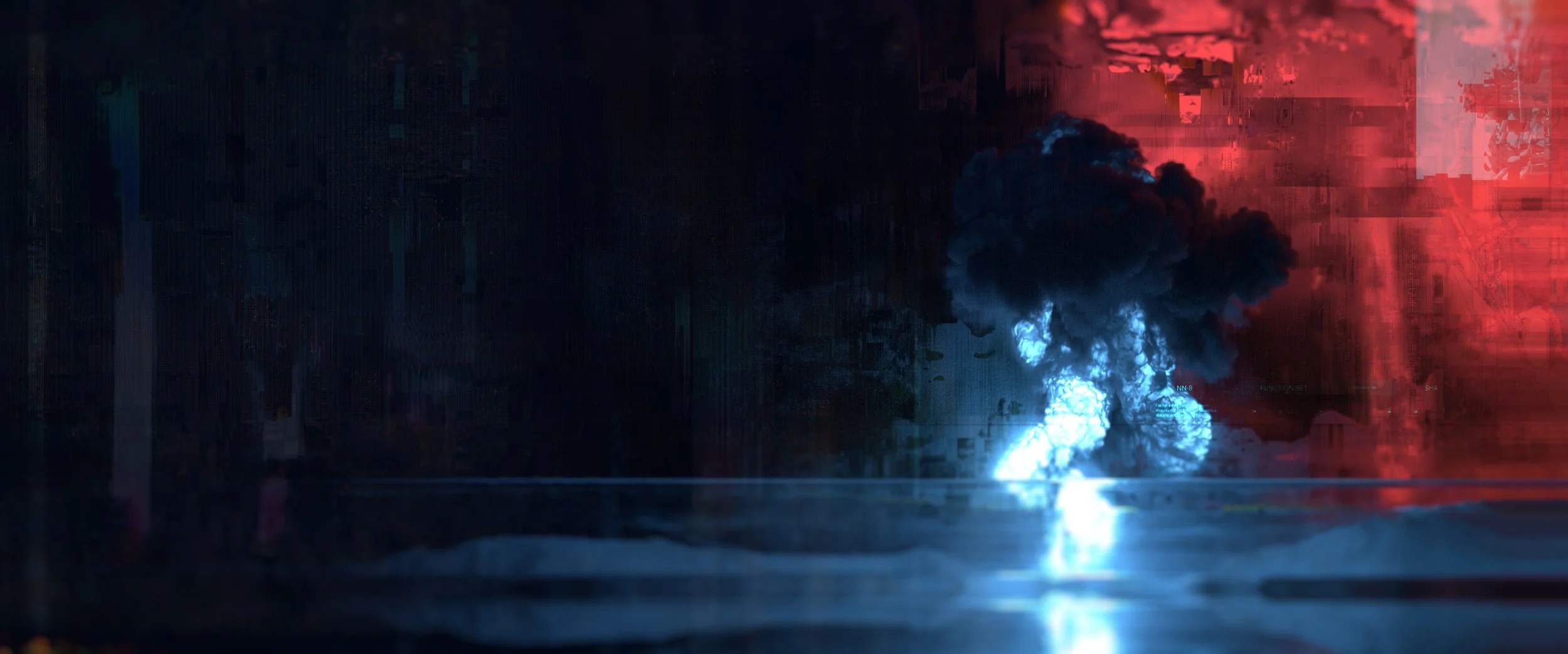
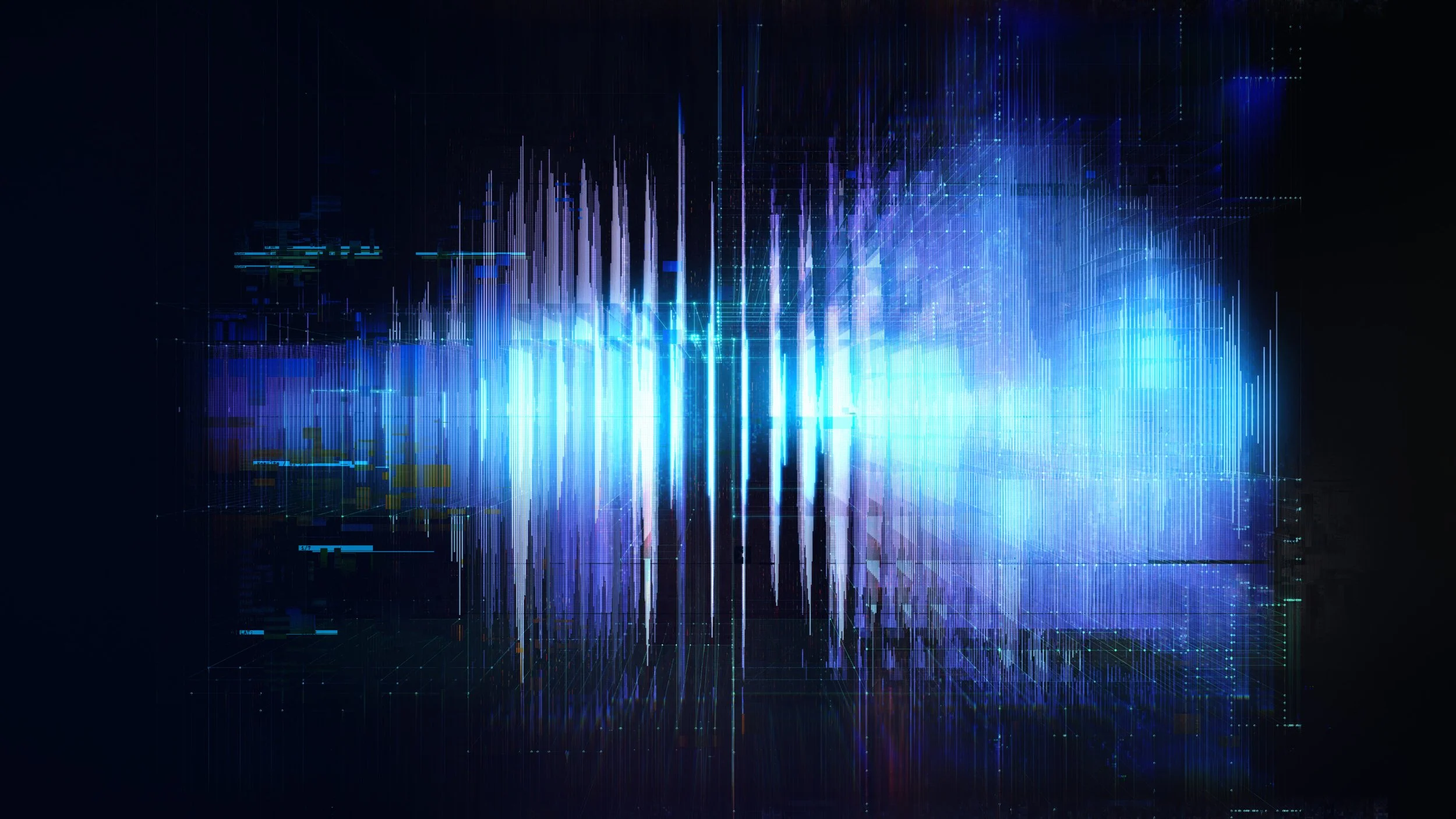
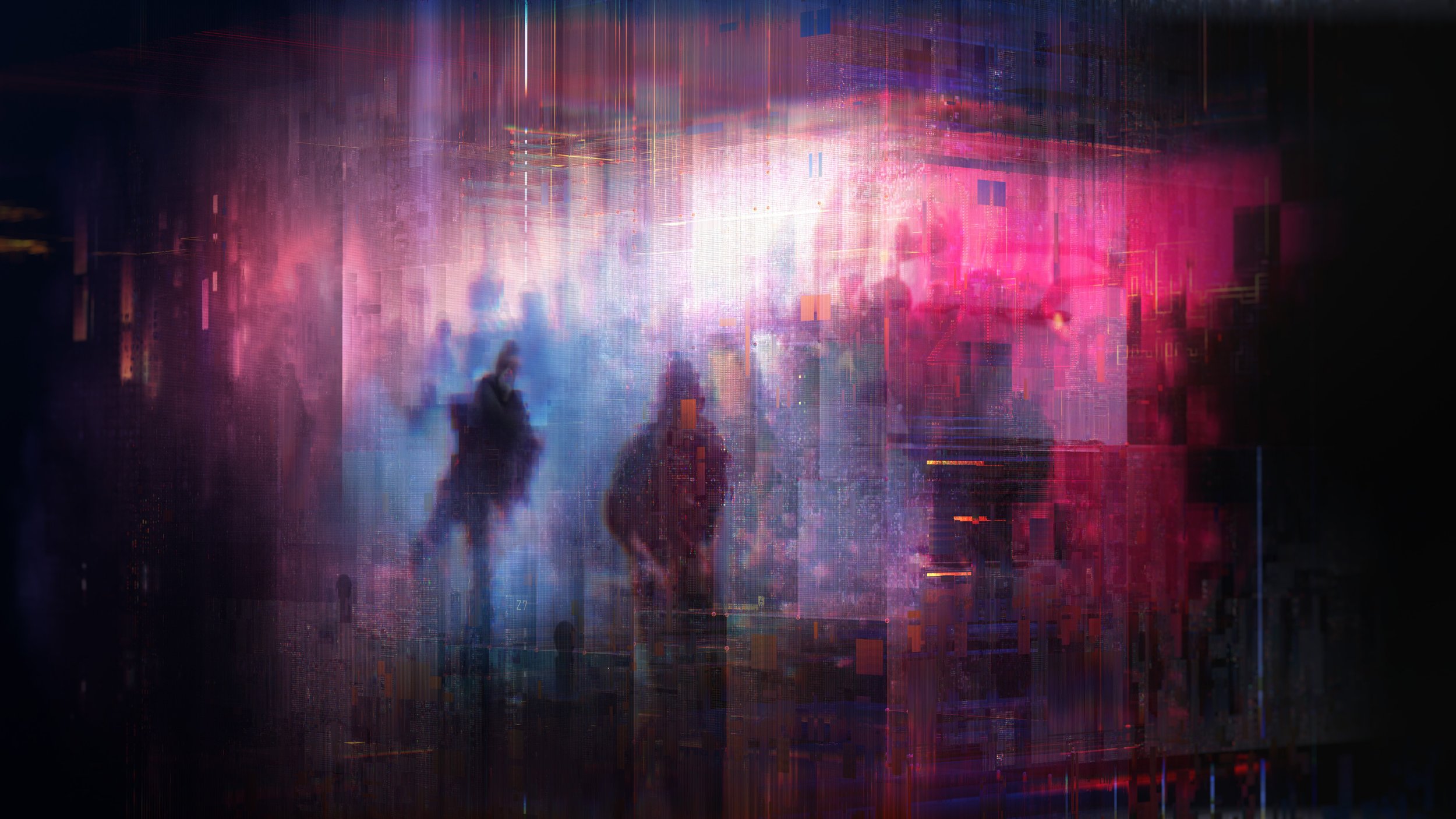
The frames presented here represent the culmination of this exploration. Decisions made across earlier phases—material behavior, content integration, spatial logic, and system scalability—converged into a unified visual language for the Network.
This system dictated the final look of the film’s internal world, supporting narrative progression while maintaining coherence across scale and density. The completed cinematic can be viewed in Part 1, where these systems are seen in motion and in sequence.
Credits
MICHAEL RIGLEY: Art Direction, Lead Design, Lead Animation, 2021
CREDITS | PRODUCTION
Client: Electronic Arts | DICE Stockholm | Criterion London
Production: Goodbye Kansas
Executive Producer: Anton Söderhäll
Producer: La-Rå Hinckeldeyn
Score: Hildur Guðnadóttir & Sam Slater
Sound Design: UHORT
Credits: GBK Graphics Team
CREDITS | MOTION GRAPHICS
Director: Will Adams
Art Director | Lead Design: Michael Rigley
Producer: La-Rå Hinckeldeyn
Lead UI Design: Steven Bussey
3D Animation: Michael Rigley, Will Adams
2D Animation: Michael Rigley, Guilherme Ferreirinha, Marcus Melin
UI Animation: Steven Bussey
Lead Glitch Animation: Guilherme Ferreirinha