
Interstellar arc | PARTS 02—03
HOLOGRAMS + 3D DESIGN
MFR CREATIVE STUDIO X FELIX & PAUL STUDIOS, 2025
ART DIRECTION | CONCEPT DESIGN | GRAPHIC DESIGN
APPLICATION OF GRAPHIC SYSTEMS
This section explores the application of the graphic systems within more complex, dimensional contexts. Building on the principles established in Graphic Systems, the work extends the visual language into volumetric structures, testing how it operates across scale, depth, and motion.
The focus shifts from foundational elements to applied systems, where graphic logic informs the construction of holographic forms and spatial interactions.

Diplomat hologram concept art
02.0 HOLOGRAMS
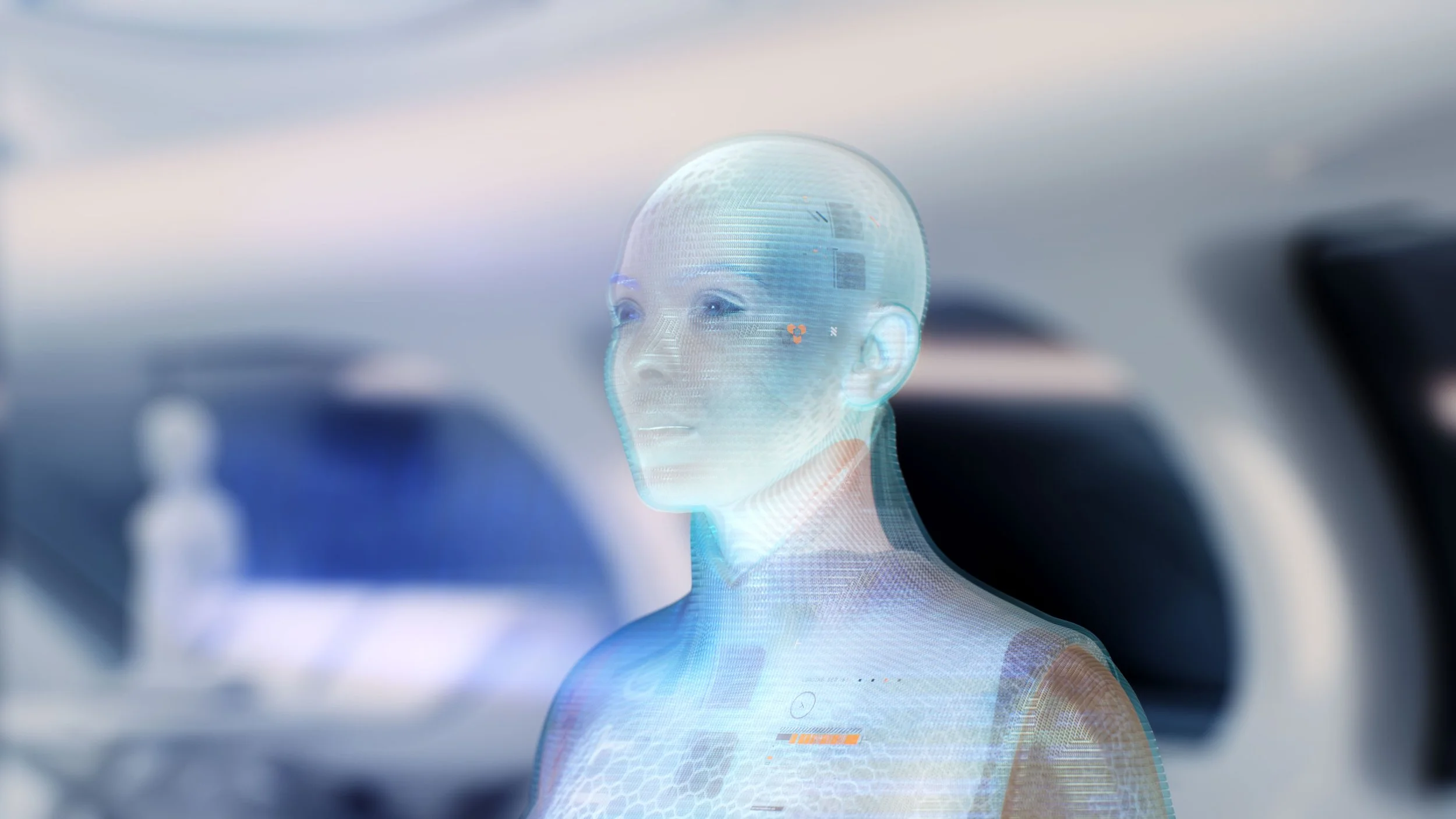
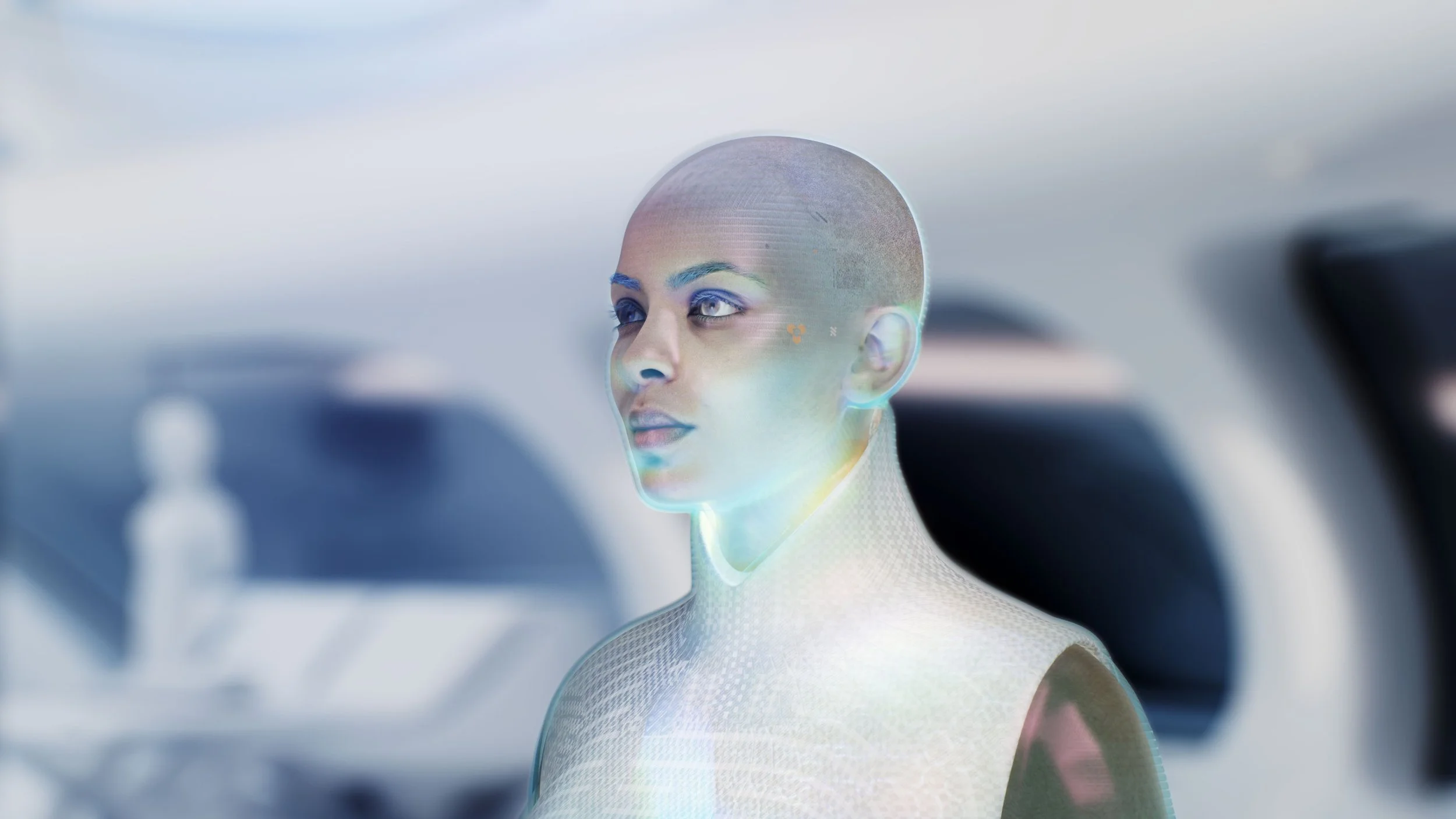
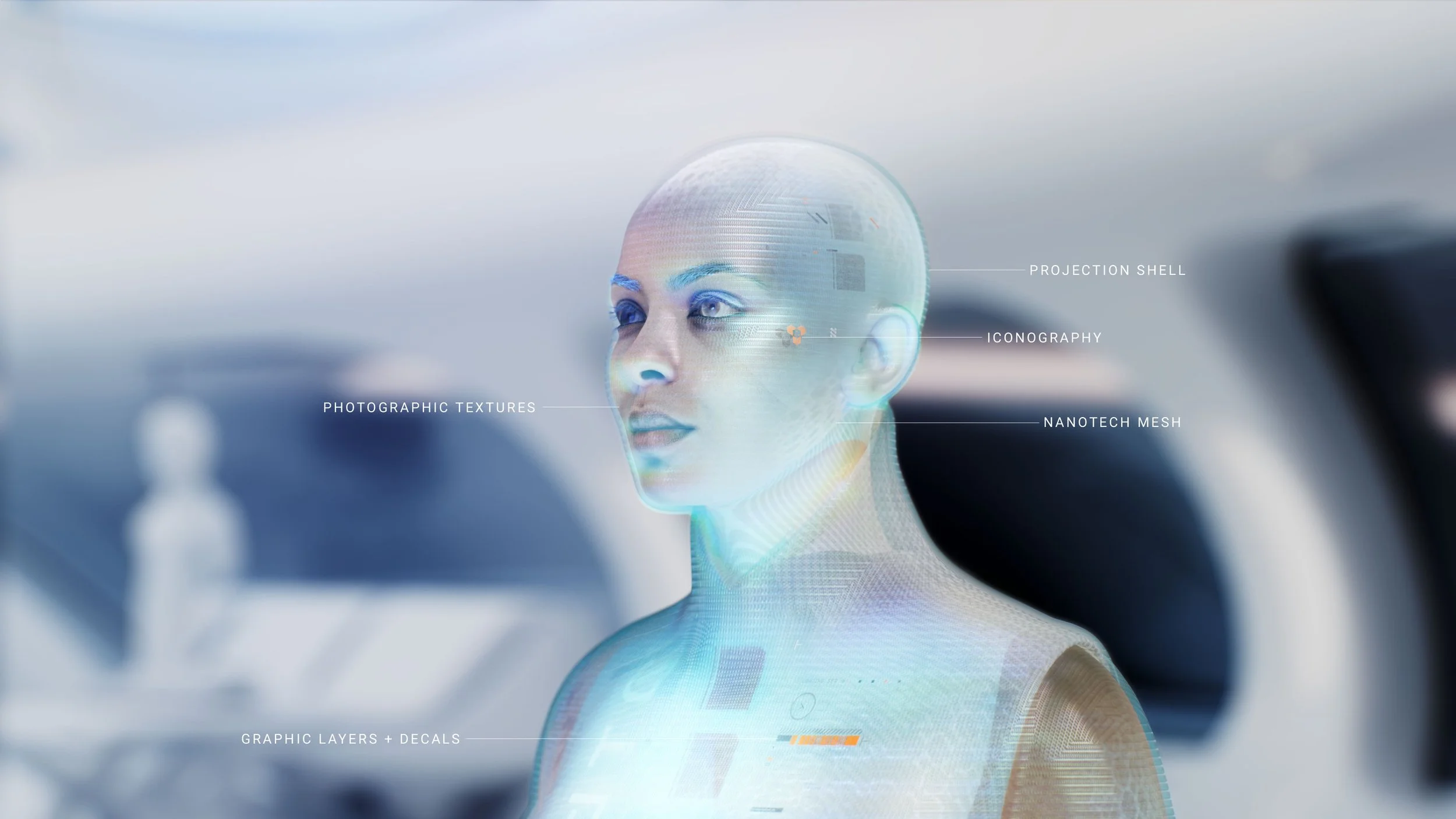
Holographic systems serve as the primary interface between the participant and the world of the Interstellar Arc. The experience begins as the viewer emerges from cryosleep, where a holographic AI entity known as the Diplomat acts as the central guide.
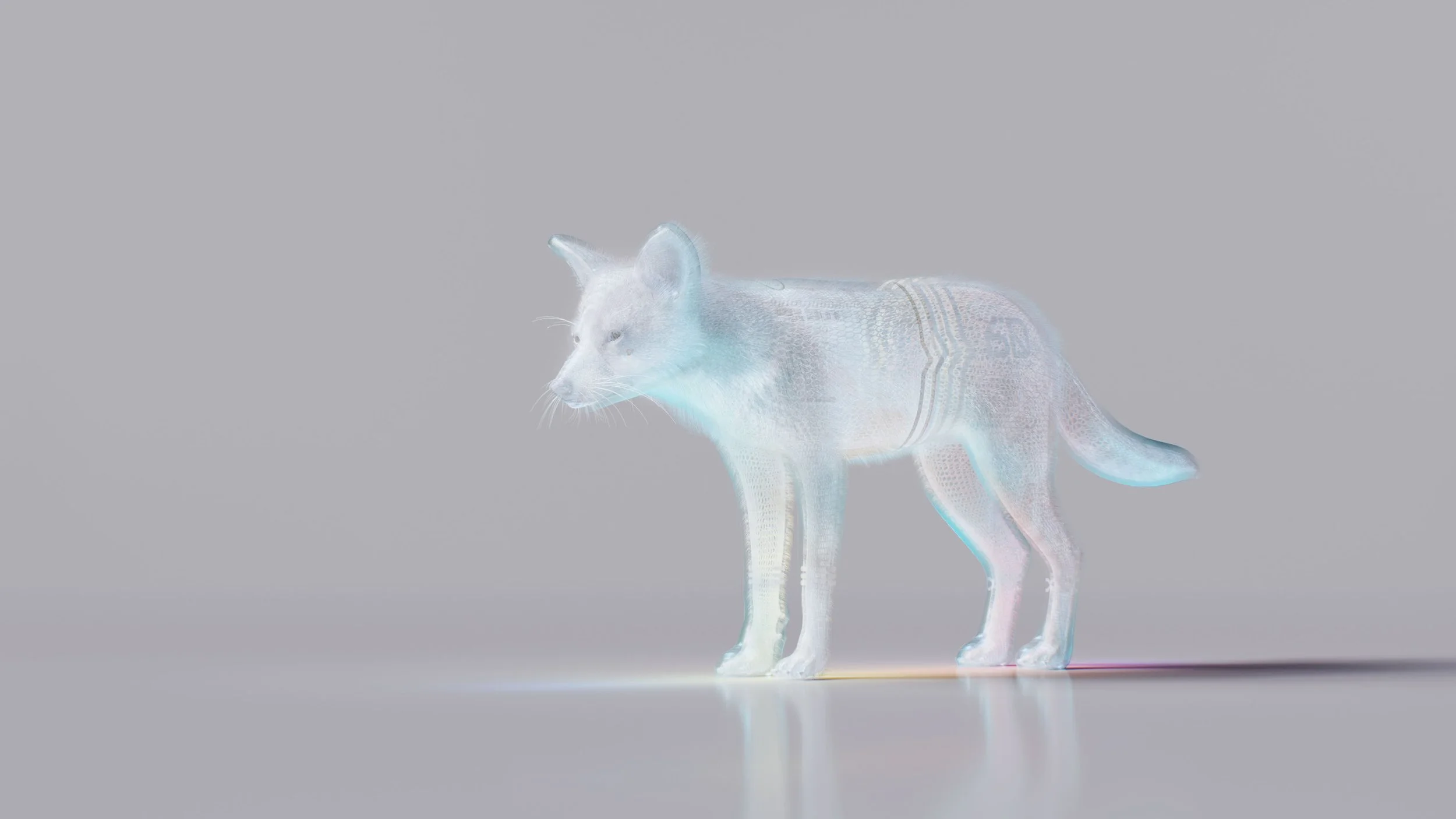
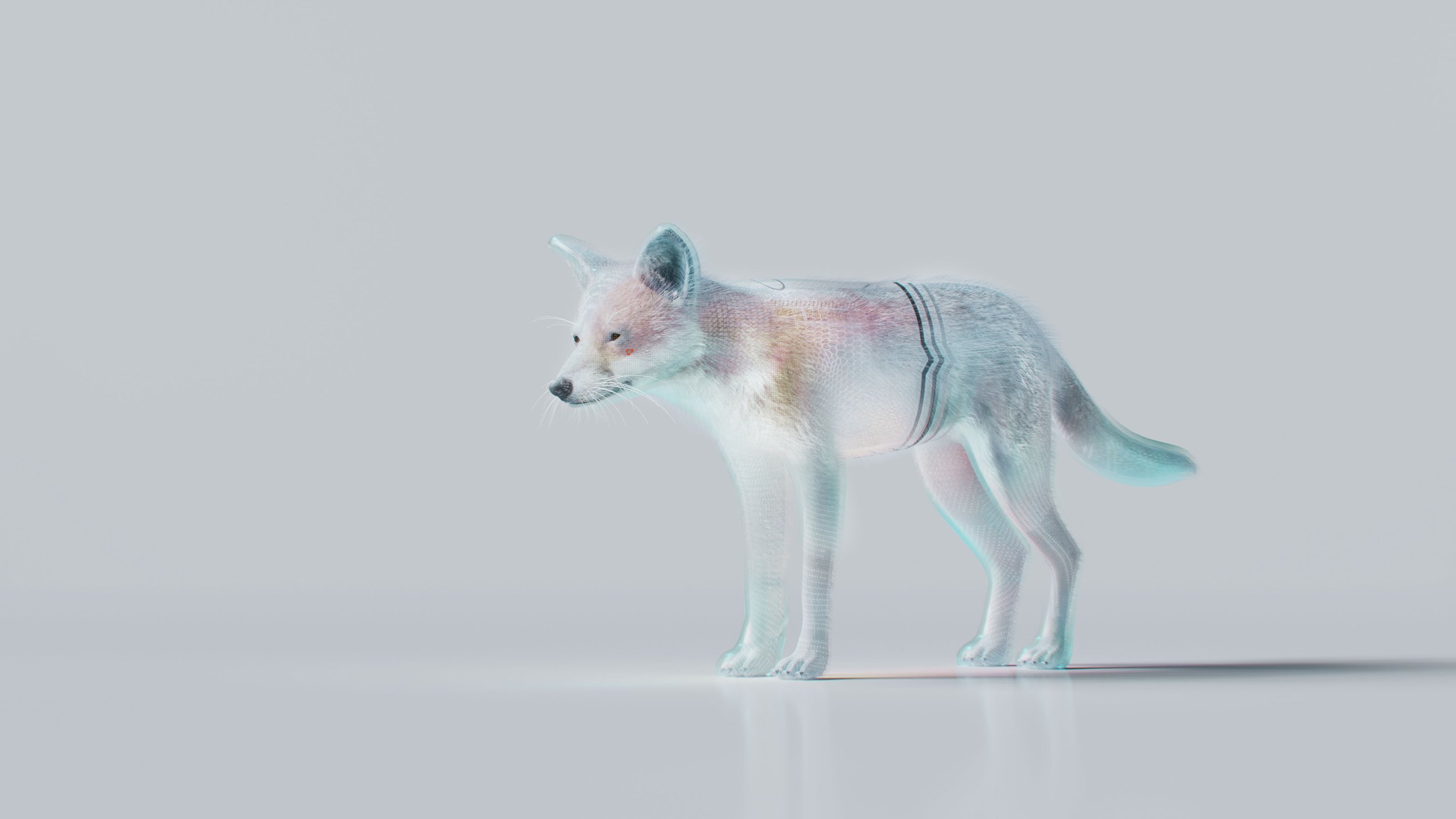
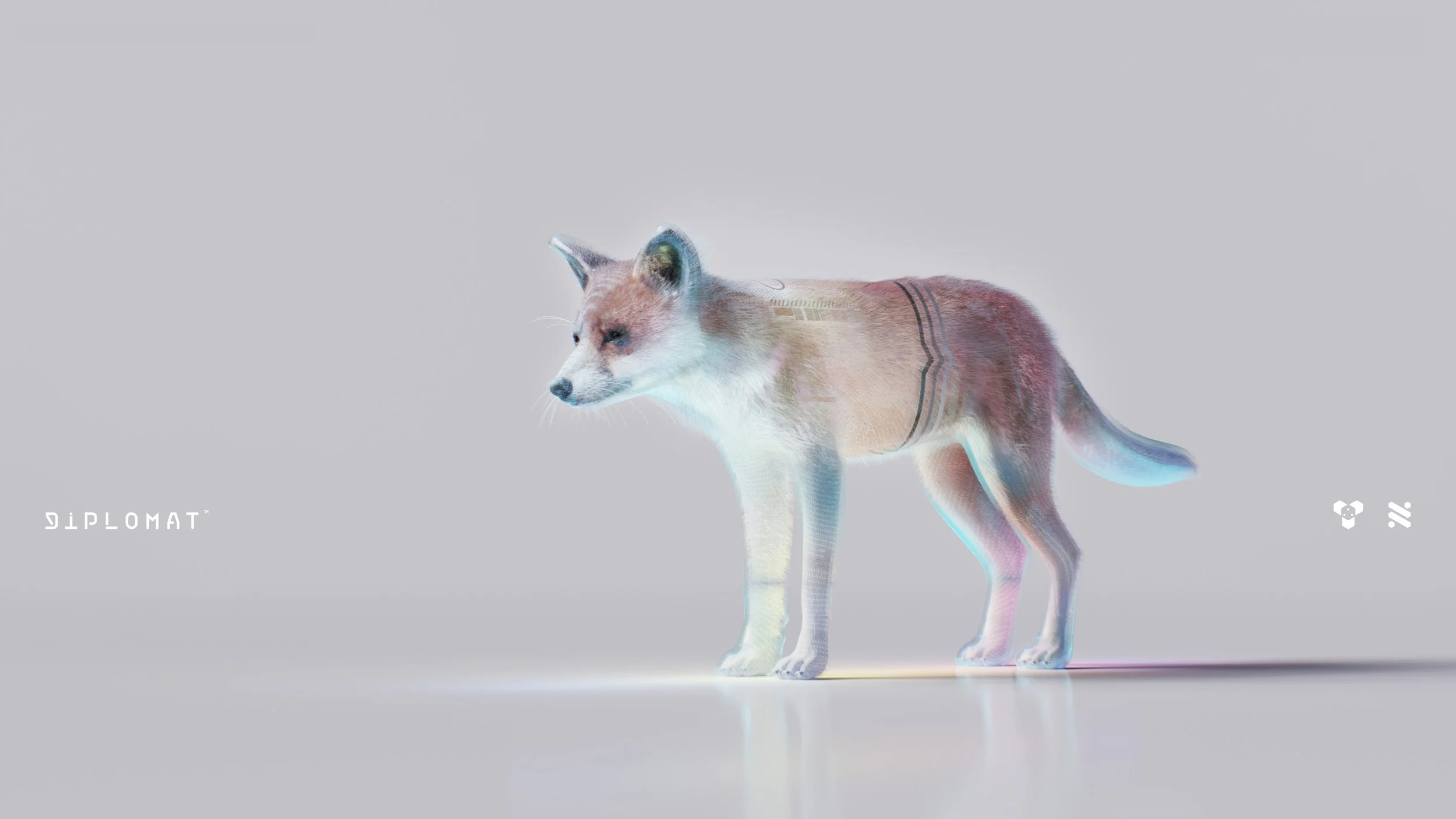
The Diplomat shifts between a human form, used for direct communication, and a fox form that leads the participant through the environment. This entity provides orientation and continuity as the viewer moves through the ship.
Most interactions with the world are mediated through holographic systems. Exhibitions, visual displays, and narrative content are presented as volumetric projections embedded within the environment, establishing a consistent mode of communication and interaction across the experience.
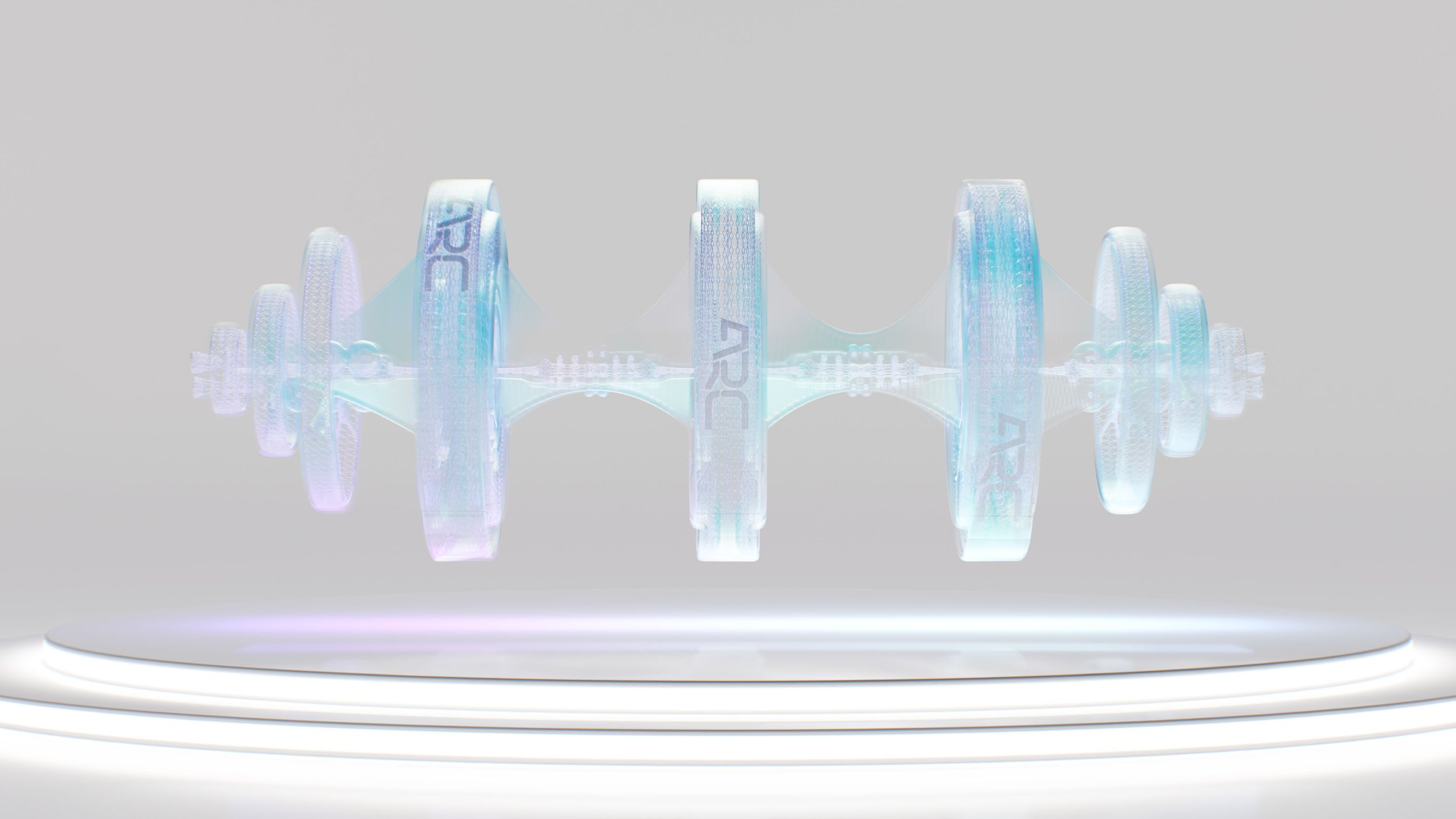
Arc hologram concept art
02.1 NANOMESH TECHNOLOGIES
The development of holographic systems required a consideration of their underlying technology. This phase explored how these forms are generated, how they occupy space, and how they transform over time, establishing a visual logic that could support both narrative and visual development.
The concept developed for this system, referred to as Nanomesh (later Hexo), describes a field of nanobot particulate elements capable of forming structured volumes and projecting emissive content. This approach provided a consistent framework for how holograms appear, transition, and reorganize.
This underlying structure also informed the construction of the holograms themselves. A dynamic mesh and graphic base supports layers of photographic texture and visual content, creating a balance between legibility and material instability. Moments of fragmentation and reformation maintain clarity around the holographic nature of these entities, reinforcing their presence as projected systems embedded within the environment.
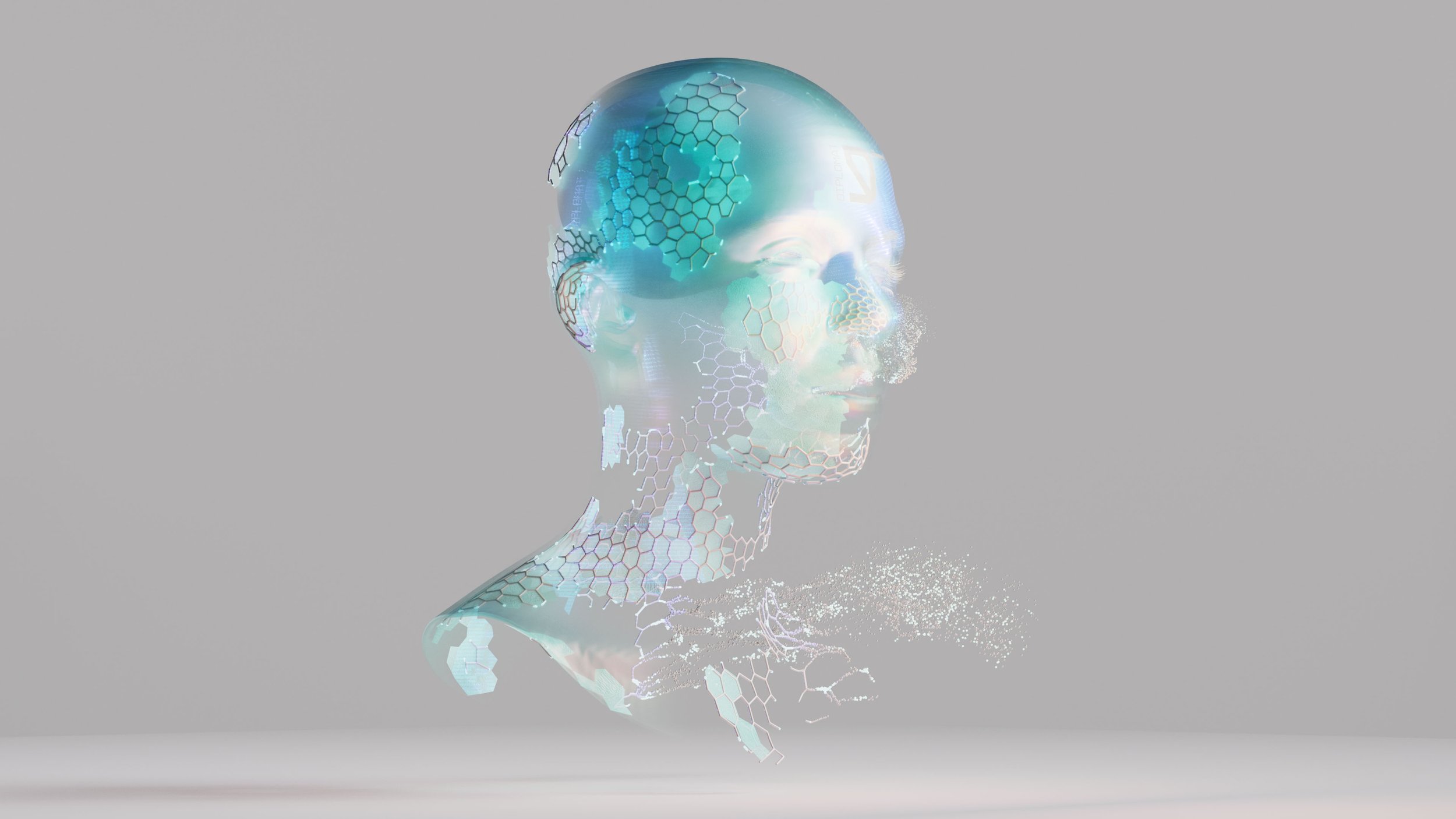
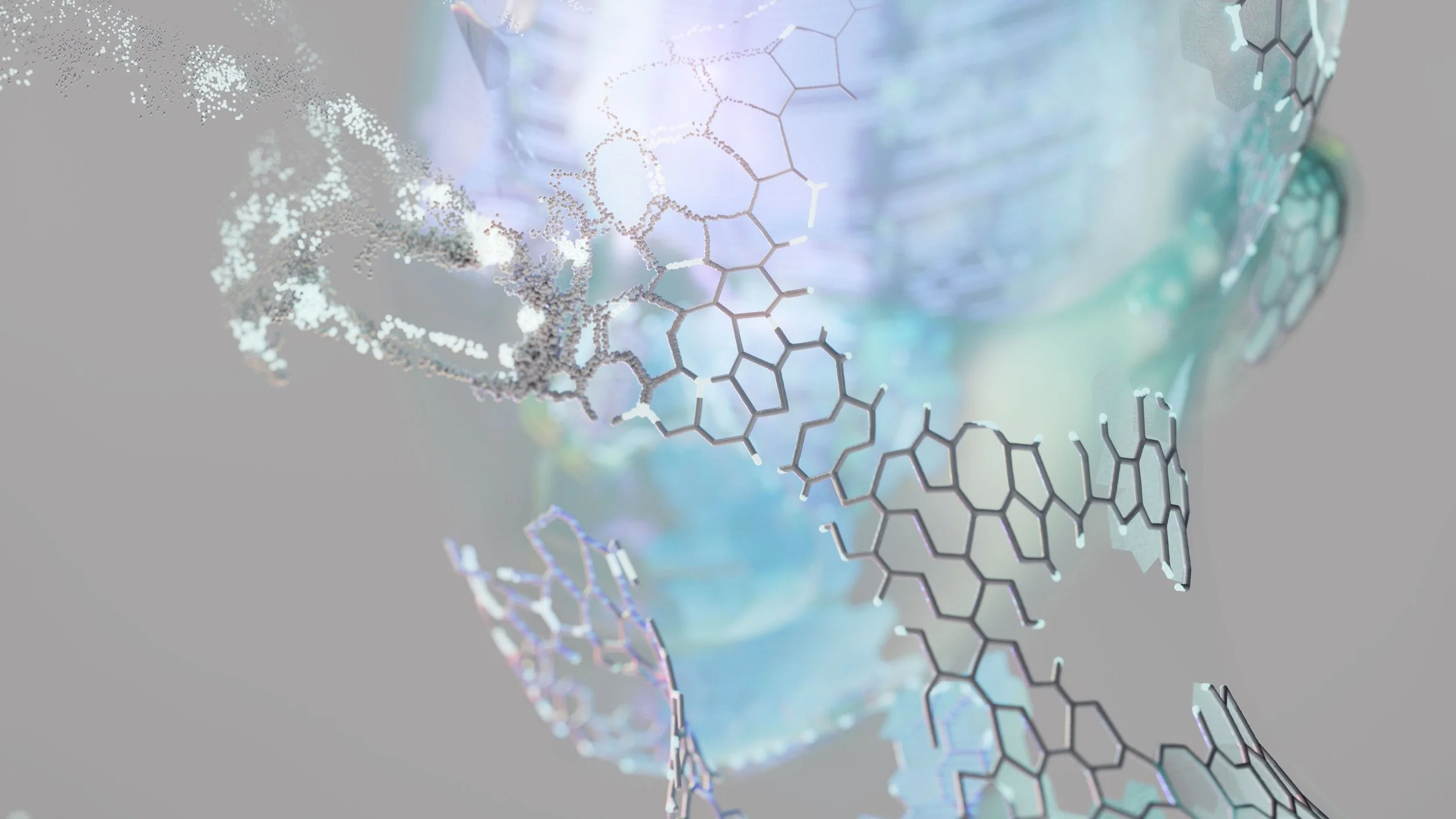
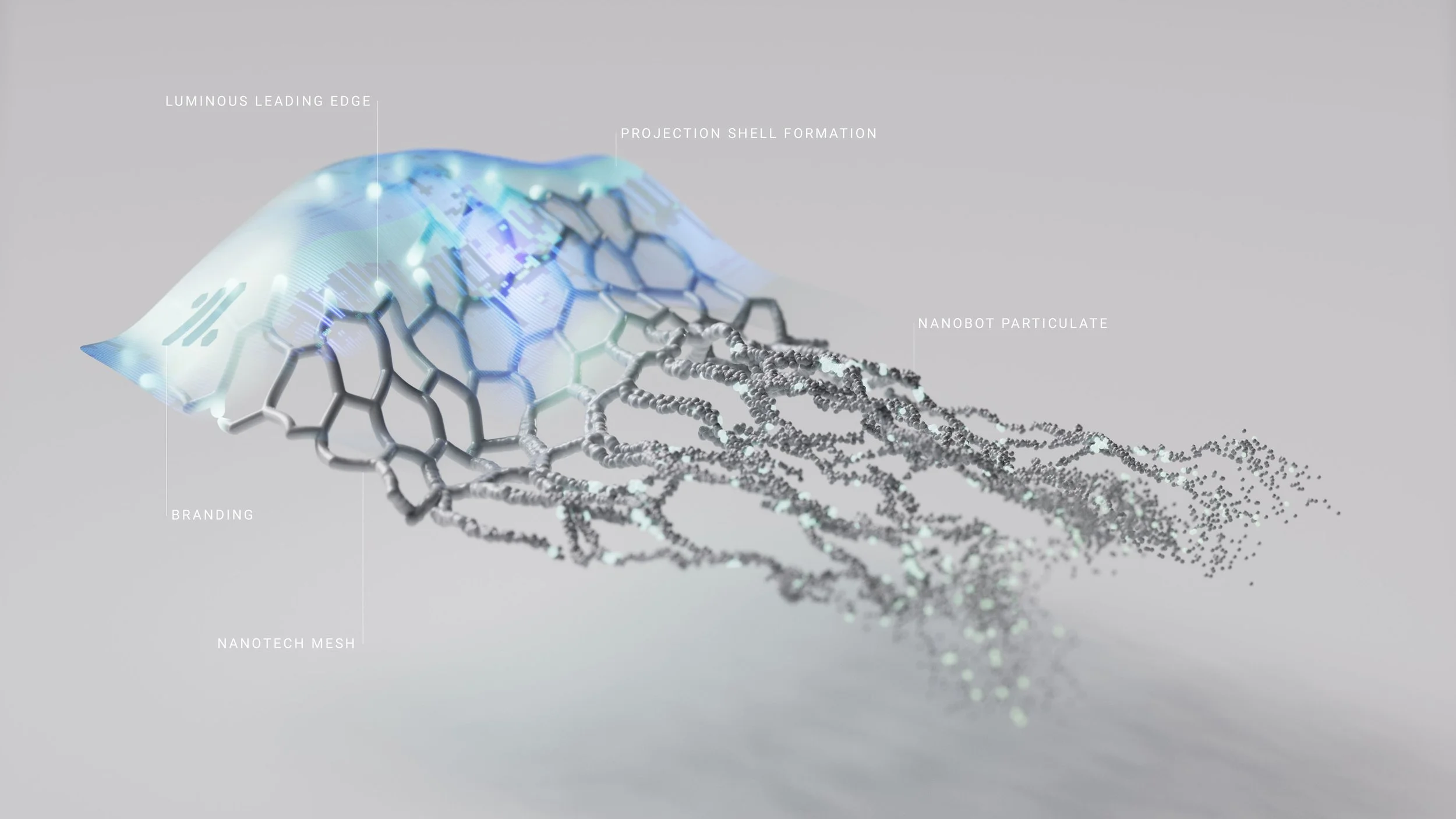
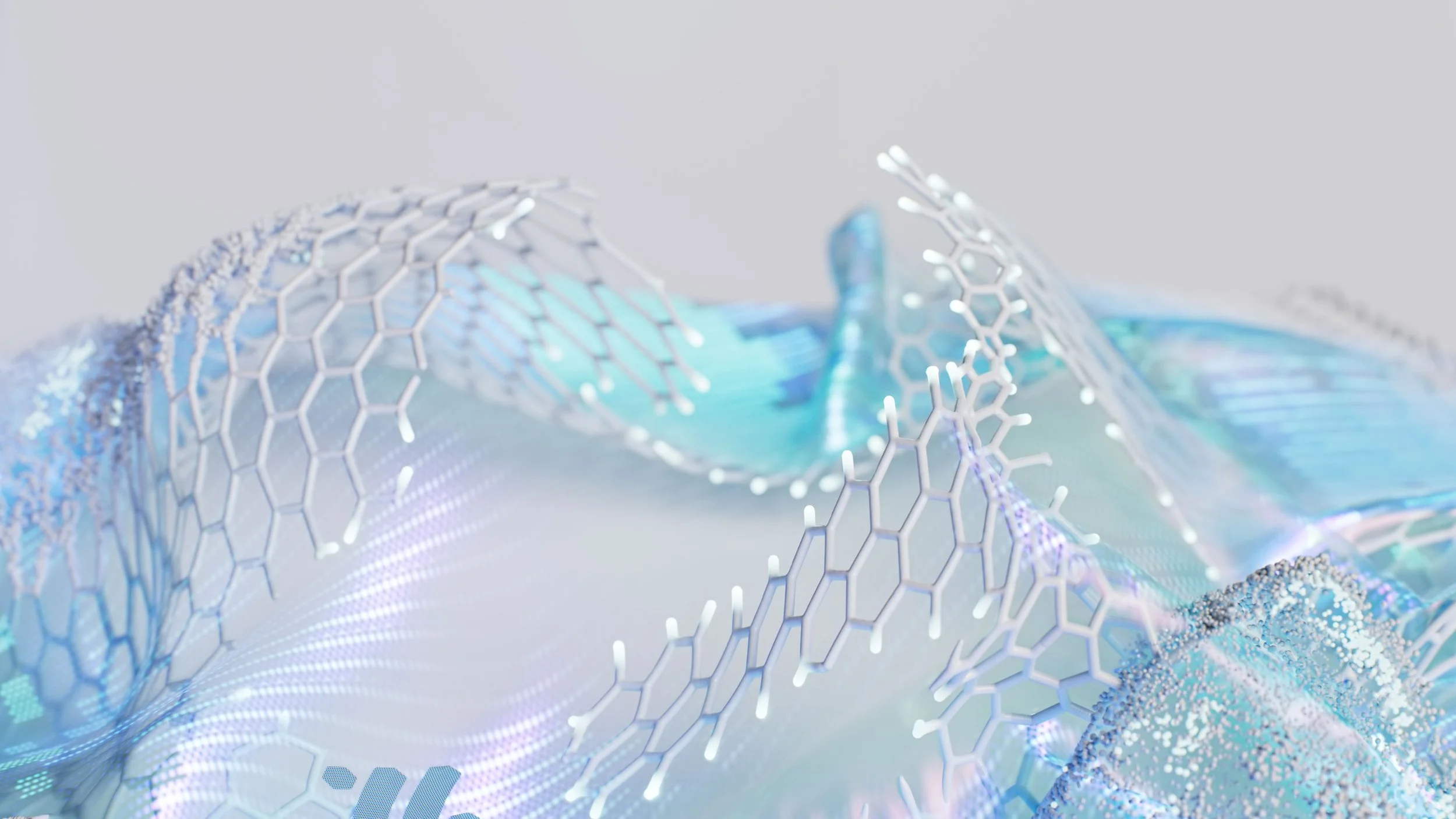
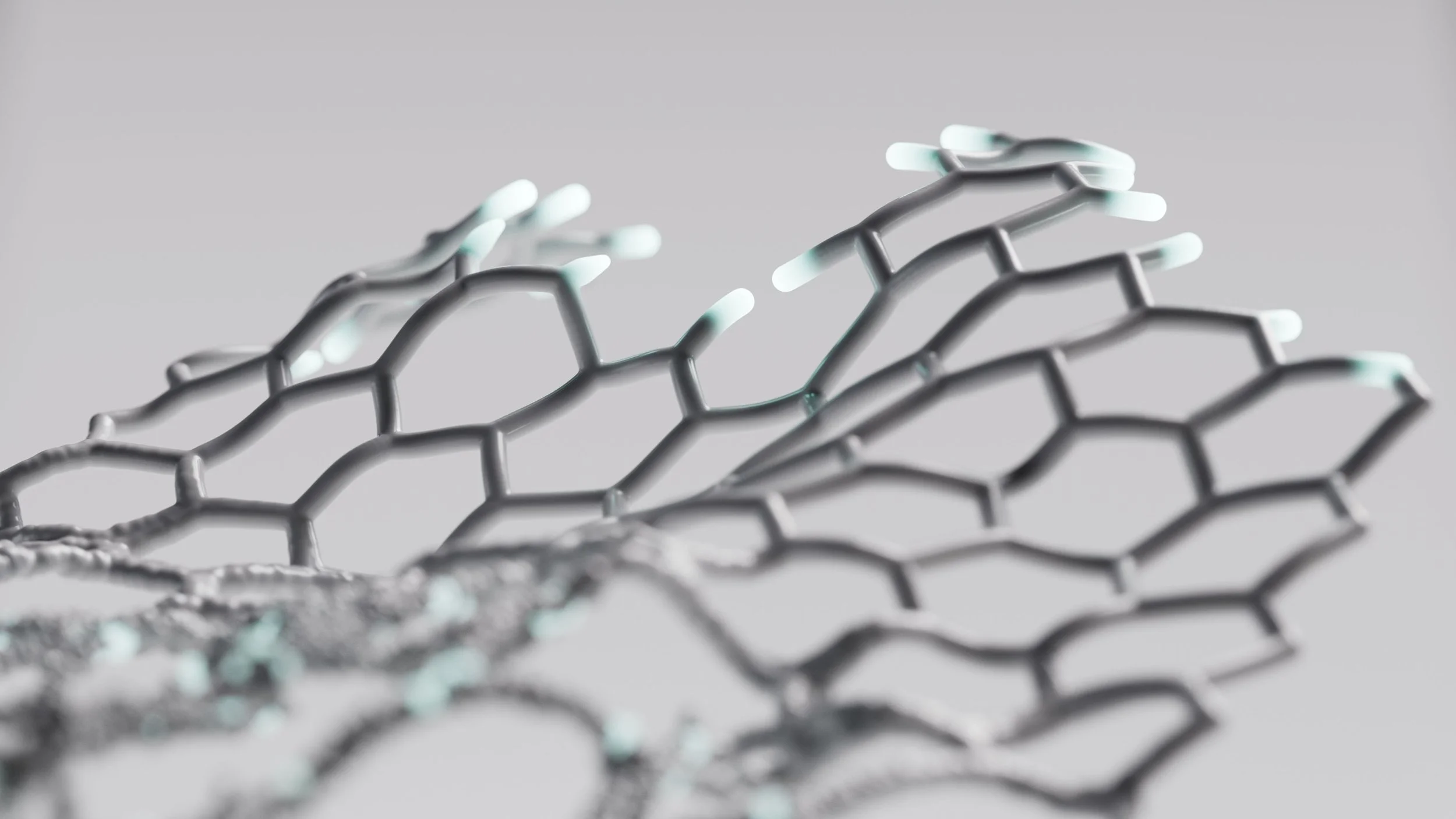
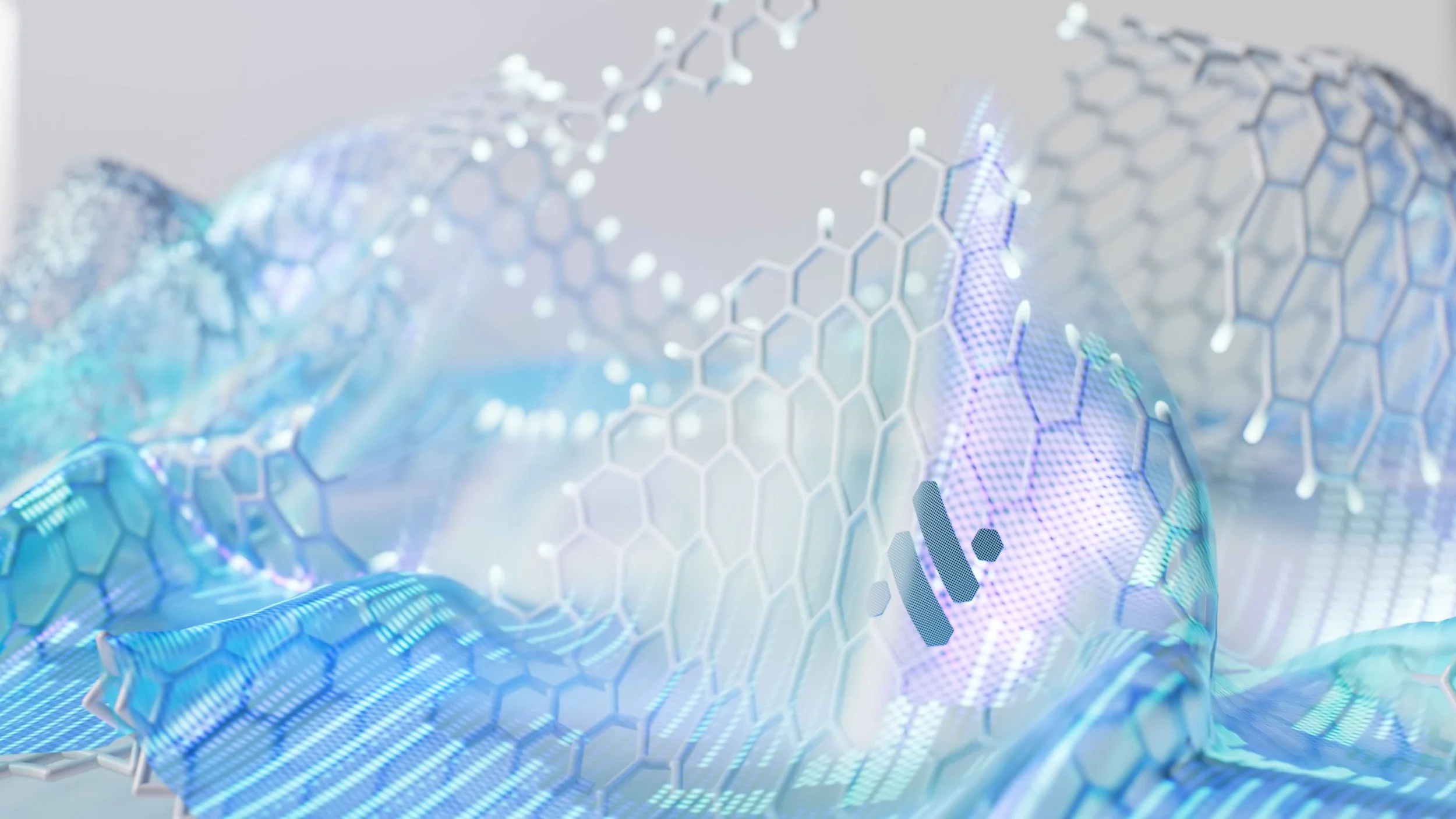
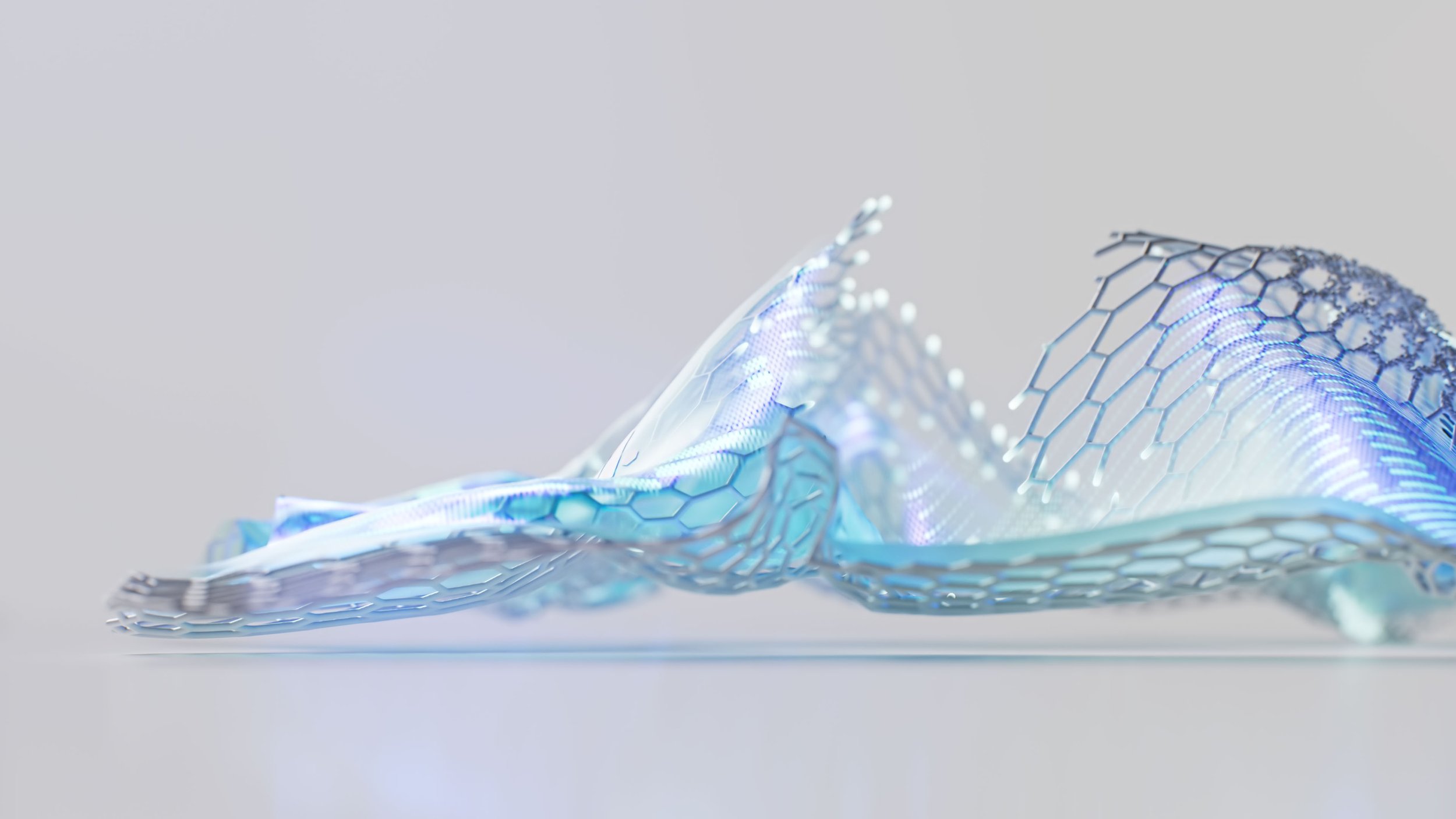
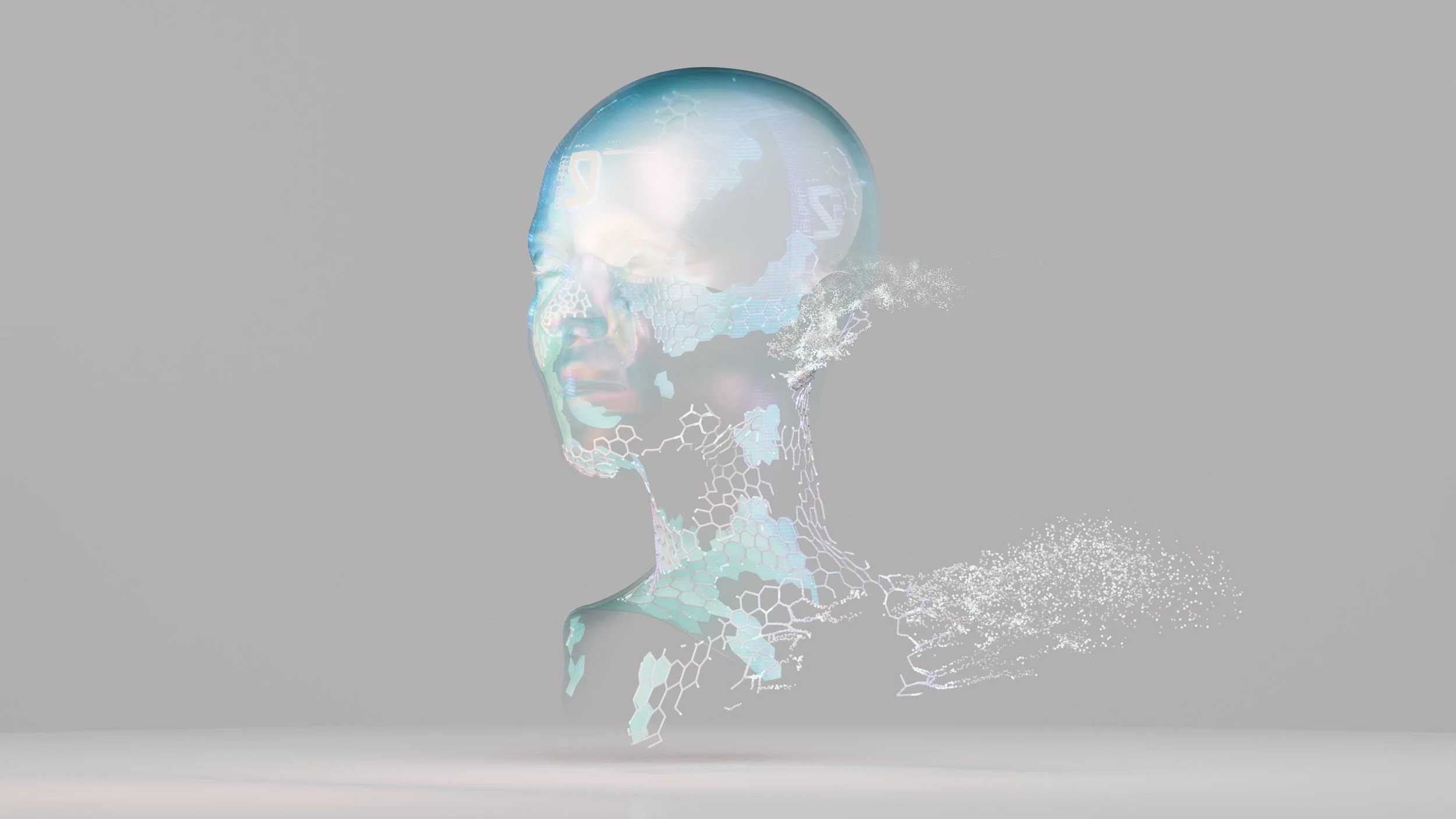
Sample humanoid hologram formation with Nanomesh technology
02.2 KEy HOLOGRAM CONCEPTS
This phase applies the graphic systems and Nanomesh framework to a series of key holographic elements, including the Diplomat in human and fox forms, Earth, and the Interstellar Arc.
Each element is developed within the same underlying system, adapting its structure and behavior to support different functions. Character-based holograms guide interaction, while environmental and diagrammatic forms provide context and orientation.

The Diplomat hologram key art
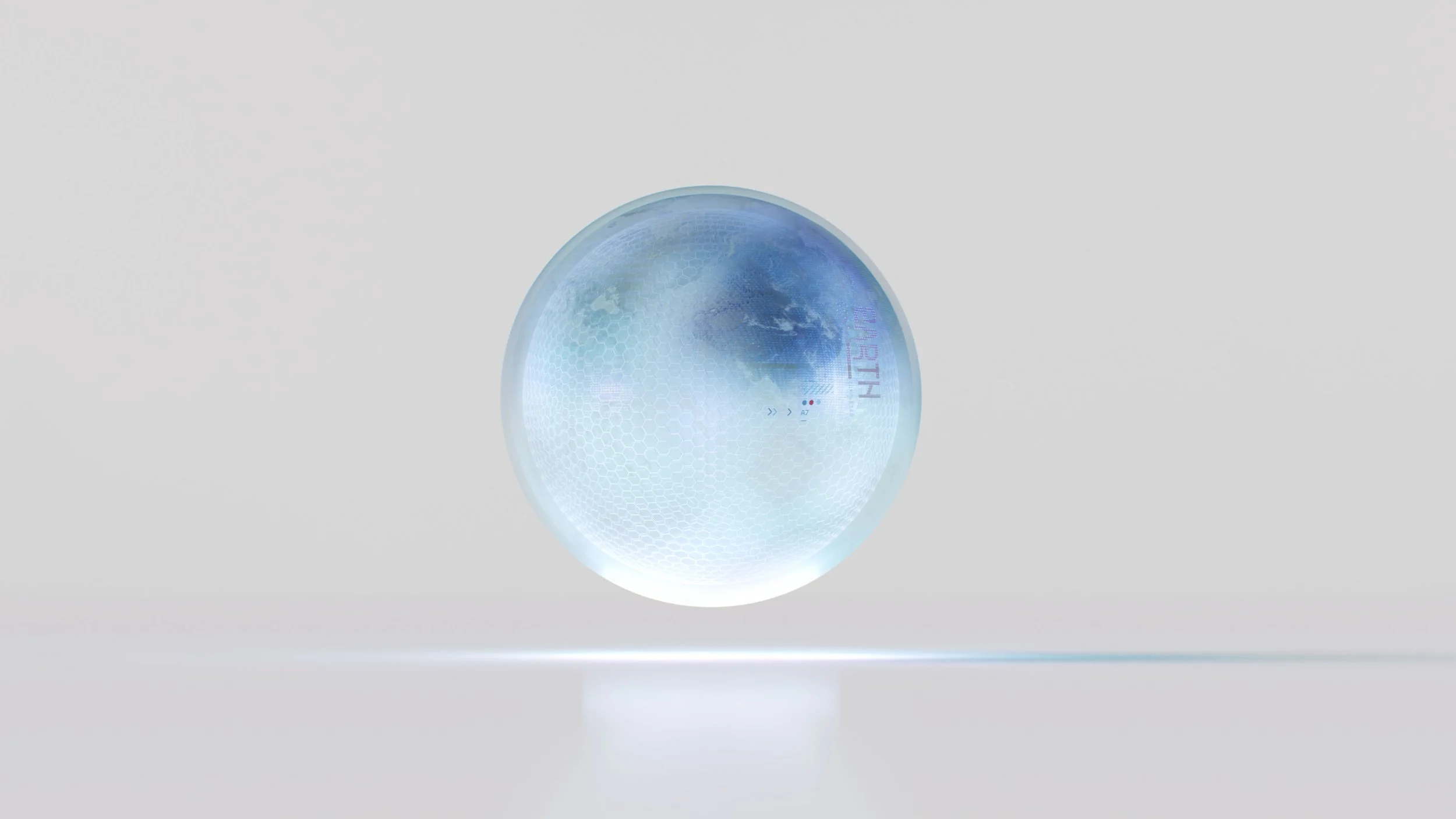
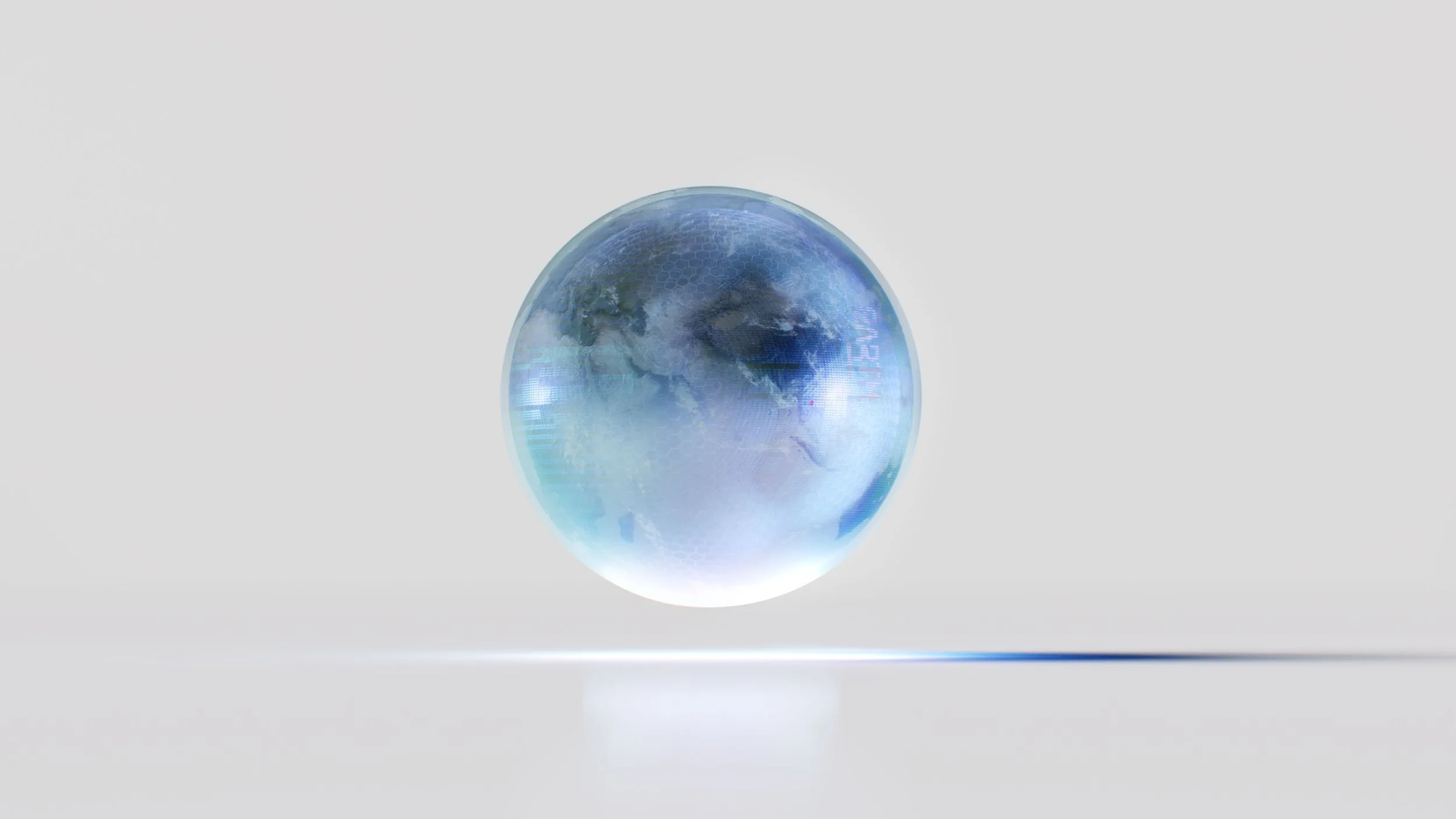

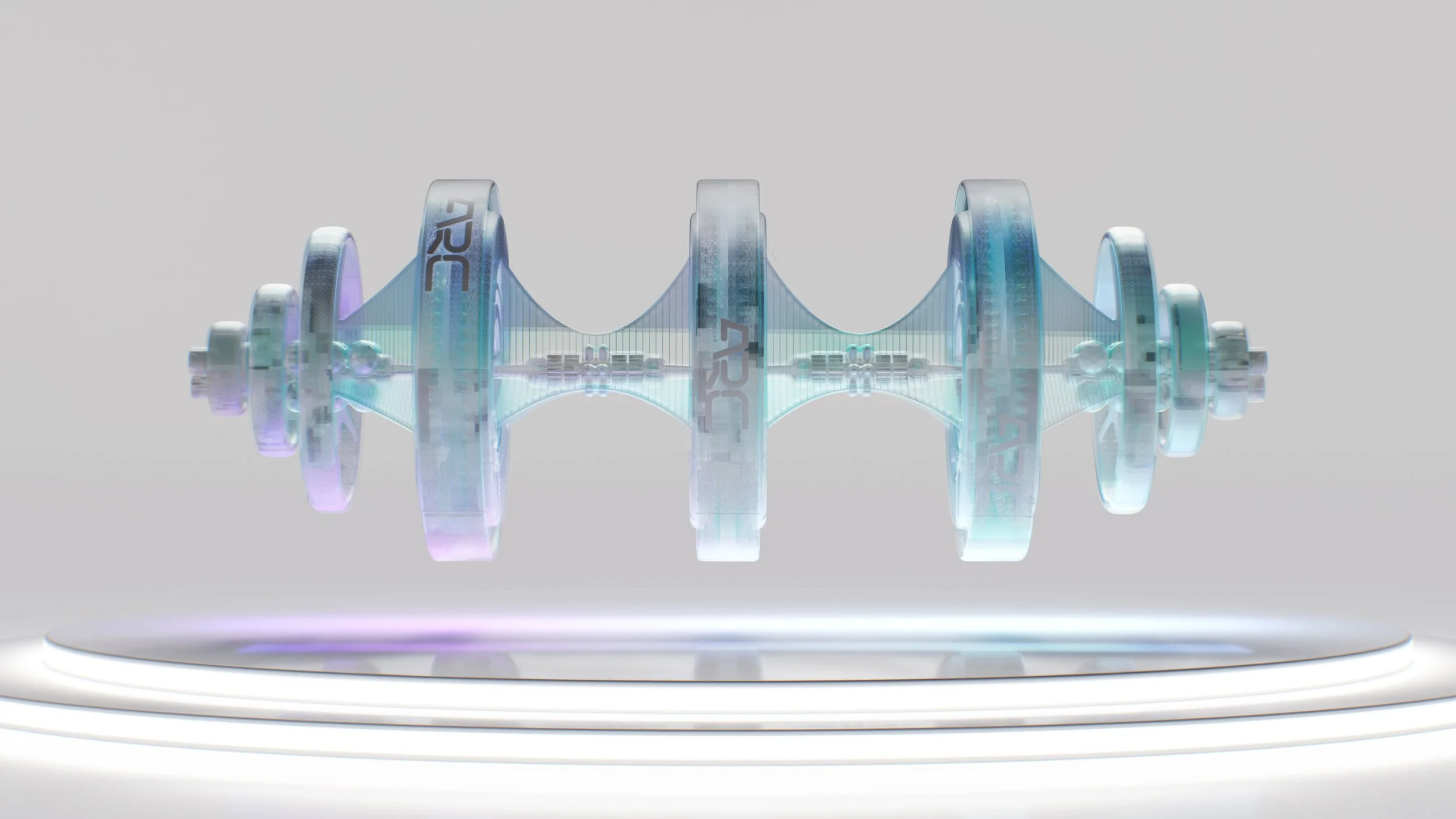
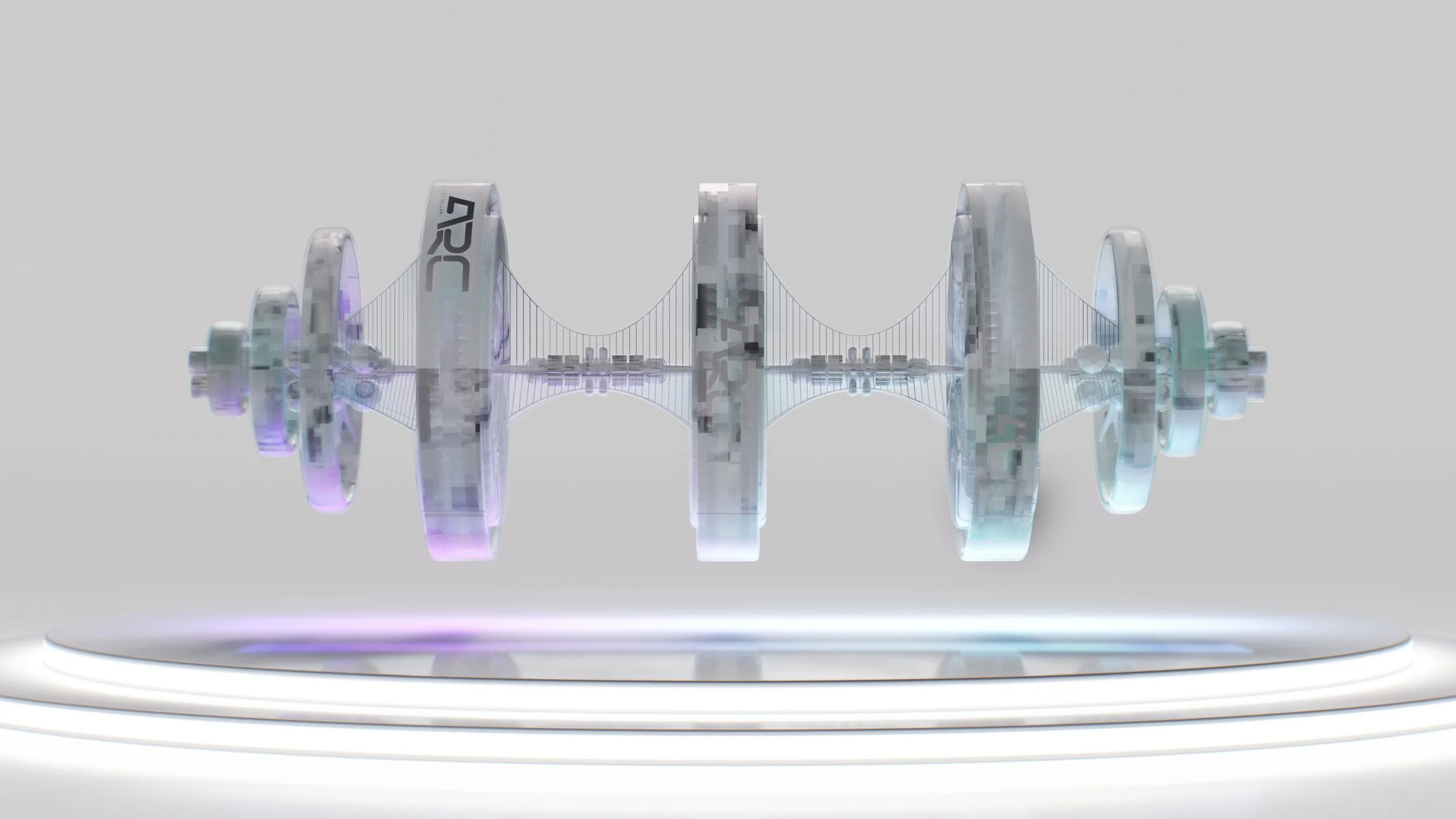
Interstellar Arc resolved hologram
03.0 3d design
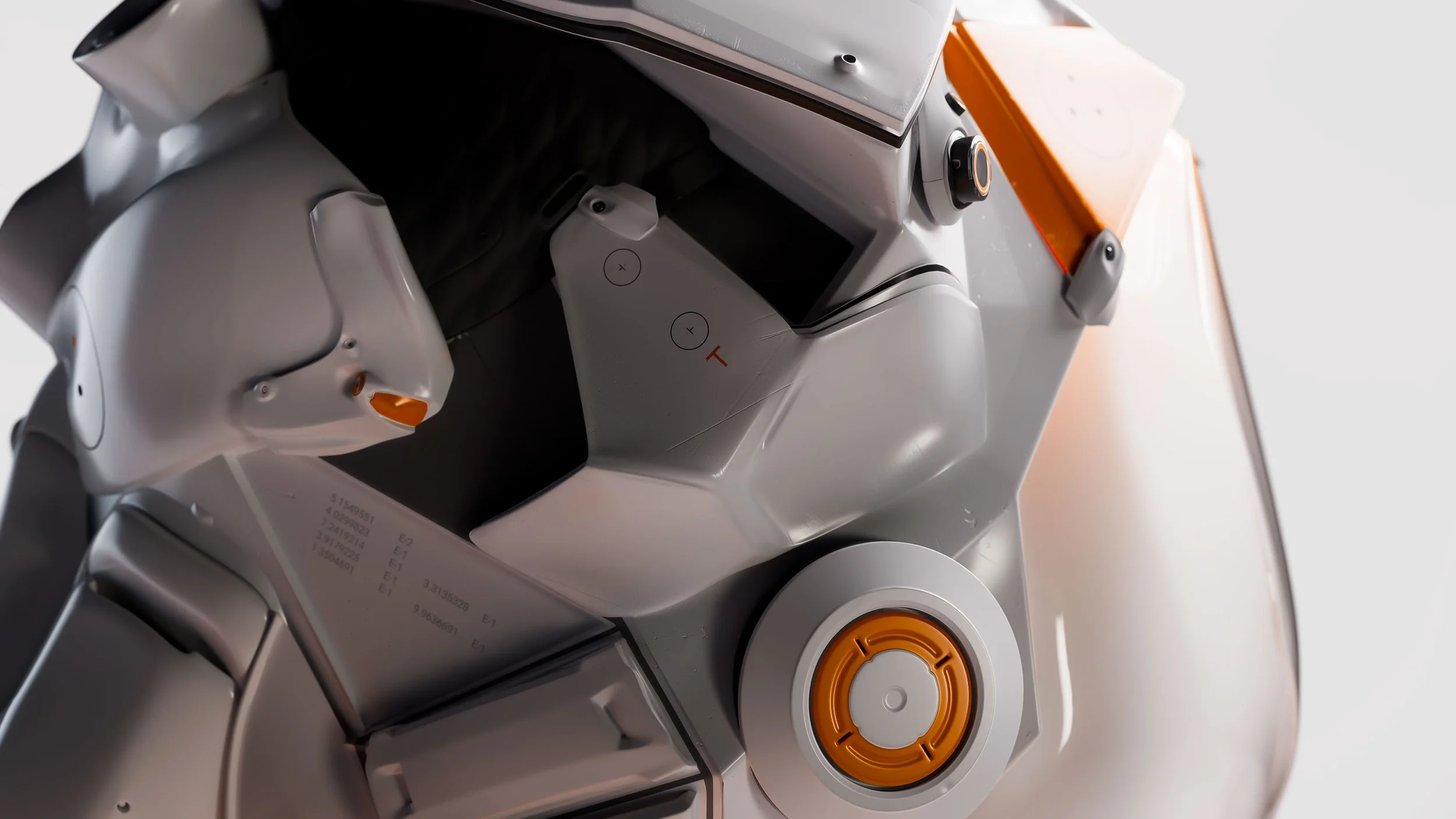
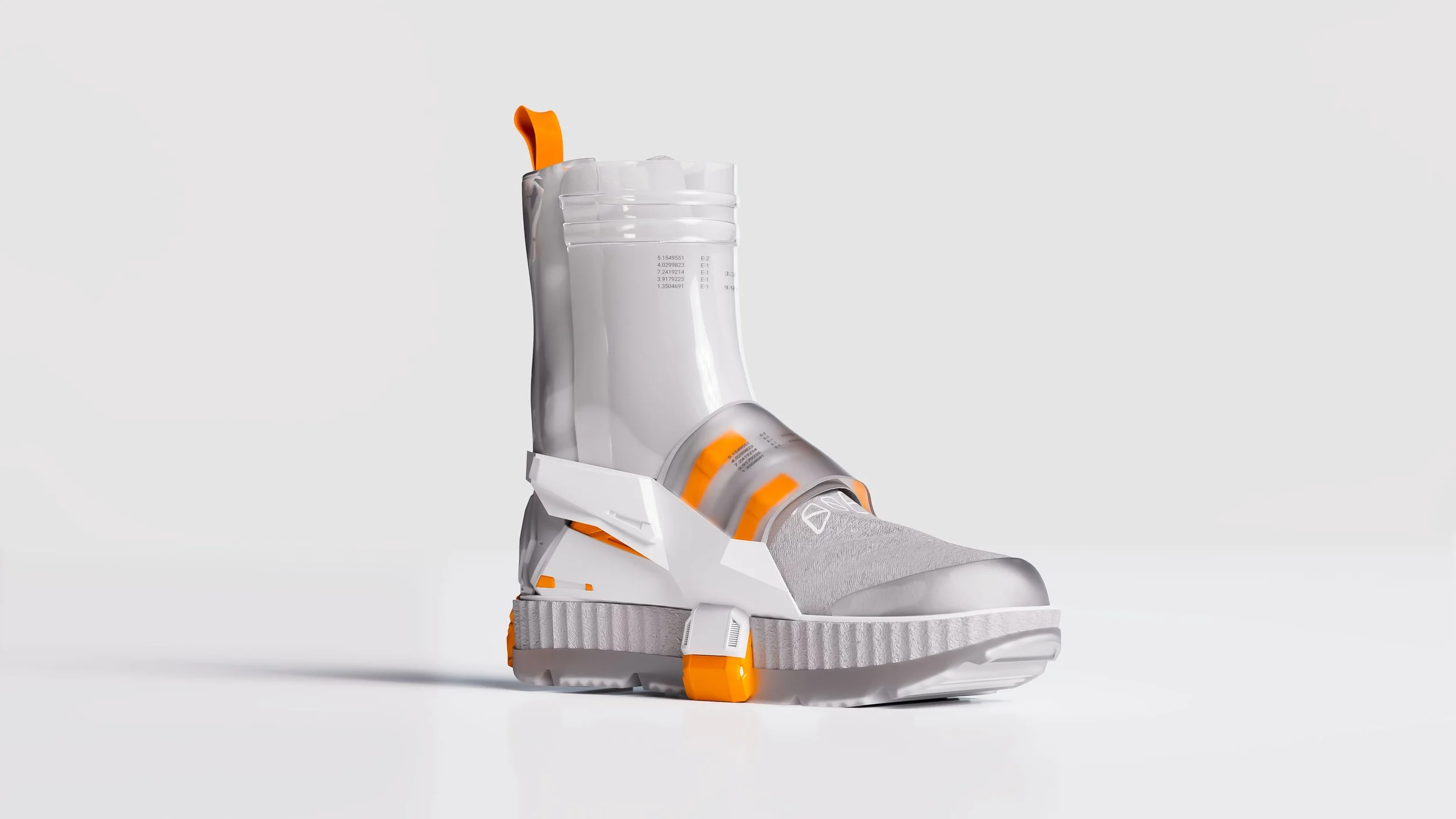
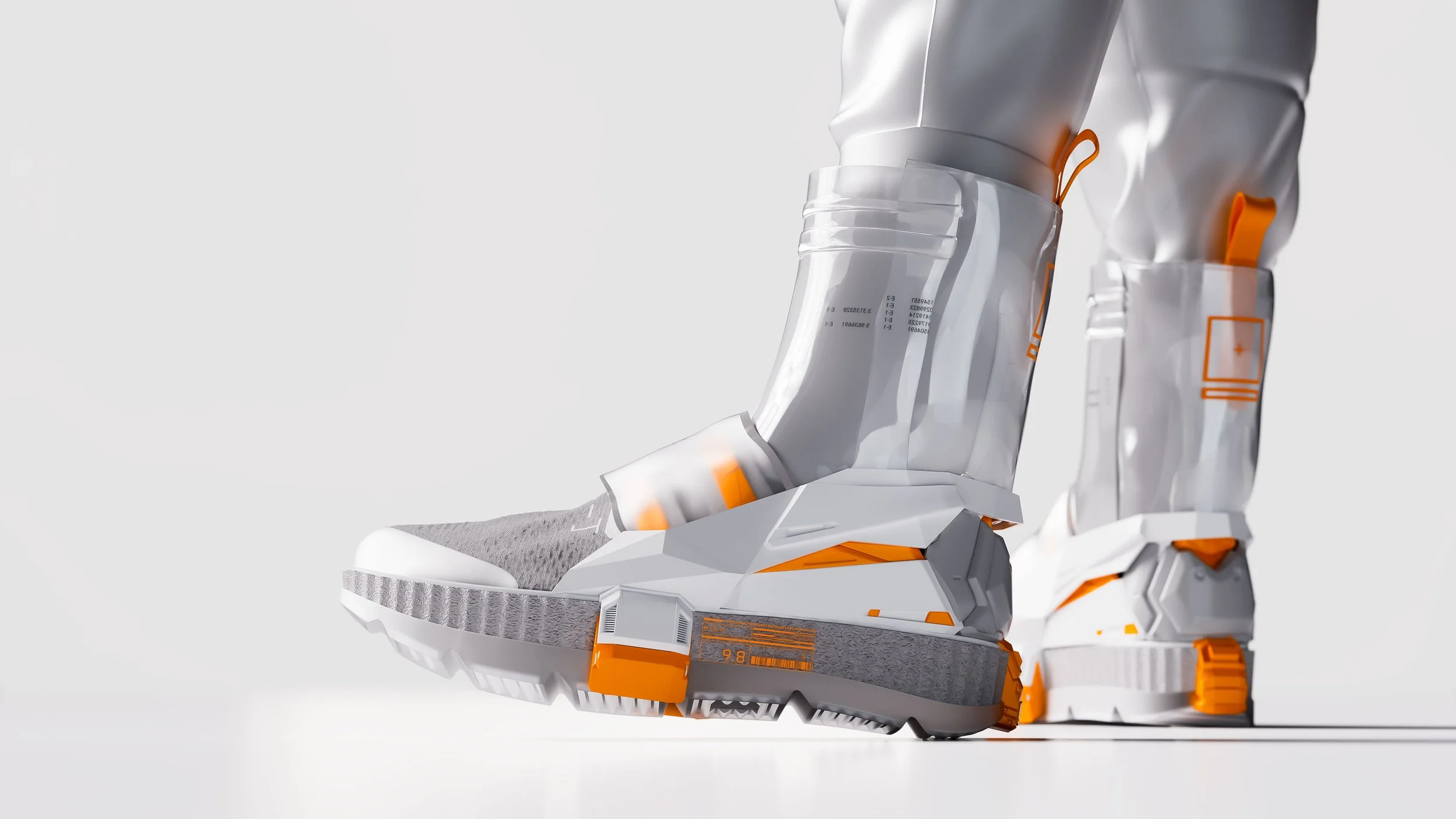
This phase explores how the established design principles extend into physical three-dimensional objects. The primary focus was the suit worn by each participant, a central element repeated throughout the experience and encountered at close range.
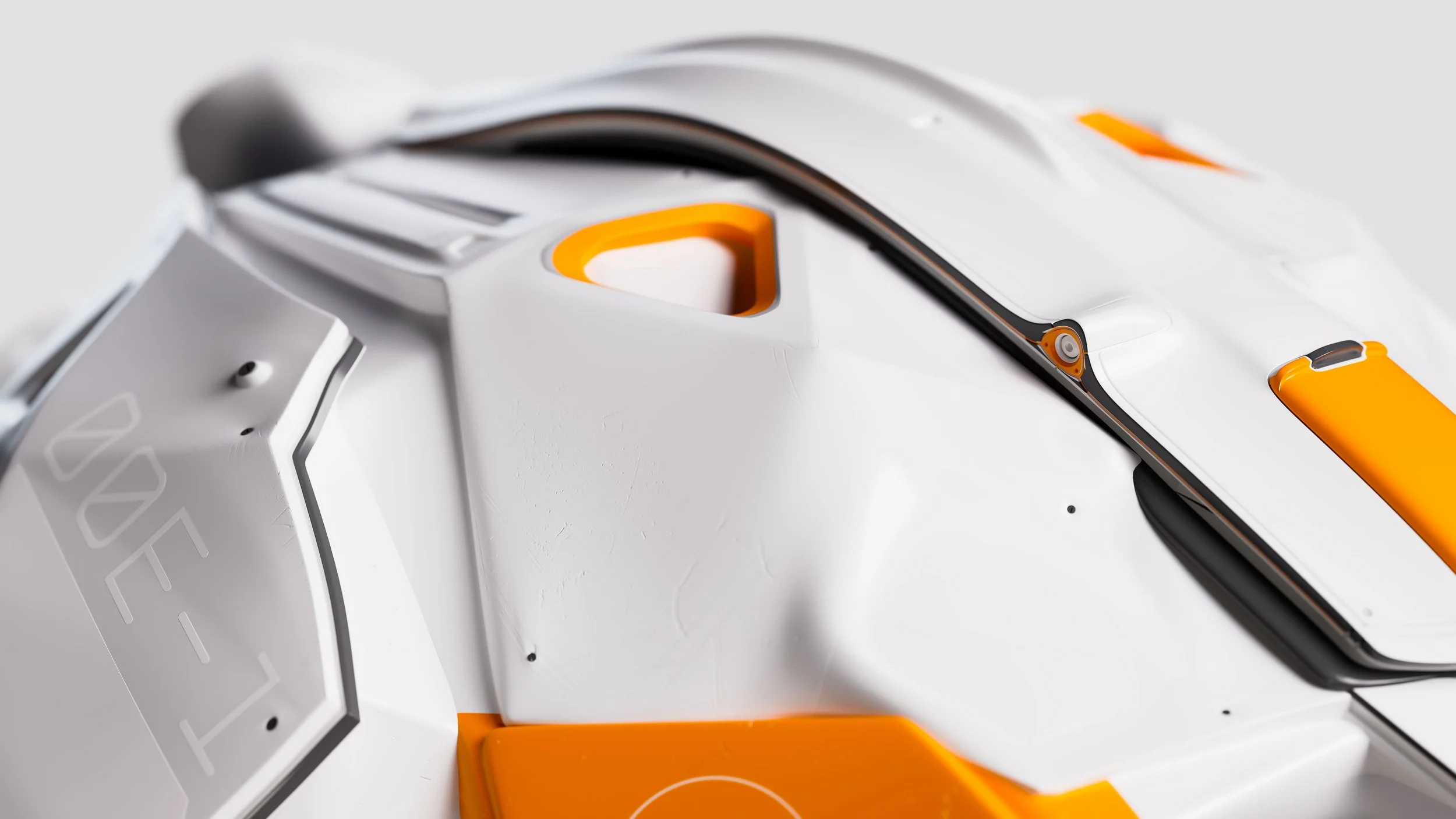
The suit serves as a key point of embodiment, requiring the graphic and material language to translate clearly onto the body. The same system is applied across additional objects, including garments, cryogenic systems, and transport vehicles, testing how the principles of stylized utilitarian design operate across different forms and functions.
03.1 SUIT DESIGN
The brief introduced a set of constraints that shaped the development of the suit system. The design needed to reflect civilian use within a long-duration travel environment, supporting comfort, functionality, and continuity across the experience.
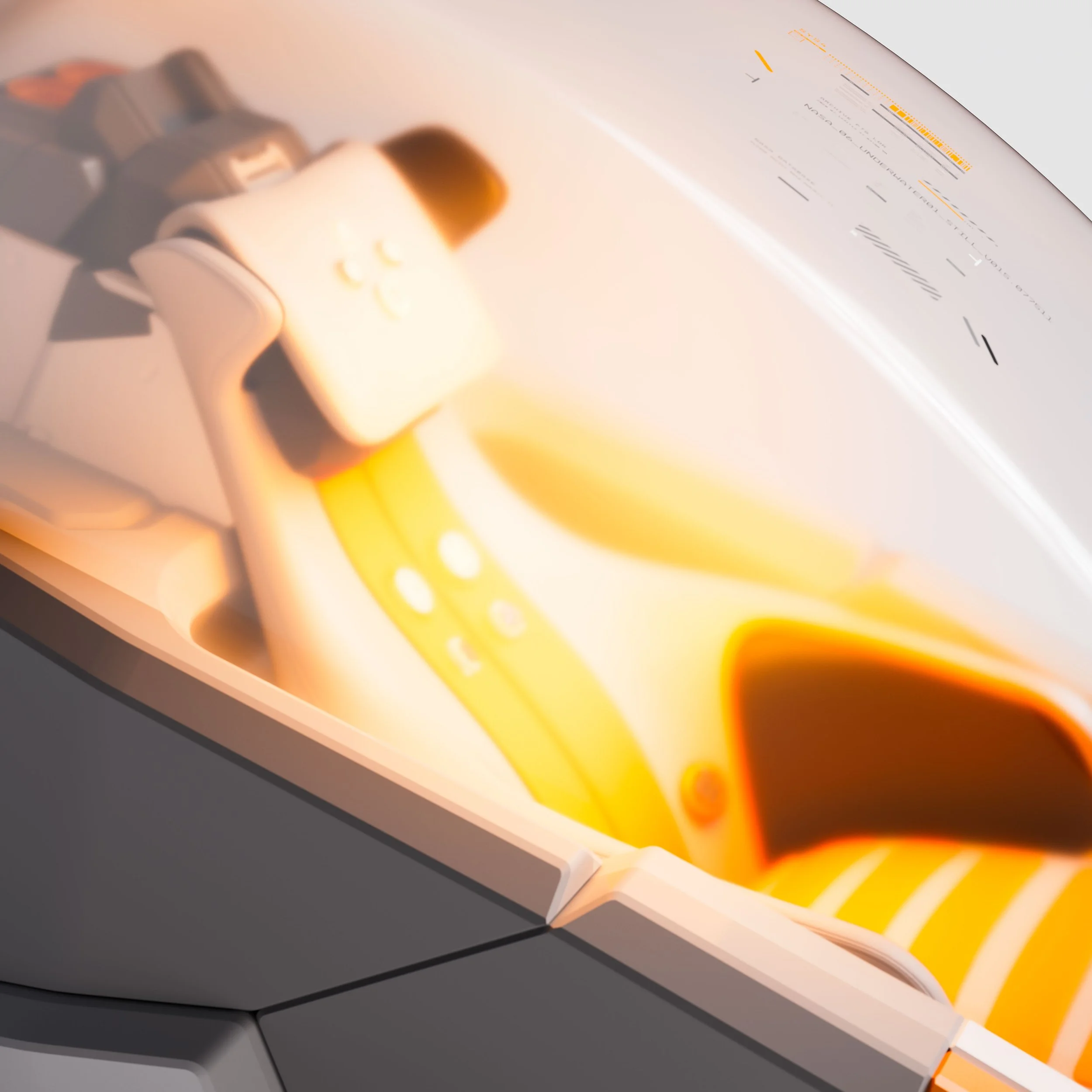
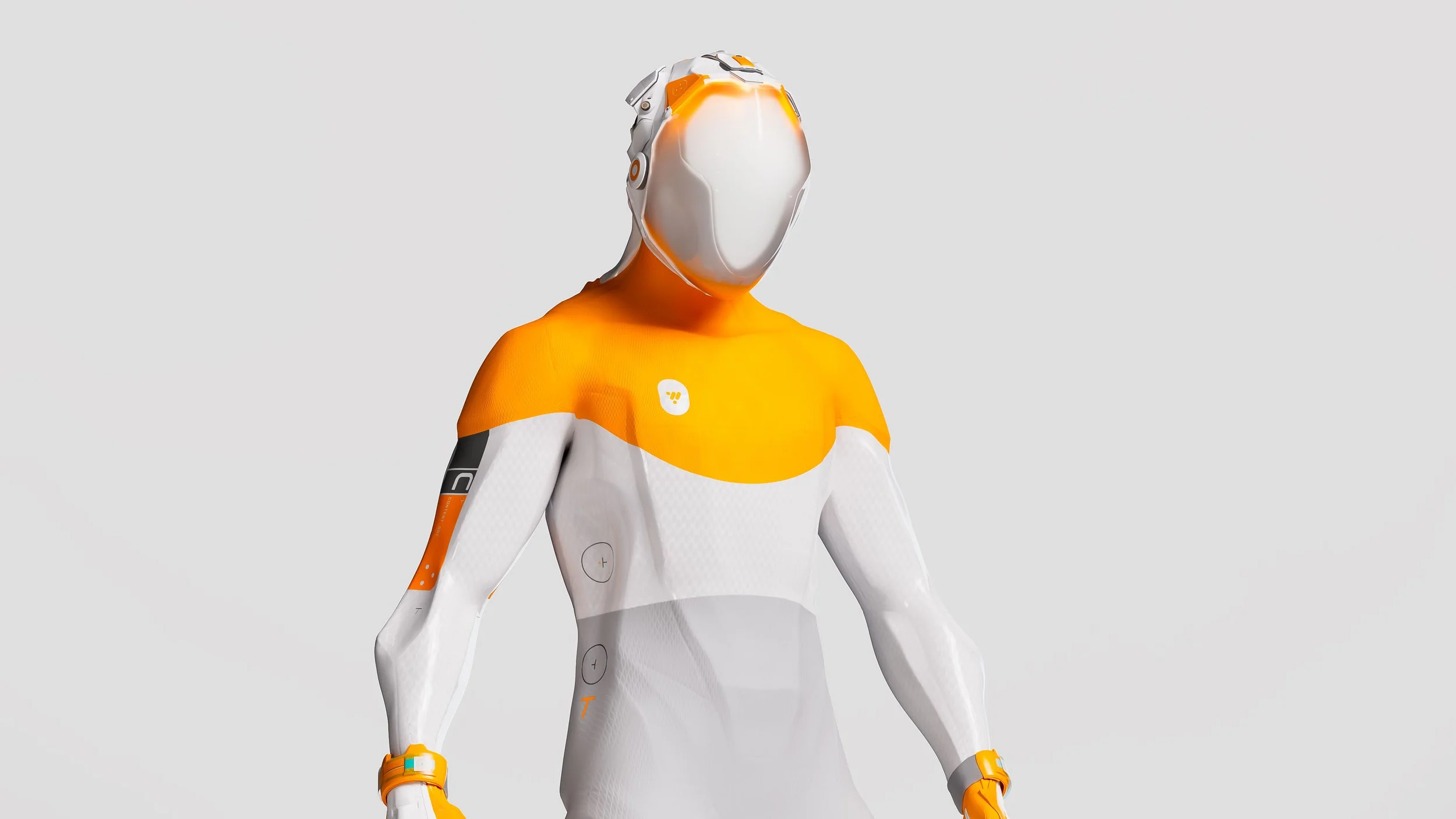
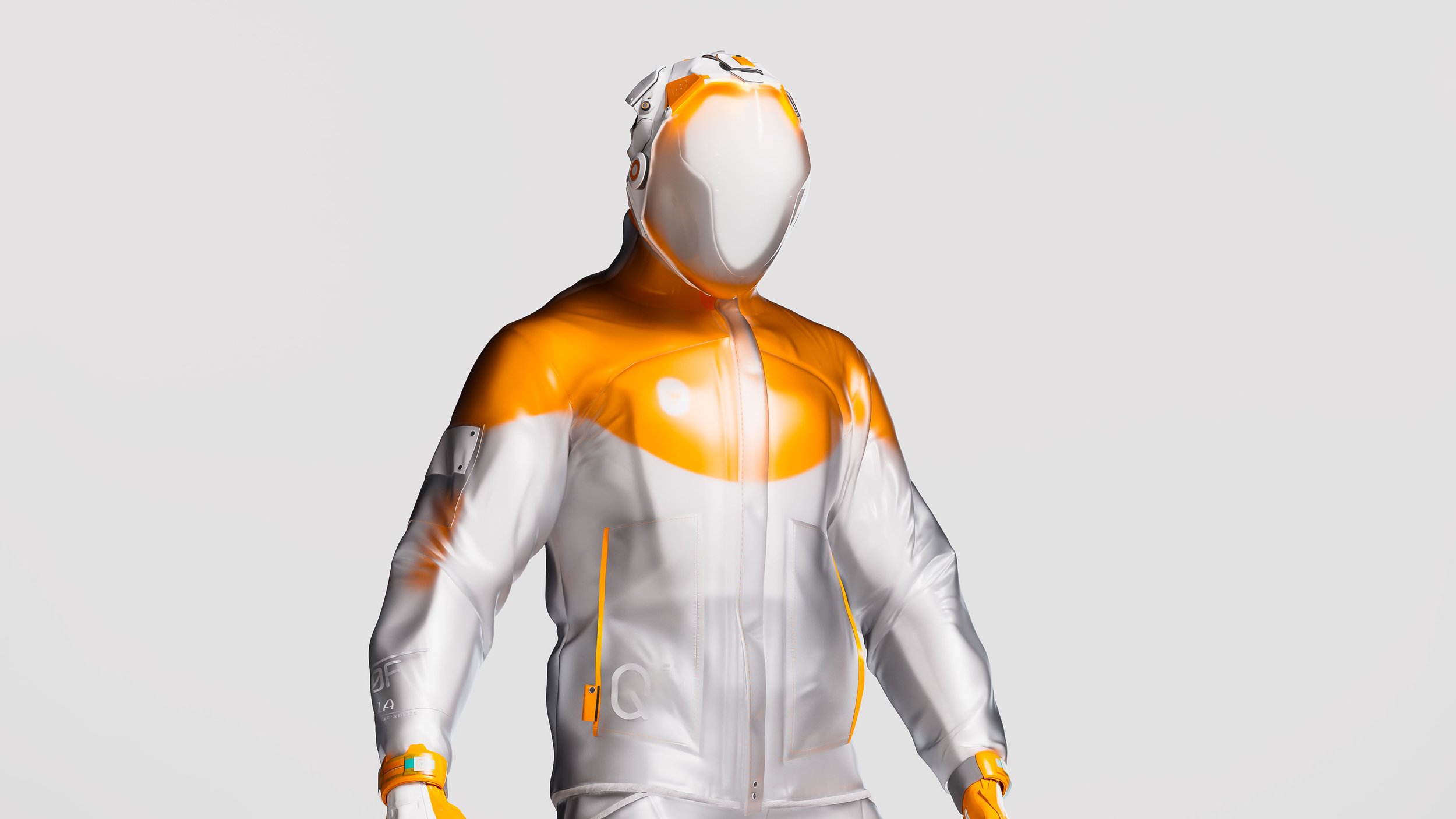
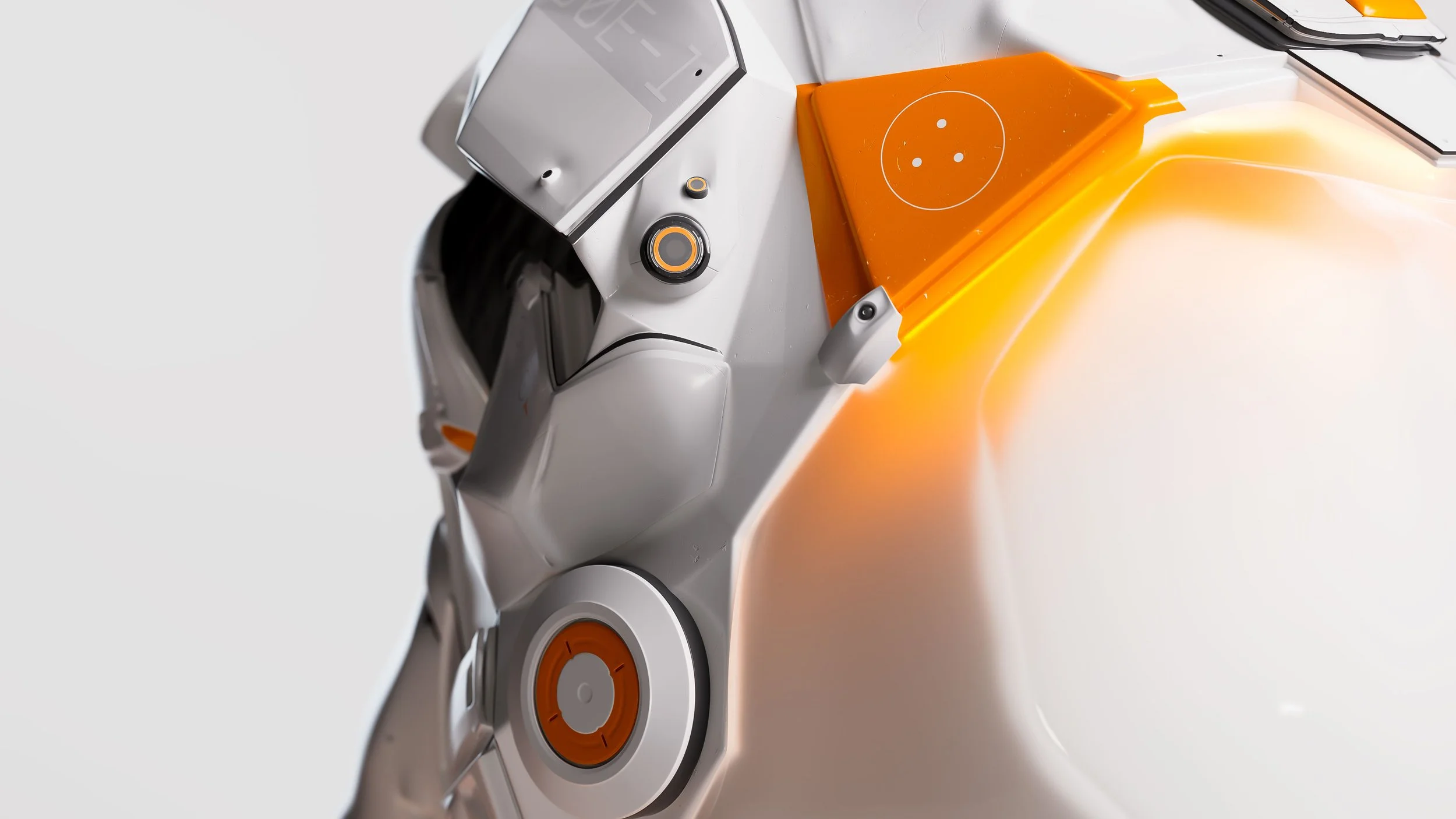
Each participant appears in the same suit, requiring a unified design that remains consistent across a wide range of body types. The system is gender-neutral and minimizes individual distinction, including facial coverage that obscures identity while maintaining a sense of approachability.
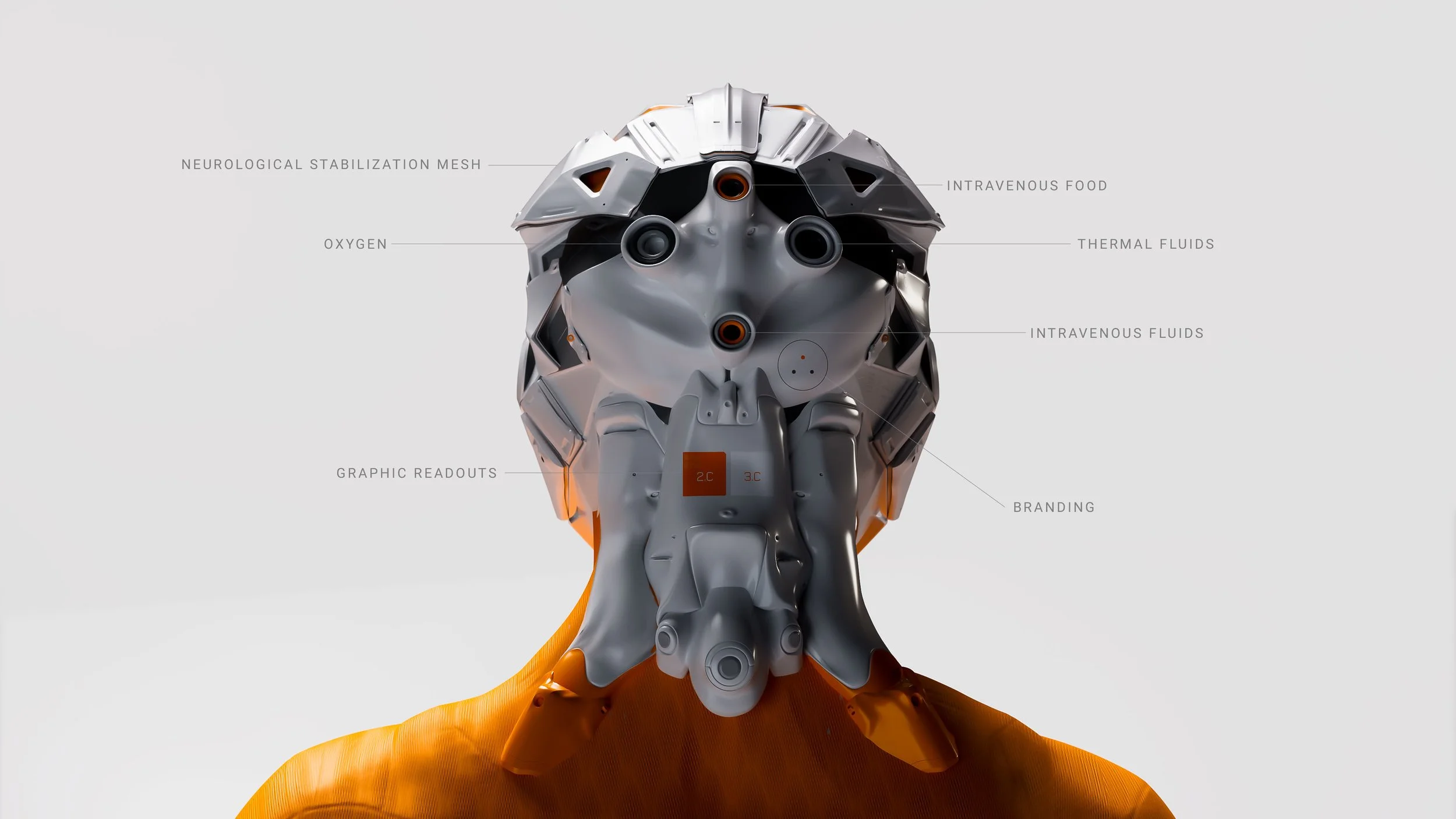
The suit also needed to register as part of a cryogenic system, supporting the transition from sleep to active experience. Integrated components suggest monitoring, support, and connectivity without introducing unnecessary visual complexity.
Given the scale of repetition, the design maintains a controlled presence within the environment. Forms remain compact and wearable, allowing the suit to support the experience without dominating it.
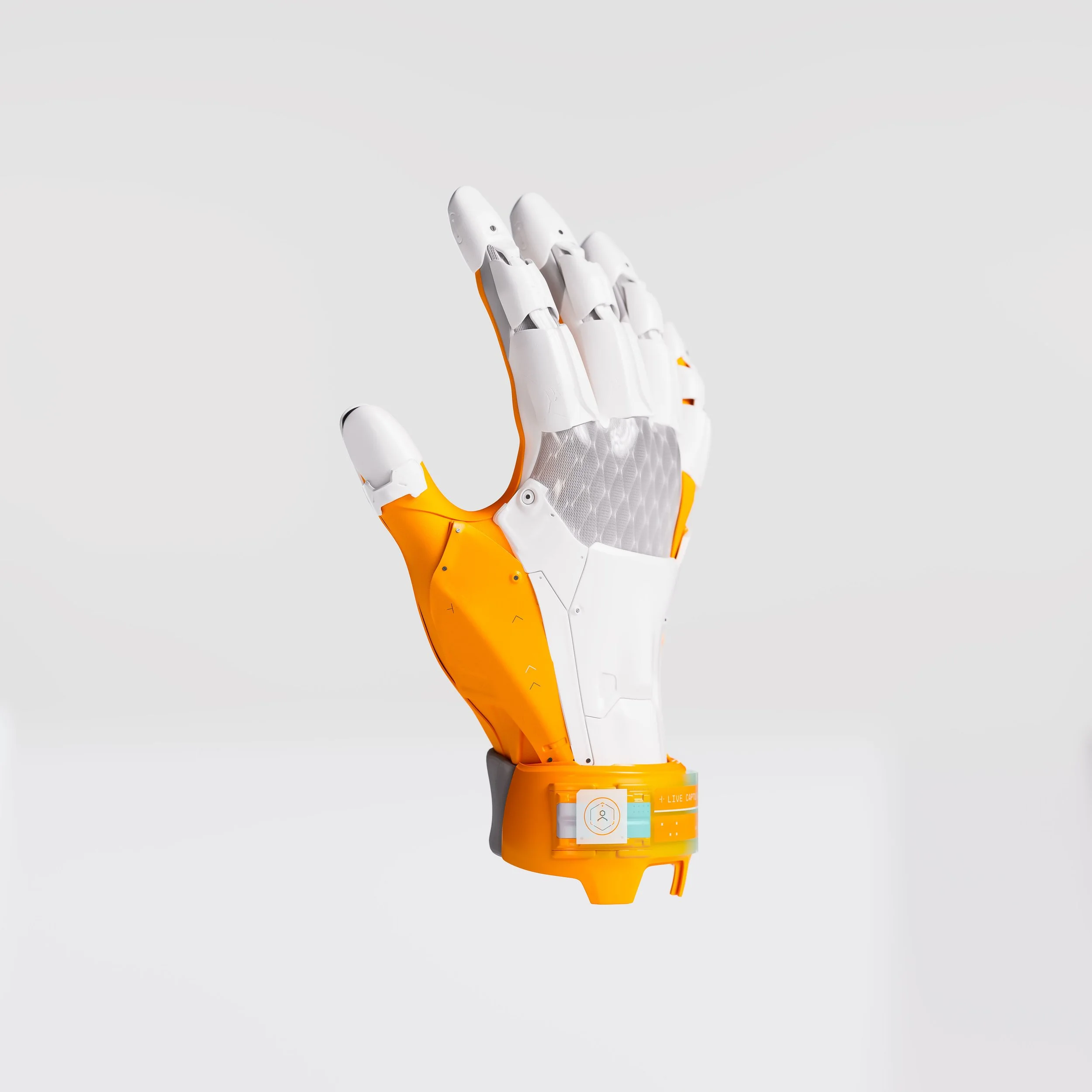
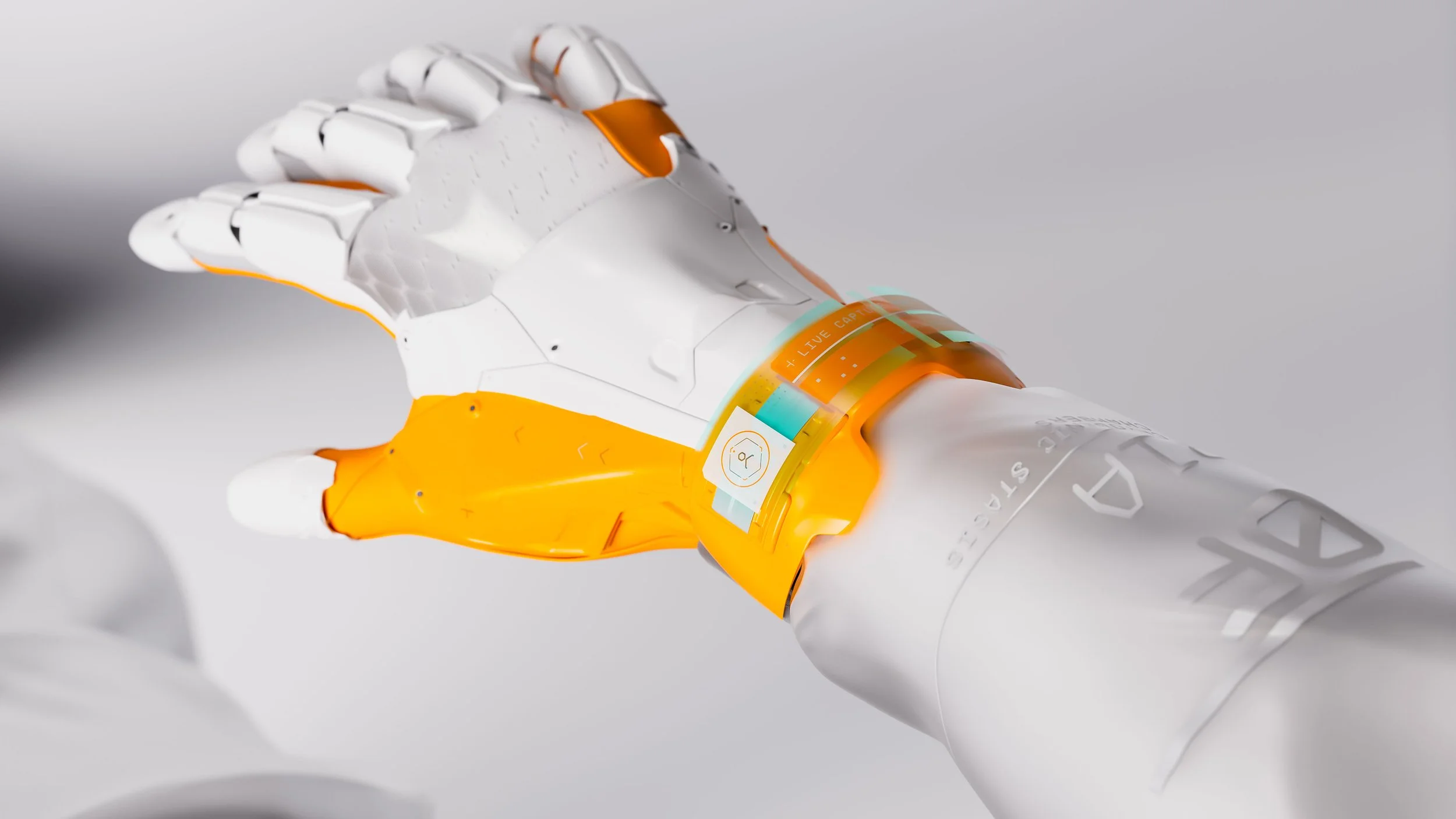
Close-range interaction was a key consideration, particularly in the hands. As the most frequently viewed element in first-person perspective, they required a high level of detail and fidelity while remaining grounded in human proportion and movement.
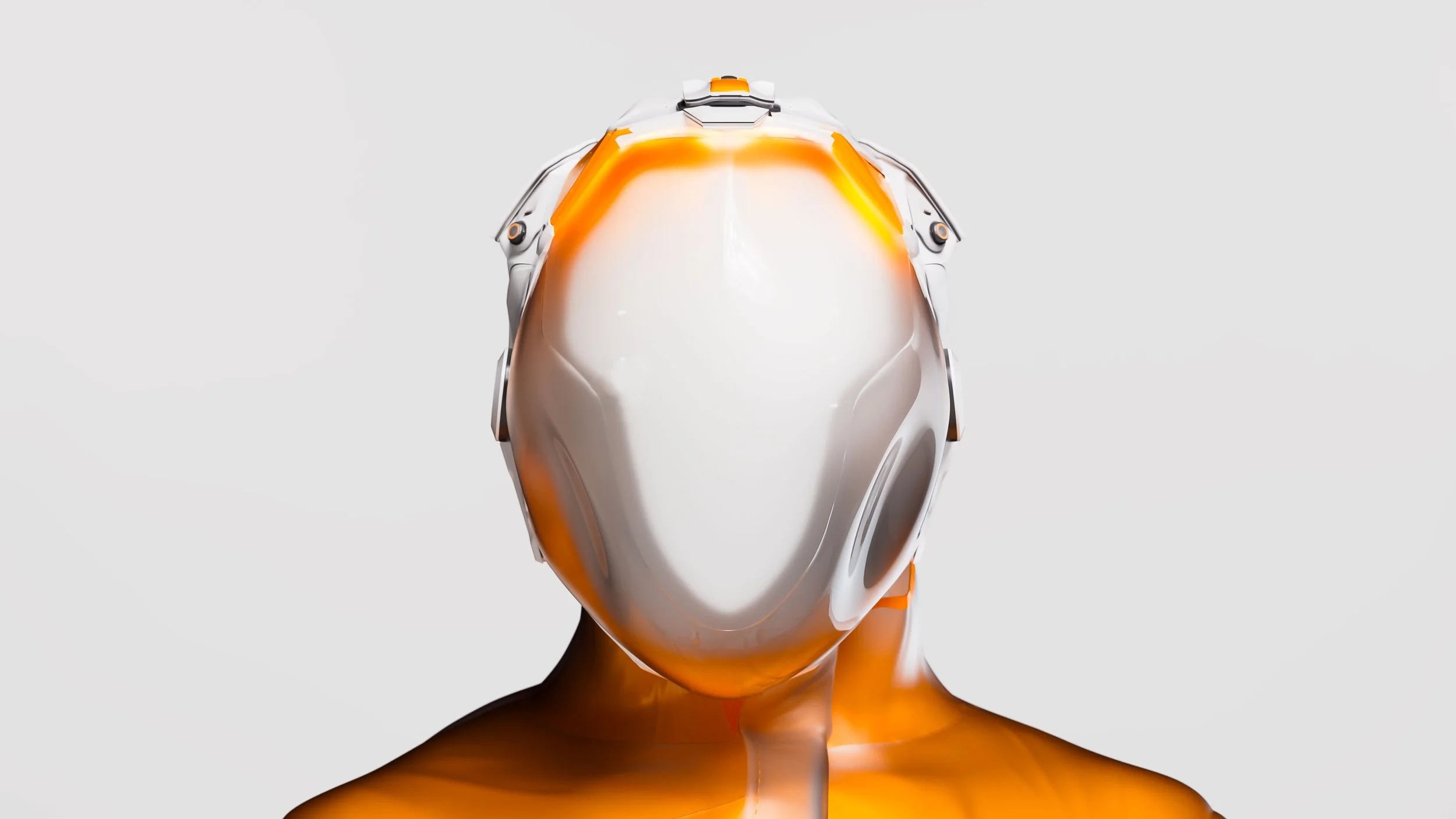
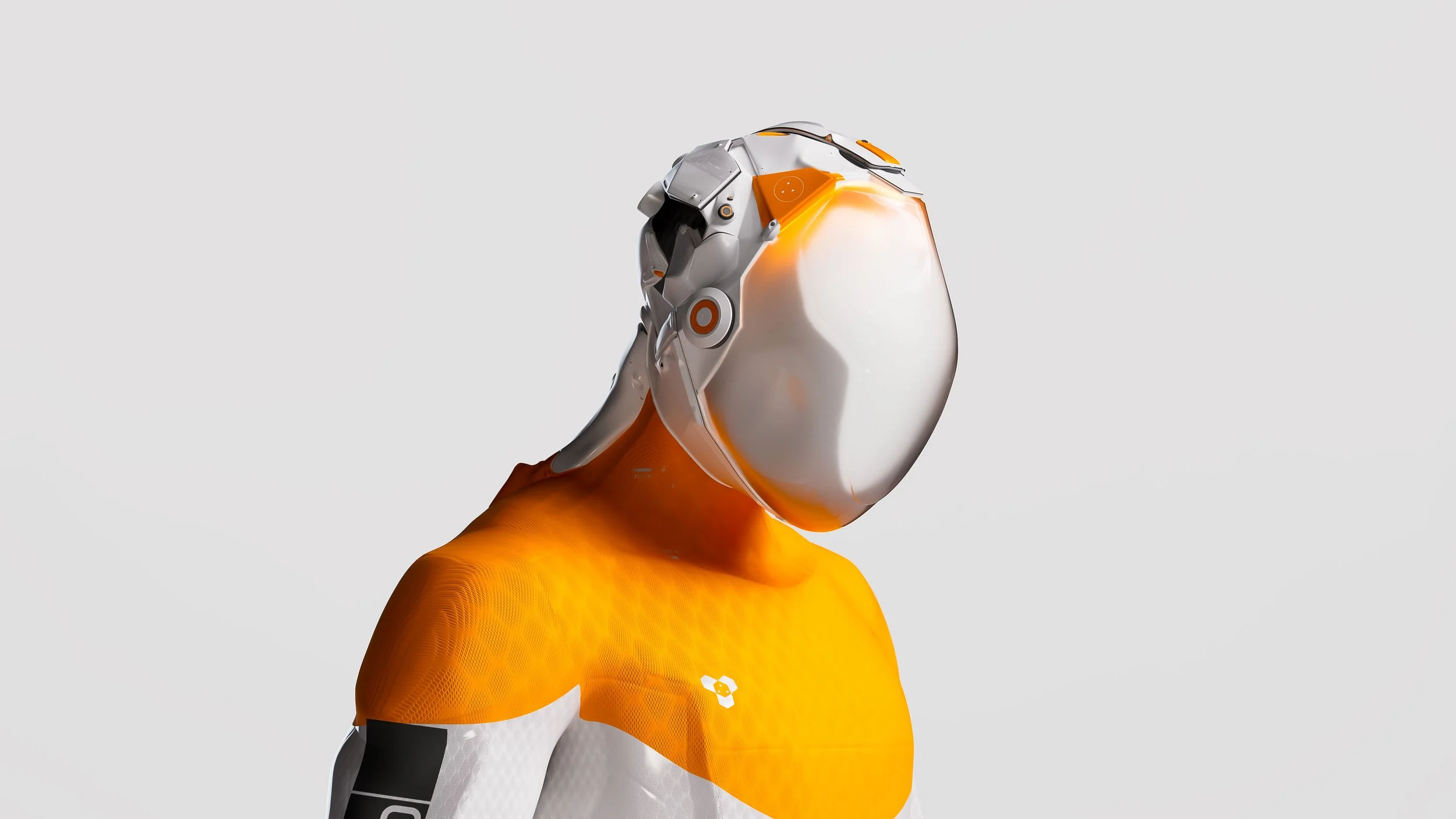
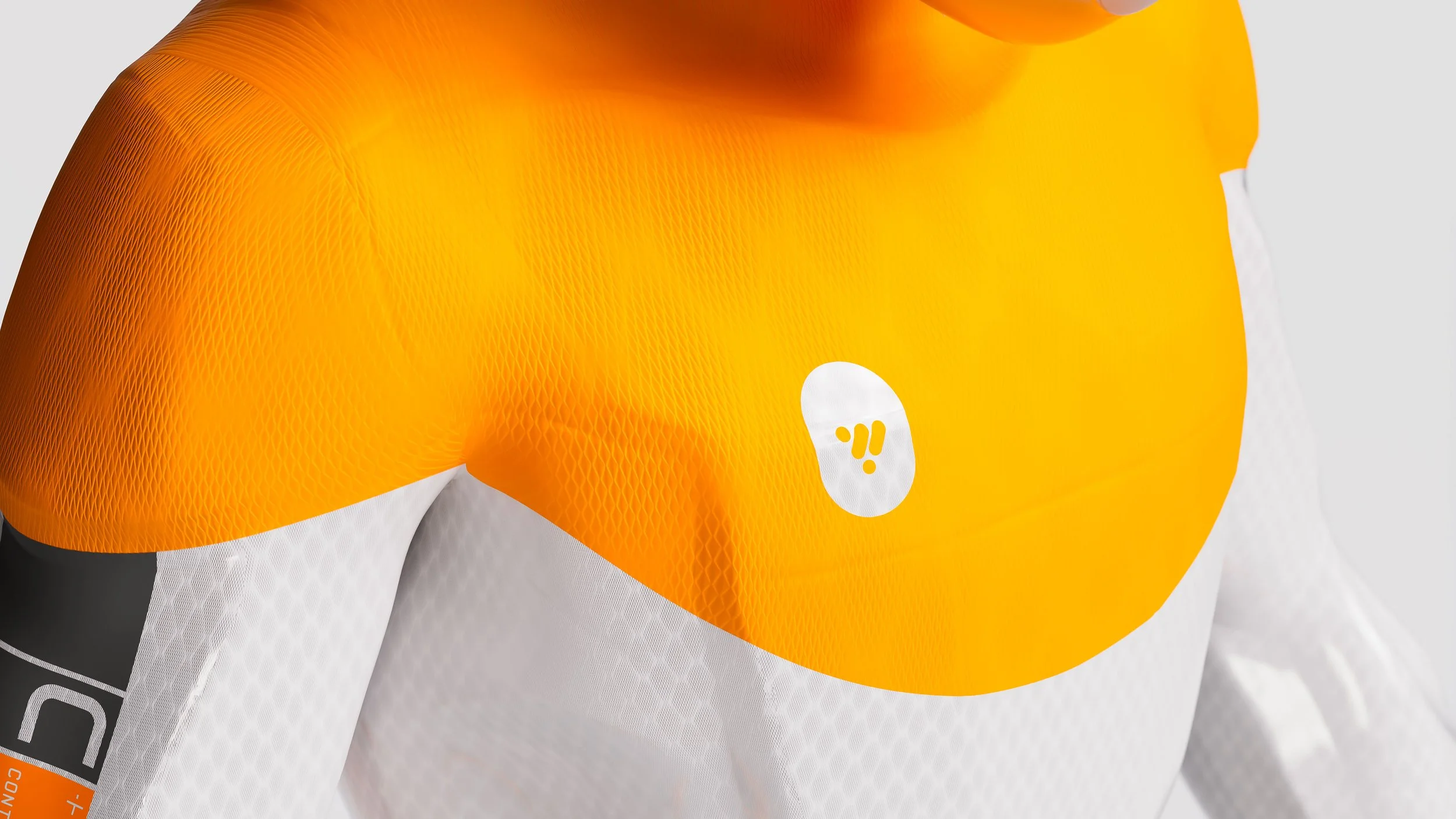
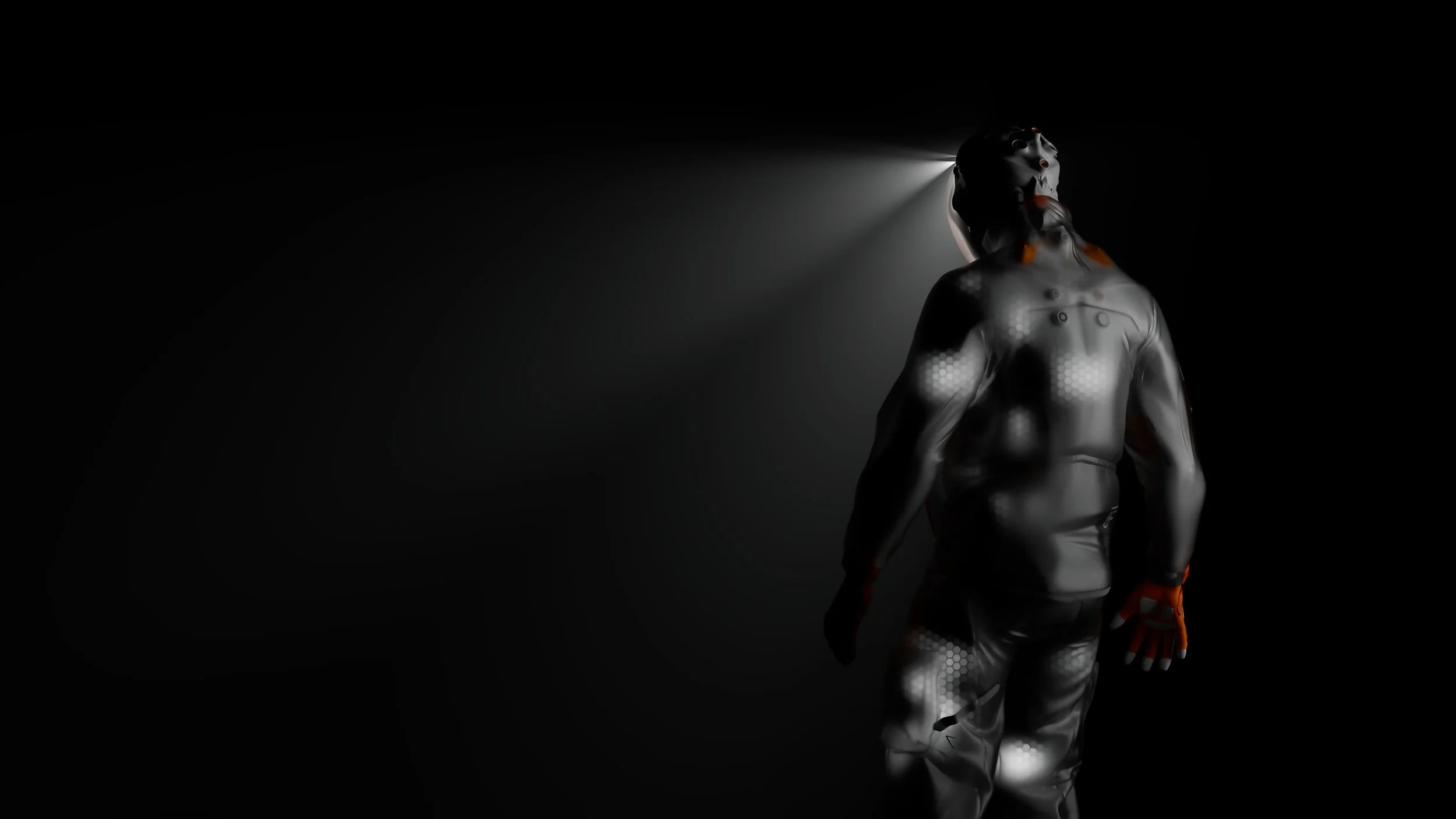
DESIGN SOLUTIONS
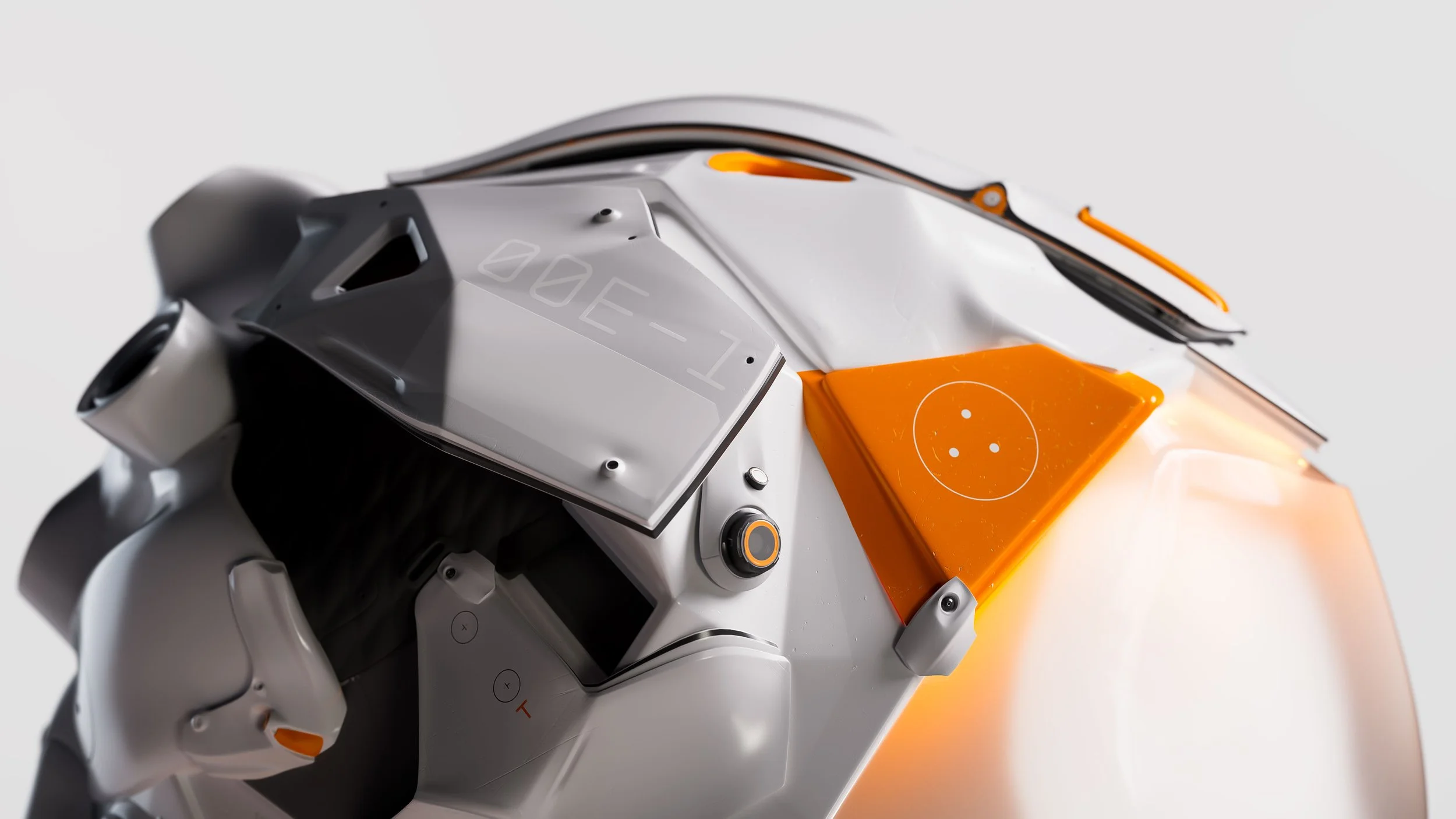
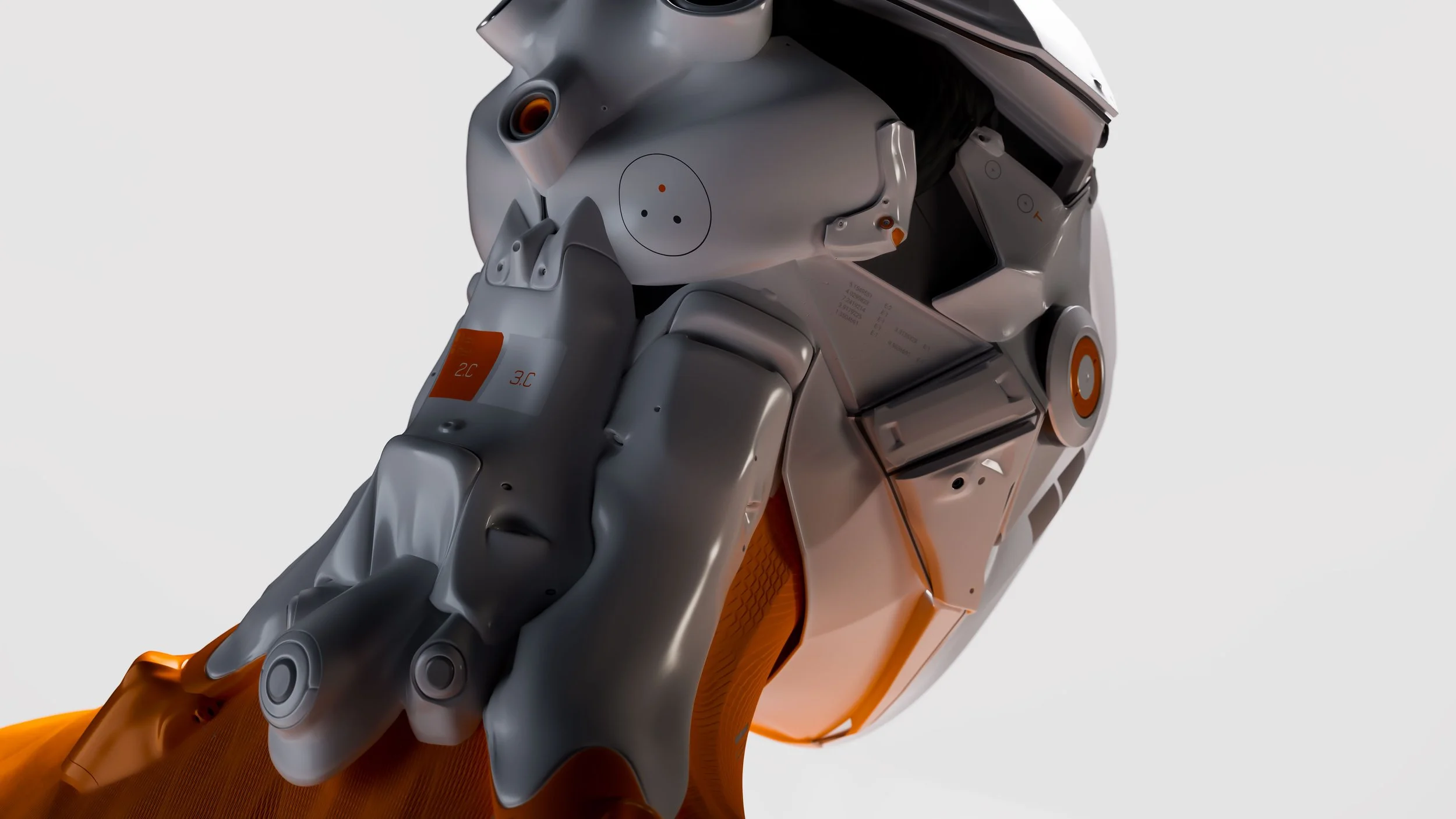
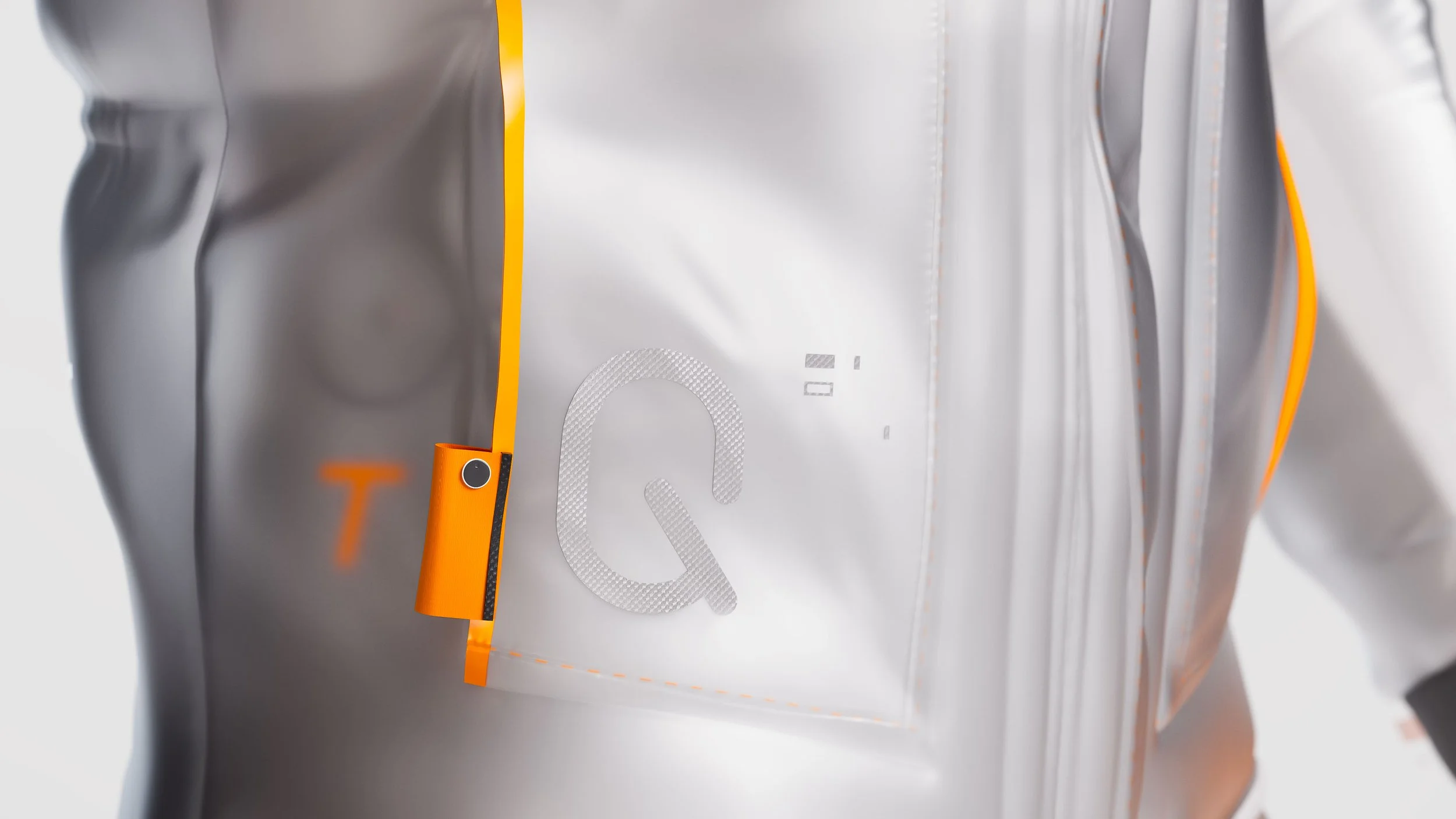
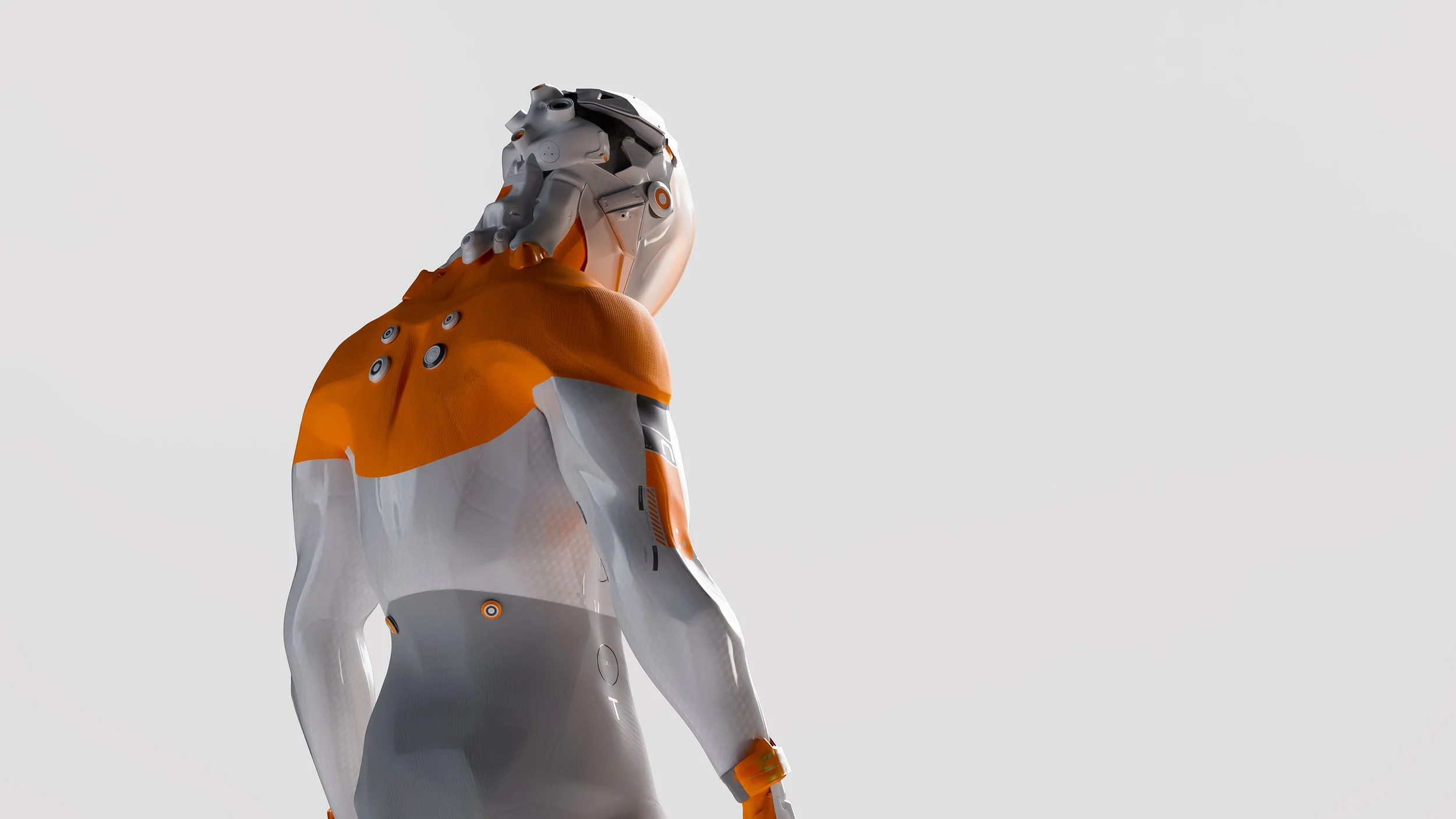
The suit is structured as a layered system that integrates life support, monitoring, and wearable comfort. At its core, a biometric compression layer functions as the primary interface, working in conjunction with the helmet to support cryogenic sleep. This layer suggests continuous monitoring, thermal regulation, and intravenous nutrient delivery, forming the technical foundation of the system.
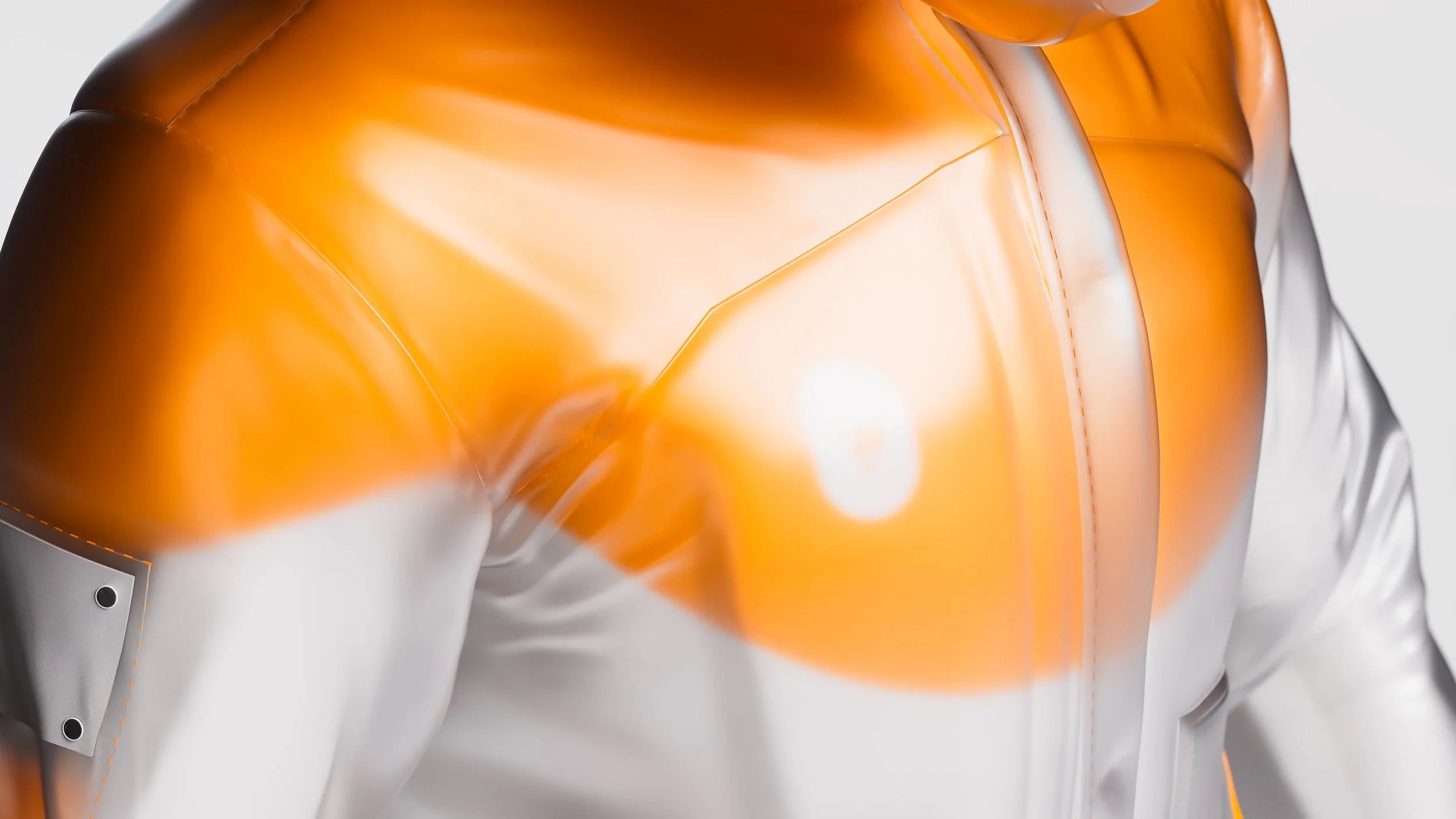
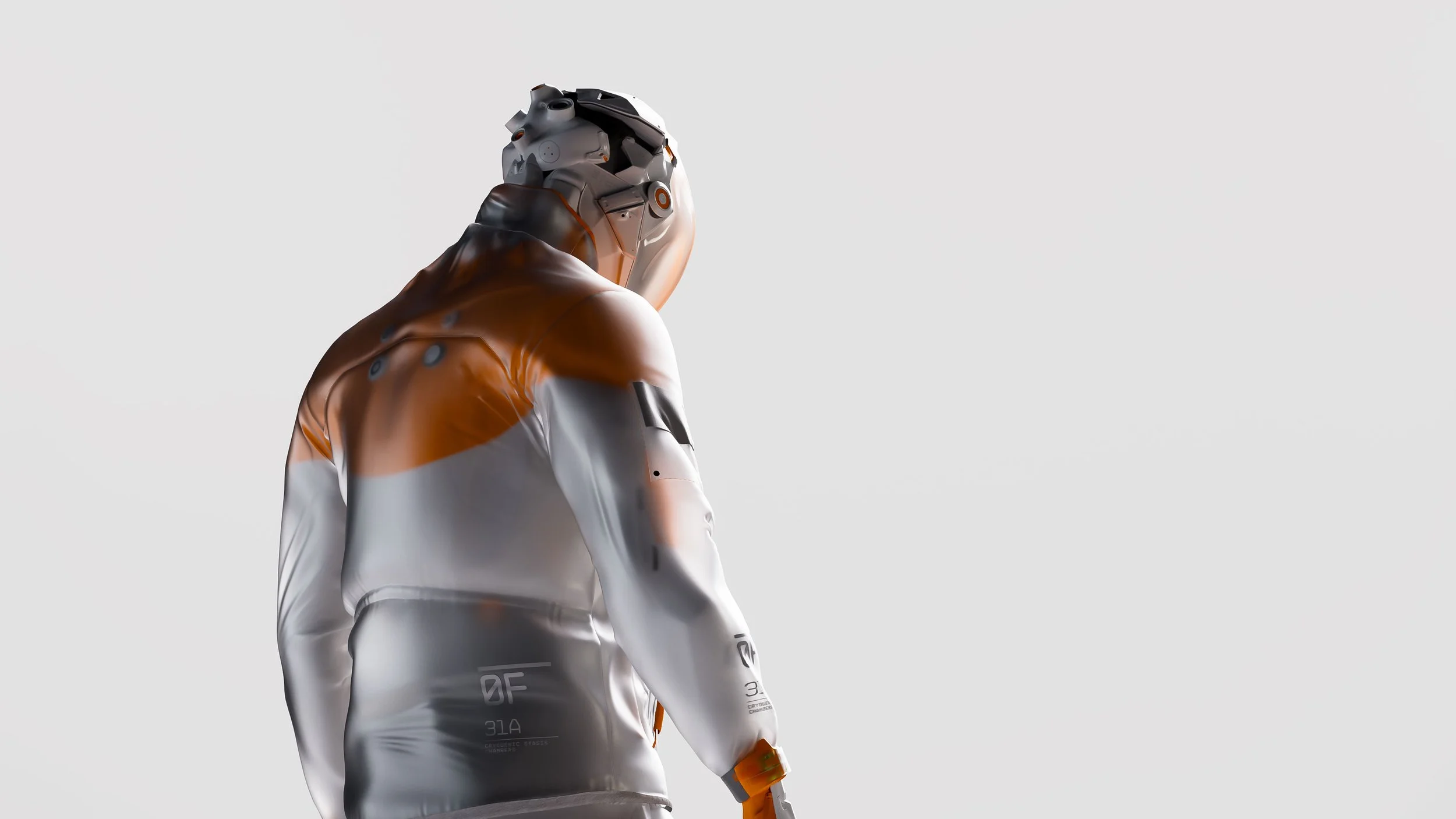
An outerwear layer sits above this core, introducing a more familiar and accessible garment structure. Pockets, zippers, and physical seams provide functional utility while softening the overall presence of the suit. This layer helps standardize silhouette across participants, obscuring individual variation while maintaining comfort and ease of movement.
Together, these layers establish a system that supports both the technical requirements of cryogenic travel and the practical needs of civilian use, balancing embedded technology with wearable familiarity.
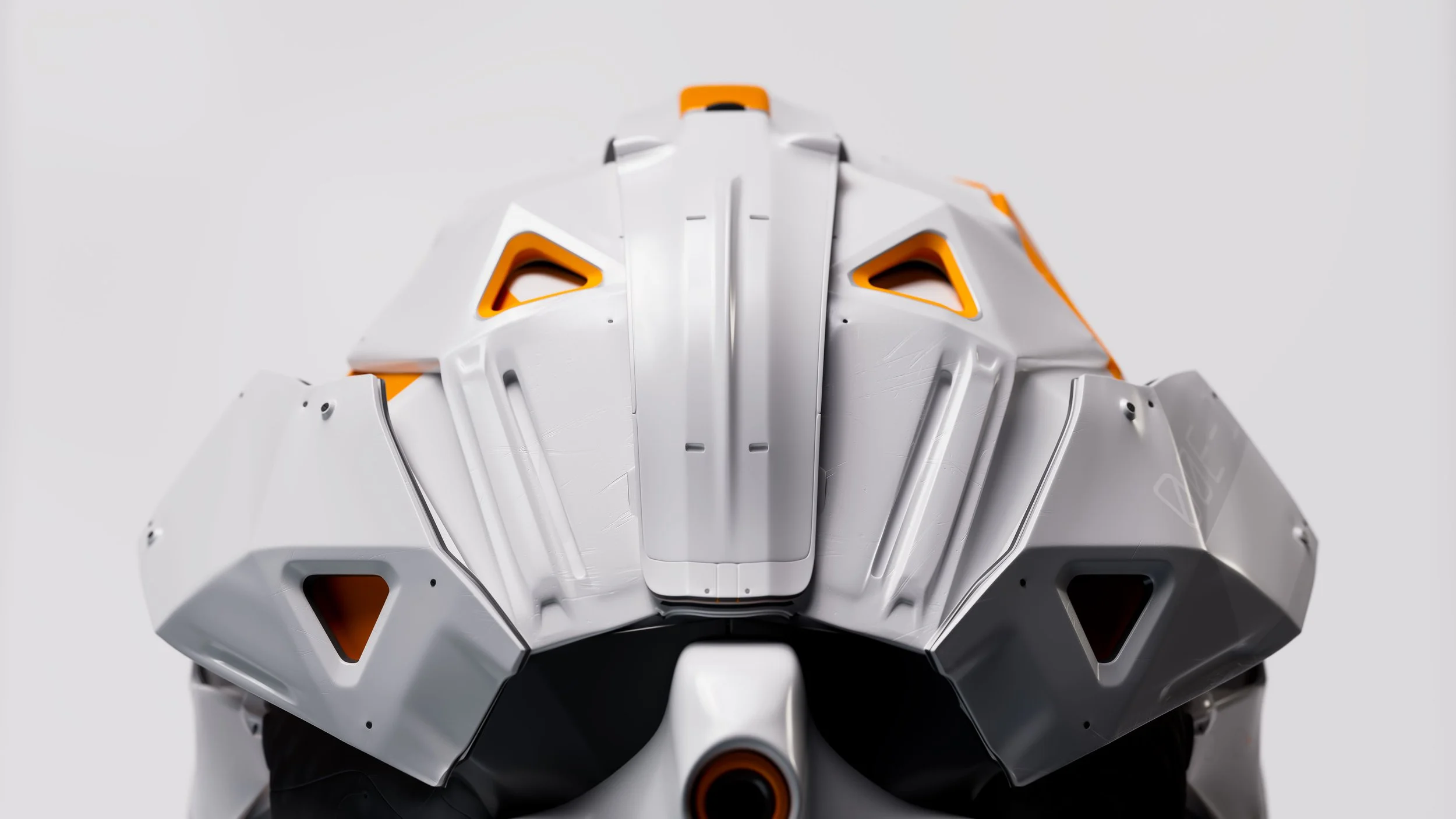
Helmet back view
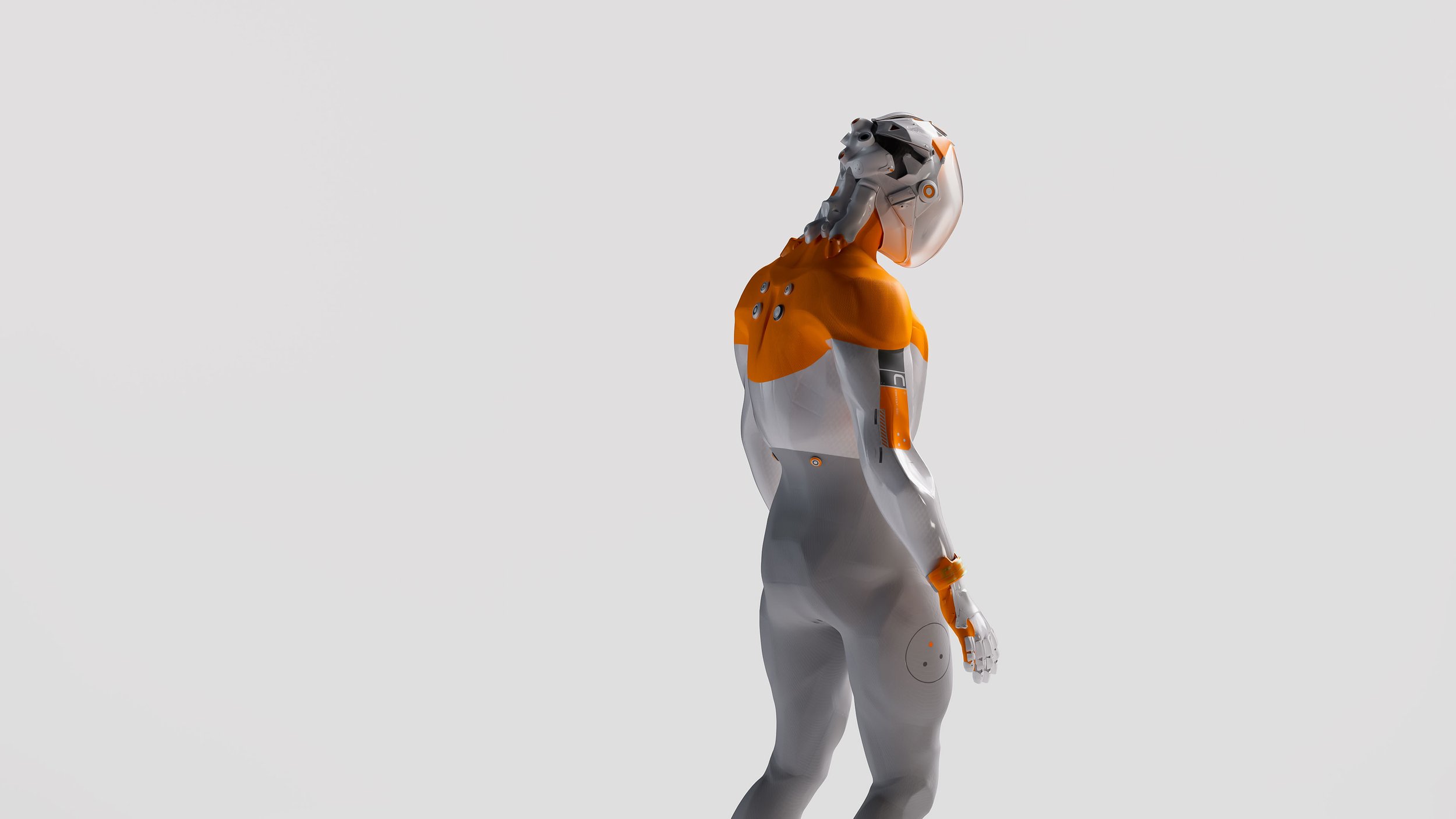
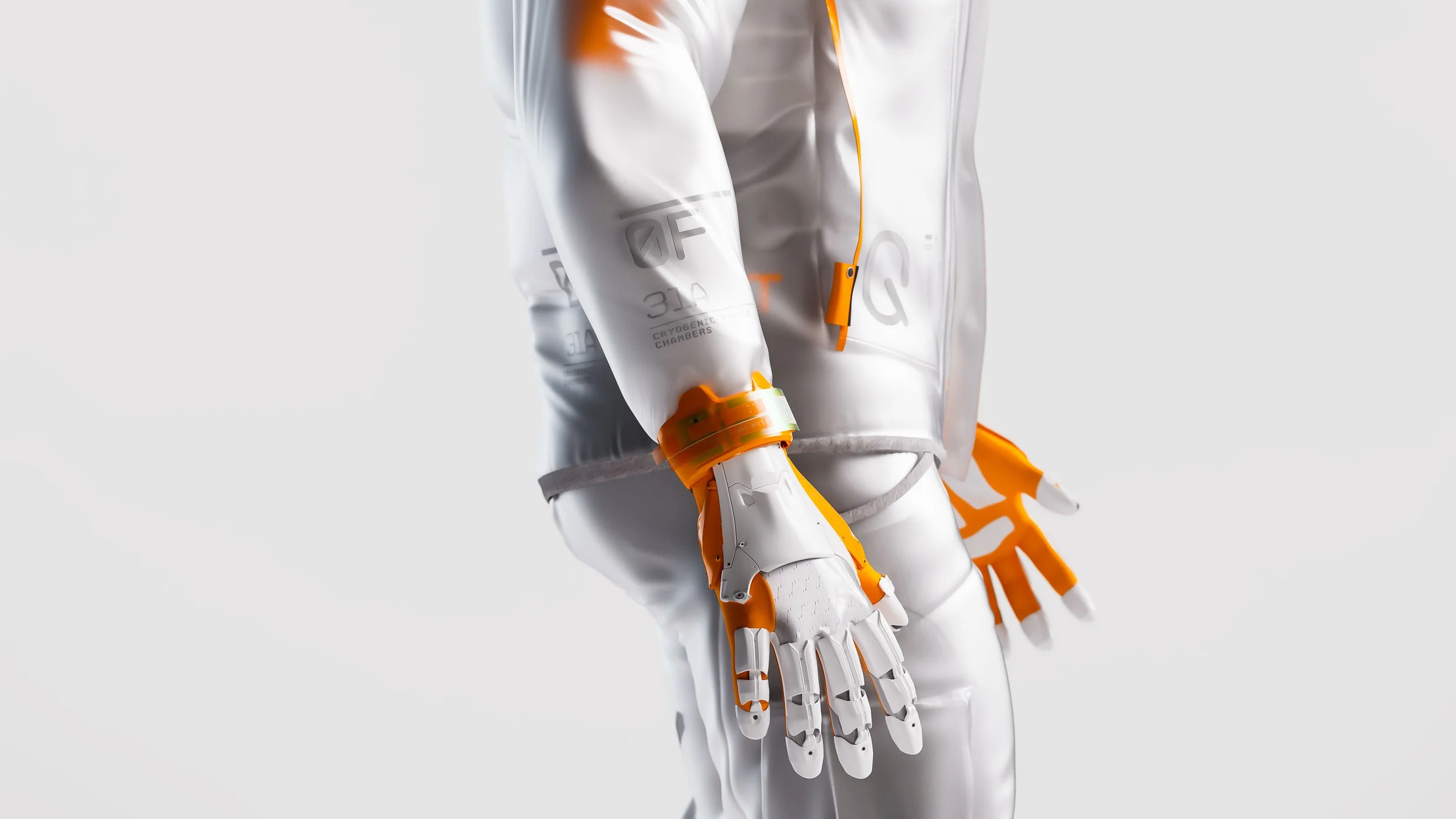
Glove / suit connection close-up
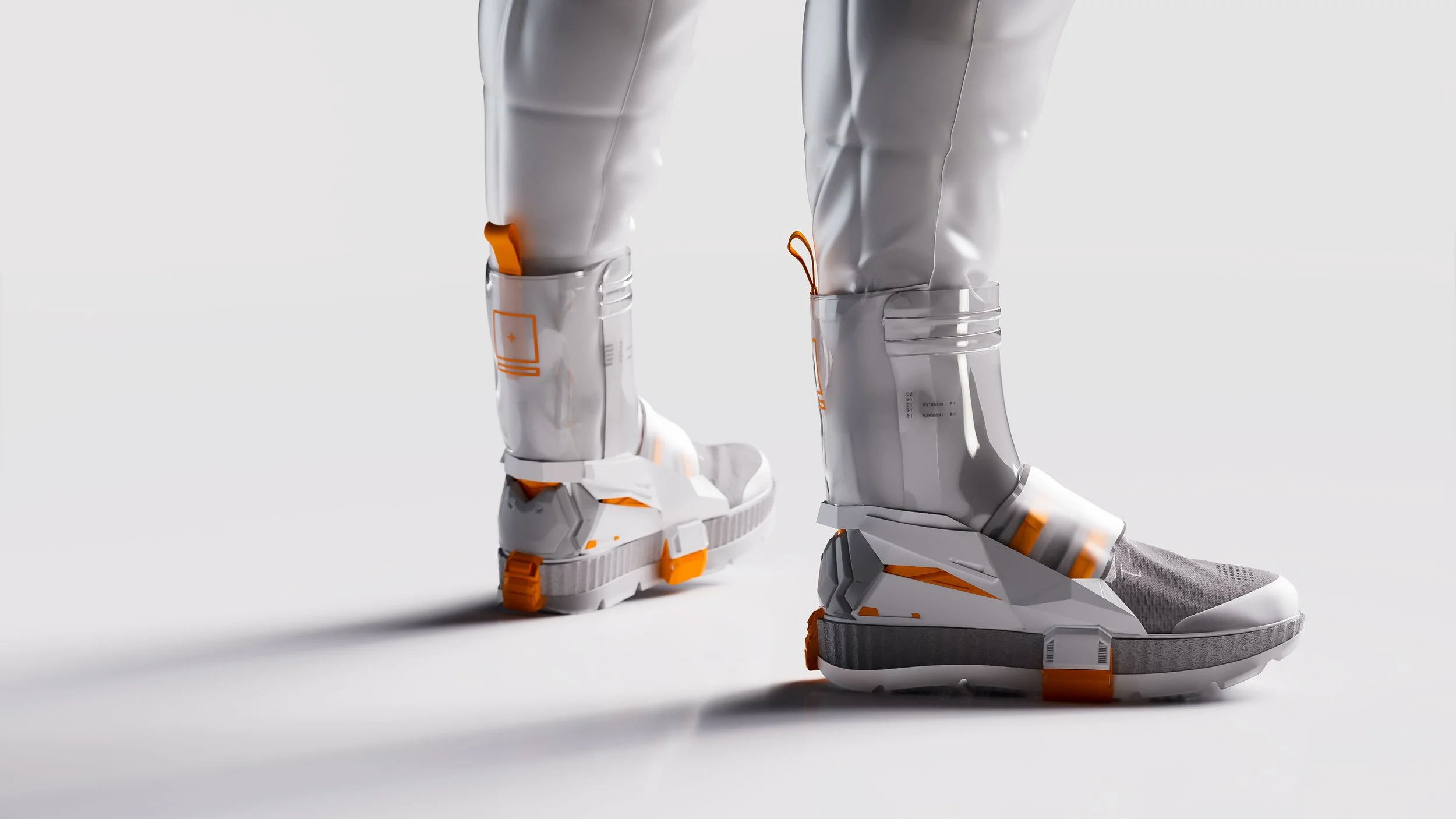
Boot design
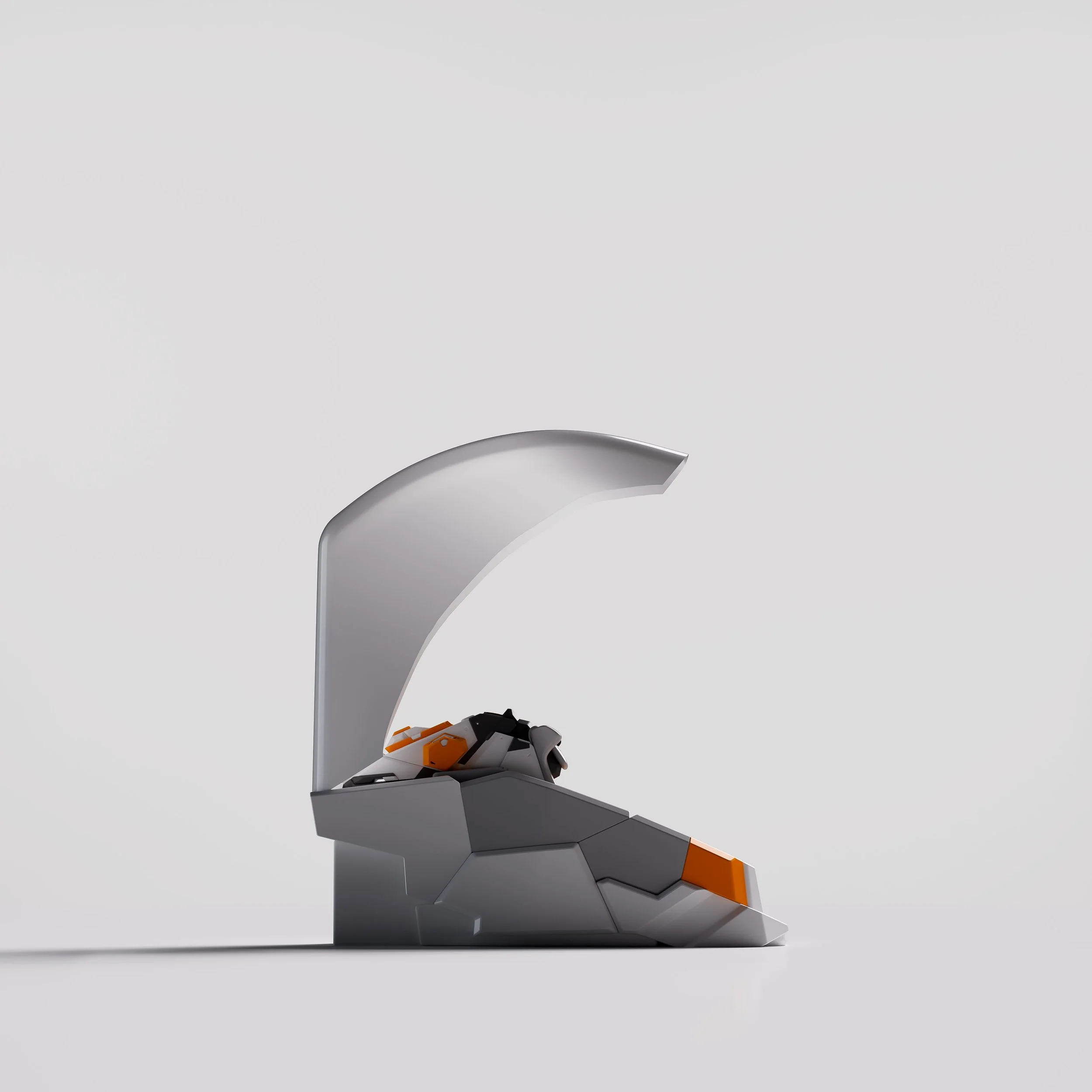
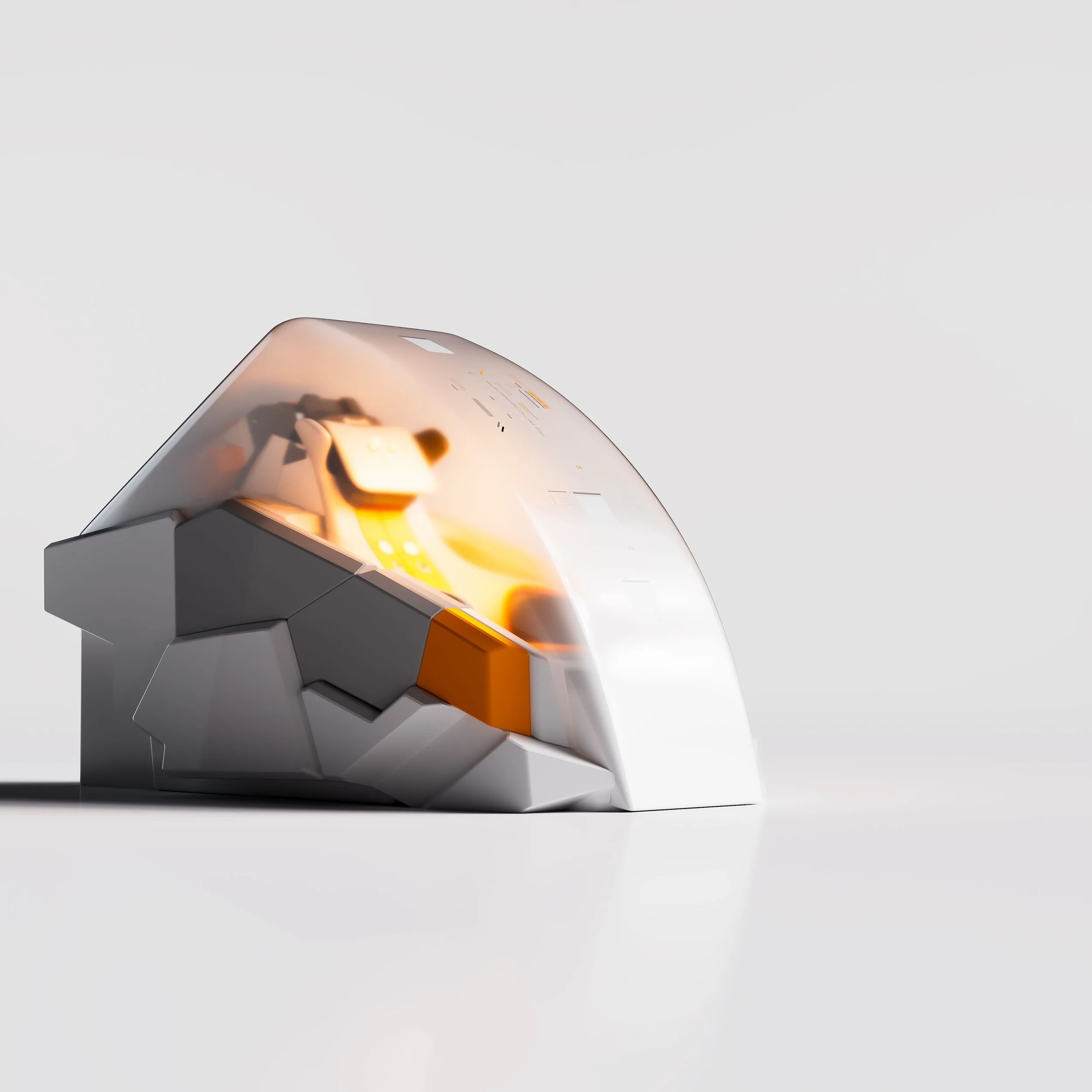
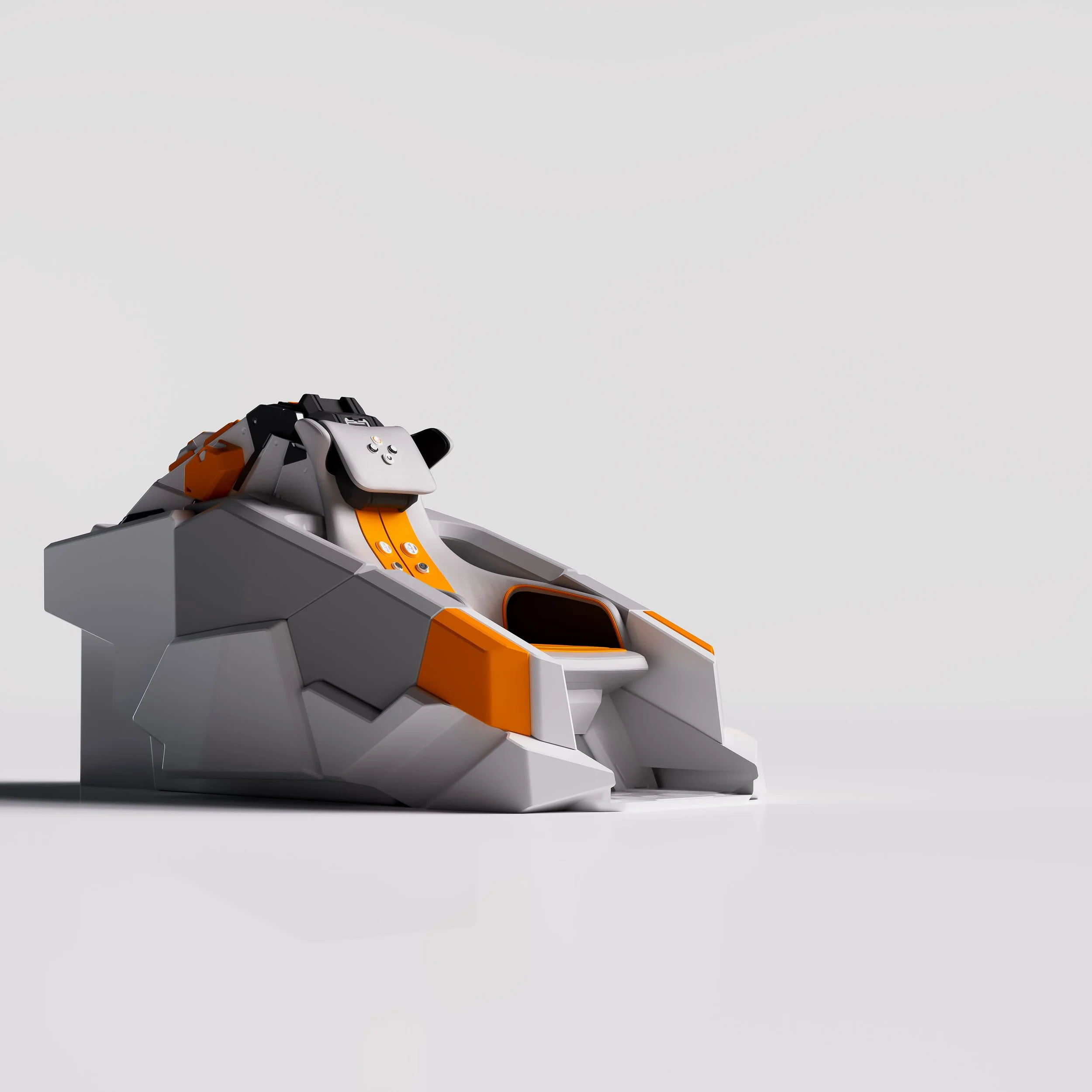
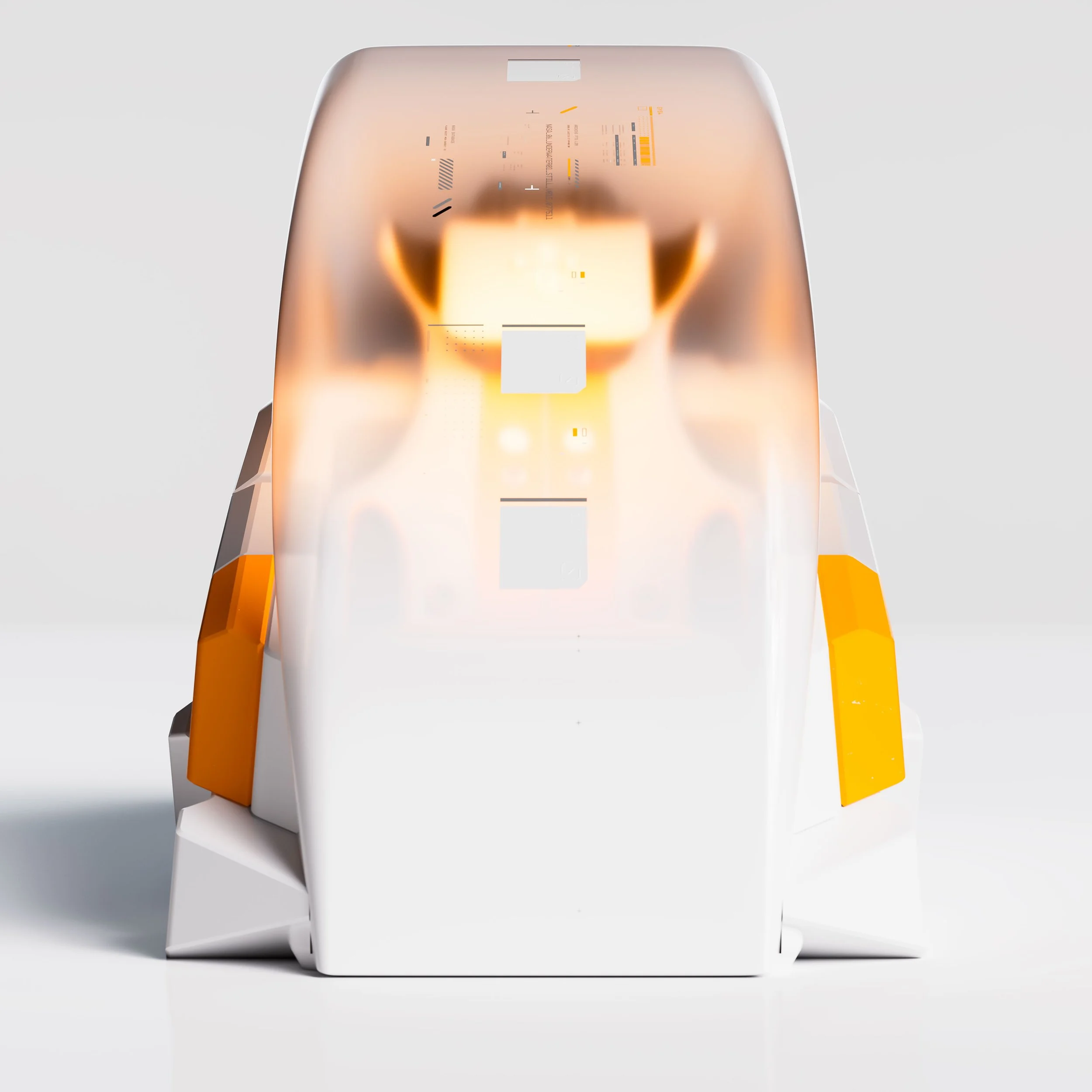
03.2 CRYO CHAMBER
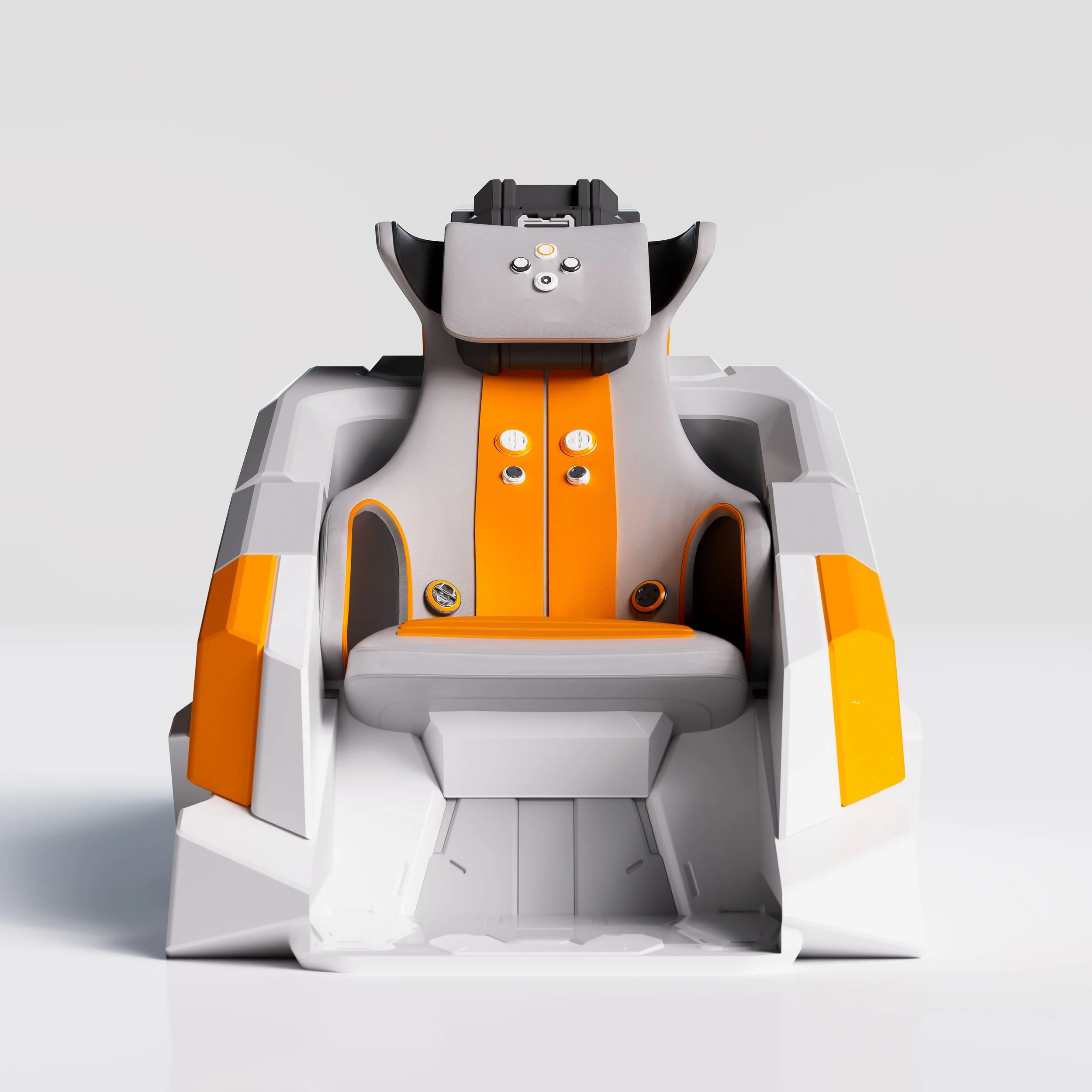
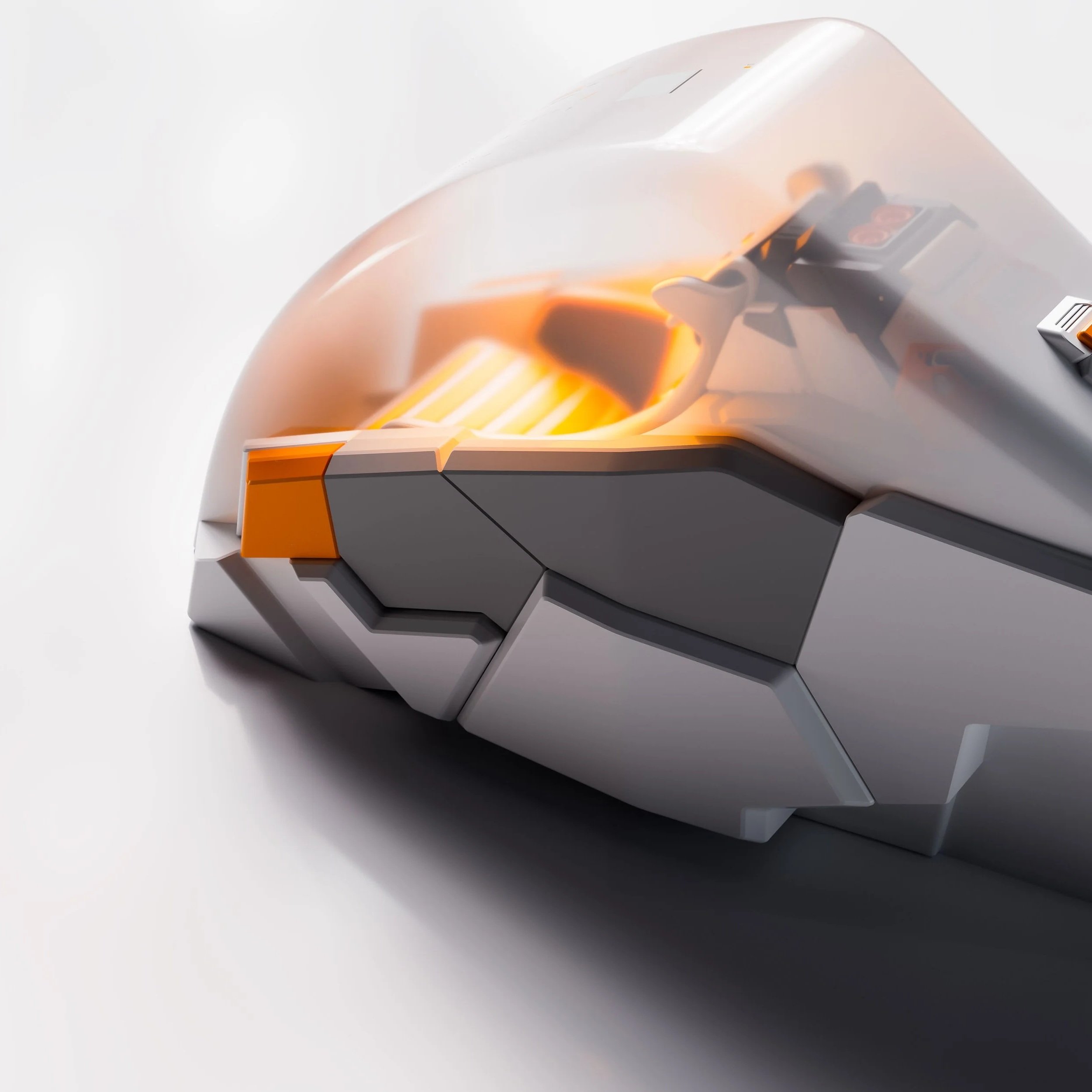
The cryopod extends the design system into a larger, fully integrated object. Building on the same principles established in the graphic language, the design adopts a utilitarian approach informed by clarity of form and function.
The pod is approached as a piece of furniture rather than a technical apparatus, drawing from established industrial design references to define proportion, surface, and structure. These forms are then carried forward through the project’s visual language, aligning with the broader system while supporting a more advanced technological context.
Integrated connection points link the pod directly to the suit system, establishing continuity between wearable and environmental elements. This relationship reinforces the pod as part of a larger operational system rather than an isolated object.
Credits
MFR CREATIVE STUDIO, 2023
Client: Felix & Paul Studios
Art Director: Michael Rigley
Lead Graphic Designer: Steven Bussey
Lead Concept Artist: Michael Rigley
3D Sculpting: Michael Rigley
Lighting + Rendering: Michael Rigley